If you need high-pressure, steady airflow for spray painting or demanding finishing jobs, a two-stage compressor is likely essential for you. These compressors provide consistent, clean air, which helps achieve flawless results and reduces issues like overspray or uneven coating. They’re especially beneficial if you work on large projects or require precision with high-quality finishes. If you want to understand why they’re the right choice for your needs, keep exploring the benefits they offer.

Get business pricing on tools and workshop supplies
- Business-only prices and quantity discounts
- Tax-exempt purchasing
- Multiple users, one account, clear invoices
Key Takeaways
- Professionals requiring high, consistent air pressure for spray painting benefit from two-stage compressors.
- Industries seeking energy-efficient solutions with stable airflow should consider two-stage units.
- High-precision painting applications needing dry, clean air are ideal candidates for two-stage compression.
- Heavy-duty painting tasks demanding high pressure and continuous operation often require two-stage compressors.
- Businesses aiming to reduce operating costs and equipment wear find two-stage compressors advantageous.
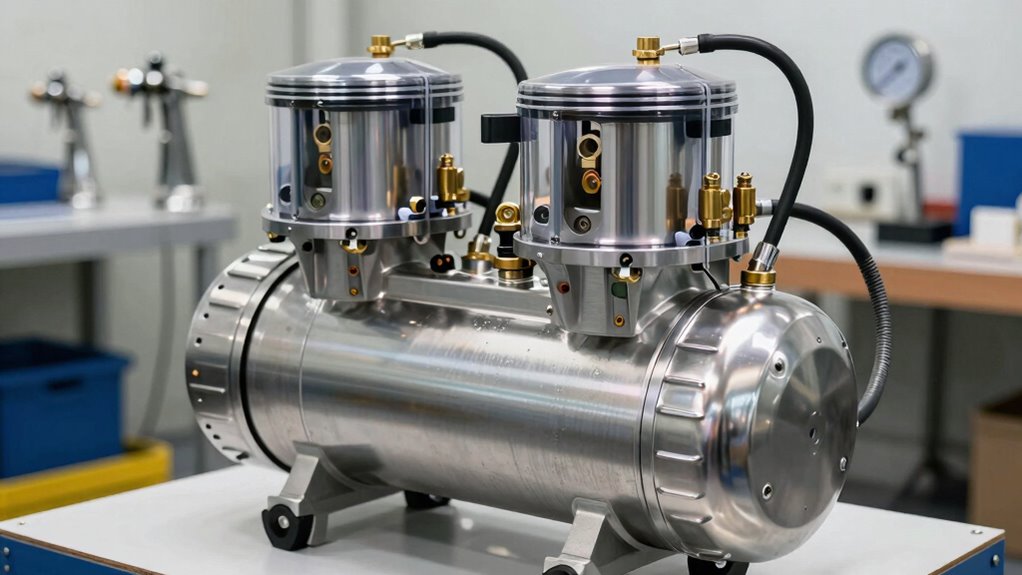
Have you ever wondered how large-scale industrial processes efficiently generate compressed air? It’s a complex system that relies on specialized equipment to produce the high-quality air needed for various applications. When it comes to painting, especially in industrial or automotive settings, the quality and consistency of compressed air are essential. That’s where two-stage compressors come into play. Unlike single-stage units, these compressors are designed to deliver higher air pressure with greater energy efficiency, making them ideal for demanding painting tasks. They work by compressing air in two distinct stages, which allows for better heat dissipation and reduces the workload on each compression cycle. This process results in a more stable and cleaner air output, indispensable for achieving a smooth, flawless paint finish.
If you’re considering whether a two-stage compressor is right for your painting needs, you need to understand the benefits related to air pressure and energy efficiency. These compressors can reach higher pressure levels—often necessary for spray painting—without sacrificing compressor longevity or performance. The two-stage process enables you to generate super-charged air, which is often required for high-quality finishes. At the same time, it minimizes energy consumption because it’s more efficient at converting electricity into compressed air. Instead of forcing the compressor to work harder in a single stage—leading to increased energy use and heat buildup—two-stage units divide the work, resulting in lower operating costs and less wear on components.
You’ll also appreciate how these compressors help maintain consistent air pressure, which is critical for precision painting. Fluctuations in air pressure can lead to uneven spray patterns, drips, or overspray, ruining an otherwise perfect job. Two-stage compressors provide a steady flow of compressed air, ensuring your spray gun operates smoothly and consistently. Plus, because they operate more efficiently, they generate less heat, reducing the risk of moisture buildup in the system. This means you get cleaner, drier air, which is essential for preventing paint defects caused by moisture or oil contamination. Additionally, employing a high-efficiency compressor can extend equipment lifespan and improve overall productivity.
two-stage air compressor for spray painting
As an affiliate, we earn on qualifying purchases.
As an affiliate, we earn on qualifying purchases.
Frequently Asked Questions
What Is the Typical Lifespan of a Two-Stage Compressor?
A typical lifespan of a two-stage compressor ranges from 10 to 15 years, depending on compressor durability and lifespan factors. You can extend its life by performing regular maintenance, ensuring proper lubrication, and avoiding overworking the unit. Environmental conditions and usage frequency also influence its longevity. With proper care, your compressor can serve you reliably for many years, providing consistent performance for your painting needs.
How Does Maintenance Differ Between Single and Two-Stage Compressors?
You’ll find that maintenance differs mainly in complexity: two-stage compressors often require more frequent filter replacements and oil lubrication checks to guarantee best performance. Statistically, neglecting filter maintenance can reduce lifespan by up to 30%. With two-stage units, you must pay closer attention to oil levels and filter cleanliness, as they handle higher pressures. Regular inspections help prevent costly breakdowns and keep both systems running efficiently.
Are Two-Stage Compressors More Energy-Efficient Than Single-Stage Models?
Yes, two-stage compressors are generally more energy-efficient than single-stage models. They deliver better energy savings by optimizing operational efficiency, reducing power consumption during compression cycles. You’ll notice lower energy costs and improved performance, especially in demanding applications. This efficiency comes from their ability to cool and compress air more effectively, which means you get more consistent air pressure while using less energy overall.
What Safety Precautions Should Be Taken When Operating Two-Stage Compressors?
Think of operating your two-stage compressor like steering a ship through rough seas. Always check pressure regulation to prevent overloading, and guarantee emergency shutdown procedures are clear and accessible. Wear protective gear, keep the area well-ventilated, and avoid loose clothing near moving parts. Regularly inspect hoses and fittings for leaks or damage. By following these precautions, you stay safe and keep your compressor running smoothly, even in stormy conditions.
Can Two-Stage Compressors Be Used for Applications Other Than Painting?
Yes, you can use two-stage compressors for various applications beyond painting. They’re ideal for industrial uses like manufacturing processes, powering pneumatic tools, and in HVAC systems for efficient climate control. Their ability to deliver higher pressure smoothly makes them versatile and reliable. If you need consistent performance and energy efficiency in your industrial or HVAC projects, a two-stage compressor could be the perfect choice to meet your specific requirements.
Conclusion
If you’re painting large surfaces or working on high-volume projects, a two-stage compressor could be your game-changer. Imagine you’re a professional painter tackling a massive mural—you’ll want the consistent, powerful airflow that two-stage compressors provide. They guarantee smooth finishes without interruptions. Don’t let insufficient equipment hold you back—investing in a two-stage compressor can make your work faster, cleaner, and more professional. For instance, a painter increased efficiency by 30% using one—think what it could do for you!
Fall Picks
fall essentials
As an affiliate, we earn on qualifying purchases.