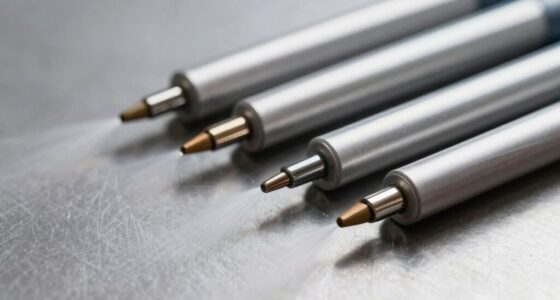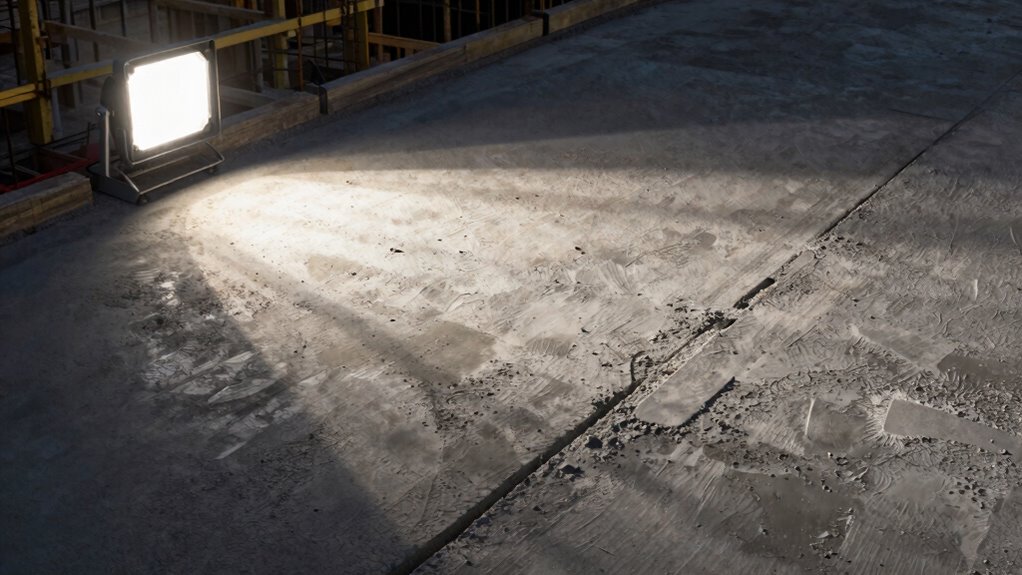

To reveal surface defects early, position your lights at angles that minimize shadows and glare. Avoid placing lights directly above or behind surfaces, as this creates long shadows that can hide flaws. Instead, angle lights so they evenly illuminate the area, enhancing contrast and making defects stand out. Properly aimed lighting also reduces glare and glare-related fatigue. Keep exploring to discover more tips on how the perfect lighting setup can improve defect detection and overall project quality.

Get business pricing on tools and workshop supplies
- Business-only prices and quantity discounts
- Tax-exempt purchasing
- Multiple users, one account, clear invoices
Key Takeaways
- Position lights at optimal angles to minimize shadows that hide surface defects.
- Avoid placing lights directly overhead or behind surfaces to prevent long, obstructive shadows.
- Use adjustable fixtures to fine-tune lighting angles for even, glare-free illumination.
- Properly angled lighting enhances surface contrast, making defects more visible early in the process.
- Focused, well-directed lighting prevents defect embedding and supports early detection for better quality control.
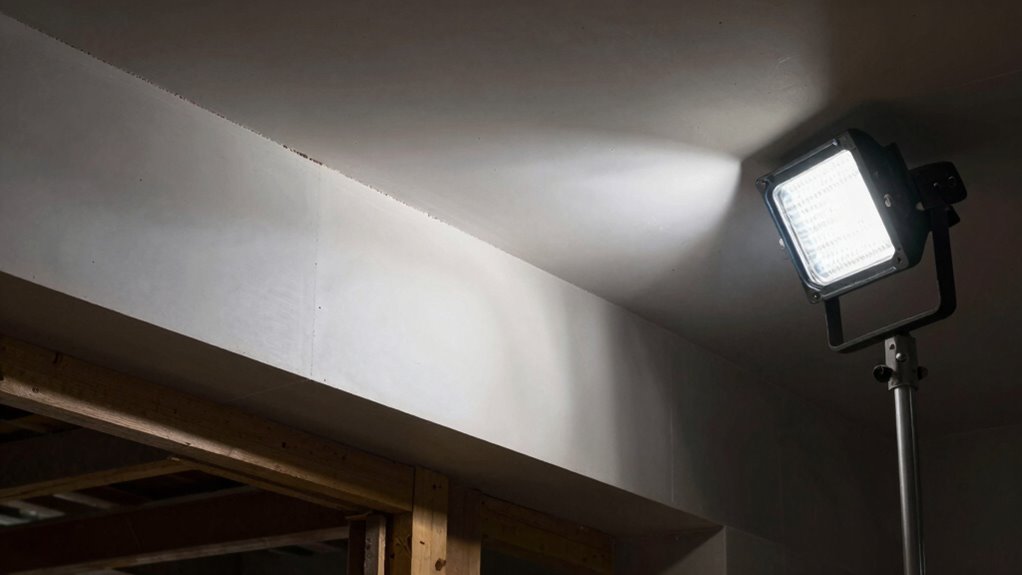
Proper lighting is vital on any jobsite to guarantee safety, accuracy, and efficiency. When you set up your lighting correctly, you can identify issues early, ensure precise work, and keep everyone safe from accidents. One key aspect to think about is how your lighting angles influence shadow casting and glare reduction. Shadows can obscure defects or details you need to see clearly, so positioning your lights to minimize harsh shadows is essential. If your lights are placed directly above or behind your line of sight, they tend to cast long, distracting shadows that make it difficult to spot flaws in materials or surfaces. Instead, you want to angle your lights in a way that evenly distributes illumination across the work area, reducing shadow length and softening any cast shadows. Properly angled lighting helps you see surface imperfections or misalignments before they become permanent, saving you time and costly rework later. Additionally, understanding the role of contrast ratio in lighting setup can help you better evaluate surface quality and detect defects more effectively. Glare reduction is also a major factor in jobsite lighting. When your lights are improperly angled or too intense, they create glare, which can strain your eyes and cause visual discomfort. This not only hampers your ability to see clearly but also increases fatigue over long shifts. To combat this, you should aim for lighting setups that diffuse light evenly and avoid direct exposure to your line of sight. Using fixtures with adjustable angles allows you to fine-tune the direction of illumination, minimizing glare and ensuring a comfortable, well-lit workspace. Properly aimed lights also prevent light spill into areas where it isn’t needed, helping you maintain focus on critical details without distraction. Another benefit of carefully selecting your lighting angles is the enhanced ability to reveal surface defects before they become embedded in the project. By avoiding overly flat or direct lighting, you create a more dynamic and three-dimensional view of your work surfaces. This approach makes subtle imperfections more visible, giving you the chance to correct issues early in the process. When you position your lights correctly, you not only improve visibility but also optimize your workflow, reducing the risk of overlooking problems that could compromise the integrity of the finished work.
As an affiliate, we earn on qualifying purchases.
Frequently Asked Questions
How Does Lighting Angle Affect Paint or Finish Application?
You should pay attention to lighting angles because they directly impact your paint or finish application. Proper angles help guarantee color consistency by reducing shadows and glare, which can distort how the finish looks. When lighting is well-positioned, you can easily spot flaws or uneven areas early, preventing defects from locking in. This way, you achieve a smoother, more professional result with consistent color and minimal glare.
What Safety Precautions Should Be Taken When Adjusting Lighting Angles?
Don’t put all your eggs in one basket when adjusting lighting angles—safety first. Always wear personal protective equipment like gloves and goggles to protect your eyes and skin. Make certain electrical safety by turning off power sources before making adjustments to avoid shocks. Use stable ladders or scaffolding, and double-check your tools. Staying alert and cautious helps prevent accidents and ensures safe, effective lighting adjustments on the jobsite.
Can Different Lighting Angles Be Used Simultaneously on a Jobsite?
Yes, you can use different lighting angles simultaneously on a jobsite. This approach enhances lighting design by reducing shadows and highlighting key areas, which helps you spot defects early. It also improves energy efficiency by directing light only where needed, minimizing waste. By adjusting angles strategically, you create a safer, more effective workspace. Just guarantee all lighting setups are stable and safe to prevent accidents during adjustments.
How Do Weather Conditions Impact Lighting Effectiveness Outdoors?
Did you know that over 80% of outdoor illumination issues are caused by weather impact? Weather conditions like rain, fog, and clouds can markedly diminish lighting effectiveness outdoors. They scatter or block light, making it harder to see defects clearly. You need to adjust your lighting angles and use weatherproof fixtures to compensate for these changes. Being aware of weather impact helps guarantee your jobsite lighting remains reliable, no matter the forecast.
What Are the Cost Implications of Adjustable Versus Fixed Lighting Fixtures?
Adjustable fixtures tend to cost more upfront due to their versatility, but a thorough cost analysis shows they can save money long-term by adapting to changing needs. Fixed fixtures are cheaper initially but may require replacement if project requirements change. Consider fixture durability too—robust, long-lasting adjustable options may justify higher costs, reducing frequent replacements. Ultimately, balancing initial expenses with long-term flexibility and durability helps you make the most cost-effective choice.
Conclusion
By adjusting your jobsite lighting angles, you illuminate flaws before they become permanent scars—like a sculptor revealing imperfections in marble before chiseling. Proper lighting acts as your keen eye, catching defects early, so you avoid costly rework later. Think of it as shining a flashlight in a dark room, revealing hidden cracks and weaknesses. Master this technique, and you’ll see your project’s quality clearly, preventing small issues from locking into your finished work.
Halloween Picks
halloween
As an affiliate, we earn on qualifying purchases.