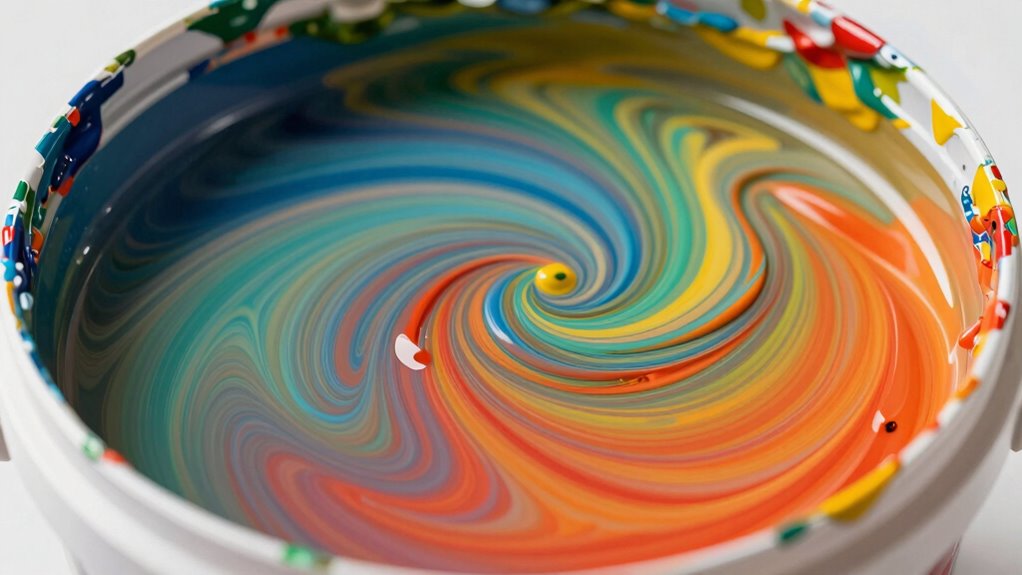
Paint skins over in the bucket because exposure to air causes moisture to evaporate from the surface, especially if the lid isn’t sealed tightly. Thick or poorly mixed paint also dries out faster, forming a hard layer. To stop this, always seal the lid tightly, transfer excess paint into smaller containers, and store in a cool, dry place. If you want tips to keep your paint fresh longer, keep going for more helpful advice.

Get business pricing on tools and workshop supplies
- Business-only prices and quantity discounts
- Tax-exempt purchasing
- Multiple users, one account, clear invoices
Key Takeaways
- Exposure to air causes moisture evaporation, leading to skin formation on the paint’s surface.
- Thick or poorly mixed paint dries faster and is more prone to skinning over.
- Not sealing the lid tightly allows air in, accelerating skin development.
- Storing paint in large open containers increases surface exposure and skin formation.
- Proper stirring, thinning, and airtight storage can effectively prevent paint from skinning over.
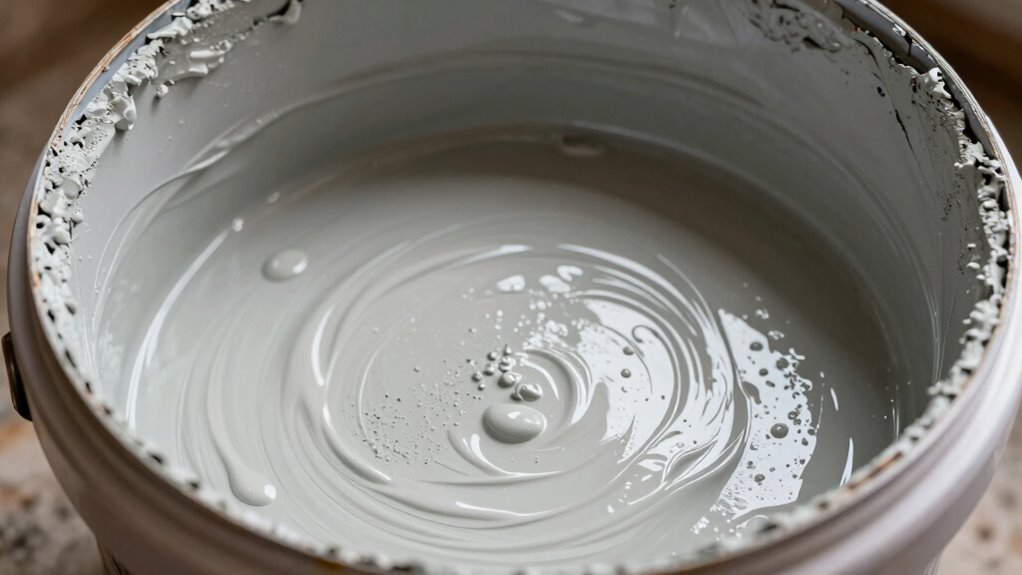
If you’ve ever noticed a thick skin forming on your paint in the bucket, you’re not alone. This common issue happens when the paint’s surface dries out and forms a hard, rubbery layer. It’s frustrating because it can make you feel like you’ve wasted product or that the paint is no longer usable. The main reason this happens is related to the paint’s consistency and how you store it in your bucket. When paint is exposed to air for too long, the moisture evaporates, causing the surface to dry out and create that unwanted skin. So, managing the paint’s consistency and ensuring proper bucket storage are key to preventing it.
First, let’s talk about paint consistency. If the paint isn’t mixed well or is too thick, it’s more prone to skinning over. Thicker paint tends to trap air bubbles, which then dry out on the surface faster than the rest of the paint. To avoid this, always stir your paint thoroughly before each use, especially if it’s been sitting for a while. If the paint has thickened over time, consider adding a suitable paint thinner or water (for water-based paints) to restore its proper consistency. This not only makes it easier to work with but also reduces the chances of skin formation because the paint remains more uniform and less exposed to air. Additionally, understanding the importance of paint preservation can help extend its usability and prevent skinning.
Next, bucket storage plays a crucial role. How you store your paint determines how quickly it dries out and forms a skin. Always keep the lid tightly sealed after each use. An airtight seal prevents air from reaching the paint’s surface, considerably slowing down the drying process. If you’re using a large bucket and only need a small amount, transfer the excess paint into smaller, airtight containers. This reduces the surface area exposed to air, helping to keep the leftover paint fresh longer. Additionally, store your paint in a cool, dry place away from direct sunlight, which can accelerate drying and skin formation. If the paint is stored properly, it’s more likely to stay in good condition for future touch-ups or projects.
airtight paint storage containers
As an affiliate, we earn on qualifying purchases.
As an affiliate, we earn on qualifying purchases.
Frequently Asked Questions
Can Paint Skins Be Reused Safely?
Yes, paint skins can be reused safely if you use proper paint mixing and storage techniques. First, stir the paint thoroughly to break up the skin. Then, transfer it into an airtight container, making sure to remove excess air. Store it in a cool, dry place away from direct sunlight. When you’re ready to use it again, stir well to restore its consistency and verify it’s still usable.
What Types of Paint Are Most Prone to Skin Formation?
You’ll notice oil-based and latex paints are most prone to skin formation because they have longer drying times and thicker paint consistency. As they sit, the surface dries out first, forming a skin. To prevent this, keep the lid tightly sealed, stir the paint regularly, and work quickly. Proper storage and maintaining the right paint consistency help reduce skin formation and keep your paint usable longer.
Does Temperature Affect Skin Formation on Paint?
Think of your paint as a delicate dance partner, sensitive to temperature changes. Yes, temperature profoundly affects skin formation on paint. When it’s too high or too low, the paint film dries unevenly, creating a stubborn skin. To keep your paint fresh and workable, maintain proper temperature control—ideally between 50-85°F. This way, you prevent premature skin formation, ensuring smooth application and a flawless finish.
How Long Does It Take for a Paint Skin to Form?
A paint skin typically forms within 15 to 30 minutes after you start painting, depending on conditions like temperature and humidity. During paint drying, skin formation occurs when the surface loses moisture and develops a thin, hard layer. To delay this process, keep the paint covered with a tight lid and work in cooler, less humid environments. This helps prevent premature skin formation and keeps your paint usable longer.
Are There Eco-Friendly Solutions to Prevent Paint Skins?
Yes, eco-friendly solutions like biodegradable additives and natural drying agents can help prevent paint skins. You can add biodegradable additives to the paint, which slow down oxidation without harming the environment. Using natural drying agents, such as drying oils or plant-based thinners, also encourages even drying and reduces skin formation. These options are safe, sustainable, and effective, helping you keep your paint fresh while protecting the environment.
Conclusion
So, next time you find that pesky paint skin forming, remember it’s almost poetic—your paint’s way of saying it’s done, even when you’re not finished. Ironically, what’s meant to protect your paint ends up wasting your time and effort. To keep that skin at bay, just cover your bucket tightly and stir often. After all, the only thing worse than a paint skin is realizing you could’ve prevented it all along.
Fall Picks
fall essentials
As an affiliate, we earn on qualifying purchases.