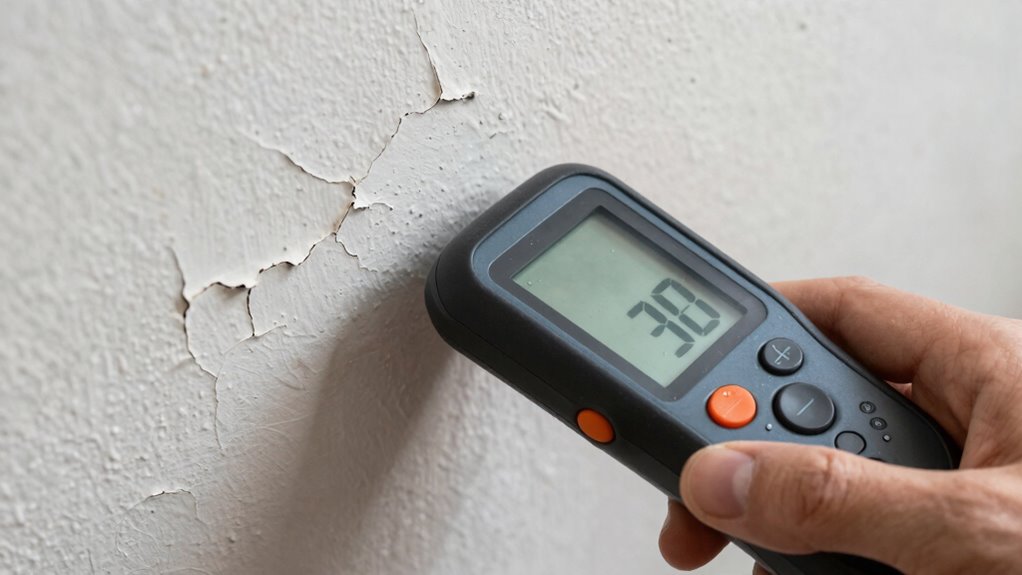
To prevent peeling, it’s vital to check your surface moisture with a reliable moisture meter before painting. When your moisture levels are below the recommended threshold—usually around 12% for wood—you can be confident the surface is dry enough for a flawless finish. Accurate measurements help you spot hidden moisture that might cause issues later. Keep reading to discover how precise moisture detection can save you time, effort, and costly repairs.

Get business pricing on tools and workshop supplies
- Business-only prices and quantity discounts
- Tax-exempt purchasing
- Multiple users, one account, clear invoices
Key Takeaways
- Correct moisture readings indicate when surfaces are dry enough to prevent peeling and ensure paint adhesion.
- Moisture meters reveal hidden moisture levels that aren’t visible, reducing the risk of future peeling.
- Maintaining surface moisture below specific thresholds (e.g., 12% for wood) helps predict and prevent peeling issues.
- Accurate readings guide optimal timing for painting, avoiding premature application that can cause peeling.
- Consistent moisture measurement promotes long-lasting, high-quality paint finishes by preventing moisture-related failures.
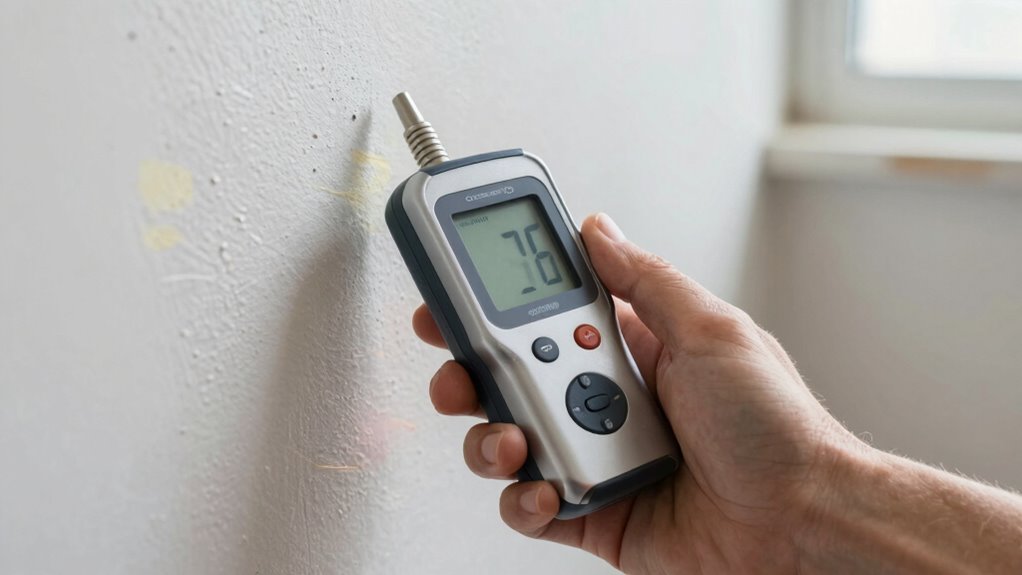
When it comes to achieving a flawless paint finish, understanding the moisture content of your surfaces is essential. Moisture levels play a significant role in how well your paint adheres and lasts over time. If you skip proper paint surface preparation and neglect to measure moisture accurately, you risk peeling, bubbling, or even mold growth down the line. That’s where a moisture meter becomes an indispensable tool. It provides precise readings of the moisture level in various surfaces, whether wood, drywall, or concrete. These readings give you the confidence that your surface is ready for paint and help you avoid costly mistakes.
Accurate moisture readings ensure your surface is ready for a flawless paint finish.
To guarantee good adhesion, you need to check the moisture level accuracy before you start painting. Even surfaces that look dry may still contain hidden moisture that can compromise your finish. For example, freshly poured concrete or damp drywall can be tricky because their moisture content isn’t always visible. Using a moisture meter allows you to measure the exact moisture content, ensuring it’s within the acceptable range for your chosen paint type. This process is a vital step in proper paint surface preparation, particularly when working in humid environments or on materials prone to retaining moisture.
When you use a moisture meter correctly, you’re making an informed decision about whether the surface needs additional drying or preparation. For instance, if you find that a wall’s moisture level is too high, you can delay painting, increase ventilation, or use drying techniques before proceeding. This not only improves the quality of your paint job but also extends its lifespan. Accurate moisture measurement helps prevent peeling caused by trapped moisture beneath the paint layer, which can lead to costly repairs and rework.
Moreover, understanding moisture level accuracy helps you adapt your approach based on the material you’re working with. Different surfaces have different thresholds for moisture content. Wood, for example, should typically be below 12%, while drywall might tolerate slightly higher levels if properly dried. Knowing these specifics empowers you to take the right steps, whether that’s waiting longer for drying or choosing a different primer. It’s a small investment in time and tools that pays off by ensuring your paint job is smooth, durable, and professional-looking.
In short, mastering paint surface preparation includes paying close attention to moisture content. Using a quality moisture meter to obtain accurate readings guides your decisions and helps you avoid the common pitfalls of peeling and bubbling. When you prioritize moisture level accuracy, you set yourself up for a successful, long-lasting paint finish that stands the test of time. Properly monitoring moisture levels is crucial for avoiding issues that compromise your paint’s integrity and longevity.
As an affiliate, we earn on qualifying purchases.
Frequently Asked Questions
How Often Should I Check Moisture Levels Before Painting?
You should check moisture levels daily before painting, especially if conditions change or if you’re working on a large project. Make sure your moisture meter is properly calibrated for accurate readings. Also, verify wall surface compatibility to prevent incorrect measurements. Regular checks help you catch excess moisture early, reducing peeling risk and ensuring a durable paint job. Keep testing until moisture levels stabilize below recommended thresholds for your specific surface.
Are Moisture Meters Suitable for All Types of Wall Surfaces?
Can moisture meters handle every wall surface? Think of them as versatile tools, but surface compatibility varies. Some meters work well on drywall, wood, or concrete, while others need calibration accuracy adjustments for different materials. Before using one, check if it suits your specific wall surface, ensuring proper calibration. This way, you get precise readings that help prevent peeling, no matter what type of wall you’re tackling.
What Is the Ideal Moisture Content for Painting Preparation?
You should aim for a moisture content below 12% before painting. Using techniques for moisture measurement, like pin and pinless meters, helps you get accurate readings. Keep in mind common moisture content thresholds to make sure your surface is dry enough. If readings are too high, wait and recheck until moisture levels fall within the ideal range. This prevents peeling and ensures a long-lasting, quality paint job.
Can Moisture Meters Detect Hidden Mold or Water Damage?
Moisture meters can’t reliably detect hidden mold or water damage, but they help identify areas with excessive moisture that could foster such issues. While mold detection and water intrusion often require specialized tools like infrared cameras or swab tests, moisture meters serve as initial indicators. You should regularly check suspect spots, as unseen water intrusion can lead to mold growth, which impacts your home’s health and durability over time.
How Do Temperature and Humidity Affect Moisture Readings?
Temperature fluctuations and humidity control directly impact moisture readings. When temperatures rise or fall, moisture levels can appear higher or lower on the meter, leading to inaccurate assessments. High humidity can cause elevated readings even if the material isn’t truly wet, so you should control humidity levels during testing. By maintaining consistent temperature and humidity, you’ll get more accurate moisture readings, helping you predict and prevent peeling effectively.
Conclusion
Using a moisture meter might seem simple, but it’s your best tool against peeling paint. It measures the unseen, the dampness lurking beneath the surface. Without it, you risk costly mistakes and flaky finishes. Because dry walls promise a perfect paint job, but wet walls hide trouble. So, trust the reading, and choose precision over guesswork. Clear, dry, and prepared—your paint job’s best friend is the moisture meter, turning potential problems into lasting beauty.
Halloween Picks
halloween
As an affiliate, we earn on qualifying purchases.