To store your paint sprayer between jobs, thoroughly clean all parts with the appropriate solvent, then disassemble and dry each component completely to prevent rust and clogs. Choose a cool, dry, and organized space like a closet or garage shelf, ensuring the sprayer is protected from dust and extreme temperatures. Lubricate moving parts, check seals, and cover it to keep dust out. Proper storage extends your sprayer’s life and keeps it ready for flawless performance — discover more tips below.
Key Takeaways
- Clean all components thoroughly with appropriate solvents and dry completely before storage.
- Store the sprayer in a cool, dry, and dust-free location, preferably on a shelf or in a dedicated cabinet.
- Lubricate moving parts and check seals or gaskets for wear, replacing as needed.
- Cover the sprayer with a dust cover or cloth to protect it from debris and humidity.
- Ensure the sprayer is stored in a stable position, with hoses and cords properly secured to prevent damage.
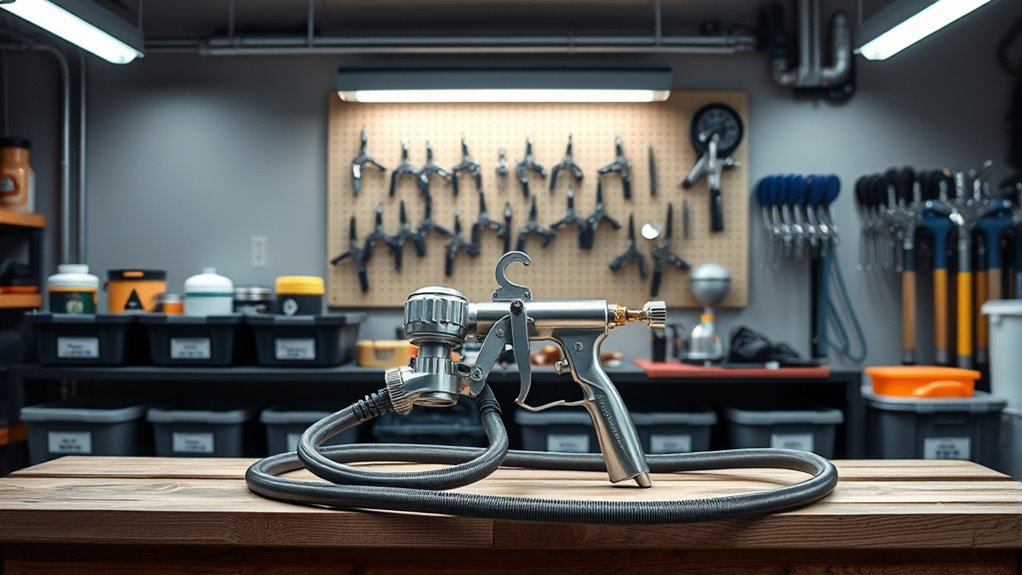
Properly storing your paint sprayer is essential to keep it in top condition and make sure it’s ready for your next project. When you’re done painting, it’s tempting to just put the sprayer away, but neglecting proper storage can lead to clogs, damage, or corrosion. The first step is to thoroughly clean your sprayer using effective cleaning methods. This involves flushing out paint residues with the appropriate solvent—water for latex paints or mineral spirits for oil-based paints. Be sure to disassemble the nozzle, filters, and other removable parts, and clean each component carefully. Using brushes or cleaning kits designed for paint sprayers will ensure all paint is removed and prevent blockages or dried paint from causing issues later on. After cleaning, dry all parts completely to avoid rust or mold growth. Additionally, incorporating practical storage practices can significantly prolong the lifespan of your equipment.
Once your sprayer is clean, you need to choose suitable storage locations. Ideally, you want a cool, dry area that’s protected from dust, extreme temperatures, and direct sunlight, which can degrade seals and materials over time. A dedicated closet, storage cabinet, or a shelf in your garage or workshop works well. Make sure the storage space is stable and free from humidity, as moisture can corrode metal parts and damage internal mechanisms. If you have limited space, consider hanging the sprayer in a way that prevents accidental bumps or falls, but avoid hanging it by sensitive hoses or cords that could be strained or damaged.
In addition to selecting a good storage location, it’s wise to take extra precautions to keep your sprayer in prime condition. For instance, after cleaning, you might want to lubricate moving parts with a light machine oil to prevent rust. If your sprayer has seals or gaskets, check them periodically for signs of deterioration and replace them if needed. Covering the sprayer with a cloth or a dust cover can help keep it clean and free from debris. Remember, proper storage isn’t just about protecting your equipment—it also saves you time and frustration on your next project. When you’re ready to use it again, inspect the sprayer, ensure all parts are dry, and reassemble carefully. With these cleaning methods and storage tips, your paint sprayer will stay in excellent shape, ready to produce flawless finishes whenever you need it.
Frequently Asked Questions
Can I Leave Paint in the Sprayer Overnight?
You shouldn’t leave paint in your sprayer overnight, as it can clog the system and make maintenance harder later. To keep your sprayer in good shape, empty and clean it thoroughly after each use, following proper paint sprayer maintenance and storage tips. If you need to pause, flush the system with water or solvent, and store the parts in a dry, safe place. This prevents damage and keeps your sprayer ready for next time.
How Do I Prevent Rust During Long Storage Periods?
Imagine your paint sprayer resting in a cozy, rust-proof shell during long-term storage. To prevent rust, you should thoroughly clean and dry the sprayer, then apply a light coat of rust inhibitor or oil to all metal parts. Store it in a dry, cool place, avoiding humidity. Regularly inspect it for moisture or corrosion, ensuring your tool remains ready for action whenever you need it again.
Is It Necessary to Clean the Filter Before Storing?
Yes, you should clean the filter before storage as part of your filter maintenance and storage preparations. A clean filter prevents clogs and damage, ensuring your paint sprayer stays in good condition. Remove the filter, rinse it thoroughly, and let it dry completely. Properly maintaining the filter helps avoid issues during your next project and prolongs the life of your equipment. Always include filter cleaning in your routine storage preparations.
What Should I Do if My Sprayer Develops a Clog?
If your sprayer develops a clog, first turn off and disconnect it. Use a paint stripper or a small brush to clear any debris from the nozzle and filters. You can also use an air compressor to blow out stubborn clogs, making sure to wear safety goggles. Regularly cleaning and maintaining your sprayer prevents clogs, ensuring smooth operation for your next project.
How Do I Store a Paint Sprayer in Cold Weather?
Prepare your paint sprayer for winter storage by thoroughly cleaning and drying it. In cold weather, keep it in a cozy, insulated container to prevent freezing. Store it in a dry, sheltered spot away from frost and moisture. Protect the pump and hoses by adding antifreeze or oil if recommended. Proper winter storage preserves your sprayer’s state, ensuring it’s ready to roll when warm weather returns.
Conclusion
To keep your paint sprayer in top shape between jobs, always clean it thoroughly, drain any leftover paint, and store it in a cool, dry place. Don’t forget to check the hoses and filters before your next use. Think of it like storing a trusty steed—give it some TLC, and it’ll be ready for action when you need it. Remember, even in the age of smartphones, proper storage is your best tool for a smooth painting adventure.

Franz came aboard the Paint Sprayer Zone team with a background in both journalism and home renovation. His articulate writing style, combined with a passion for DIY projects, makes him an invaluable asset. Franz has a knack for breaking down technical jargon into easy-to-understand content, ensuring that even the most novice of readers can grasp the complexities of paint sprayers.