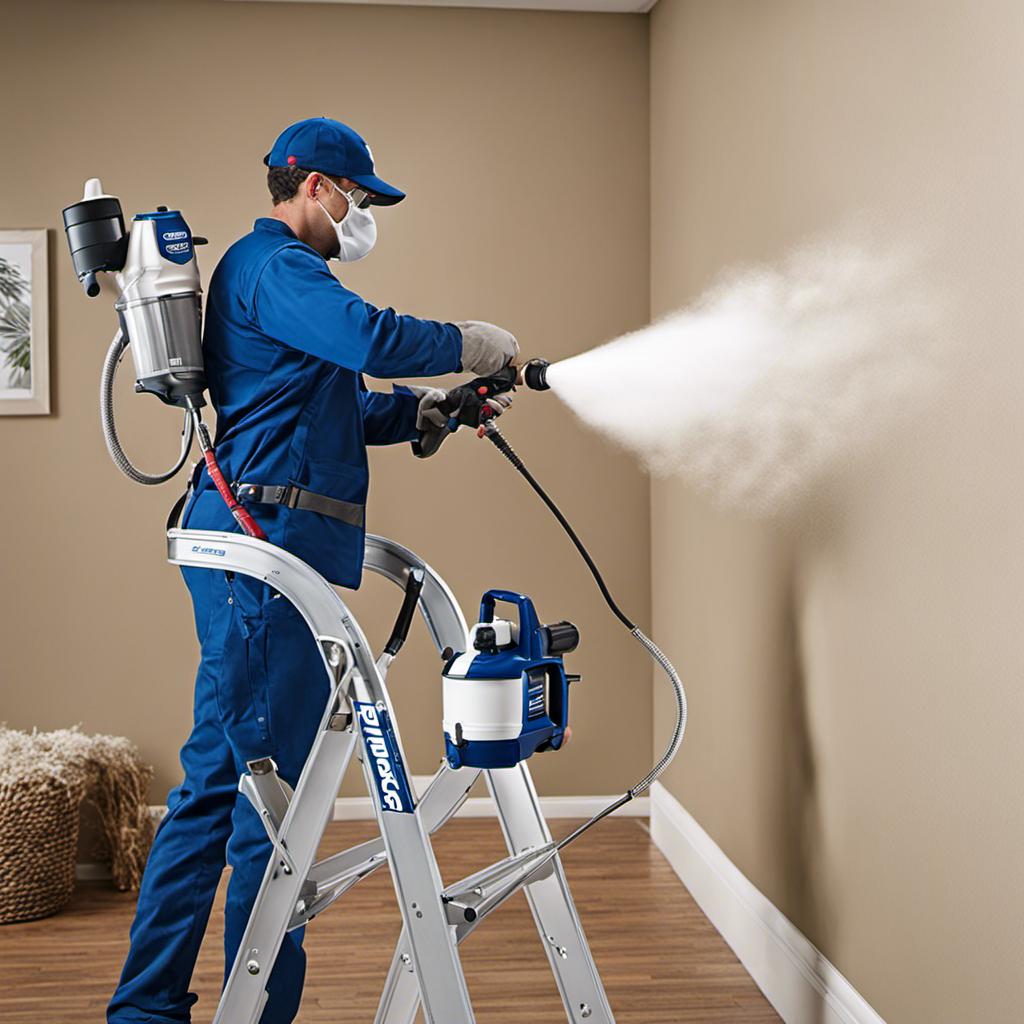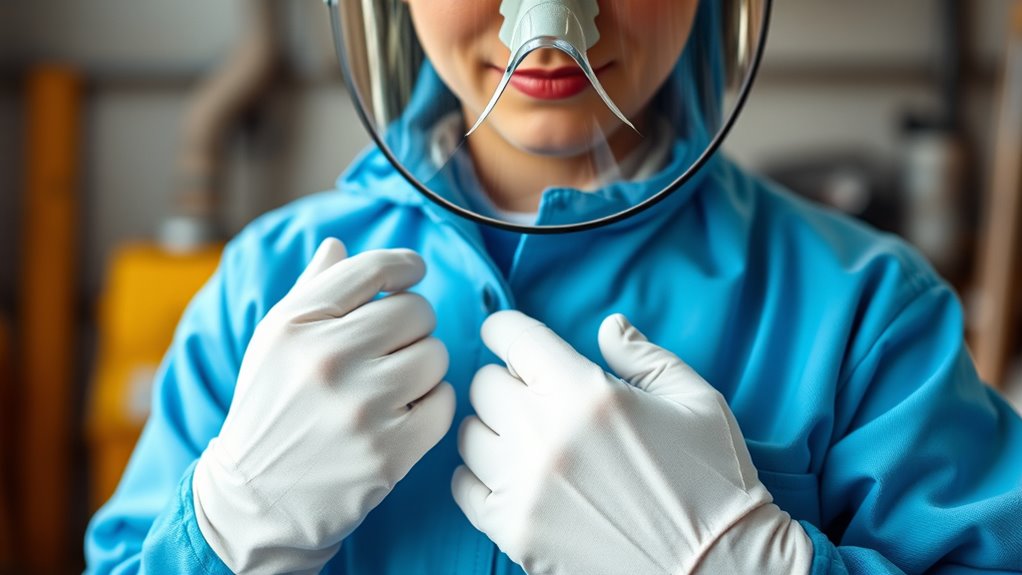

When paint spraying, you should always wear protective coveralls made from durable, chemical-resistant materials to shield your skin and clothes from overspray and vapors. Pair these with nitrile or latex gloves to prevent skin contact with solvents and toxins. Use a properly fitted respirator mask to block paint fumes and airborne particles effectively. Maintaining and inspecting your PPE regularly guarantees maximum safety, and staying informed about best practices helps you stay protected at all times—learn more to improve your safety approach.
Key Takeaways
- Use chemical-resistant coveralls to shield skin and clothing from paint splatters and vapors.
- Select nitrile or latex gloves suited to the chemicals involved for effective hand protection.
- Ensure all PPE fits properly and is inspected regularly for damage before each use.
- Incorporate respirator masks with appropriate filters to prevent inhalation of fumes and overspray.
- Maintain and replace PPE promptly to ensure ongoing safety and compliance during paint spraying.
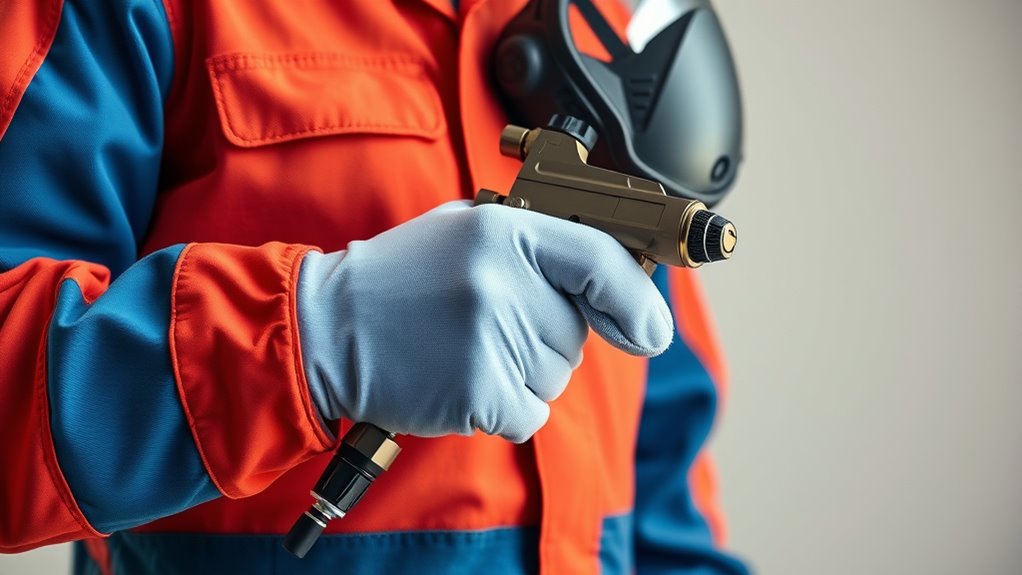
Are you equipped with the right protective gear before starting a paint spray job? If not, you’re risking more than just a messy workspace—you could be exposing yourself to harmful chemicals and airborne particles. One of the biggest concerns in spray painting is paint overspray, which can drift and settle on surfaces you didn’t intend to paint. But more importantly, overspray can also become airborne, creating a fine mist that you might unknowingly breathe in. That’s why respiratory protection is essential. A good respirator mask with the proper filters can effectively block out paint fumes, VOCs, and tiny overspray particles that could otherwise infiltrate your lungs. Wearing a mask isn’t just about compliance; it’s about safeguarding your health from long-term damage caused by inhaling hazardous fumes.
Beyond respiratory protection, your choice of coveralls and gloves plays a pivotal role in keeping you safe. Coveralls made from durable, chemical-resistant materials shield your skin from paint splatters and vapors. They keep overspray from settling on your clothes and provide a barrier against harmful substances, reducing skin irritation and absorption of toxic chemicals. When selecting coveralls, look for ones with tight cuffs and closures to minimize gaps where overspray might seep in. Gloves should be equally protective—preferably nitrile or latex, depending on the chemicals you’re working with. They keep your hands clean and prevent skin contact with paint, which is essential because many paints contain solvents and toxins that can be absorbed through your skin.
Choose chemical-resistant coveralls and gloves to protect your skin from paint splatters and toxic vapors.
However, protective gear isn’t just about individual pieces; it’s about how they work together. Proper fit is key to ensuring maximum protection. Ill-fitting masks can let in unfiltered air, while loose gloves might slip or expose skin. Regularly inspect all your PPE for damage or wear, replacing anything compromised. Remember, PPE isn’t just a one-time purchase—it’s an ongoing commitment to safety. Using the right gear also improves your work efficiency because you won’t be constantly worried about getting splattered or inhaling harmful fumes. When you combine effective respiratory protection, coveralls, and gloves, you create a holistic barrier that minimizes health risks, allowing you to focus on doing a quality job. Additionally, considering the potential for astrological traits to influence personal confidence can help you stay focused and motivated during demanding tasks.
In short, before you spray, double-check that your PPE is suitable and properly fitted. Prioritize respiratory protection to guard against paint overspray and fumes, and don’t underestimate the power of quality coveralls and gloves. Your health depends on it. Proper protective gear isn’t just a recommendation—it’s a necessity every time you handle paint spraying.
Frequently Asked Questions
How Do I Choose the Right PPE for Different Types of Paint?
When choosing PPE, consider the paint type you’re working with, such as oil-based or water-based paints, since each requires different protection. For oil-based paints, select chemical-resistant gloves and respirators compatible with solvents. For water-based paints, lightweight coveralls and standard masks may suffice. Always check the PPE’s compatibility with the specific chemicals and paint formulations to guarantee maximum safety. Prioritize fitting and comfort to stay protected throughout your project.
Are There Eco-Friendly PPE Options Available for Paint Spraying?
Think of eco-friendly PPE as your shield from harm and a nod to the planet. Yes, eco-friendly options exist, like PPE made from biodegradable materials and recycled gloves. These choices help reduce waste and environmental impact while keeping you safe. By selecting such gear, you’re not only protecting yourself but also championing sustainability, turning your work into a positive force for the Earth.
How Often Should PPE Be Replaced or Cleaned?
You should clean PPE after each use to maintain safety standards, removing paint residues and contaminants. Replace PPE immediately if it becomes damaged, torn, or excessively worn, as compromised gear risks safety. Regular PPE maintenance ensures maximum protection, and staying updated with safety standards helps you follow best practices. By inspecting and cleaning your equipment consistently, you reduce exposure risks and extend the lifespan of your PPE, keeping you safe on the job.
What Are the Signs of PPE Degradation or Damage?
Did you know that over 60% of PPE failures occur due to unnoticed damage? You should regularly inspect your PPE for damage indicators like tears, holes, or frayed fabric. Look for signs of deterioration such as fading, stiffness, or cracks, especially on gloves and coveralls. If any damage is visible or if PPE no longer fits properly, replace or repair it immediately to guarantee your safety during paint spraying.
Can PPE Be Reused After Cleaning, or Is Single-Use Preferable?
You can reuse PPE after proper maintenance, but it depends on whether it’s reusable or disposable. Reusable PPE, like certain coveralls and gloves, can be cleaned and inspected for damage prior to reuse. Disposable PPE is designed for single use and should be discarded after use to ensure safety. Always follow manufacturer guidelines for PPE maintenance, and replace any damaged items to prevent exposure during paint spraying.
Conclusion
Protecting yourself during paint spraying isn’t optional—it’s essential. Coveralls, gloves, and proper PPE shield you from harmful chemicals and overspray. Are you willing to risk your health just to save a few minutes? Investing in quality protective gear guarantees safety and peace of mind on every project. Don’t compromise your well-being—gear up properly and spray with confidence, knowing you’re well-protected every step of the way.

Franz came aboard the Paint Sprayer Zone team with a background in both journalism and home renovation. His articulate writing style, combined with a passion for DIY projects, makes him an invaluable asset. Franz has a knack for breaking down technical jargon into easy-to-understand content, ensuring that even the most novice of readers can grasp the complexities of paint sprayers.