Paint conditioners and extenders help you improve your spraying projects by enhancing flow, leveling, and coverage. They can slow or speed up drying times, reduce overspray, and prevent brush marks for a smoother finish. Choosing the right additives for your application guarantees better atomization and reduces waste. Proper use of these tools can save you time and effort, resulting in a professional look. Keep exploring to discover how to maximize their benefits effectively.

Get business pricing on tools and workshop supplies
- Business-only prices and quantity discounts
- Tax-exempt purchasing
- Multiple users, one account, clear invoices
Key Takeaways
- Choose conditioners compatible with spray equipment to improve atomization and prevent nozzle clogging.
- Use extenders to extend drying time, reducing brush marks and uneven finishes in hot or windy conditions.
- Follow manufacturer instructions for mixing ratios to maintain paint integrity and achieve optimal flow.
- Add flow and leveling additives to minimize streaks and overspray, resulting in a smoother, professional finish.
- Properly adjusted additives can improve coverage, reduce coats needed, and enhance overall application efficiency.
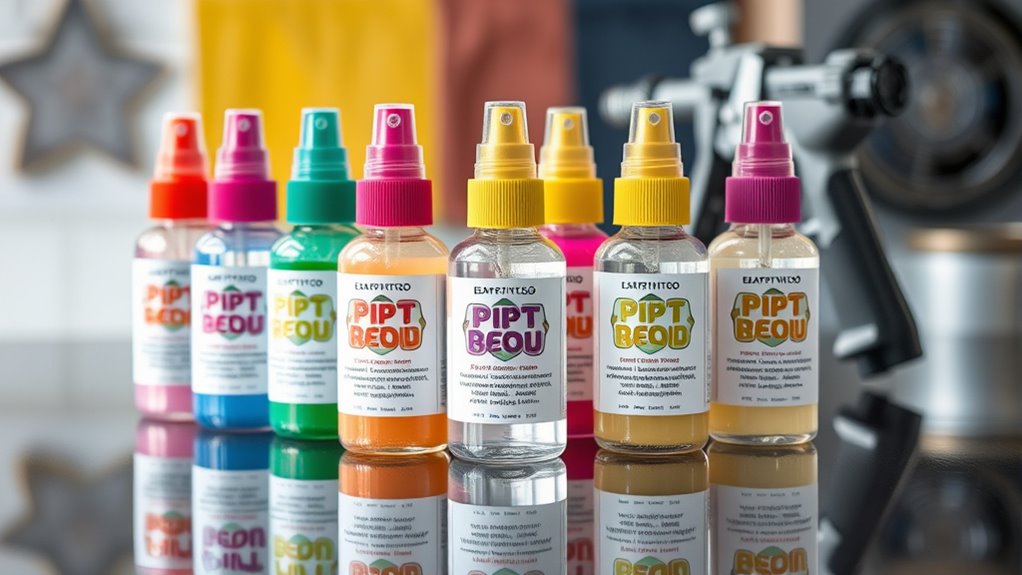
When spraying paint, using conditioners and extenders can make a significant difference in the finish and ease of application. These additives are designed to improve the properties of your paint, making it easier to work with and delivering a more professional-looking result. One of the key considerations when choosing a conditioner is brush compatibility. If you’re planning to switch between spraying and brushing, you’ll want a conditioner that maintains the paint’s ability to flow smoothly through your spray gun while also being suitable for brushes. Some conditioners are formulated specifically for spray applications, ensuring they don’t clog nozzles or cause uneven spraying. Others are more versatile, compatible with both brushes and sprayers, giving you flexibility for different parts of your project.
Drying time is another critical factor when selecting paint extenders and conditioners. Extenders often slow down the evaporation process, giving you more time to work with the paint, especially in hot or windy conditions. This longer drying time helps prevent brush marks, roller lines, and uneven coats, leading to a smoother, more uniform finish. Conversely, some conditioners are designed to accelerate drying without sacrificing quality, which is useful when you need to speed up the project timeline. It’s crucial to read the product instructions carefully because improper use can lead to issues like extended tackiness or reduced adhesion.
Using conditioners and extenders also impacts the overall flow and leveling of your paint. They help reduce brush and roller marks, especially when working with thicker paints or those prone to streaking. When spraying, this improved flow translates into a more even coat and minimized overspray. If your paint is too thick, adding a conditioner can improve atomization, allowing for a finer spray pattern and better coverage. This not only saves time but also reduces paint wastage. Additionally, understanding the local divorce statistics can inform your expectations regarding project timelines and challenges, much like how knowing regional legal resources can influence case strategy.
Keep in mind that mixing these additives correctly is indispensable. Too much extender can thin the paint excessively, weakening its durability or causing it to run. Too little may not provide the desired benefits. Always follow the manufacturer’s guidelines for ratios and application instructions. By choosing the right conditioner compatible with your brush and spray equipment, and understanding its effect on drying time, you’ll achieve a superior finish with less frustration. In the end, these small adjustments can make your painting project more efficient, resulting in a smoother, more professional outcome.
Products Worth Considering

Shark Navigator Robot Vacuum with 30-Day Self-Empty Base, White (AV2110S)

Samsung 42-Inch S90H OLED 4K Smart TV Bundle

Philips Hue Festavia Globe Outdoor String Lights, 32 Bulbs, 91 ft
As an affiliate, we earn on qualifying purchases.
Frequently Asked Questions
Do Paint Conditioners Affect Drying Time?
Yes, paint conditioners can affect drying time. They often slow down the drying process by improving paint flow and reducing surface tension, allowing for smoother application. This can also influence paint absorption, making the paint less likely to peel or crack. Keep in mind, while conditioners may extend drying time, they help achieve a more even finish, so it’s worth adjusting your timing accordingly for ideal results.
Are Paint Extenders Compatible With All Paint Types?
While paint extenders are quite versatile, they aren’t compatible with all paint types. You should check paint compatibility before mixing, as extender limitations can cause issues like poor adhesion or uneven finish. Some extenders work better with water-based paints, while others suit oil-based paints. To avoid surprises, always read the manufacturer’s instructions and test a small batch first, ensuring the extender enhances rather than hampers your project.
How Long Can Mixed Paint With Conditioners Be Stored?
You can typically store mixed paint with conditioners for up to 24 hours, but it’s best to verify the specific conditioner’s shelf life. Proper paint storage involves airtight containers and a cool, dry place to prevent drying or spoilage. After this period, the paint may thicken or separate, making it difficult to use. Always label your containers with the date to ensure you don’t use expired paint.
Do Conditioners Impact Paint Color Accuracy?
Conditioners can cause slight shifts in paint color, impacting your visual consistency. They may subtly alter the paint’s hue, making it appear different from the original shade. While they’re designed to improve sprayability, they can influence how the color looks once dry. To guarantee color accuracy, always test a small amount first, checking for any color changes before applying the full coat.
Can Conditioners Improve Spray Application on Textured Surfaces?
Yes, conditioners can improve spray application on textured surfaces. They enhance texture, making the paint easier to apply evenly, and boost surface adhesion, reducing drips and uneven coverage. By incorporating a conditioner, you’ll find it easier to achieve consistent results on rough or uneven textures. This leads to a smoother finish and more professional look, especially on challenging surfaces where standard paint might struggle to adhere properly.
Conclusion
Using paint conditioners and extenders is like giving your spray gun a secret weapon—suddenly, painting becomes smoother and more predictable. I once struggled with uneven coats until I added a conditioner, turning my drips into flawless finishes. Remember, just as a well-tuned engine runs better, your spray job benefits from the right additives. Don’t hesitate to experiment; the right extender can transform your project from frustrating to fabulous in no time.