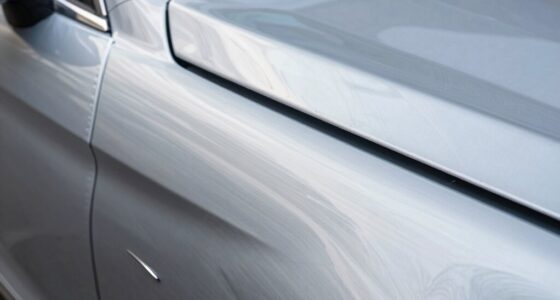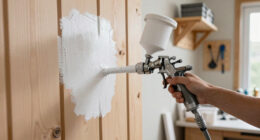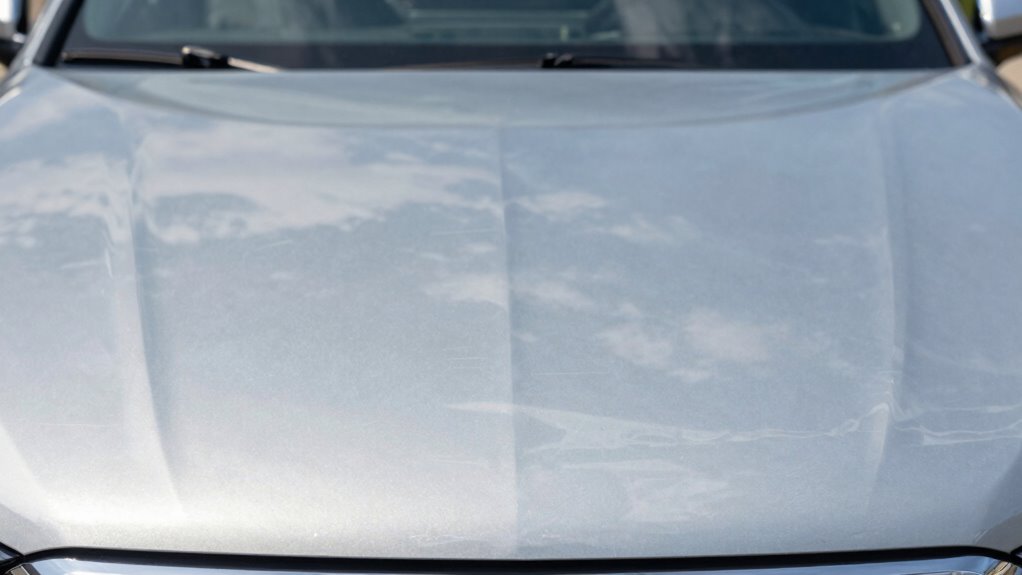

Clear coats can go cloudy mainly because of UV damage and improper application. Prolonged sun exposure breaks down the clear coat, causing haziness and dullness over time. To prevent this, park in shaded areas, use UV-protective waxes, and apply thin, even coats of high-quality material following proper techniques. Good surface prep also helps. If you want to discover more about keeping your clear coat clear and shiny, keep going—there’s much more to learn.
Key Takeaways
- UV damage from prolonged sunlight exposure causes chemical breakdown, leading to hazy and dull clear coats.
- Poor application techniques or uneven coating can trap moisture and air bubbles, resulting in cloudiness.
- Regular washing without proper surface preparation can degrade the clear coat over time.
- Lack of UV-protective wax or coatings accelerates the hazing and deterioration process.
- Proper surface prep, thin multiple coats, and protective measures help prevent cloudiness and extend clear coat lifespan.
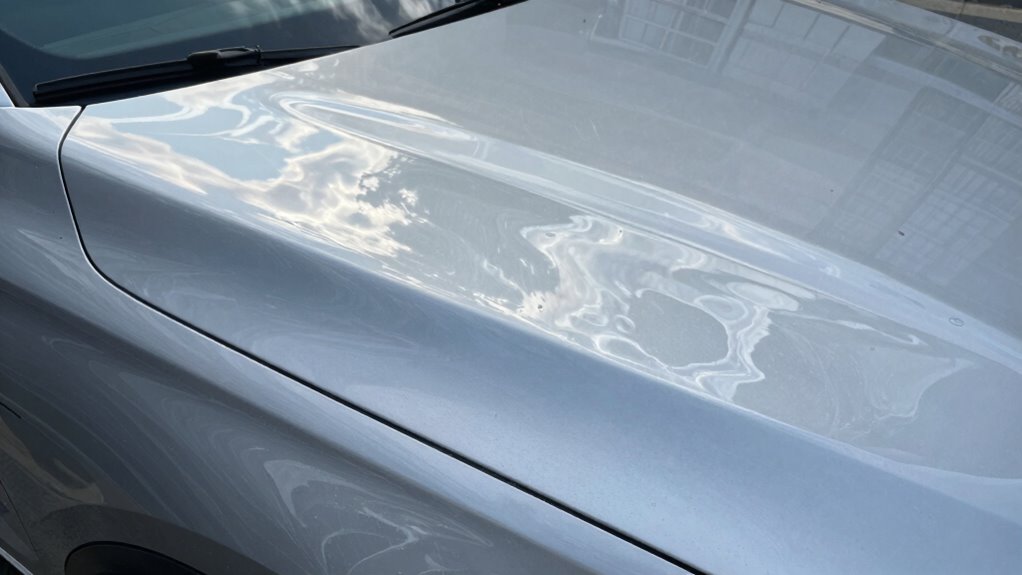
If you’ve noticed your clear coat turning cloudy, you’re not imagining things. This common issue happens because the protective layer on your vehicle’s paint has started to degrade, and understanding why can help you take proper steps to prevent it. One of the main culprits behind a cloudy appearance is UV damage. Over time, prolonged exposure to sunlight causes ultraviolet rays to break down the clear coat’s chemical structure, leading to a hazy, dull look. This damage isn’t always obvious at first but gradually worsens, leaving your vehicle looking aged and neglected. To combat UV damage, consider parking in shaded areas or using a car cover when you’re not driving. Regular waxing with a UV-protective product creates an extra barrier that shields your clear coat from harmful rays, extending its clarity and life.
Another common reason your clear coat becomes cloudy is improper application during the painting or detailing process. If the clear coat isn’t applied correctly—perhaps it’s too thick, uneven, or not cured fully—cloudiness can develop prematurely. Poor application can trap moisture or air bubbles beneath the surface, which eventually causes a hazy appearance. It’s essential that professionals or DIY enthusiasts follow manufacturer instructions precisely, ensuring the right thickness and curing times. Using high-quality materials and applying in a dust-free environment minimizes the risk of debris or imperfections settling into the finish. Additionally, multiple thin coats are preferable over one thick coat, as they allow for better adhesion and a more uniform finish. Proper preparation of the surface before application—such as thorough cleaning, sanding, and priming—also plays a crucial role in ensuring a smooth, clear finish. Moreover, innovative European cloud servers are contributing to sustainable and secure solutions that can help optimize vehicle maintenance data and scheduling, ensuring your car stays in top shape and prolongs the life of its clear coat.

Meguiar's Deep Crystal Carnauba Wax, High-Grade Carnauba Liquid Car Wax for Long-Lasting Protection, Creates a Brilliant Shine and Gloss, Blocks UV Rays, Ideal Step for After Polishing, 16 Oz
SHINE AND GLOSS: After you’re done washing and polishing your car, this liquid carnauba wax locks in your…
As an affiliate, we earn on qualifying purchases.
As an affiliate, we earn on qualifying purchases.
Frequently Asked Questions
Can Environmental Factors Cause Clear Coat Cloudiness?
Environmental factors definitely cause clear coat cloudiness. Exposure to environmental damage like UV rays, rain, and dirt can break down the coating over time. Chemical exposure from pollutants or harsh cleaners also accelerates this process, leading to cloudiness. To prevent it, regularly wash your vehicle, park in shaded areas, and apply a protective wax or sealant. Keeping your clear coat protected from environmental damage and chemicals helps maintain its clarity and longevity.
How Long Does a Typical Clear Coat Last Before Clouding?
Your clear coat typically lasts around 2 to 5 years before clouding, but this depends on factors like paint adhesion and UV degradation. If your vehicle’s exposed to harsh sunlight or poor paint adhesion, the clear coat may degrade faster, leading to cloudiness. Regular washing, waxing, and parking in shaded areas help extend its lifespan, preventing UV damage and maintaining clarity longer.
Are There Specific Brands More Resistant to Clouding?
You’ll find that brands like PPG and Sherwin-Williams often offer clear coats with better resistance to clouding due to their superior product durability. When comparing brands, look for those with advanced formulations designed to withstand UV rays and environmental stress. These brands tend to last longer without clouding, so investing in a reputable product can save you time and money on reapplications, ensuring your finish stays clear and vibrant longer.
Does Cleaning With Certain Products Worsen Cloudiness?
They say prevention is better than cure, and that’s true for clear coats too. Using harsh cleaning products can worsen cloudiness because certain chemicals trigger reactions with the clear coat, especially when UV damage is already present. Stick to gentle, pH-neutral cleaners to avoid accelerating chemical reactions that cause cloudiness. Regular, careful cleaning helps maintain clarity and prevents the buildup of substances that could worsen UV damage over time.
Can Professional Polishing Restore a Cloudy Clear Coat?
Yes, professional polishing can restore a cloudy clear coat if done correctly. You should focus on proper surface preparation before polishing, removing any oxidation or contaminants. Using the right polishing techniques—like gentle buffing and appropriate compounds—helps eliminate cloudiness without damaging the finish. A skilled detailer will assess your clear coat’s condition, then carefully polish to restore clarity and shine, making your vehicle look new again.
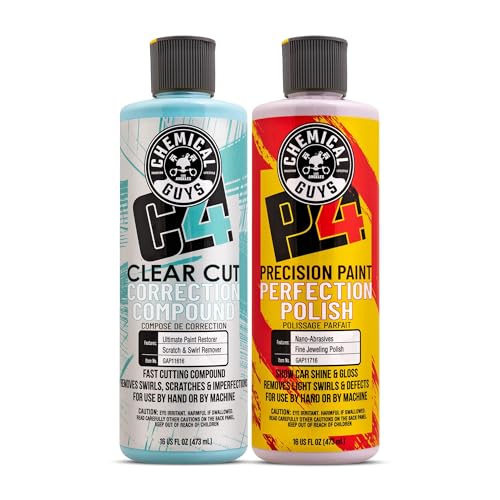
Chemical Guys C4 & P4 Clear Cut Correction Compound and Precision Paint Perfection Polish Combo – Removes Scratches, Swirls, Towel Marks, and Etching, Restores Gloss, Polishing Kit – 2 x 16 oz
C4 & P4 PAINT CORRECTION COMBO (GAP40016) – Complete 2-step Chemical Guys polishing kit includes C4 Clear Cut…
As an affiliate, we earn on qualifying purchases.
As an affiliate, we earn on qualifying purchases.
Conclusion
Next time your clear coat turns cloudy, picture a glass fogging up in the cold—it’s a sign moisture or impurities have crept in. But with careful prep and patience, you can keep that shimmering surface crystal clear, like a mirror reflecting sunlight. Think of your paint as a fresh lake’s surface—smooth, pristine, and inviting. Preventing cloudiness keeps your project shining brightly, revealing its true beauty beneath a flawless, glassy finish.

P & S PROFESSIONAL DETAIL PRODUCTS Paint Surface Prep for Coatings, Removes Waxes & Silicones, Ensures Bonding Use After Paint Correction – 1 Pint, Spray
Ultimate Surface Prep: This advanced formula eliminates waxes, silicones, and other contaminants that can interfere with coating adhesion….
As an affiliate, we earn on qualifying purchases.
As an affiliate, we earn on qualifying purchases.

SprayMax 2K Glamour High Gloss Clear Coat | 2K Automotive Clear Coat Spray Paint | High Gloss Finishing Spray | UV-Resistant, Scratch & Gasoline Resistant | Professional Grade 11.8 oz
PREMIUM CLEAR FINISH: Professional-grade polyurethane automotive spray paint designed for automotive refinishing and new paint jobs — delivers…
As an affiliate, we earn on qualifying purchases.
As an affiliate, we earn on qualifying purchases.