To determine the right mask or respirator, consider the environment and specific hazards you’ll encounter. For airborne particles like dust or mold, an N95 or similar particulate mask with certification benefits you. If you’re exposed to chemicals or fumes, look for chemical cartridges suited to those hazards. Fit is essential—ensure the mask properly seals around your face for maximum protection. Knowing these details helps you choose confidently, and if you keep going, you’ll discover how to select the best gear for your needs.
Key Takeaways
- Assess your environment and hazards to determine the appropriate mask or respirator type needed.
- Verify that the mask or respirator has proper certification marks like NIOSH or CE for safety compliance.
- Choose a filter or cartridge suitable for specific risks such as dust, chemical vapors, or airborne pathogens.
- Ensure the mask fits snugly and comfortably, following proper fitting and fit-testing procedures.
- Use the correct protective gear consistently for effective health and safety protection.
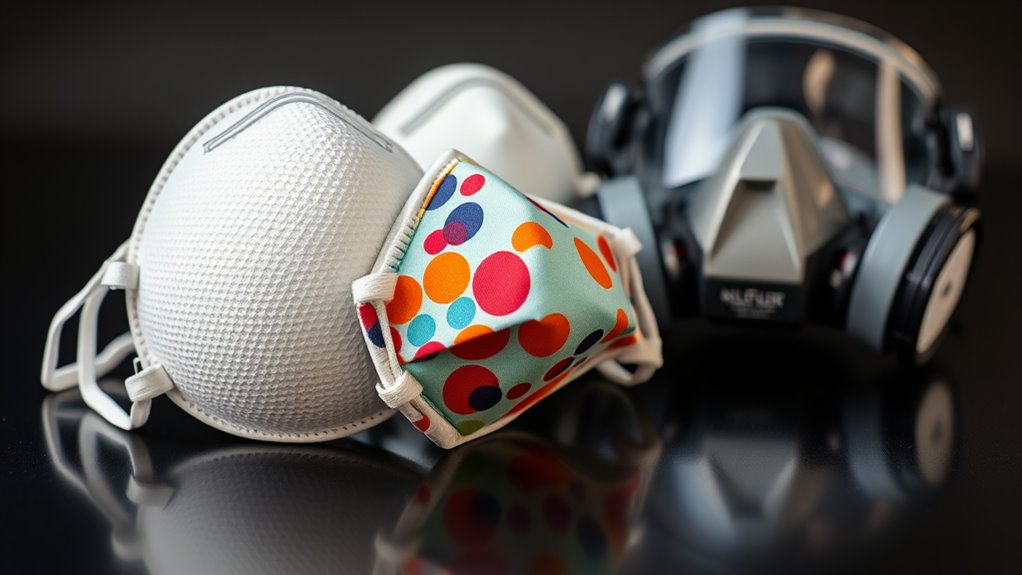
Are masks and respirators truly necessary for your safety? The answer depends on your environment and the risks you’ll face. Choosing the right protective gear isn’t just about picking something that looks good; it’s about understanding the different filter types and certification standards that guarantee effectiveness. Not all masks or respirators are created equal, and knowing which ones meet safety requirements helps you make an informed decision.
Filter types are a crucial factor in determining how well a mask or respirator will protect you. Different filters target specific particles, so it’s essential to match the filter type to your needs. For instance, particulate filters like N95s are designed to block at least 95% of airborne particles, including dust, bacteria, and viruses. If you’re working in a dusty environment or dealing with airborne pathogens, a mask with a high-efficiency particulate air (HEPA) filter might be necessary. Conversely, for paint fumes or chemical vapors, masks equipped with chemical cartridges are more appropriate. Understanding these filter types helps you select a mask that provides the right level of protection against the hazards you’ll encounter.
Matching filter types to hazards ensures effective respiratory protection.
Certification standards are equally important because they verify that a mask or respirator meets established safety benchmarks. When shopping for protective gear, look for certification marks like NIOSH (National Institute for Occupational Safety and Health) in the United States or CE marking in Europe. These certifications indicate that the mask or respirator has undergone rigorous testing and complies with recognized safety standards. For example, N95 respirators are certified by NIOSH to filter at least 95% of airborne particles, giving you confidence in their protective capabilities. Cheaper or unmarked masks might not meet these standards, leaving you vulnerable to exposure. Always check the certification standards to ensure the gear you choose is reliable.
Additionally, proper fit is essential. Even the best mask or respirator won’t protect you if it doesn’t fit correctly. Make sure to follow fitting instructions carefully, and consider fit-testing if available. A well-fitting mask combined with the correct filter type and certified standards ensures maximum protection. Choosing the right mask involves considering the environment, the hazards, and verifying that the equipment is certified and properly fitted. Remember, the right equipment isn’t just a matter of comfort; it’s about your safety and health.
Frequently Asked Questions
Can I Reuse My Mask or Respirator Safely?
Yes, you can reuse your mask or respirator safely if it’s a reusable mask option. Make sure to follow proper mask maintenance tips, like washing cloth masks regularly and inspecting for damage. For respirators, clean and disinfect as recommended, and replace filters as needed. Always store your mask properly between uses to prevent contamination. Reusing masks safely helps maintain their effectiveness and ensures your protection remains reliable.
What Are the Differences Between N95 and KN95 Masks?
You might think N95 and KN95 masks are the same, but they differ in mask material and how long they last. N95 masks are certified in the U.S., made with sturdy, multilayer filters that provide reliable protection. KN95 masks, often made with similar filter materials, are certified in China and may have slight differences in fit. Remember, both have limited mask lifespan, so replace them when they become damp, soiled, or damaged.
How Do I Ensure a Proper Fit for My Mask?
To guarantee a proper fit, start with accurate mask sizing by trying different sizes until you find one that feels comfortable and snug. Perform fit testing by checking for gaps around the edges; the mask should seal tightly without causing discomfort. Adjust the straps to achieve a secure fit, making sure the mask molds to your face. A proper fit maximizes protection and minimizes air leaks.
Are Cloth Masks Effective Against Airborne Particles?
Cloth masks are like a net cast in a pond—they catch some airborne particles but aren’t foolproof. The effectiveness depends on the mask material and its filtration efficiency; tightly woven fabrics like cotton offer better protection than loose weaves. While they help reduce droplet spread, they don’t fully block smaller airborne particles. Use them as a barrier, but for higher protection, consider masks with higher filtration efficiency or respirators.
What Certifications Should I Look for on Masks?
You should look for masks with clear mask standards and certification labels like NIOSH, N95, or KN95. These labels indicate the mask meets safety and filtration requirements. verify the certification is recent and from reputable agencies. Avoid masks without verified standards, as they might not offer adequate protection. By choosing masks with proper certification labels, you ensure you’re using reliable gear that effectively filters airborne particles.
Conclusion
So, when choosing a mask or respirator, trust the facts. While some believe all masks offer equal protection, research shows N95 respirators provide superior filtration against airborne particles. Don’t fall for myths—select the right gear based on your risk level. Proper protection keeps you safer and healthier. Remember, understanding the science behind masks helps you make smarter choices, ensuring you’re genuinely protected when it matters most.

Franz came aboard the Paint Sprayer Zone team with a background in both journalism and home renovation. His articulate writing style, combined with a passion for DIY projects, makes him an invaluable asset. Franz has a knack for breaking down technical jargon into easy-to-understand content, ensuring that even the most novice of readers can grasp the complexities of paint sprayers.