
To pick the right glove material for solvents, understand that many materials like natural rubber or neoprene can degrade quickly, risking exposure. Check compatibility charts from manufacturers or safety organizations and test glove samples with your specific solvents under controlled conditions. Materials like nitrile tend to offer better resistance. Ensuring the gloves meet standards like EN 374 helps confirm their effectiveness. Continue exploring to learn how proper selection and maintenance can keep you safer.

Get business pricing on tools and workshop supplies
- Business-only prices and quantity discounts
- Tax-exempt purchasing
- Multiple users, one account, clear invoices
Key Takeaways
- Consult manufacturer compatibility charts and standards like EN 374 and ASTM D6319 for suitable glove materials.
- Choose synthetic materials such as nitrile or neoprene, which resist most solvents better than natural rubber.
- Conduct controlled testing of glove samples with specific solvents to verify material resistance before use.
- Regularly inspect gloves for signs of wear, tears, or degradation, and replace them promptly to prevent failure.
- Consider environmental factors and chemical properties to select gloves with appropriate durability and resistance.
Nitrile chemical resistant gloves
As an affiliate, we earn on qualifying purchases.
As an affiliate, we earn on qualifying purchases.
Why Do Gloves Fail Against Solvents and What Are the Safety Risks?

Gloves often fail against solvents because many materials don’t provide a perfect barrier, allowing the chemicals to seep through quickly. This failure is often due to chemical degradation, where the solvent weakens or breaks down the glove material over time. High glove porosity also plays a role, as tiny pores or imperfections in the material can allow solvents to pass through more easily. When this happens, you risk skin exposure to hazardous chemicals, which can lead to burns, irritation, or more severe health issues. The safety risks become even greater if the glove material isn’t resistant to the specific solvent you’re handling. Understanding these factors helps you choose better gloves to protect yourself effectively against solvent-related hazards. Proper glove selection is crucial to ensure safety when working with challenging chemicals. Additionally, selecting gloves made from chemical-resistant materials can significantly reduce the risk of failure and improve overall safety.
How Can I Determine Which Gloves Are Compatible With My Solvent?

To determine which gloves are compatible with your solvent, start by checking the material compatibility charts provided by glove manufacturers or safety organizations. These charts offer essential guidance on chemical compatibility, helping you identify which glove materials resist your specific solvent. Remember, not all gloves are equally resistant, so it’s important to rely on tested data. Conduct glove testing whenever possible—this involves exposing sample gloves to your solvent under controlled conditions to observe any degradation or failure. By combining manufacturer charts with glove testing results, you ensure you select the right gloves for your application, reducing the risk of chemical breakthrough. Accurate assessment of chemical compatibility is key to maintaining safety and preventing glove failure.
What Glove Materials Are Most Vulnerable to Chemical Breakdown?
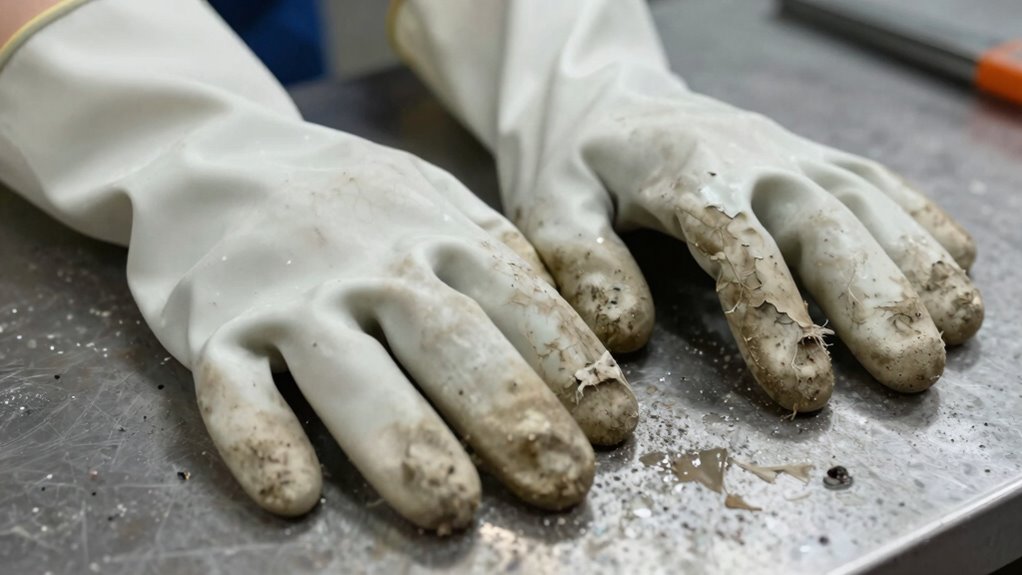
Certain glove materials are more prone to chemical breakdown than others, making it essential to understand their vulnerabilities. Materials like natural rubber, neoprene, and polyvinyl chloride (PVC) are particularly susceptible to chemical degradation when exposed to solvents. These vulnerabilities can lead to rapid material failure, risking exposure. Here’s a quick overview:
| Material | Vulnerability to Chemical Breakdown | Commonly Affected Solvents |
|---|---|---|
| Natural Rubber | High | Aromatic hydrocarbons |
| Neoprene | Moderate | Ketones, chlorinated solvents |
| PVC | High | Aromatic hydrocarbons |
| Nitrile | Low | Most solvents, including oils |
| Vinyl | Moderate | Alcohols, esters |
Knowing material vulnerability helps you select gloves that resist chemical degradation, ensuring safety and durability. Being aware of chemical compatibility can help prevent accidents and extend glove lifespan. Additionally, understanding material properties can assist in making better choices for various chemical exposures.
What Factors Should I Consider When Choosing Chemical-Resistant Gloves?

When selecting chemical-resistant gloves, you need to consider material compatibility to ensure the glove can withstand the specific solvents you’ll encounter. Thickness impacts both protection level and dexterity, so choose what fits your task’s precision needs. Balancing these factors helps you pick gloves that keep you safe without sacrificing mobility. Additionally, understanding color accuracy in materials can influence the effectiveness of the gloves in different environments.
Material Compatibility Considerations
Choosing the right chemical-resistant gloves requires careful deliberation of material compatibility, as not all glove materials withstand every solvent or chemical. To ensure effective protection, focus on the chemical resistance and material durability of the gloves. Essential oils for skin health are generally not suitable for direct contact with certain glove materials, highlighting the importance of verifying chemical compatibility. Here are key factors to consider: 1. Chemical Compatibility: Verify the glove material’s resistance to the specific chemicals you’ll handle. 2. Concentration and Duration: Higher concentrations or prolonged exposure can compromise material durability. 3. Environmental Conditions: Temperature and exposure to UV or ozone may affect the glove’s resistance and lifespan.
Thickness and Dexterity Needs
Selecting the right gloves involves balancing thickness and dexterity to suit your specific tasks. Thicker gloves generally provide better chemical resistance but can limit your dexterity, making fine tasks more difficult. If your work requires precision, such as handling small components or performing detailed tasks, choose gloves with less thickness to enhance mobility. Conversely, tasks with high chemical exposure or requiring durability benefit from thicker gloves, even if it means sacrificing some dexterity. Consider your dexterity needs carefully—if you need to manipulate objects delicately, opt for gloves designed for flexibility. Always test the fit and feel before committing, ensuring the gloves offer the right combination of protection and ease of movement. Finding this balance helps prevent accidents and maintains efficiency.
Which Materials Offer Reliable Protection Against Common Solvents?

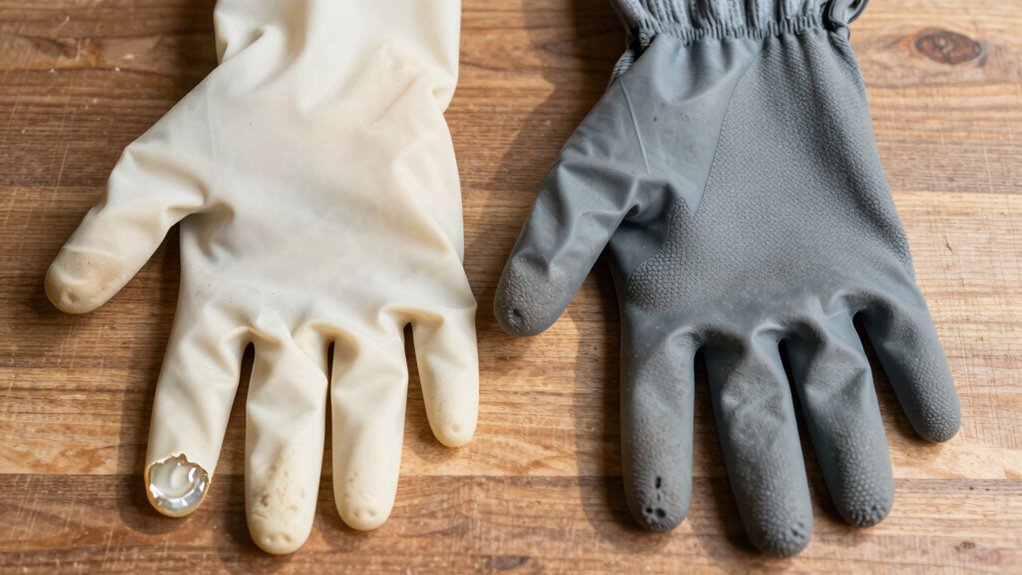
Certain materials provide more reliable protection against common solvents, but it’s vital to understand their limitations. Natural rubbers, like latex, offer good resistance to many solvents but can degrade with prolonged exposure. Synthetic fibers, such as nitrile or neoprene, often outperform natural rubbers in chemical resistance and durability. To choose wisely, consider these points:
Synthetic materials like nitrile and neoprene offer superior chemical resistance over natural rubbers, but understanding their limitations is essential.
- Nitrile gloves are resistant to oils, acids, and many solvents, making them a versatile choice.
- Neoprene provides reliable barrier protection against chlorinated solvents and ketones.
- Natural rubbers excel against water-based solutions but may fail in stronger solvents.
How Can I Verify That My Gloves Meet Chemical Resistance Standards?
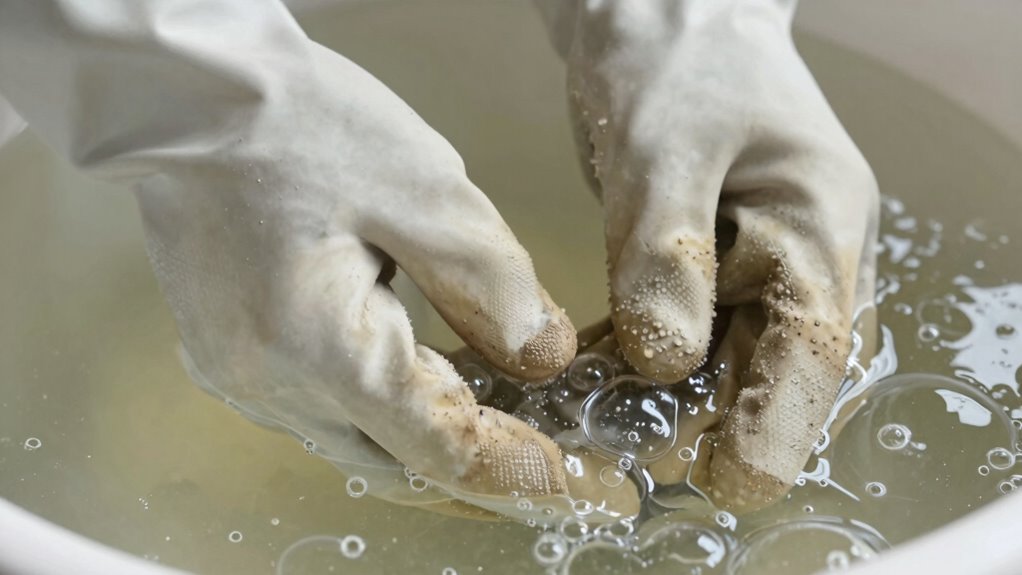
To guarantee your gloves provide adequate chemical resistance, you should verify that they meet established standards through proper testing and certification. Chemical resistance testing involves exposing gloves to specific chemicals under controlled conditions to assess their durability and protective capabilities. Look for gloves that conform to recognized glove certification standards, such as EN 374, ASTM D6319, or others relevant to your industry. These standards ensure the gloves have undergone rigorous evaluation and meet minimum performance criteria. Always check product labels, datasheets, or certification documents to confirm compliance. Valid certification indicates the gloves have been tested appropriately and are suitable for handling particular chemicals. Additionally, understanding the thermal behavior of glove materials can help you select gloves that maintain integrity under varying conditions. Being aware of the material composition can also provide insights into their chemical resistance properties. Considering the testing methods used during certification can further ensure the gloves’ reliability in demanding environments. Familiarity with chemical resistance standards can help you make more informed decisions and select the most appropriate gloves for your specific needs. Verifying these details helps you select reliable gloves, reducing the risk of failure and ensuring your safety during chemical handling.
How Should I Maintain and Inspect Gloves for Safe Chemical Handling?

After verifying that your gloves meet the appropriate chemical resistance standards, maintaining and inspecting them regularly becomes essential for ongoing protection. Consistent inspection routines help identify signs of wear, cracks, or degradation that could compromise safety. To ensure your gloves stay effective, follow these steps:
- Conduct visual checks before and after each use for tears or damage.
- Clean gloves properly and store them using storage best practices—keep them in a cool, dry place away from sunlight and chemicals.
- Replace gloves immediately if you notice any deterioration or after a set period, even if no visible damage exists.
- Proper storage conditions help preserve the glove material’s chemical resistance, ensuring continued safety during handling. Additionally, familiarity with the material properties can guide timely replacements and proper maintenance routines. Regular testing and inspection procedures are also recommended to maintain the integrity of protective gloves over time, especially considering environmental factors that may affect material durability.
Frequently Asked Questions
Are There Gloves Suitable for Multiple Solvent Types Simultaneously?
Yes, you can find gloves suitable for multiple solvent types simultaneously by using layered glove systems designed for multisolid compatibility. These systems combine different materials to provide broader protection against various solvents, reducing the risk of failure. When selecting, guarantee the layers are compatible with the specific chemicals you’re handling. This approach offers enhanced durability and flexibility, making it easier to work safely across diverse solvent environments.
How Do Temperature Variations Affect Glove Chemical Resistance?
Ever wondered how temperature swings impact your gloves’ chemical resistance? As temperatures rise or fall, thermal expansion causes gloves to stretch or contract, leading to permeability changes. These shifts can weaken barriers, making gloves less effective against chemicals. You need gloves designed to withstand temperature variations, maintaining integrity despite thermal expansion. Choosing materials with stable resistance across temperature ranges guarantees your hands stay protected, no matter the conditions.
Can Gloves Be Repaired if They Are Damaged During Use?
If your gloves get damaged during use, they generally can’t be repaired effectively. First, perform damage assessment methods like visual inspection or flexibility tests to determine the extent of the harm. For minor tears or punctures, consider glove repair options such as patching with compatible materials, but for significant damage, it’s safer to replace them entirely. Always prioritize your safety by ensuring your gloves are intact before handling hazardous substances.
What Is the Typical Lifespan of Chemical-Resistant Gloves?
Think of your chemical-resistant gloves as warriors on the front line— their lifespan depends on care and conditions. Typically, you get 3 to 6 months of protection, but improper glove storage accelerates material deterioration, shortening their effectiveness. Check regularly for signs of wear, and replace them promptly. By storing gloves in cool, dry places and inspecting them often, you guarantee they remain your first line of defense longer.
Are There Eco-Friendly or Biodegradable Glove Options Available?
Yes, eco-friendly options like biodegradable gloves are accessible. You can choose gloves made from biodegradable materials such as plant-based polymers or natural latex, which break down more quickly in the environment. These options offer effective protection while reducing environmental impact. When selecting gloves, look for certifications or labels indicating biodegradability to ensure you’re choosing truly eco-friendly products that align with sustainable practices.
Conclusion
Choosing the right gloves is like finding the perfect shield to guard you in a storm—essential and lifesaving. By understanding how gloves fail, selecting materials wisely, and regularly inspecting them, you guarantee your safety against hazardous solvents. Always prioritize chemical resistance standards to stay protected. Remember, your gloves are your first line of defense—treat them with care, and they’ll serve you like a sturdy armor in a battle for safety.
Fall yard work Picks
leaf blowers
As an affiliate, we earn on qualifying purchases.