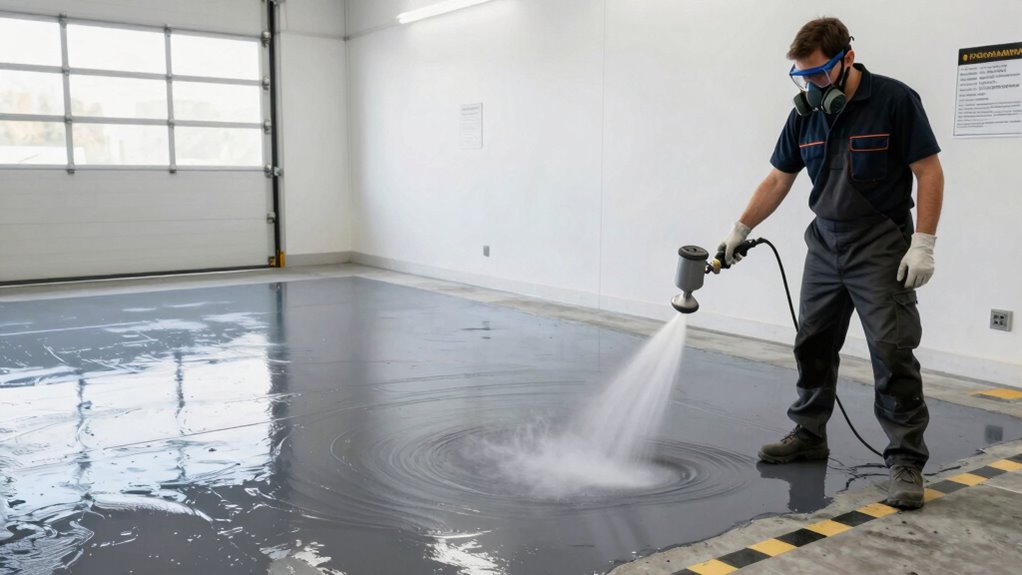
To guarantee safety and a durable epoxy floor, always maintain proper ventilation during spraying and curing to disperse harmful fumes. Wear the right protective gear, including respirators, goggles, and gloves, to prevent injuries. Control environmental conditions, like temperature and humidity, to avoid curing issues such as bubbles and cracks. Don’t rush the curing process—allow enough time for it to fully set. For essential tips on avoiding common mistakes, explore further to achieve the best results.

Get business pricing on tools and workshop supplies
- Business-only prices and quantity discounts
- Tax-exempt purchasing
- Multiple users, one account, clear invoices
Key Takeaways
- Always ensure proper ventilation during and after spraying to disperse fumes and prevent inhalation hazards.
- Wear appropriate PPE, including respirators, goggles, and gloves, to protect against chemical exposure and splashes.
- Maintain optimal environmental conditions, such as temperature and humidity, to ensure proper curing and prevent defects.
- Follow the manufacturer’s recommended cure times without rushing to achieve maximum epoxy durability.
- Avoid skipping ventilation and safety steps, as neglecting them can compromise safety and result in poor finish quality.

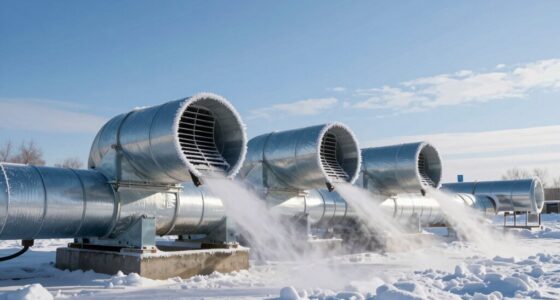
Epoxy floor spraying is an efficient way to achieve a durable, high-quality finish on concrete surfaces. However, to guarantee safety and proper curing, you need to pay close attention to certain details, especially ventilation guidelines and protective gear selection. Good ventilation is vital during and after application to prevent the buildup of harmful fumes. Make sure your workspace is well-ventilated by opening windows, using exhaust fans, or setting up industrial ventilation systems. This airflow helps disperse volatile organic compounds (VOCs) and reduces the risk of inhaling toxic fumes, which can cause headaches, dizziness, or respiratory issues. Failing to follow ventilation guidelines can lead to unsafe working conditions and compromise your health, so never skip this step.
Ensure proper ventilation during epoxy flooring to safely disperse fumes and protect your health.
When it comes to protective gear, your selection should be thorough and appropriate for the task. At a minimum, you should wear a high-quality respirator or mask rated for chemical fumes, along with safety goggles to shield your eyes from splashes. Gloves made of chemical-resistant materials are essential to protect your skin from epoxy contact, which can cause irritation or allergic reactions. Consider wearing long sleeves and pants to minimize skin exposure, especially if you’re working in a confined space where fumes can linger. Proper protective gear not only keeps you safe but also helps you work more efficiently because you won’t be distracted by discomfort or worry about accidental exposure.
In addition to ventilation and gear, pay attention to the curing environment. Temperature and humidity levels impact the curing time of epoxy coatings. Keep the workspace climate-controlled, if possible, to avoid rapid or uneven curing. Excessive heat can cause the epoxy to cure too quickly, leading to bubbles or cracks, while cold temperatures slow down the curing process, risking incomplete bonding. Humidity can also interfere with curing, so try to keep the environment dry and within the manufacturer’s recommended conditions. Material properties play a crucial role in how epoxy reacts to environmental factors during curing.
Lastly, don’t rush the curing process. Even if the surface feels dry to the touch, the epoxy needs sufficient time to fully cure to reach maximum durability. Rushing this step can compromise the finish and reduce longevity. Follow the manufacturer’s recommended cure times, and avoid walking or placing objects on the surface until it’s fully cured. Proper ventilation, protective gear, and environmental control are essential to avoid safety mishaps and guarantee your epoxy floor finishes perfectly, lasting for years to come.
As an affiliate, we earn on qualifying purchases.
Frequently Asked Questions
What Are the Environmental Impacts of Epoxy Floor Spraying?
You should be aware that epoxy floor spraying can have environmental concerns, such as VOC emissions and chemical runoff that harm air and water quality. To reduce your impact, consider eco-friendly alternatives like water-based epoxy or low-VOC products. These options help protect the environment while still providing durable flooring. Always follow proper application and disposal procedures to minimize your ecological footprint and promote sustainability in your project.
How Does Temperature Affect Epoxy Curing Times?
You might think that temperature doesn’t impact epoxy curing, but it definitely does. Warmer temperatures speed up curing, while cooler temperatures cause curing delays. Proper temperature regulation is vital to avoid uneven curing or extended wait times. If you ignore temperature effects, you risk compromising the epoxy’s strength and finish. Always guarantee the environment stays within the recommended temperature range to achieve ideal curing times and a durable, beautiful surface.
Are There Specific Safety Gear Recommendations for Spraying Epoxy?
You should wear protective equipment like gloves, goggles, and a respirator mask to shield yourself from fumes and skin contact. Make sure your workspace has proper ventilation systems running to disperse harmful vapors effectively. Always follow safety guidelines, and don’t skip protective gear, as epoxy fumes can be hazardous. Good ventilation combined with protective equipment keeps you safe during spraying and helps maintain a healthier environment.
Can Epoxy Floors Be Painted Over After Curing?
You can paint over epoxy floors once they’re fully cured, but don’t just jump in blindly—think of it as a head start, not a shortcut. To guarantee good paint adhesion, you might need to remove the epoxy first or at least sand its surface. Proper preparation and cleaning are key to a smooth finish. Rushing the process can lead to peeling or uneven paint, so take your time!
What Are Common Signs of Improper Epoxy Curing?
You’ll notice signs of improper epoxy curing if you see surface imperfections like bubbling, cracking, or peeling. The curing process indicators also include a soft or tacky feel long after the recommended cure time, or inconsistent color and texture. These issues suggest the epoxy didn’t properly harden, which can compromise durability. Always follow manufacturer instructions closely to guarantee your epoxy cures correctly and avoids these common curing problems.
Conclusion
So, next time you rush through epoxy floor spraying, remember that safety and proper curing are no joke—unless you enjoy peeling, fumes, or a sticky mess to redo. It’s ironic how neglecting simple steps can turn a sleek floor into a disaster you’ll wish you’d avoided. Take your time, follow the guidelines, and you’ll end up with a durable, beautiful finish. After all, isn’t it worth a little patience to skip the headache later?
Halloween Picks
halloween
As an affiliate, we earn on qualifying purchases.