Yes, you should strain paint before spraying to guarantee a smooth, clog-free finish and protect your equipment from debris. Straining removes lumps, dried paint chunks, and particles that can block nozzles or cause sputtering. It also helps achieve the right paint consistency for even coverage. Spending a few extra minutes on this step can save you time, effort, and costly repairs later on. Keep going to discover more tips for perfect spray painting results.
Key Takeaways
- Straining paint removes lumps and debris, preventing nozzle clogs during spraying.
- It helps achieve a smooth, even finish by ensuring proper paint consistency.
- Straining reduces equipment wear and the need for repairs caused by debris.
- It saves time by minimizing interruptions due to clogging or sputtering.
- Properly strained paint contributes to a professional, high-quality spray finish.
Have you ever noticed paint splattering or clogging your spray gun? If so, you’re not alone. These issues often stem from problems with paint consistency or debris that clogs the nozzle. When paint isn’t properly strained before spraying, it can lead to uneven application, drips, or even damage to your equipment. That’s why many professionals and DIY enthusiasts alike recommend straining paint beforehand. It’s a simple step that can save you time and frustration and assure a smooth, flawless finish.
Straining paint prevents clogs, ensures smooth application, and protects your spray gun for a flawless finish.
The key to a successful spray job starts with the right paint consistency. If the paint is too thick, it’s more likely to clog the nozzle, causing interruptions and uneven spraying. On the other hand, if it’s too thin, it can create drips or an inconsistent coat. Straining helps you achieve that perfect balance by removing lumps, dried paint chunks, or other unwanted debris that might have settled at the bottom of the container. When you strain paint, you’re effectively filtering out particles that could block or damage your spray gun, leading to a more consistent spray pattern and a cleaner finish. Additionally, proper preparation can prevent equipment wear and prolong the lifespan of your sprayer.
Nozzle clogging is a common headache when spraying paint, especially if the paint contains impurities or has not been properly prepared. When debris gets stuck in the nozzle, it interrupts the flow of paint, resulting in sputtering or uneven coverage. Regularly straining your paint minimizes this risk by catching these particles before they reach the spray gun. This simple step can prevent costly repairs or the need to stop mid-project to clear a clogged nozzle. It also helps maintain the proper spray pattern, giving you better control and a professional-looking finish.
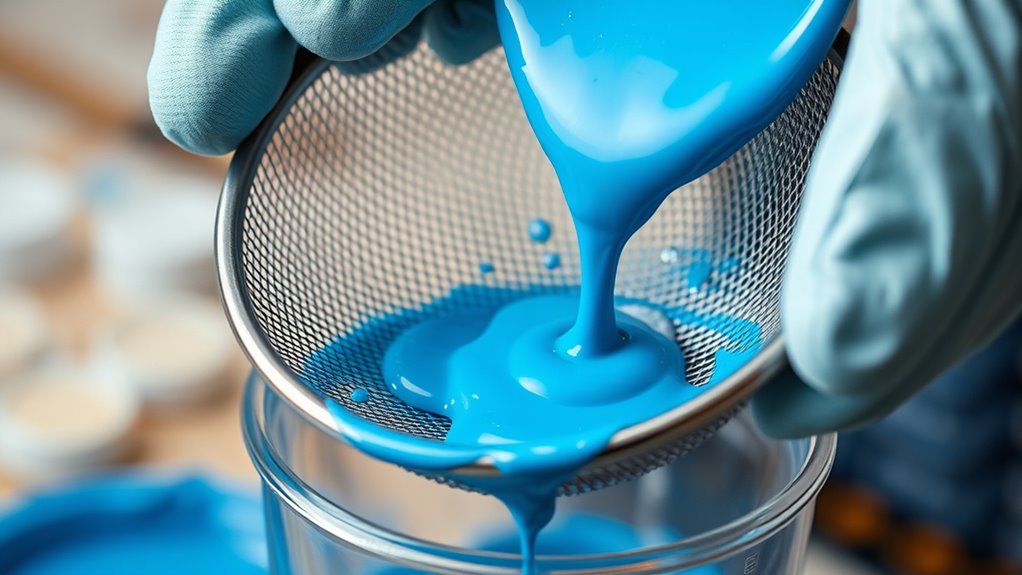
To strain your paint effectively, use a fine mesh strainer or a paint filter. Pour the paint slowly through the strainer into your spray container, making sure to catch any lumps or debris. For best results, do this right before pouring the paint into your sprayer’s reservoir. This way, you’ll remove any potential blockages early on. Remember, taking the extra minute or two to strain your paint can markedly improve your spraying experience, reducing the chances of nozzle clogging and ensuring your paint flows smoothly. Ultimately, it’s a small but vital step that makes a big difference in achieving a flawless, professional finish.
As an affiliate, we earn on qualifying purchases.
Frequently Asked Questions
Can I Use a Paint Strainer Multiple Times?
Yes, you can use a paint strainer multiple times, but it depends on its condition. If the strainer remains durable and free of tears, you can reuse it to maintain proper paint consistency. However, if it becomes clogged or damaged, it’s best to replace it to guarantee smooth application. Reusing strainers saves money, but always check for wear to avoid compromised results or clogged spray tips.
What Types of Paint Require Straining Before Spraying?
You should filter paint before spraying if its consistency is thick or contains lumps, which can clog your spray gun. Thin paints usually don’t need straining, but thicker paints benefit from a fine strain mesh type to remove debris and ensure smooth application. Using the right strain mesh type helps prevent clogging and achieves a professional finish, especially with latex, oil-based, or textured paints.
How Does Straining Paint Affect Drying Time?
Straining paint can actually improve drying time by optimizing paint viscosity, leading to a more uniform application. When you strain paint, you remove lumps and debris, which helps achieve consistent drying. Without straining, thick or uneven paint may cause longer drying times and uneven finishes. So, yes, straining paint before spraying promotes better drying consistency, ensuring your project dries evenly and looks professional.
Is It Necessary to Strain Paint for Small Projects?
For small projects, straining paint isn’t strictly necessary, but it can improve your results. It helps maintain proper paint consistency and ensures a smooth application. Straining removes lumps or debris that might clog your spray nozzle or cause uneven coverage. Good surface preparation is essential, so taking this extra step can lead to a cleaner finish and fewer issues during spraying, especially when working on detailed or delicate surfaces.
What Tools Are Best for Straining Paint Efficiently?
You should use a fine mesh strainer or paint filter to efficiently strain paint. These tools help improve paint consistency by removing lumps and debris, ensuring smooth spraying. Opt for stainless steel or nylon strainer materials, as they are durable and easy to clean. Before spraying, pour paint through the strainer into a clean container, giving you a consistent, clog-free application and a professional finish.
Conclusion
Straining your paint before spraying is like filtering out the rough edges of a rough diamond, revealing its true sparkle. It guarantees smooth, flawless finishes and prevents clogs that can turn your project into a splattered mess. Think of it as giving your paint a gentle sieve, letting only the purest, most refined liquid flow through. So, yes—strain your paint and watch your masterpiece shine without unwanted bumps or bumps in the road.