
To spray paint fireplaces and mantels, start by thoroughly cleaning and lightly sanding the surface to guarantee proper adhesion. Use a rust-inhibiting primer for metal or a sealing primer for wood, applying thin, even coats with steady, overlapping strokes and allowing each layer to dry completely. Proper surface prep and choosing the correct primer help achieve a smooth, durable finish. Keep practicing the right spray techniques, and you’ll be surprised at how professional your results can look.
Key Takeaways
- Clean and lightly sand the fireplace and mantel surfaces to ensure proper primer adhesion.
- Choose a heat-resistant primer suitable for fireplaces, such as a high-temperature or bonding primer.
- Apply the primer using smooth, consistent spray strokes from 8-12 inches, overlapping slightly for even coverage.
- Use multiple thin coats of primer, allowing proper drying time between each layer for optimal adhesion.
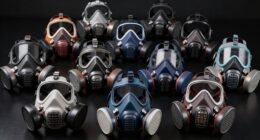
- Ensure good ventilation and wear a mask to protect from fumes and overspray during priming and painting.

Have you ever wondered how to give your fireplace or mantel a fresh, updated look? The key to a professional-looking finish lies in mastering spray paint techniques and choosing the right primer. When you’re ready to transform your space, understanding these elements will make a significant difference in the final result. Spray painting is not as simple as just spraying paint onto the surface; it requires careful technique to ensure an even, smooth coat with no drips or uneven coverage.
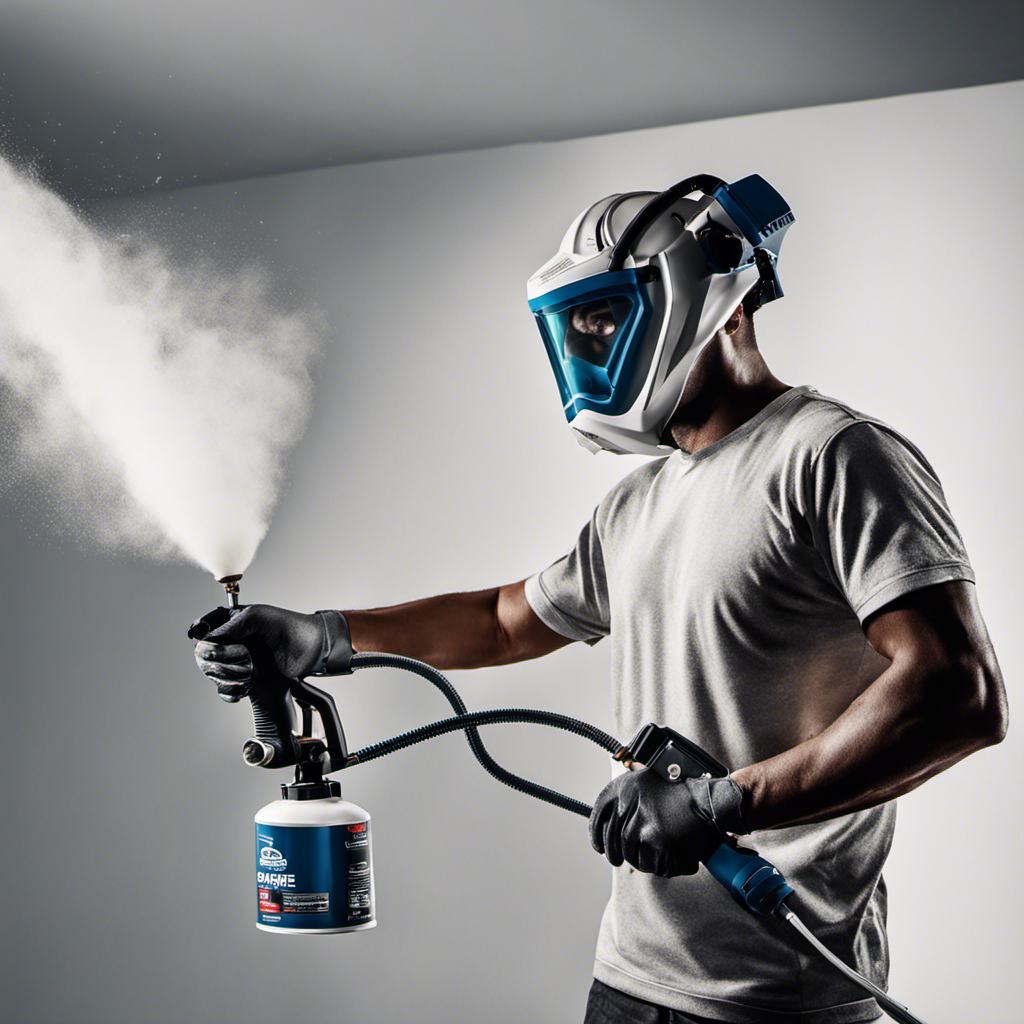
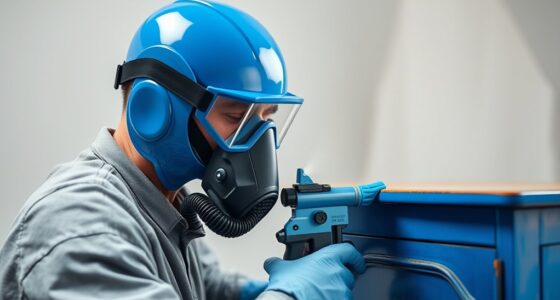
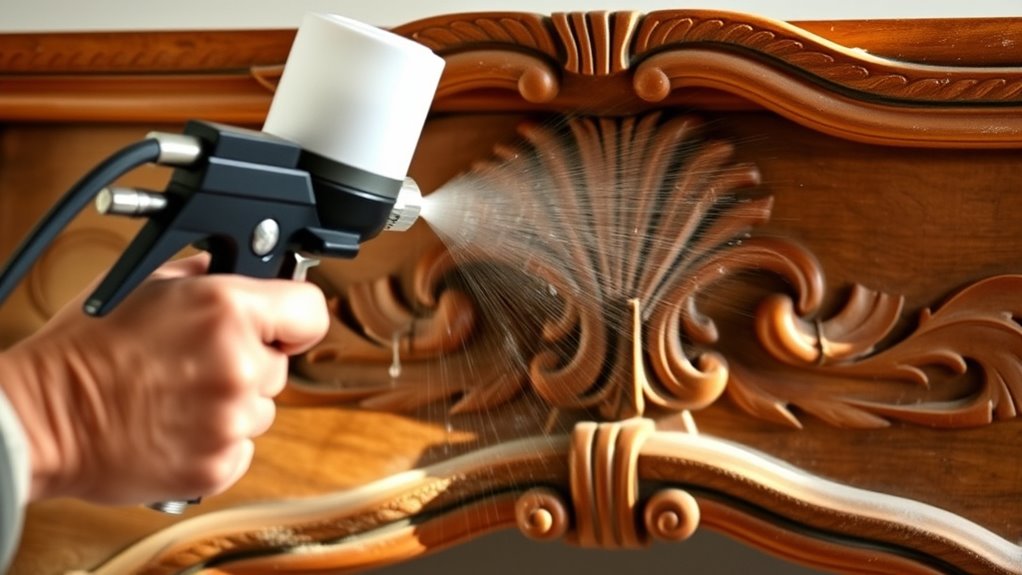
First, focus on your spray paint techniques. Hold the spray can about 8-12 inches from the surface and keep a steady, consistent motion. Start spraying off the edge of the object, then move across in a smooth, sweeping motion. Overlap each pass slightly to prevent streaks or missed spots. Apply multiple thin coats rather than one thick one, giving each layer time to dry before adding the next. This approach prevents drips and ensures an even finish. Keep your movements fluid and consistent, avoiding stopping mid-spray which can cause uneven patches. Also, work in a well-ventilated area and wear a mask to protect yourself from fumes and overspray.
The second critical factor is primer selection. Choosing the right primer depends on the material of your fireplace or mantel. Metal surfaces benefit from a rust-inhibiting primer, while wood requires a primer that seals the surface and promotes adhesion. For surfaces with existing paint or a glossy finish, a bonding primer is essential to ensure the spray paint adheres properly. Before applying primer, clean the surface thoroughly to remove dust, grease, or old paint that might interfere with adhesion. Lightly sand glossy surfaces to create a better grip for the primer. When applying primer, use the same spray techniques—keep the can at a consistent distance and move in smooth, overlapping strokes. Allow the primer to dry completely according to the manufacturer’s instructions before moving on to spray painting.
Frequently Asked Questions
What Safety Precautions Should I Take When Spraying Indoors?
When spraying indoors, you should wear safety gear like a mask, goggles, and gloves to protect yourself from fumes and overspray. Make sure you set up proper ventilation by opening windows and using fans to disperse fumes quickly. Keep the area clear of people and pets, and cover surrounding furniture. Always follow the spray paint manufacturer’s safety instructions to prevent health hazards and make certain of a safe, successful project.
How Long Does It Take for Primer to Dry Completely?
Primers typically take about 1 to 2 hours to dry to the touch, but full curing can take up to 24 hours. During this drying time, it’s crucial to guarantee good ventilation and avoid touching the surface. Keep in mind that primer curing is a gradual process, so patience is key. Rushing the drying time might compromise the finish, so wait until the primer is thoroughly dry before proceeding with painting or additional coats.
Can I Use a Different Type of Spray Gun for This Project?
Sure, you can use an alternative spray gun for your fireplace project, but beware—different primer types demand different tools. Opting for a paint sprayer designed for thick coatings guarantees even coverage and avoids mishaps. Skipping this step might turn your elegant mantel into a splattered mess, so choose your spray gun wisely. After all, a perfect finish is only as good as your equipment—and a little patience.
What Environmental Conditions Affect Spray Painting Results?
Environmental conditions like high humidity levels and temperature fluctuations can profoundly impact your spray painting results. When humidity is too high, paint may not dry properly, causing runs or sags. Temperature fluctuations can lead to uneven curing, affecting finish smoothness. To get the best results, spray in a controlled environment with stable temperature and low humidity, ideally between 70-75°F and 40-50% humidity, ensuring a smooth, professional finish.
How Do I Fix Drips or Uneven Coverage During Spraying?
Imagine fixing a tiny hole in a stretched canvas—your spray can can do the same. For drips, immediately perform drip correction by gently dabbing with a brush or rag before the paint dries. For uneven coverage, let it dry, then do coverage touch-up with light, even coats. Keep your spray pattern steady, and don’t rush; patience guarantees a smooth, professional finish.
Conclusion
Now that you’ve mastered the art of spraying fireplaces and mantels, you’re like a painter wielding a magic wand, turning dull surfaces into stunning focal points. With proper primers and a steady hand, your project will shine brighter than a starry night sky. Remember, patience and attention to detail are your trusted companions on this colorful journey. So go ahead, breathe life into your space—your masterpiece is just a spray away!
Franz came aboard the Paint Sprayer Zone team with a background in both journalism and home renovation. His articulate writing style, combined with a passion for DIY projects, makes him an invaluable asset. Franz has a knack for breaking down technical jargon into easy-to-understand content, ensuring that even the most novice of readers can grasp the complexities of paint sprayers.