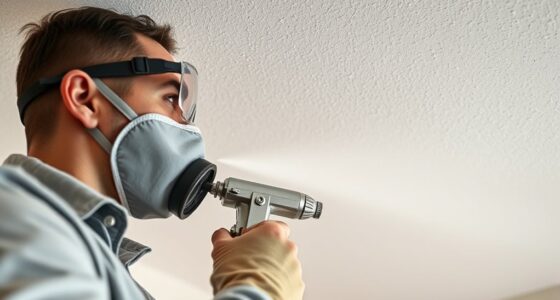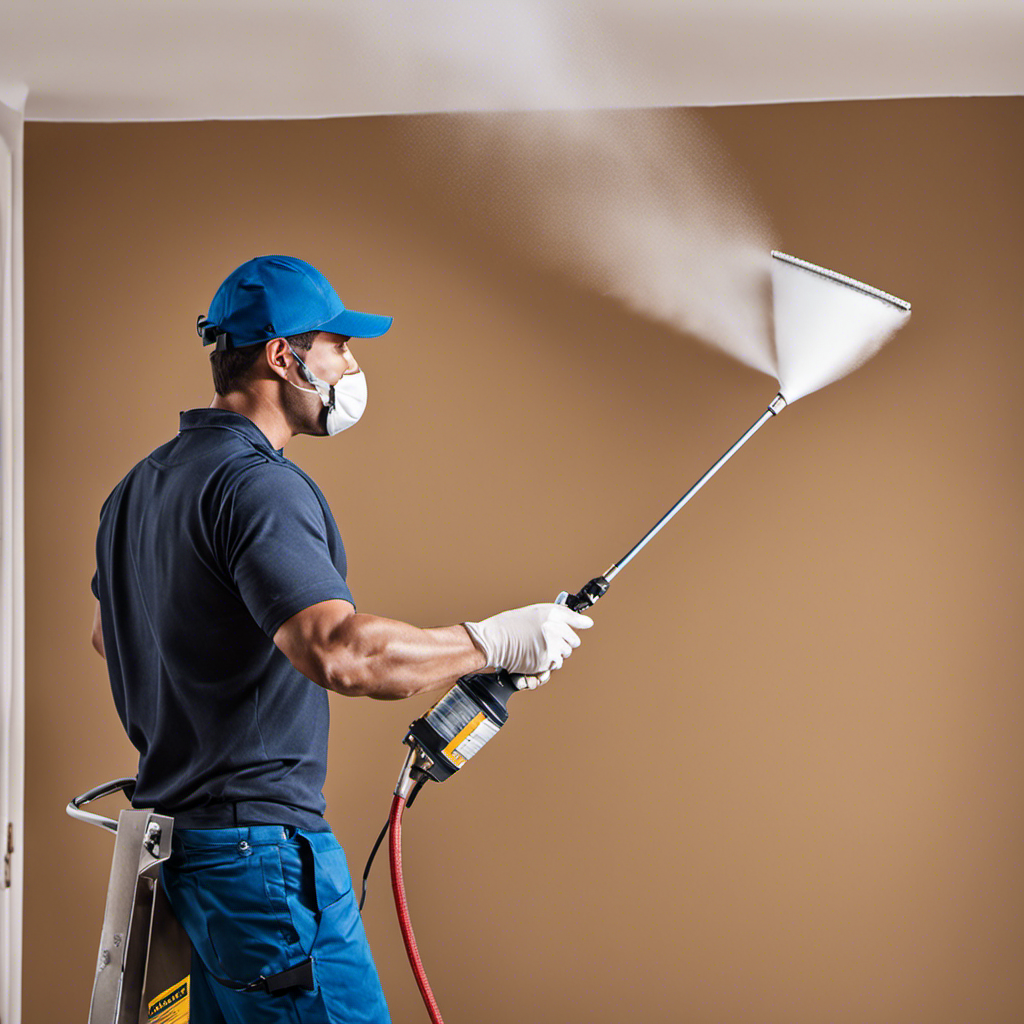
To calculate paint quantity for spraying, measure the total surface area by multiplying length and width, subtracting non-painted areas like doors and windows. Check your spray paint’s coverage rate (square feet per gallon) and account for factors like paint thinning or absorption by adding an extra 10-15%. Keep in mind that spraying usually uses more paint than brushing. If you want to master precise calculations, there’s more to explore below.
Key Takeaways
- Measure the total surface area to be painted, subtracting non-painted sections like windows and doors.
- Check the paint can’s coverage rate (square feet per gallon) to determine how much paint is needed per surface.
- Account for the increased paint requirement when using spray application, typically adding 10-15% for coverage variability.
- Consider if paint needs thinning for spraying, which can increase total volume due to added solvent or water.
- Calculate total paint volume by dividing the adjusted surface area by the coverage rate, then add a safety margin for absorption and uneven application.
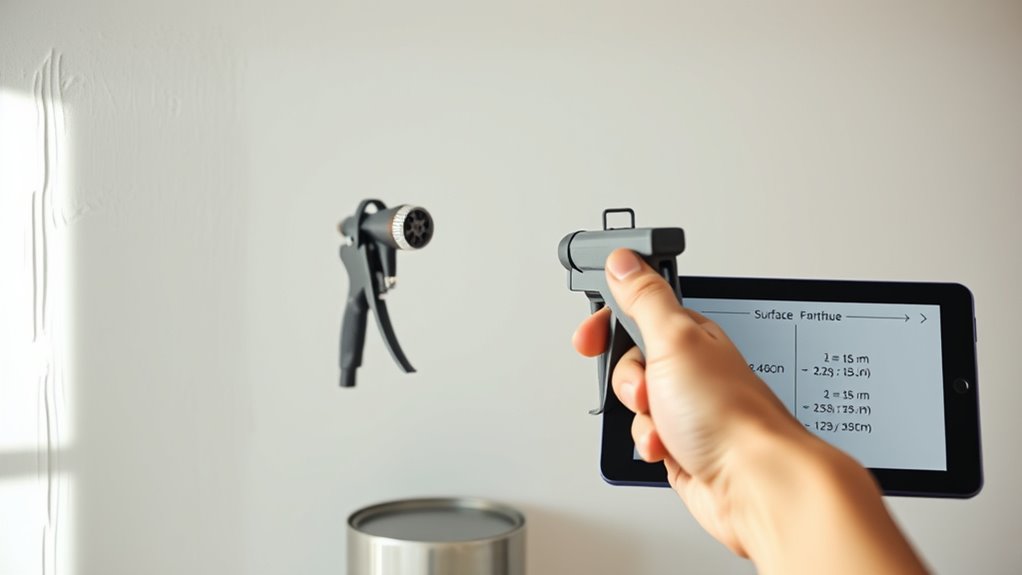
Calculating the right amount of paint you need can save you time and money, preventing both shortages and excess. When it comes to spraying, knowing exactly how much paint to prepare is essential. The first step involves understanding the different brush types and how they influence your paint application. Brushes come in various shapes, sizes, and bristle types, each suited for specific surfaces and paint types. For example, synthetic brushes are great for latex paints, while natural bristles work better with oil-based paints. Choosing the right brush type ensures smooth application and minimizes waste, especially when switching to spray painting, where paint coverage efficiency varies.
Next, consider how paint mixing impacts your calculations. Even if you’re using pre-mixed paint, giving it a good stir is crucial to ensure color consistency and proper pigment distribution. If you’re mixing custom colors or blending different batches, you’ll need to account for the additional volume created during mixing. Proper mixing can prevent uneven coverage, which would otherwise lead to overestimating or underestimating the amount of paint needed. When calculating your total paint requirement, factor in the paint’s consistency after mixing, especially if you’re thinning it with water or additives for spraying; thinning can increase the volume you’ll need. Additionally, understanding the importance of paint coverage rates can help you make more accurate estimates and avoid waste.
To accurately determine how much paint you’ll require, measure the surface area you plan to cover. Use a tape measure to get the length and width of each wall or surface, then multiply these dimensions to find the total square footage. Don’t forget to subtract areas that won’t be painted, like windows or doors. Once you’ve established the surface area, consult the paint can to find out its coverage rate, usually expressed as square feet per gallon or liter. This information helps you estimate the volume of paint needed. Remember, spraying tends to require more coverage than brushing because of differences in application techniques, so add a margin—about 10-15%—to your estimate to account for absorption and uneven application.
Finally, when preparing to spray, keep in mind that paint mixing should be thorough to maintain consistency throughout your project. Stir the paint well, ensuring any settled pigment is evenly distributed, and if thinning is necessary, do so gradually while monitoring the volume. By understanding the importance of brush types and proper paint mixing, you’ll be better equipped to calculate precisely how much paint you need. Accurate calculations help you avoid overbuying, which saves money, and underestimating, which causes delays. With meticulous measurement, correct mixing, and knowledge of application techniques, you’ll finish your project efficiently and with professional results.
Frequently Asked Questions
How Do Surface Textures Affect Paint Coverage Estimates?
Surface textures greatly impact your paint coverage estimates because texture variations and surface porosity influence how much paint is absorbed. Rough or porous surfaces require more paint to achieve an even coat, reducing coverage efficiency. Smooth surfaces, on the other hand, need less paint. When planning your project, consider these factors to accurately estimate the amount of paint needed, ensuring you don’t run short or overspend.
Should I Account for Paint Absorption on Different Wall Materials?
Yes, you should definitely account for paint absorption on different wall materials. Think of wall porosity as a sponge soaking up paint, so porous surfaces like drywall or plaster absorb more, requiring extra paint. Ignoring this can leave your walls looking patchy or uneven. To get a smooth finish, estimate the paint absorption based on material type, and add extra paint to your calculations, ensuring your project flows seamlessly from start to finish.
How Does Paint Thickness Impact the Amount Needed?
Paint thickness directly influences the amount you need, as thicker paint demands more material for proper coverage. When your paint consistency is thicker, it may require multiple coats, increasing overall usage. Using an appropriate application technique helps control thickness, preventing excess application. Keep in mind that thinner coats dry faster and use less paint, so adjusting your technique based on paint thickness ensures efficient coverage without wasting material.
What Role Do Environmental Conditions Play in Paint Calculation?
Weather impact and ventilation effects considerably influence your paint calculation. If it’s windy or humid, you’ll need more paint because uneven spray or faster drying reduces coverage. Good ventilation helps control overspray and ensures even application, so you can estimate paint more accurately. Always consider these environmental conditions beforehand; they can increase or decrease the amount of paint required, helping you avoid running short or wasting supplies.
How Can I Adjust Calculations for Multiple Coats?
Think of applying multiple coats like layering a cake; each layer adds richness. To modify your calculations, consider the brush density and spray technique—more coats mean more paint. Increase your initial estimates by about 50% for two coats, and 75% for three. Keep in mind, efficient spray technique and appropriate brush density ensure even coverage, reducing excess paint use and saving you time and money.
Conclusion
Now that you know how to calculate your paint needs, you’re like a skilled chef preparing a perfect recipe. Just as each ingredient ensures the dish turns out right, accurate measurements guarantee a smooth, even coat. Remember, a little extra paint is like a safety net, catching any surprises. With these steps, you’ll master your project and avoid waste, turning your painting journey into a masterpiece you can be proud of.
Franz came aboard the Paint Sprayer Zone team with a background in both journalism and home renovation. His articulate writing style, combined with a passion for DIY projects, makes him an invaluable asset. Franz has a knack for breaking down technical jargon into easy-to-understand content, ensuring that even the most novice of readers can grasp the complexities of paint sprayers.