If your cabinets look like orange peel, start by checking five common setup mistakes. First, verify you scrub surfaces with a degreaser and remove dust thoroughly before painting. Second, lightly sand all surfaces to boost adhesion and smooth out flaws. Third, apply thin, even coats with a steady technique, avoiding thick layers. Fourth, choose a paint finish suited for cabinetry—matte or eggshell hides imperfections better. Finally, use proper equipment and techniques to achieve a sleek, professional look—more tips to improve your finish await you.
Key Takeaways
- Ensure surfaces are thoroughly cleaned and free of dust, grease, or old paint before applying new coats.
- Lightly sand cabinets to create a smooth surface and remove surface flaws for better paint adhesion.
- Apply thin, even coats of paint using proper technique, avoiding thick layers that cause bumps.
- Choose the right paint finish; matte or eggshell hides imperfections better than high-gloss or semi-gloss.
- Use proper equipment, maintain steady application speed, and allow each coat to dry completely for a smooth finish.
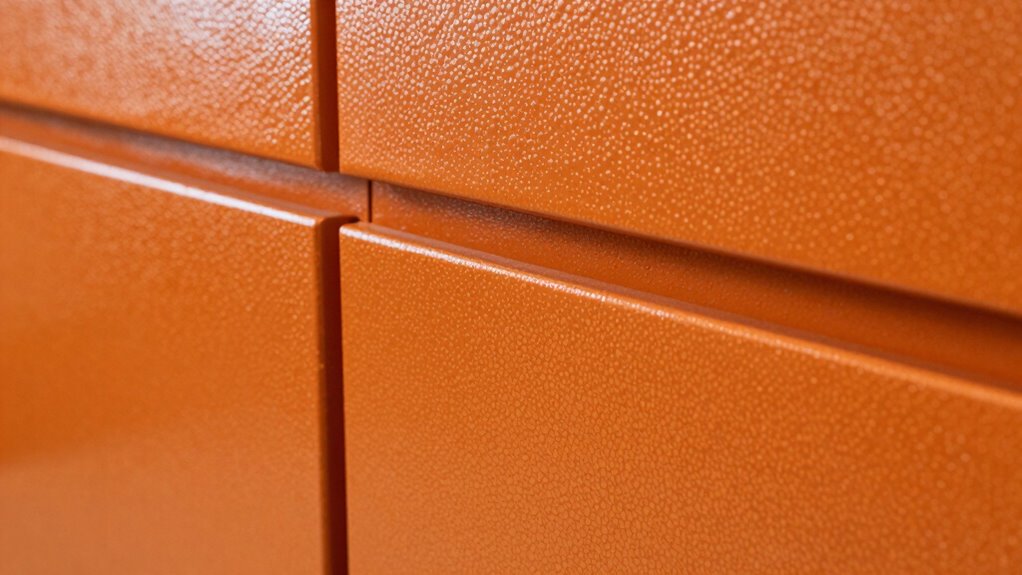
If your cabinets have developed a textured, bumpy surface that resembles an orange peel, you’re not alone. This common issue often results from improper surface preparation or incorrect paint application techniques. Before you consider repainting or replacing your cabinets, it’s essential to understand what went wrong and how to fix it. The first step is assessing your current surface and preparing it properly to guarantee a smooth, professional-looking finish.
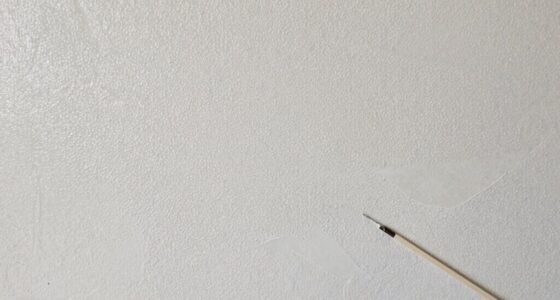
Surface preparation is crucial when tackling a textured cabinet surface. If you didn’t thoroughly clean the cabinets beforehand, dust, grease, or old paint can prevent new coats from adhering evenly. Use a degreaser or a mixture of mild soap and water to clean all surfaces, then rinse with clean water and let everything dry completely. Sanding is another vital part of surface preparation. Lightly sand the cabinets with fine-grit sandpaper to create a rough surface that new paint can grip onto. Skipping this step can cause the paint to bubble and peel, leading to that orange peel texture. Make sure to remove all dust afterward with a tack cloth or a damp rag to leave a clean surface ready for painting.
Proper cleaning and light sanding prevent textured, uneven cabinet surfaces.
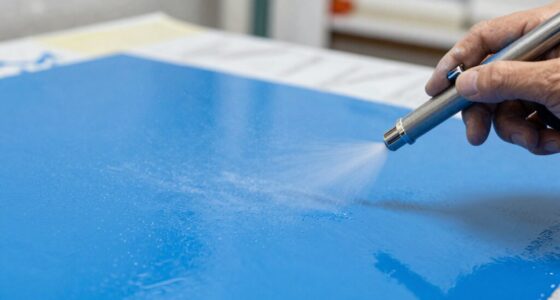
When it comes to paint application techniques, consistency is key. Applying paint with a brush, roller, or sprayer should be done carefully to avoid uneven layers that cause texture. If you’re using a spray gun, hold it at a steady distance and move smoothly across the surface to prevent buildup in any one area. When brushing or rolling, use long, even strokes and avoid overworking the paint, which can introduce air bubbles that manifest as bumps once dry. Thin coats are better than thick ones; multiple light layers will help you achieve a smoother finish and reduce the risk of orange peel texture. Always let each coat dry thoroughly before applying the next to guarantee proper adhesion and a sleek surface. Additionally, using proper paint application techniques and equipment can make a significant difference in the final outcome.
Furthermore, consider the paint type and finish you choose. High-gloss or semi-gloss paints tend to highlight imperfections, so opting for a matte or eggshell finish can help hide minor surface flaws. Using high-quality paint designed for cabinetry also makes a difference, as it spreads more evenly and adheres better. If you follow these surface preparation and paint application techniques, you’ll considerably improve the appearance of your cabinets. Remember, patience and attention to detail are your best tools for avoiding that unwanted orange peel effect and achieving a professional, smooth finish that enhances your space.
Frequently Asked Questions
Can Orange Peel Texture Be Completely Removed From Cabinets?
Yes, you can completely remove the orange peel texture from cabinets. Start by sanding the surface to smooth out the bumps, then apply a high-quality primer suitable for your cabinet material. Use paint smoothing techniques to achieve an even finish, ensuring the texture is eliminated. Proper primer selection helps the new paint adhere better, resulting in a sleek, flat cabinet surface free of orange peel imperfections.
What Causes an Orange Peel Finish During Application?
A smooth finish is like a good book—hard to perfect but worth the effort. When applying paint, an orange peel finish happens if your spray technique is uneven or if your paint consistency is too thick. You might be rushing or holding the spray gun too close, causing uneven droplets. To fix this, make certain your spray technique is steady, and dilute your paint properly for a smoother, flawless finish.
How Long Does It Take for Cabinets to Dry Properly?
You should expect your cabinets to dry within 2 to 4 hours after applying the finish, but the curing process takes longer—typically around 7 to 14 days. During this drying time, avoid touching or placing objects on the cabinets. Proper drying time guarantees the finish sets correctly, preventing issues like an orange peel appearance. Patience during the curing process guarantees a smooth, durable surface that lasts.
Are There Specific Paints or Primers to Prevent Orange Peel?
Did you know that using the right paint selection can diminish orange peel texture by up to 40%? To prevent this, choose high-quality paints formulated for cabinetry, which flow smoothly and level out better. Primer effectiveness also plays a key role—opt for a primer designed for cabinets to create a uniform surface. These choices ensure a sleek, professional finish, reducing the chances of an orange peel effect on your cabinets.
Is Sanding the Only Solution to Fix Orange Peel Issues?
Sanding isn’t the only solution for orange peel textures on cabinets. Proper surface preparation and correct spray techniques are essential. You can fix it by lightly sanding the affected area to smooth out the texture, then applying a new, thin coat of paint using controlled spray techniques. Make sure to prime the surface properly beforehand. This approach helps achieve a smooth finish without the need for extensive sanding or stripping.
Conclusion
If your cabinets resemble orange peel, don’t be discouraged. Sometimes, a small misstep can lead to less-than-perfect results, but with patience and the right adjustments, you can bring back that smooth, flawless finish. Remember, every project is a learning experience; even the finest craftsmen started somewhere. Embrace the process, and soon enough, you’ll see your cabinets transformed into the beautiful centerpiece they were meant to be. Keep going—you’re closer than you think.