TL;DR

Get business pricing on tools and workshop supplies
- Business-only prices and quantity discounts
- Tax-exempt purchasing
- Multiple users, one account, clear invoices
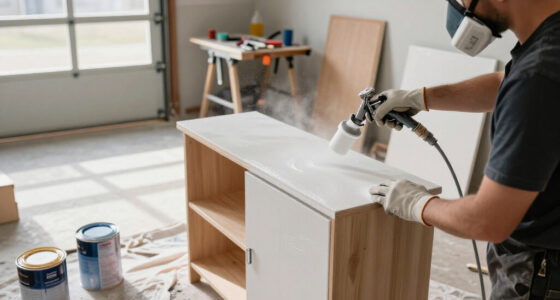
Airless paint sprayers use a high-pressure pump (1,500–3,000+ PSI) to force paint through a small tip, atomizing it without air — letting you spray unthinned latex 5–10x faster than rolling. They excel on large or textured surfaces like fences, stucco, and exteriors, but they produce serious overspray, take 20–45 minutes to clean, and carry an underknown high-pressure injection injury risk. Rent one (~$60–120/day) for one-time big jobs; buy (~$150–400) only if you’ll spray several times a year.
My neighbor spent two weekends rolling his 6-foot privacy fence. The guy across the street sprayed his identical fence in a single Saturday morning — primer and two coats — and still had time to mow the lawn. The difference wasn’t skill. It was a $200 airless paint sprayer.
But that speed comes with fine print: overspray that drifts like fog, a cleanup routine that eats half an hour, and a safety risk most DIYers have never heard of. So before you click “add to cart,” you should know exactly when these machines shine and when a $12 roller beats them.
In this article, you’ll learn how airless sprayers actually work, the honest rent-vs-buy math, a beginner technique guide, and the one safety fact that belongs in every manual’s first page.
Airless sprayers atomize paint by forcing it through a small tip at 1,500–3,000+ PSI, so they spray unthinned latex 5–10x faster than rolling.
Rent (~$60–120/day) for one-time big projects; buy ($150–400) only if you’ll spray two or more projects per year — and pick an HEA model for ~55% less overspra…
Use a 515 tip for walls and a 411/311 for trim and stains; hold the gun 10–12 inches away, keep it moving, and overlap passes 50%.
High-pressure injection injuries are surgical emergencies — never point the gun at anyone, lock the trigger when setting it down, and seek immediate medical ca…
Budget 20–45 minutes for cleanup and flush the system immediately after spraying; dried latex in the hose or tip is the most common way DIYers ruin their spray…
How Airless Sprayers Work (The Garden Hose Analogy)
Airless sprayers use an electric-powered pump to pressurize paint to 1,500–3,000+ PSI and force it through a tip opening smaller than the tip of a pencil. That tiny opening is what turns liquid paint into a fan of fine droplets — no compressed air needed, which is why they’re called “airless.” [1]
Think of it like putting your thumb over a garden hose. Same water, same pressure source — but squeeze the opening down and the gentle stream becomes a forceful, wide spray. The pump is the water pressure; the tip is your thumb.
Here’s the practical payoff: because the pump does the atomizing, airless sprayers can spray unthinned latex paint straight from the can. Rollers and brushes push paint around; an airless pump blasts it into surfaces. That’s why it handles thick wall paint, primers, enamels, stains, and even some elastomeric coatings without additives.
Contrast that with HVLP sprayers, which use a gentle stream of air to atomize paint. HVLP units are quieter, neater, and great for furniture and cabinets — but they’re slower and often need thinned material.
The pump pressurizes, the tip atomizes. Once you understand that, every troubleshooting problem — clogs, spitting, fans instead of patterns — traces back to one of those two things.
Airless vs. HVLP vs. Roller: Which One Wins Your Project
For large, flat, or textured surfaces, airless sprayers beat rollers and HVLP units on speed and coverage; for small detail work like cabinets and trim, HVLP or a brush wins. According to usage data, airless sprayers apply coatings 5–10x faster than rolling or brushing, and they’re the only common option that fully coats rough textures like stucco, popcorn ceilings, and brick. [1]
| Tool | Speed | Best For | Biggest Weakness |
|---|---|---|---|
| Airless sprayer | 5–10x faster than rolling | Fences, exteriors, whole rooms, stucco, new drywall | Heavy overspray; 20–45 min cleanup |
| HVLP sprayer | Moderate | Cabinets, furniture, doors, trim | Paint usually needs thinning; slower coverage |
| Roller/brush | Slowest | Touch-ups, small jobs, repaints in furnished rooms | Brush marks; can’t reach deep texture |
Real-world example: repainting a furnished bedroom with carpet? Roll it. Masking everything from overspray will take longer than the painting. Empty new construction or a bare garage? Spray it — one person can coat an entire garage interior in under an hour.
One more thing rollers can’t do: back-rolling aside, they simply can’t push paint into the crevices of popcorn ceilings or rough-sawn fences. The texture eats the nap and skips the valleys. Sprayed paint lands everywhere the texture exists.
Buy or Rent? The $60 Question
Rent if this is a one-time big project; buy if you’ll spray at least two or three times a year. That’s the whole decision, and here’s the math behind it.
- Rental: Home improvement stores rent pro-grade Graco and Titan units for roughly $60–120 per day. For a one-shot exterior repaint, that’s a bargain — you get a better machine than you’d buy, with no maintenance. [1]
- Handheld purchase ($150–250 range): Graco TrueCoat and Wagner Flexio models suit occasional small-to-medium jobs like a fence section or a single room.
- Mid-size cart purchase ($300–400 range): Graco Magnum X5/X7 and Titan Control Pro units handle fences, full exteriors, and repeated whole-room work.
- Pro units: Graco and Titan professional models exceed $1,000 — overkill for DIY use unless you’re spraying houses for a living.
Here’s the scenario that decides it: if you’re spraying a 2,000-square-foot house exterior once, rent for the weekend and spend ~$150 total. If you’re a serial renovator flipping rooms every season, a $350 Graco X7 pays for itself by the third project.
Also worth knowing: newer HEA (High Efficiency Airless) technology, found in Titan Control Pro and Graco’s TC Pro lines, cuts overspray by roughly 55% with a softer, lower-pressure spray. For indoor DIY work, that feature alone justifies choosing these models. [1]
5 Technique Rules That Separate Good Sprays From Runs and Sags
Beginner airless problems — runs, sags, lap marks, and heavy edges — almost always come from breaking one of five rules. Follow these in order and your first wall will look like a pro did it.
- Hold the gun 10–12 inches from the surface, perpendicular to the wall. Spraying at an angle sprays more paint on one edge of the fan than the other, leaving stripes.
- Keep the gun moving. Pull the trigger after you start moving and release before you stop. Hesitate with the trigger pulled and paint pools into a run within a second.
- Overlap each pass about 50%. Each stroke should cover half of the previous one, like shingles on a roof.
- Strain your paint through a filter or paint bag before filling. Most tip clogs come from skin flecks and dried chunks straight from the can.
- Match the tip to the job: a 515 tip for walls and ceilings, a 411 or 311 for trim, doors, and stains. The first digit is fan width, the last two are hole size.
For rough surfaces like stucco or fences, add a sixth habit: back-roll the wet coating with a roller to press paint into crevices and even out heavy application.
Runs and sags aren’t a machine defect — they’re a trigger finger that stopped moving. The gun should never be still while it’s spraying.
The Safety Risk Nobody Warns You About (Read This Part)
An airless sprayer at full pressure can inject paint through your skin — this is a genuine surgical emergency, not a bruise. At 2,000+ PSI, paint doesn’t splash; it enters tissue like a needle. According to medical guidance on high-pressure injection injuries, these wounds can look minor while causing serious tissue damage, and they require immediate emergency medical care — tell the doctor exactly what was injected and at what pressure. [1]
So the rules are non-negotiable:
- Never point the gun at yourself or anyone else, even when you’re sure it’s not spraying.
- Engage the trigger lock whenever you set the gun down or clear a clog.
- Relieve system pressure before changing tips or disconnecting hoses.
Everyday protection matters too. Wear a proper respirator rated for paint vapors — not a dust mask — plus sealed eye protection. Ventilate indoor spaces aggressively with fans and open windows. And never spray flammable materials near ignition sources, including pilot lights and space heaters.
One more practical note: overspray mist travels much farther than beginners expect — drift of 10–20 feet is common in breezy outdoor conditions. Cover plants, windows, and your neighbor’s car, not just your floors.
Cleanup and Storage: The 20 Minutes That Save Your Machine
Plan on 20–45 minutes of cleanup for a cart-style airless sprayer — and never let paint sit in the hose or tip while you take a lunch break, because it dries fast and clogs solid. Cleanup is the price of the speed; skimp on it once and you’ll buy a new tip and spend an hour flushing dried latex. [1]
Your post-spray routine:
- Run the remaining paint from the hose back into the can or a waste container.
- Flush with clean water (for latex) or mineral spirits (for oil-based) until the discharge runs clear.
- Remove and clean the tip and gun filter separately — these trap the debris that cause spitting.
- Run pump protector fluid through the system before storage, especially before winter.
Can you leave paint in the sprayer overnight? With many cart units, yes — sealed and pressurized per the manual, latex can sit overnight (some manufacturers allow up to a few days). Handheld units generally can’t. Check your model’s manual, because guessing wrong means a hardened hose and a $60 replacement.
Spitting or an uneven pattern during your next job usually means one of two leftovers: a dirty tip or a clogged filter. Clean both first before blaming the machine.
Frequently Asked Questions
Do I need to thin paint for an airless sprayer?
Usually no — that’s the main advantage of airless sprayers. The high-pressure pump can atomize unthinned latex paint straight from the can. Only thin if your manual specifically recommends it for a handheld unit or if the paint is unusually thick, and then only slightly.
Can I use an airless sprayer indoors?
Yes, but with preparation. Mask everything you don’t want painted, open windows, run fans, and wear a respirator rated for paint vapors. HEA (High Efficiency Airless) models reduce overspray by about 55% and are the best choice for indoor rooms.
Why is my airless sprayer spitting or clogging?
Spitting usually means a clogged or worn tip, a dirty gun filter, or debris in the paint. Strain your paint before spraying, clean the tip and filter after every use, and replace tips once the spray pattern becomes uneven — tips wear out faster than beginners expect.
How much overspray is there, really?
Significant. Fine mist can drift 10–20 feet, especially outdoors in a breeze, so masking and drop cloths are mandatory. Standard airless units waste noticeably more paint than rollers; HEA units cut that overspray roughly in half.
What’s the cheapest airless sprayer that’s still good?
Reliable entry points are the Wagner Control Max or Graco TrueCoat handhelds in the $150–250 range for small-medium jobs, or a Graco Magnum X5 around $300 for fences and exteriors. Cheaper no-name units typically suffer from weak pumps and short lifespans.
Conclusion
Here’s the one-line decision: if your project is big, flat, textured, or repeated, an airless sprayer will repay you in saved weekends. If it’s a single door in a furnished room, buy a roller and keep your Saturday. Rent for the one-timers, buy the HEA handheld or mid-size cart if you’re a serial renovator, and respect the injection hazard like you’d respect a table saw. [1]
The guy who sprayed his fence by noon knew the machine’s limits as well as its strengths. Now you do too. So — what’s on your painting list this season?
Fall yard work Picks
leaf blowers
As an affiliate, we earn on qualifying purchases.