TL;DR

Get business pricing on tools and workshop supplies
- Business-only prices and quantity discounts
- Tax-exempt purchasing
- Multiple users, one account, clear invoices
Hunker has highlighted clear adhesive contact paper as a lower-cost way to obscure views through windows while still allowing light to pass through. It can be trimmed after application and removed later, though the report does not give prices or test results for privacy, durability or residue.
Hunker has outlined a low-cost alternative to curtains for people seeking more privacy at home: applying clear adhesive contact paper directly to window glass. The covering can obscure views while letting light through, and the report says it may suit small rooms such as bathrooms where curtains can feel bulky.
The method uses clear contact paper, a product commonly sold for lining drawers or covering flat surfaces. On glass, it produces a frosted effect, according to Hunker. The report says contact paper is usually less expensive than static-cling window film, particularly when a larger amount is needed, but it provides no prices or product-by-product comparison.
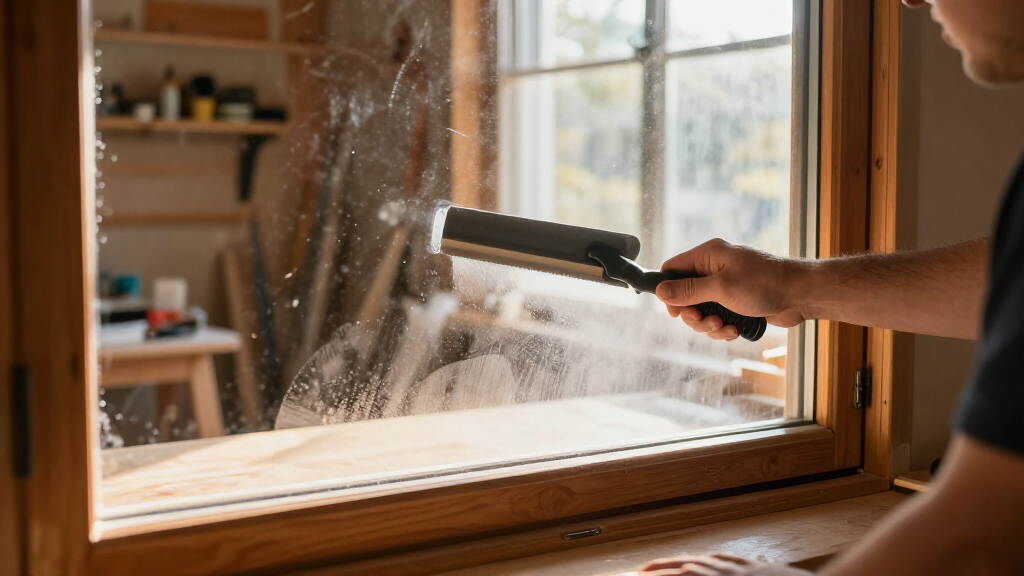
For installation, Hunker recommends cleaning the glass first and using a ruler or measuring tape, a utility knife, and a wallpaper smoother. A credit card or nylon pan scraper can serve to press out air bubbles. The paper can be applied slightly larger than the glass and trimmed afterward, which can help avoid uncovered gaps at the edges.
Hunker also describes options beyond a plain frosted finish: lace or diamond patterns, colored coverings and stained-glass designs. Strips can be applied for a striped look, while a solid or patterned paper may block more light. These choices change the appearance and light level; the report does not provide measured privacy or light-transmission ratings.
A Privacy Option for Small Rooms
For renters and homeowners weighing privacy against cost, contact paper offers an alternative that does not require curtain rods, fabric panels or a permanent change to the window. The approach may be useful in bathrooms and other compact spaces, where fabric can take up visual and physical room. It also retains some daylight, unlike coverings designed to block a window completely.
The practical trade-off is that an adhesive sheet changes the view through the glass and may reduce incoming light depending on its pattern or opacity. It also requires careful fitting to avoid bubbles and gaps. Hunker says the covering is removable, but readers should test removal on their own glass and check the product instructions, since the supplied report does not establish how every brand performs.
Products Worth Considering

Coway Mighty AP-1512HH(W) Air Purifier, White

TCL T7 Series 85-Inch 4K 144Hz QLED Smart Google TV

Sony BRAVIA 5 85-Inch Mini LED 4K HDR Smart TV (K-85XR50)
As an affiliate, we earn on qualifying purchases.
How the Adhesive Covering Works
Contact paper is an adhesive-backed covering used on household surfaces. Hunker’s report applies that familiar product to a different purpose: placing it on window glass to create a translucent barrier. The proposed benefit is privacy without fully blocking daylight, rather than the decorative fabric and adjustable coverage curtains provide.
The report compares contact paper with static-cling window film, saying adhesive-backed paper is generally less expensive when buying larger quantities and may stay in place better in humid rooms. Those are claims in the Hunker article, not results from a published comparative test included in the supplied material. It says leftover adhesive can be addressed with soap and water or a commercial adhesive remover.
“A much more budget-friendly way to add privacy to your windows, while still letting in light, is to skip the curtains entirely and apply clear contact paper directly to the glass.”
— Hunker report
Costs, Privacy and Removal Vary
The supplied report does not give specific product prices, the size of a typical roll, or a quantified comparison with curtains or window film. It also does not report tests of how well the covering blocks views at different distances, how much light each finish transmits, or how long it lasts in humid conditions.
Removal may depend on the product, the time it has been attached and the glass surface. Hunker says adhesive residue can be removed with soap and water or a commercial remover, but the material does not establish that every product will come away cleanly. The report also does not address whether contact paper is suitable for every type of window or whether it affects window warranties.
Check the Film Before Applying
Anyone considering the method should compare the cost and coverage of available products, confirm that the chosen paper is intended for the planned use, and follow its application and removal directions. Testing a small area first can help reveal how the finish looks from inside and outside and how the adhesive behaves on that glass.
Hunker’s report offers a do-it-yourself suggestion, not a product test or a formal recommendation from a window manufacturer. No follow-up testing, product announcement or additional development is identified in the supplied material.
Key Questions
Does clear contact paper make a window completely private?
Hunker says it creates a frosted effect that obscures views while allowing light through. The report does not quantify privacy or say how well it works at night, so results may depend on the product and lighting conditions.
Is contact paper cheaper than window film?
The report says contact paper is usually less expensive than static-cling window film, especially when a larger quantity is needed. It provides no prices or comparison for specific brands.
What tools are needed to apply it?
Hunker lists a measuring tape or ruler, a utility knife and a smoother. A credit card or nylon pan scraper can be used to press out air bubbles if a wallpaper smoother is unavailable.
Can the covering be removed?
Hunker describes contact paper as removable and says stuck-on adhesive may come off with soap and water or a commercial adhesive remover. Removal results are not guaranteed in the supplied report and may depend on the product and surface.
Source: hunker.com