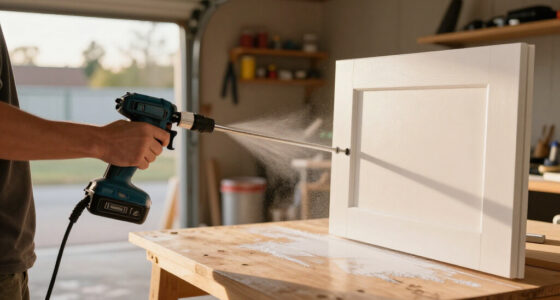
Choosing among electric sanders for woodworking mostly comes down to matching the sander type to your projects: random orbital sanders for large flat panels, detail and sheet sanders for tight corners and finishing, and benchtop combinations for shaping stock. My top overall pick is the DEWALT DWE6423 5-Inch Variable-Speed Random Orbit Sander, which balances aggressive material removal with a swirl-free finish and strong dust extraction. For tighter budgets, the SKIL 5-Inch Random Orbital Sander delivers surprising performance for the price, while the WEN 6313 1/3-Sheet Sander is the go-to for finishing flat boards cleanly. The main tradeoffs in this category are corded power versus cordless convenience, dust collection quality, and whether you need one versatile sander or several specialized ones. Keep reading for the full breakdown of all 15 models and who each one suits best.

Get business pricing on tools and workshop supplies
- Business-only prices and quantity discounts
- Tax-exempt purchasing
- Multiple users, one account, clear invoices
Key Takeaways
- DEWALT dominates the top tier: three of its random orbital and quarter-sheet models earned the highest spots because of superior dust sealing, consistent pad speed under load, and longer warranties than budget rivals.
- The budget detail sanders (WORKPRO, HYCHIKA, BLACK+DECKER) are capable of fine finishing work but share weak dust collection and motors that bog down on hardwood, making them finishing tools rather than stock-removal tools.
- Variable speed emerged as the real dividing line in this roundup — fixed-speed models like the WEN 6313 are excellent value for dimensioned lumber, while six-speed models like the HYCHIKA 5-inch orbital handle delicate veneers and painted surfaces far better.
- Cordless only makes sense if you already own DEWALT 20V batteries; the DCW210B performs like a corded sander but the tool-only price stops being a bargain once you add a battery and charger.
- The WEN 6502T belt/disc benchtop sander fills a completely different role than every handheld pick — it is for shaping and sharpening at a workstation, not for finishing, so buying it as your only sander is a common mistake.


| electric sanders for woodworking | Motor | Power source | Dust collection | Speed |
|---|---|---|---|---|
| WORKPRO Detail Electric Sander | 1.6 A | Corded electric, 120 V | Dust collector included | — |
| HYCHIKA Detail Sander | — | — | 6-hole system with dust bag | 14,000 OPM |
| SKIL 5-Inch Random Orbital San | 2.8 A | Corded electric, 120 V | — | 7,000–13,000 OPM variable |
| Dong Cheng 5-Inch Random Orbit | — | — | — | 8,000–12,800 OPM |
| BLACK+DECKER BDEMS600 1.2-Amp | 1.2 A | Corded electric, 230 V | — | Up to 16,000 OPM |
| SKIL SR232301 Corded 4-in-1 De | 1.2 amp | — | Micro-filtration system and 1-1/4-inch vacuum port | — |
| WEN 6313 Electric 1/3-Sheet Sa | — | Corded electric | — | 12,000 OPM |
| DEWALT 20V MAX Brushless Cordl | Brushless | — | One-handed locking dust bag; compatible with DWV010 and DWV012 collectors | 8,000–12,000 OPM |
| DEWALT 1/4-Sheet Electric Sand | 2.3 amp | — | — | 14,000 OPM |
| WEN 4 x 36 in. Belt and 6 in. | 4.3 A | — | — | — |
| 2.2 Amp 1/3 Sheet Palm Sander | — | Corded electric | Detachable dust box | — |
| DEKOPRO 5-Inch Random Orbital | 2.5 Amp | Corded electric | Detachable dust box | — |
| DEWALT 5-Inch Variable-Speed R | 3 amps | Corded electric | Locking dust bag; compatible with DWV010/DWV012 collectors and 1-1/4-inch hoses via DWV9000 | 8,000–12,000 OPM variable |
| DEWALT 5-Inch Corded Random Or | 3.0 amp | Corded electric | One-handed locking dust bag | 12,000 OPM fixed |
| HYCHIKA 5-Inch Random Orbital | — | Corded electric, 120 V | Dust bag with 8 vacuum holes | — |
More Details on Our Top Picks
WORKPRO Detail Electric Sander with Dust Collection, 1.6 Amp
This option stands out for what comes in the box: 15 sandpaper sheets across five grits, which means a newcomer can start on rough stock removal with P60 and finish at P240 without buying anything extra. Compared with the HYCHIKA Detail Sander’s 12 sheets in only three grits, the WORKPRO gives you a fuller progression through a typical woodworking project. The soft rubber grip and 2.6-pound body make it forgiving for long sessions, and the hook-and-loop base removes the frustration of adhesive-backed paper. The tradeoff is power: at 1.6 amps this is a corner-and-detail tool, not a surface-prep machine like the SKIL random orbital. If you already own a bigger sander and want a first detail tool, this kit makes the most sense.
Pros:- Includes 15 sheets across five grits (P60–P240) so you can work from rough to finish
- Light 2.6-pound body with a soft rubber grip reduces hand fatigue
- Hook-and-loop base makes grit changes quick and tool-free
- Dust collection system keeps fine wood dust contained
Cons:- Corded design limits mobility around the workshop
- Listed weight differs between the description and product information, which muddies expectations
Best for: Woodworking beginners who want a complete, ready-to-sand package with a full grit progression out of the box
Not ideal for: Anyone sanding large tabletops or panels — the small triangular pad and 1.6-amp motor make flat-surface work slow
- Motor:1.6 A
- Power source:Corded electric, 120 V
- Maximum speed:13,000 rpm
- Weight:2.6 lbs (3.4 lbs listed item weight)
- Disc diameter:5.5 in
- Included sandpaper:15 sheets: P60, P80, P120, P180, P240
- Dust collection:Dust collector included
Our verdict“Buy this if you’re starting a woodworking hobby and want every grit you’ll need included on day one; skip it if your projects involve large flat surfaces.”
HYCHIKA Detail Sander, 14,000 OPM Compact Electric Sander
Where the WORKPRO wins on included grits, the HYCHIKA wins on raw speed and reach. Its 14,000 OPM motor strips paint and polishes metal faster than the BLACK+DECKER BDEMS600’s stated range, and the soft rubber nose is shaped specifically to slip into inside corners, window frames, and trim detail — the places a round-pad tool like the SKIL orbital simply cannot go. The 6-hole dust extraction with a dust bag pulls debris away at the pad rather than letting it cloud the work, which matters when you’re refinishing furniture indoors. The three-grit paper bundle (P80/P120/P240) is thinner than WORKPRO’s five-grit kit, so expect to buy finer papers for finish work. It’s also explicitly not rated for drywall or cement plaster, limiting it to wood, metal, and plastic tasks.
Pros:- 14,000 OPM motor removes paint and rust quickly in confined spaces
- Ergonomic soft rubber head reaches inside corners and edges precisely
- 6-hole dust collection with bag keeps indoor refinishing work cleaner
- 12 included hook-and-loop sheets cover coarse through fine tasks
Cons:- Only three grits included, so finishing work requires additional paper
- Corded power tethers you to an outlet compared with battery options like the DEWALT DCW210B
Best for: Furniture restorers and trim woodworkers who spend most of their time in corners, grooves, and tight interior details
Not ideal for: Drywall or plaster work — the manufacturer explicitly excludes those materials, and speed-focused detail pads clog quickly on them
- Speed:14,000 OPM
- Amperage:1.6 A
- Cord length:2 meters
- Included sandpaper:12 sheets (P80, P120, P240)
- Sandpaper size:140 x 90 mm
- Attachment type:Hook and loop
- Dust collection:6-hole system with dust bag
Our verdict“This pick makes the most sense for detail-heavy refinishing where corner access matters more than versatility.”
SKIL 5-Inch Random Orbital Sander with Cyclonic Dust Box
If one tool has to cover the widest range of woodworking jobs, this is the one. The random orbital action leaves far fewer swirl marks than any detail sander here — the WORKPRO and HYCHIKA will both leave visible scratch patterns on open grain — and the 5-inch round pad covers surface area several times faster. The variable speed dial (7,000–13,000 OPM) lets you drop low for veneer and delicate stock, then push high for aggressive material removal, something the fixed-speed BLACK+DECKER can’t do. SKIL’s cyclonic dust box is a step above the simple cloth bags on the detail sanders: the transparent container shows when it’s full and spins dust away from the filter. The compromises are modest — only three sheets included, and the 2.8-amp motor sits below workshop-grade units like the DEWALT DWE6423.
Pros:- Random orbital action minimizes swirl marks on visible wood surfaces
- Variable speed (7,000–13,000 OPM) suits both delicate veneer and aggressive stock removal
- Cyclonic dust box is transparent and easy to empty
- Vibration-reducing design and rubber grip improve comfort during long sessions
Cons:- Only three sanding sheets included, so budget for a paper supply
- Corded design limits mobility compared with cordless options
Best for: Hobbyist woodworkers who want one do-it-all sander for smoothing panels, tabletops, and between-coat finish work
Not ideal for: Detail work like chair spindles or inside corners — the round pad shape can’t reach where a triangular detail sander can
- Motor:2.8 A
- Speed:7,000–13,000 OPM variable
- Power source:Corded electric, 120 V
- Pad diameter:128 mm (5 in)
- Weight:3.4 lb
- Included accessories:3 sanding sheets (120 grit)
Our verdict“The strongest all-around choice for woodworkers who need one sander that handles both rough smoothing and finish prep without leaving swirl marks.”
Dong Cheng 5-Inch Random Orbital Sander, 380W, 6 Speeds
This model competes directly with the SKIL on capability but pulls ahead on kit contents: 20 sanding discs across five grits (80 through 320), spare carbon brushes, and a tool bag, versus SKIL’s three sheets and nothing else. The six speed settings between 8,000 and 12,800 OPM give finer control steps than the SKIL’s dial, and the 32 mm vacuum connection means you can hook it to shop extraction instead of relying on a small onboard box — a real advantage for anyone sanding indoors. The tradeoffs are transparency and polish. The listing’s conflicting amperage figures (3.2A in the title versus 380W in the details) make it harder to verify motor output against the SKIL’s clean 2.8-amp rating, and brand support and parts availability trail established names like DEWALT.
Pros:- Six speed settings allow fine-tuning between 8,000 and 12,800 OPM
- 20 included discs spanning grits 80–320 cover rough through finish work
- 32 mm vacuum port enables shop dust extraction beyond the onboard box
- Includes spare carbon brushes and a tool bag
Cons:- Conflicting motor specs between title and details make true power output unclear
- Weaker brand support network than SKIL or DEWALT if service is needed
Best for: Budget-conscious woodworkers who want a full grit library, spares, and vacuum-ready dust extraction without buying accessories separately
Not ideal for: Buyers who prioritize brand certainty and long-term parts support — the inconsistent specs and lesser-known brand carry some risk
- Motor power:380 W (listed 3.2 A)
- Speed:8,000–12,800 OPM
- Speed settings:6
- Pad size:5 in (125 mm)
- Weight:3.1 lbs
- Vacuum connection:32 mm outer diameter
- Included sandpaper:20 sheets: grits 80, 120, 180, 240, 320
Our verdict“The best hardware-per-dollar package here for woodworkers who value included consumables and vacuum connectivity over brand pedigree.”
BLACK+DECKER BDEMS600 1.2-Amp Detail Sander
The BDEMS600’s signature feature is its three-position comfort grip, which no other sander in this lineup offers — flipping between grip positions lets you attack a vertical stair spindle or the underside of a shelf without wrist strain, something the single-grip HYCHIKA and WORKPRO can’t match. The detail finger attachment extends reach into grooves and slots that defeat even compact multi-tools, and the dust-sealed switch helps the tool survive dusty shop conditions over time. Against the WORKPRO, you give up the generous 15-sheet grit kit and some motor headroom: 1.2 amps is the smallest motor here, so heavy paint stripping will test your patience. The listing’s conflicting speed figures (14,000 versus 16,000 OPM) also add a small honesty penalty. As a dedicated tight-space companion to a larger orbital like the SKIL, it earns its place.
Pros:- Three-position grip adapts to awkward angles and reduces fatigue on vertical or overhead work
- Detail finger attachment reaches grooves and slots other sanders can’t
- Dust collection canister plus dust-sealed switch improve cleanliness and durability
- Compact body navigates cramped spaces comfortably
Cons:- 1.2-amp motor is the weakest here, slowing any aggressive stock or paint removal
- Product description lists conflicting speeds (14,000 and 16,000 OPM)
Best for: Woodworkers doing intricate projects — spindles, carvings, latticework — who need multiple grip angles and a finger pad for grooves
Not ideal for: Anyone expecting a primary sander — the 1.2-amp motor is too small for surface prep or heavy material removal
- Model:BDEMS600
- Motor:1.2 A
- Speed:Up to 16,000 OPM
- Power source:Corded electric, 230 V
- Dimensions:10.25 x 4.63 x 5.44 in
- Included features:Detail finger attachment, detail pad, dust canister, dust-sealed switch
Our verdict“A capable second sander for intricate woodworking, provided a larger orbital handles your surface work.”
SKIL SR232301 Corded 4-in-1 Detail Sander
This option stands out for versatility in tight spaces. The three interchangeable attachments let one tool handle flat surfaces, inside corners, edges, and contoured trim, which is more shapes than the WEN 6313 can reach with its fixed rectangular pad. Dual dust collection — a micro-filtration box plus a vacuum port — beats the single bag setup on the BLACK+DECKER BDEMS600. The tradeoff is power: at 13,500 OPM from a 1.2-amp motor, it removes material slower than the DEWALT DWE6411 at 14,000 OPM, so it is a finishing-and-detail tool, not a stock-removal workhorse. Compared with the WORKPRO detail sander, the SKIL’s tool-free attachment swaps make contour work faster, though corded operation still tethers you to an outlet.
Pros:- Three attachments cover flat, corner, edge, and contour sanding
- Micro-filtration dust box plus 1-1/4-inch vacuum port
- Tool-free attachment and hook-and-loop sheet changes
- Soft rubber grip and counterweight balance reduce fatigue
Cons:- Corded design limits mobility around the shop
- Small pad coverage makes large surfaces slow work
Best for: Woodworkers who regularly sand intricate trim, corners, and contoured pieces and want one tool for multiple profiles
Not ideal for: Anyone flattening large panels or removing lots of material — the small pads and modest motor make big surfaces tedious
- Motor:1.2 amp
- Orbits per minute:13,500
- Attachments:3 additional detail attachments
- Dust collection:Micro-filtration system and 1-1/4-inch vacuum port
- Sanding sheet changes:Hook-and-loop system
- Model:SR232301
Our verdict“A smart pick if your woodworking involves detailed profiles and hard-to-reach spots that a standard palm sander can’t touch.”
WEN 6313 Electric 1/3-Sheet Sander
This model makes the most sense for budget-conscious beginners who need a straightforward flat-pad sander. Its 1/3-sheet format covers more area per pass than any detail sander here, including the SKIL SR232301, making it better for tabletops and cabinet doors. At 3 pounds, it is easy to control for long sessions, and both a dust bag and vacuum adapter are included — accessories that pricier tools sometimes leave out. The compromise is single-speed operation: unlike the variable-speed DEWALT DCW210B, you cannot dial back the 12,000 OPM for delicate finishes, so expect more care around thin veneers. It also ships with just one 80-grit sheet, so budget for sandpaper from day one. Still, for the price of entry, the value is hard to argue with.
Pros:- Lightweight 3-pound design reduces fatigue
- 12,000 OPM handles general wood sanding
- Dust bag and vacuum adapter both included
- Hook-and-loop pad makes grit changes quick
Cons:- Single speed limits control on delicate surfaces
- Only one sheet of sandpaper included
Best for: Hobbyists and first-time woodworkers who want an affordable, easy-to-handle sander for flat panels
Not ideal for: Finish-sanding purists — the fixed speed leaves no room to slow down for delicate work
- Brand:WEN
- Model:6313
- Sander type:1/3-sheet
- Power source:Corded electric
- Motor amperage:1.2 A
- Speed:12,000 OPM
- Sanding surface:3-5/8 x 7-3/8 inches
- Weight:3 lbs
- Warranty:1 year
Our verdict“A dependable, low-cost entry point into electric sanding that trades speed control for affordability.”
DEWALT 20V MAX Brushless Cordless Orbital Sander (Tool Only, DCW210B)
This pick earns its place through untethered mobility. Every other handheld sander in this roundup drags a cord; the 20V battery platform lets you sand fences, decks, or workpieces clamped anywhere in the shop. The brushless motor delivers better runtime and longevity than brushed designs like the WEN 6313, and the 8,000–12,000 OPM variable speed range gives finish control that single-speed models can’t match. The low-profile body gets your hand closer to the work for precise pressure. Be clear about the tradeoffs: this is a tool-only package, so if you don’t already own DEWALT 20V batteries and a charger, the real cost climbs past corded rivals like the DEWALT DWE6411. The locking dust bag is convenient one-handed operation, but the DWV010/DWV012 collectors and universal connector are separate purchases.
Pros:- Cordless operation for site work and awkward locations
- Variable speed from 8,000 to 12,000 OPM
- Brushless motor improves runtime and durability
- Low-profile design aids precise control
Cons:- Tool-only — battery and charger sold separately
- Dust collectors and universal connector cost extra
Best for: Woodworkers already invested in the DEWALT 20V system who sand away from outlets or hate cord management
Not ideal for: Buyers starting from zero tools — battery and charger purchases make it a poor first sander
- Model:DCW210B
- Power:20V MAX cordless
- Motor:Brushless
- Speed:8,000–12,000 OPM
- Sanding pad:Replaceable 8-hole hook-and-loop pad
- Dust collection:One-handed locking dust bag; compatible with DWV010 and DWV012 collectors
- Tool only:Yes
Our verdict“The clear choice for cord-free sanding, provided you already run DEWALT batteries.”
DEWALT 1/4-Sheet Electric Sander, 14,000 OPM (DWE6411)
This model is better suited to aggressive material removal than any other sheet sander here. The 2.3-amp motor spinning at 14,000 OPM out-muscles both the WEN 6313 (1.2 amp, 12,000 OPM) and the SKIL SR232301, flattening and stripping noticeably faster. The separate counterweight genuinely cuts vibration, which matters when you’re leaning into a long session, and the rubber overmold keeps grip secure. Unlike hook-and-loop models, the paper clamps let you use any standard sandpaper cut to size — cheaper over time than proprietary discs, though slower to swap than the WEN’s hook-and-loop pad. One recurring annoyance: connecting a standard shop vacuum requires the DWV9000 universal connector, since the dust port is shaped for DEWALT’s DWV010 and DWV012 collectors out of the box.
Pros:- 14,000 OPM removes material quickly
- Separate counterweight reduces vibration
- Paper clamps accept any cut-to-size sandpaper
- Textured rubber overmold improves control
Cons:- Standard vacuum hookup requires the DWV9000 connector
- Single high speed demands care on delicate surfaces
Best for: Woodworkers who prioritize speed on paint stripping, flattening, and heavy grit work over finesse
Not ideal for: Finish work at low speeds — there is no variable control, and 14,000 OPM can scorch delicate veneers
- Brand:DEWALT
- Model:DWE6411
- Type:1/4-sheet electric sander
- Motor:2.3 amp
- Speed:14,000 OPM
- Sheet retention:Paper clamps
- Dust port compatibility:DWV010 and DWV012 collectors; other vacuums via DWV9000 universal quick connector
Our verdict“A hard-working corded sander for those who value raw speed and standard paper over convenience features.”
WEN 4 x 36 in. Belt and 6 in. Disc Benchtop Sander with Cast Iron Base (6502T)
This option plays a completely different role from everything else here: instead of bringing the tool to the work, you bring the work to the tool. The 4 x 36-inch belt strips stock aggressively and squares edges, while the 6-inch disc handles curves and end grain — capability no handheld in this lineup, including the DEWALT DWE6411, can match for speed. The cast iron base dampens vibration far better than plastic-bodied palm sanders, and the 0–90 degree belt tilt plus tension release lever make grit changes and angled passes practical. The tradeoff is obvious: it anchors to a bench, so sanding assembled furniture or installed trim is out of the question, and hand sanders like the DEWALT DCW210B remain necessary for finish work.
Pros:- Belt and disc sanding in one stationary tool
- Belt tilts 0 to 90 degrees for angled passes
- Cast iron base reduces vibration
- Tension release lever speeds grit changes
Cons:- Benchtop design cannot be brought to large or installed workpieces
- Requires dedicated shop space and mounting
Best for: Shop-based woodworkers who shape small parts, sharpen tools, or strip stock and want stationary speed
Not ideal for: Anyone sanding large assemblies or working on-site — it stays bolted to the bench
- Belt size:4 x 36 in.
- Disc size:6 in.
- Belt tilt:0 to 90 degrees
- Motor:4.3 A
- Maximum speed:3600 RPM
- Base material:Cast iron
- Model:6502T
Our verdict“A workshop addition for fast stock removal on small parts, not a replacement for a handheld finish sander.”
2.2 Amp 1/3 Sheet Palm Sander with Variable Speed and Dust Collection
Unlike the random orbit models dominating this roundup, this 1/3-sheet palm sander sands in a straight-line motion, which means it leaves no swirl marks — a real advantage when finishing tabletops, cabinet doors, or trim where grain clarity matters. The variable speed dial up to 26,000 OPM lets a woodworker back off the pace on veneer or edge work, something the single-speed DEWALT DWE6421K can’t do. The bundled 15 sheets across five grits makes it a genuinely complete starter kit, whereas the HYCHIKA orbital includes only three grit ranges. The tradeoff is pace: a 1/3-sheet pad covers wood more slowly than a 5-inch orbit, and it’s not the tool for aggressive stock removal on rough lumber.
Pros:- Straight-line sanding action leaves no circular swirl marks on visible wood surfaces
- Variable speed dial suits both coarse work and delicate finishing
- Complete kit with 15 sandpaper sheets across five grits
- Low-vibration rubber grip reduces hand fatigue during long sessions
Cons:- 1/3-sheet format is slower for covering large surfaces than a 5-inch orbital pad
- Corded design tethers you to an outlet and can drag across finished work
Best for: Woodworkers focused on fine finishing of panels, furniture faces, and trim who want swirl-free results without buying sandpaper separately
Not ideal for: Anyone stripping rough-sawn lumber or flattening large tabletops — the sheet format is slower at material removal than a 5-inch random orbital like the DEWALT DWE6423
- Motor Power:2.2 Amp
- Pad Size:1/3 Sheet
- Max Speed:26,000 OPM
- Speed Control:Variable speed dial
- Power Source:Corded electric
- Pad Attachment:Hook-and-loop quick-change
- Dust Collection:Detachable dust box
- Included Accessories:15 sandpaper sheets (40/60/80/120/180 grit), dust box
Our verdict“This pick makes the most sense for finish-focused woodworkers who value a swirl-free surface and a ready-to-go grit assortment over raw sanding speed.”
DEKOPRO 5-Inch Random Orbital Sander with Dust Box and 16 Sanding Discs
For a first step into random orbit sanding, this DEKOPRO covers the basics well: six speed settings, a detachable dust box, and 16 included discs so a beginner can start sanding the moment the box opens. Compared with the HYCHIKA 6-speed orbital, it includes more discs, though the grit range is narrower in practice for fine finishing. It’s noticeably lighter duty than the 3-amp DEWALT DWE6423 — the 2.5A motor works harder under load and will bog down on aggressive material removal — but for smoothing cut boards, rounding edges, and prep between finish coats, that’s rarely a problem. One caution: the listed maximum speed differs between the description and spec sheet, which hints at loose quality control on documentation.
Pros:- Six variable speed settings handle both aggressive sanding and gentle polishing
- 16 included sanding discs cover the most common grit needs out of the box
- Light 1.64 kg build with an ergonomic grip reduces fatigue
- Detachable dust box keeps the workspace cleaner than sanding with no collection
Cons:- Motor bogs down under aggressive pressure compared with 3-amp DEWALT models
- Inconsistent published speed specs raise questions about documentation accuracy
- Corded design limits mobility around a large workpiece
Best for: Beginners and casual DIY woodworkers who want a capable random orbital sander with everything needed in one box
Not ideal for: Frequent or heavy-use woodworkers — the 2.5A motor lacks the sustained power and durability of the DEWALT DWE6423
- Motor:2.5 Amp
- Disc Diameter:5 inches
- Max Speed:13,000 rpm (listed)
- Speed Settings:6
- Power Source:Corded electric
- Disc Attachment:Hook-and-loop
- Dust Collection:Detachable dust box
- Included Discs:16 sanding discs
- Weight:1.64 kg
Our verdict“A sensible low-commitment entry into random orbit sanding, best for hobbyists rather than anyone demanding sustained professional power.”
DEWALT 5-Inch Variable-Speed Random Orbit Sander (DWE6423)
This is the model I’d point most serious woodworkers toward. The 3-amp motor with an 8,000–12,000 OPM range gives real control: drop low for delicate veneer, run high for flattening glue lines. Its counterweight design measurably calms vibration compared with budget orbitals like the DEKOPRO or HYCHIKA, which pays off over hours of panel sanding. Compared with its sibling, the DEWALT DWE6421K, this model adds variable speed for roughly the same build quality — that flexibility is why it sits higher in the roundup. The dust-sealed switch is a durability detail cheap sanders skip entirely, and sanding dust is the number one killer of sander switches. The cost of that quality: it’s pricier than every budget entry here, and hooking it to a standard 1-1/4-inch shop vacuum hose requires a separate DWV9000 connector.
Pros:- Variable speed from 8,000 to 12,000 OPM adapts to both stock removal and fine finishing
- Counterweight design substantially reduces vibration versus budget orbitals
- Dust-sealed switch extends tool life in a dusty shop environment
- Locking dust bag plus dust-extractor compatibility for serious dust management
Cons:- Higher price than comparable budget models in this lineup
- Vacuum hose connection requires the separately sold DWV9000 connector
- Corded design limits mobility versus the DEWALT 20V MAX cordless option
Best for: Dedicated woodworkers and small-shop professionals who sand regularly and want durable, controllable performance
Not ideal for: Occasional one-project buyers — the capability premium over the DEKOPRO or HYCHIKA won’t pay off with a few hours of annual use
- Brand:DEWALT
- Model:DWE6423
- Type:Random orbit sander
- Pad Size:5 inches
- Motor:3 amps
- Speed:8,000–12,000 OPM variable
- Power Source:Corded electric
- Dust Collection:Locking dust bag; compatible with DWV010/DWV012 collectors and 1-1/4-inch hoses via DWV9000
Our verdict“The best balance of power, control, and durability for anyone who sands wood often enough to justify quality.”
DEWALT 5-Inch Corded Random Orbit Sander Kit, 3 Amp (DWE6421K)
The DWE6421K shares its sibling’s 3.0 amp motor, counterweight vibration control, and dust-sealed switch, but runs at a fixed 12,000 OPM — and that single-mindedness is the whole story. At max speed constantly, it’s a set-it-and-forget-it stock remover: smoothing rough boards, leveling joints, stripping old finishes. If your workflow is mostly aggressive prep rather than delicate finishing, skipping the variable-speed dial of the DWE6423 saves money with no real loss. Its shorter height also lowers the hand position for better control on flat panels, a subtle edge over taller budget models like the Dong Cheng 380W orbital. What you give up: at a fixed 12,000 OPM there’s no backing off for thin veneers or between-coat finish sanding, where the DWE6423 or the 2.2 Amp palm sander is the safer choice.
Pros:- Full 3.0 amp power at a consistent 12,000 OPM for dependable material removal
- Shorter body height improves control and hand positioning on flat work
- Dust-sealed switch and one-handed locking dust bag manage dust well
- Same counterweight vibration reduction as the premium DWE6423 at a lower tier
Cons:- No variable speed — too aggressive for veneer or between-coat finishing
- Requires the separately sold DWV9000 connector for standard vacuum hoses
- Corded design restricts movement around larger projects
Best for: Woodworkers whose sanding is mostly heavy prep — flattening, leveling, and stripping — who don’t need fine speed control
Not ideal for: Finish carpenters and veneer workers who need low-speed control; a fixed 12,000 OPM is too aggressive for delicate surfaces
- Brand:DEWALT
- Model:DWE6421K
- Type:Corded random orbit sander
- Pad Diameter:5 inches
- Motor:3.0 amp
- Speed:12,000 OPM fixed
- Power Source:Corded electric
- Dust Collection:One-handed locking dust bag
- Dust Port Compatibility:DWV010/DWV012 collectors; 1-1/4-inch hoses with DWV9000 connector
Our verdict“A focused workhorse for woodworkers who remove wood more than they finesse it, and want DEWALT durability without paying for speed control they won’t use.”
HYCHIKA 5-Inch Random Orbital Sander with 6 Variable Speeds
The HYCHIKA’s appeal is its compact 9.17-inch footprint and light weight — it’s easier to maneuver inside cabinets, on shelving, and along edges than the taller DEWALT models, while still offering six speed settings up to 13,000 RPM. Unlike the entry-level DEKOPRO, it includes a thoughtful grit spread: 12 discs in 80, 120, and 240, so it’s genuinely usable from prep through final finishing without an extra purchase. The hook-and-loop system makes grit changes seconds-long, which matters when moving between smoothing and polish stages on a single piece. The honest tradeoff is power: at 300W it’s lighter-duty than the 3-amp DEWALT DWE6423 and will slow down when pressed hard, and the small dust bag empties frequently on bigger jobs.
Pros:- Compact, lightweight body excels in tight spaces like cabinet interiors
- Six speed settings span coarse prep through fine polishing
- 12 included discs across 80, 120, and 240 grits cover a full progression
- Tool-free hook-and-loop disc changes speed up multi-grit workflows
Cons:- 300W motor bogs down under aggressive pressure versus 3-amp models
- Small dust bag requires frequent emptying on larger projects
- Corded power requires outlet access around the workpiece
Best for: Hobbyist woodworkers with limited shop space who sand furniture, shelves, and smaller pieces and want one tool for prep through polish
Not ideal for: Heavy stock removal on thick or rough-sawn lumber — the 300W motor lacks the grunt of the DEWALT DWE6421K
- Motor Power:300 W (2.5 A)
- Disc Size:5 inches
- Max Speed:13,000 rpm
- Speed Settings:6
- Power Source:Corded electric, 120 V
- Disc Attachment:Hook-and-loop
- Dust Collection:Dust bag with 8 vacuum holes
- Included Discs:12 discs (4 each of 80, 120, 240 grit)
- Dimensions:9.17 × 6.61 × 5.61 inches
Our verdict“A sensible space-saving all-rounder for small-project woodworkers who value maneuverability and a complete grit kit over maximum power.”

How We Picked
I evaluated each sander against the demands of real woodworking tasks: finish quality (does it leave swirl marks or gouges on bare wood), material removal rate on hardwoods like oak and maple, dust collection effectiveness, ergonomics during extended sessions, and build quality relative to the tool’s class. A detail sander was not penalized for removing material slowly — that is not its job — but every tool was judged on whether it does its intended job well and whether the pad, bearings, and switch feel like they will survive daily shop use.
The ranking logic follows versatility and reliability first. Random orbital sanders claim the top positions because they handle both stock prep and finishing, which covers the widest range of woodworking projects. Dedicated detail and sheet sanders rank next as excellent second tools or budget first tools. The single benchtop model sits lower not because it is worse built, but because it serves a narrower niche. Cordless models were ranked with their true cost in mind — a tool-only sander that requires a battery ecosystem is not the same value as a ready-to-run corded kit.
| electric sanders for woodworking | Power source |
|---|---|
| WORKPRO Detail Electric Sander | Corded electric, 120 V |
| HYCHIKA Detail Sander | — |
| SKIL 5-Inch Random Orbital San | Corded electric, 120 V |
| Dong Cheng 5-Inch Random Orbit | — |
| BLACK+DECKER BDEMS600 1.2-Amp | Corded electric, 230 V |
| SKIL SR232301 Corded 4-in-1 De | — |
| WEN 6313 Electric 1/3-Sheet Sa | Corded electric |
| DEWALT 20V MAX Brushless Cordl | — |
| DEWALT 1/4-Sheet Electric Sand | — |
| WEN 4 x 36 in. Belt and 6 in. | — |
| 2.2 Amp 1/3 Sheet Palm Sander | Corded electric |
| DEKOPRO 5-Inch Random Orbital | Corded electric |
| DEWALT 5-Inch Variable-Speed R | Corded electric |
| DEWALT 5-Inch Corded Random Or | Corded electric |
| HYCHIKA 5-Inch Random Orbital | Corded electric, 120 V |
Factors to Consider When Choosing Electric Sanders For Woodworking
Before settling on a specific model, it helps to understand how sander type, dust management, and motor characteristics shape your day-to-day experience at the bench. These are the factors that actually determine whether a sander stays in your hands or gathers in a drawer.Match the Sander Type to Your Work
The single biggest mistake woodworkers make is buying one sander and expecting it to do everything. Random orbital sanders are the most versatile handheld option because the spinning-and-orbiting pad motion removes material quickly while minimizing swirl marks, making them suitable for everything from flattening glue-ups to final finishing passes. Detail (mouse) sanders excel at corners, trim, and inside cuts but remove material slowly on open surfaces. Quarter- and third-sheet palm sanders sit between the two: slower than orbitals but with a rectangular pad that reaches into spots a round pad cannot. If you shape lots of stock, a benchtop belt/disc combo belongs on its own tier entirely. Most hobbyists are best served by pairing one random orbital with one detail or sheet sander rather than spending the same money on a single premium tool.
Dust Collection Is Not Optional
Sanding generates enormous amounts of fine dust, and in woodworking that dust is both a health hazard and a finish-killer — loose grit trapped under a pad scratches the very surface you are trying to smooth. Built-in dust boxes help, but their effectiveness varies dramatically: cyclonic designs like the one on the SKIL orbital separate dust from air and clog less than simple mesh filters, while most budget detail sanders collect only a fraction of what they produce. If your shop has a vacuum, check for a vacuum adapter port, which is standard on DEWALT models and worth prioritizing. A cheaper sander with a good dust port will outperform a pricier one that sprays dust everywhere, because clogged paper cuts slower, runs hotter, and needs replacing far sooner.
Variable Speed and What It Actually Buys You
A single-speed sander running at 12,000–14,000 orbits per minute is fine for bare hardwood, but that same speed will melt finishes, burn through veneer, and gum up sandpaper on painted or resinous surfaces. Variable speed lets you drop to 6,000 OPM for delicate work and ramp up for aggressive removal — this is why six-speed models like the Dong Cheng and HYCHIKA orbitals rank above comparable fixed-speed tools for mixed woodworking. The honest caveat: many woodowners set the dial to maximum and never move it, in which case the feature adds cost without benefit. If you only sand raw lumber, save the money. If you restore furniture, refinish painted surfaces, or work with thin veneers, variable speed is one of the most useful upgrades you can pay for.
Corded Versus Cordless — the Real Cost Math
Cordless sanders have genuinely closed the performance gap — the brushless DEWALT DCW210B sands like a corded tool — but the pricing structure changes the equation. Tool-only listings assume you already own compatible batteries, and a sanding session drains a mid-size battery quickly because the tool runs continuously rather than in bursts like a drill. For a home shop with outlets within reach, a corded sander delivers uninterrupted full power at a lower total cost with no battery to degrade over five years. Cordless makes sense for job sites, renovations away from power, or anyone already invested in a battery platform. Everyone else should treat cordless as a convenience premium, not an upgrade in capability.
Ergonomics and Runtime Fatigue
Sanding sessions routinely run thirty minutes or more, and small design differences compound quickly. Palm-grip detail sanders are easiest to control one-handed but transmit more vibration; full-body barrel-grip orbitals distribute weight better for horizontal work but feel clumsy overhead. Look at rubberized overmold, switch placement (a paddle switch you can hold or lock beats a trigger you must squeeze constantly), and overall weight — corded orbitals cluster around 3 to 3.5 pounds, while detail sanders run lighter but vibrate more. Vibration matters beyond comfort: sustained high-vibration use causes numbness and reduces your ability to feel when the sander is cutting properly versus burning the wood.
Pad Quality, Paper Attachment, and Consumables
The pad is the part that determines finish quality, and it is also the first component to wear out. Hook-and-loop attachments are faster to change than pressure-sensitive adhesive but can lose grip when dust cakes the pad — hook-and-loop paper also costs more over time. Check whether replacement pads and third-party abrasive discs are widely available in your region, because an orphaned sander with proprietary paper becomes expensive to feed. Bosch-pattern 8-hole discs fit most 5-inch orbitals in this list, which keeps running costs low, while some budget sanders use less common hole patterns. Budget for paper as an ongoing expense: a serious project can burn through ten or more discs, so consumable availability matters nearly as much as the tool itself.
Frequently Asked Questions
Can one sander handle all my woodworking, or do I need two?
One random orbital sander covers roughly 80 percent of typical woodworking — flattening panels, smoothing before finish, and stripping old coatings. What it cannot do is reach into inside corners, tight curves, or the corners of raised-panel doors, because the round pad leaves a radius in every square corner. That is where a detail or sheet sander earns its spot as a second tool. If you are starting from zero on a limited budget, buy the random orbital first and add a cheap detail sander later; the reverse order leaves you unable to prep large surfaces efficiently. Woodworkers who shape lots of curves, toys, or spoons will eventually want a benchtop option as well, but that is a third-tool problem, not a first-tool one.
Why does my sander leave swirl marks, and is it the tool’s fault?
Swirl marks on random orbital sanders usually come from technique and consumables rather than a defective tool, though cheaper orbitals with less refined counterbalance systems do show them more readily. The most common causes are skipping grits (jumping from 80 to 180 leaves deep scratches the finer paper cannot erase), pressing down on the sander — which slows the pad and defeats the random action — and sanding after the paper has loaded with dust. Letting the tool’s own weight do the work and moving it slowly across the surface produces better results than forcing it. Genuinely faulty tools show a distinctive repeated-loop pattern rather than random faint swirls; if the marks form identical circles, the bearing or pad is likely worn and should be replaced.
Are cheap detail sanders under $40 actually usable for furniture work?
Yes, with clear expectations. Budget detail sanders like the WORKPRO and HYCHIKA models are entirely capable of final smoothing on trim, corners, and small parts — the pad geometry and fine grit paper do that work well regardless of price. Where they fall short is aggressive removal: their small motors bog down on hardwood, so flattening a rough oak surface with one is slow and frustrating. Their dust boxes are also mostly decorative, so plan on sanding outdoors or hooking up a vacuum if one is offered. As a second sander for detail duty, or a first sander for someone doing small crafts and trim work, they are a sensible buy. As your only tool for furniture-sized projects, they will hold you back.
Is a 5-inch random orbital sander big enough, or should I get a 6-inch?
For most hobbyist woodworking, 5-inch is the sweet spot, and every orbital sander in this roundup uses that size. Five-inch paper is cheaper, available everywhere, and the smaller pad lets the tool fit tighter curves and respond faster to your guidance. Six-inch sanders — usually professional-grade and considerably more expensive — cover more area per pass and carry thicker, stiffer pads that stay flatter on wide panels, which matters for production work and large tabletops. The tradeoff is weight, cost, and less maneuverability. Unless you regularly flatten surfaces wider than about 18 inches, a quality 5-inch model with good technique will produce equally flat, equally smooth results — spend the savings on better abrasive paper instead.
What grit sequence should I use when sanding bare wood for finish?
The standard sequence for bare wood is 80 (or 100 if the surface is already fair), then 120, then 150, and stopping at 180 or 220 for most film finishes — going finer than 220 under polyurethane or lacquer actually reduces adhesion because the surface becomes too polished for the finish to grip. The key rule is never skipping more than one grit step, because each paper needs to remove the scratches left by the previous one, and skipping grits just means the finer paper works harder and wears out faster. On a random orbital, change paper as soon as it loads or cuts slowly rather than pushing harder. Between the final grit and finishing, a light hand-sanding with 220 along the grain knocks down any remaining machine marks — this five-minute step is what separates shop-looking results from factory-looking ones.
Conclusion
After comparing all 15 models, the right choice depends less on which sander is objectively best and more on what your bench actually demands. For best overall, the DEWALT DWE6423 random orbital is the most balanced tool here — fast, smooth-finishing, and built to survive years of regular use. The best value pick is the SKIL 5-Inch Random Orbital Sander, whose cyclonic dust box and competent motor punch well above its price. On the premium end, the DEWALT DWE6421K kit adds a hard case and accessories for serious shops, while the cordless DCW210B is the best premium choice for anyone already on the 20V platform.
Beginners should start with the WEN 6313 1/3-sheet sander or the DEKOPRO 5-inch orbital — both are affordable, forgiving, and cheap to feed with paper. For specific needs: the SKIL SR232301 4-in-1 covers detail work with interchangeable pads, the DEWALT DWE6411 quarter-sheet is the finishing specialist for flat furniture parts, and the WEN 6502T benchtop is the shaping and sharpening station for turners and anyone doing heavy stock removal. Whatever you choose, pair it with good dust extraction and quality abrasive — those two decisions improve your results as much as the tool itself.
Fall Picks
fall essentials
As an affiliate, we earn on qualifying purchases.