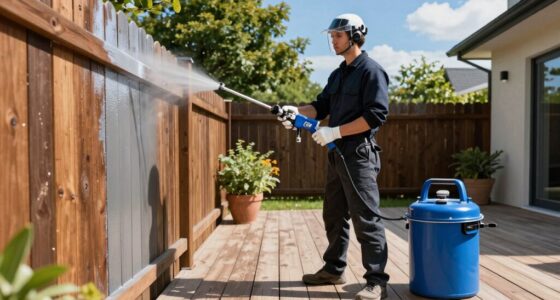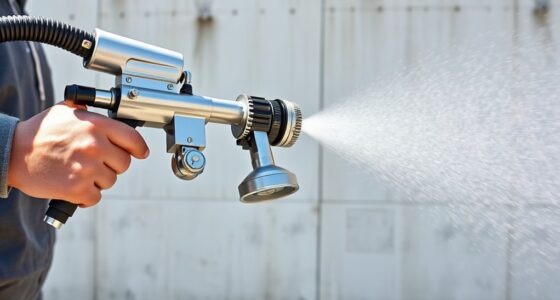
For a DIYer choosing an airless paint sprayer, the central question is how much work the tool needs to handle. A corded cart-style sprayer draws paint from a larger container and is better suited to rooms, fences, and repeated projects. A handheld sprayer keeps the pump and paint cup together, making it easier to carry and store for a door, a few chairs, or a small section of trim.

Get business pricing on tools and workshop supplies
- Business-only prices and quantity discounts
- Tax-exempt purchasing
- Multiple users, one account, clear invoices

Graco Magnum 257025 Project Painter Plus Paint Sprayer
- ✔ Material: Metal
- ✔ Country of origin: USA
- ✔ Maximum project size: Up to 5 gallons

InoKraft NEO Airless Paint Sprayer Kit, 3000 PSI 0.26 GPM
- ✔ Model: IK01099 (NEO)
- ✔ Maximum pressure: 3000 PSI
- ✔ Maximum paint output: 0.26 GPM

WORKPRO 700W Airless Paint Sprayer
- ✔ Motor power: 700 W
- ✔ Maximum pressure: 2900 PSI
- ✔ Flow rate: 0.317 GPM
Both can apply paint quickly, but neither removes the need to mask surfaces, practice on scrap, and clean the equipment promptly. The practical tradeoff is capacity and sustained coverage versus portability and convenience. Choose a corded model if your project has broad surfaces or several gallons of paint; choose a handheld if compact storage and avoiding a lengthy setup matter more than uninterrupted spraying.
At a Glance
| Criteria | Corded cart-style airless sprayers | Handheld airless sprayers | Winner |
|---|---|---|---|
| Best project size | Rooms, fences, sheds, and multiple large surfaces | Furniture, doors, cabinets, and small sections | Depends |
| Capacity and refilling | Typically draws from a larger paint container; fewer interruptions | Small onboard cup; frequent refills on larger jobs | A |
| Portability | Pump and hose are carried or wheeled; needs a power outlet | Compact and easy to carry, with no hose trailing behind | B |
| Setup and learning | More assembly and hose management; benefits from practice | Quick to bring out, though paint loading and spray practice still matter | B |
| Finish and control | Steady coverage over broad areas; overspray still needs control | Useful for short passes and smaller pieces; fatigue can affect control | Depends |
| Cleanup and storage | More components and hose to flush; larger storage footprint | Fewer parts to store, but the cup and internal passages need prompt cleaning | B |
| Value for DIY use | Better value when used for substantial or repeat projects | Better value for occasional, limited jobs when convenience matters | Depends |
Graco Magnum 257025 Project Painter Plus Paint Sprayer
The Graco Magnum Project Painter Plus earns our top spot because its combination of adjustable pressure and hose support addresses two practical challenges in household painting: matching the spray to the material and reaching the work without moving the sprayer as often. It supports up to 50 feet of paint hose, twice the length listed for the InoKraft and WORKPRO kits. For a multi-story exterior or work around a larger room, that reach can make positioning more convenient, provided the appropriate hose is used.Its flexible suction tube draws from a 1- or 5-gallon bucket, which helps avoid repeatedly filling a small onboard container. The description says it can spray unthinned paints or stains, but we should still follow the coating maker’s guidance and the sprayer instructions. Fully adjustable pressure offers more control than relying on a fixed output, especially when a project involves different surfaces or materials. Compared with InoKraft, Graco offers greater stated hose reach; InoKraft counters with a lower listed weight and a more expansive starter kit.The tradeoff is that its strengths are focused on the sprayer itself rather than an all-in-one preparation bundle. The provided details do not list masking materials or a cleanup valve like InoKraft’s Flush-Ease feature, so buyers should plan for the rest of the setup. It is also described as a DIY machine, which makes it a poor match for heavy, repeated professional workloads. For homeowners looking for a flexible sprayer for projects up to five gallons, reach and pressure control make this the most balanced choice here.
Pros:
- Fully adjustable pressure for different compatible paints and stains
- Supports up to 50 feet of hose for improved reach
- Flexible suction tube draws from 1- or 5-gallon buckets
- Designed for DIY household projects up to five gallons
Cons:
- Intended for DIY use rather than heavy professional workloads
- Supplied details do not specify the broad accessory bundle listed for InoKraft
Best for: DIY homeowners tackling projects up to five gallons who need adjustable pressure and the option of extended hose reach.
Not ideal for: Heavy professional use or buyers who want a starter kit with masking and cleanup accessories already specified.
Bottom line: We recommend the Graco for DIYers who value flexible pressure control and longer reach across household projects.
“We recommend the Graco for DIYers who value flexible pressure control and longer reach across household projects.”
InoKraft NEO Airless Paint Sprayer Kit, 3000 PSI 0.26 GPM
The InoKraft NEO is the easiest of these three to picture as a ready-to-organize DIY setup. At 10 pounds, it is the lightest model with a stated weight, and its built-in component storage helps keep small parts together between jobs. The package also includes masking film, painter’s tape, a touch-up brush, cleaning tools, and a 25-foot hose. That bundle matters because surface protection and cleanup are unavoidable parts of spraying, even when the sprayer itself is straightforward.Its listed output is 0.26 GPM at up to 3000 PSI, and it is specified for projects up to about five gallons. It draws directly from 1- or 5-gallon containers and can spray compatible latex, acrylic, stain, and primer without thinning when the coating permits. A 515 tip and 12-inch extension with a 360-degree swivel give buyers useful starting equipment and some added reach into awkward areas. Compared with Graco, however, the NEO’s 25-foot hose is less suited to jobs where extended hose routing is a priority. It is also below WORKPRO’s stated 0.317 GPM flow rate.We place it second because the lightweight kit and included prep supplies make it appealing for someone assembling a home-project setup, while its output and hose length remain more contained. “No thinning” is conditional: the coating must be compatible, and its directions still govern. That qualification is important for beginners choosing a paint. The NEO makes sense when the project is medium to large and the convenience of included accessories is worth more than the longer reach of Graco or the higher listed flow of WORKPRO.
Pros:
- Lightweight 10-pound design with built-in component storage
- Includes masking film, painter’s tape, touch-up brush, and cleaning tools
- Flush-Ease valve is intended to simplify cleanup
- Includes a 515 tip and 12-inch swivel extension
Cons:
- 25-foot hose offers less stated reach than Graco’s support for up to 50 feet
- Thinning-free spraying depends on coating compatibility
- Listed 0.26 GPM flow is lower than WORKPRO’s 0.317 GPM
Best for: DIYers who want a lightweight sprayer and a starter bundle of masking, touch-up, and cleaning supplies for projects around five gallons.
Not ideal for: Buyers who need more than 25 feet of hose, want the highest listed flow rate, or expect every coating to spray without thinning.
Bottom line: We favor the InoKraft when a lightweight, accessory-rich DIY kit matters more than maximum reach or the highest listed flow.
“We favor the InoKraft when a lightweight, accessory-rich DIY kit matters more than maximum reach or the highest listed flow.”
WORKPRO 700W Airless Paint Sprayer
For DIYers whose main priority is moving across a broad surface, the WORKPRO 700W has the strongest listed flow rate in this comparison: 0.317 GPM, compared with 0.26 GPM for the InoKraft. Its description also specifies 2900 PSI and says it can spray without thinning. Those figures make it the coverage-focused choice among these three, but they do not by themselves establish how quickly a particular room or exterior can be completed. Material, tip choice, surface preparation, and the operator’s pace still shape the result.Adjustable pressure gives the operator a way to tune the sprayer to a project, while the 25-foot hose and 12-inch extension rod help reach across surfaces and into areas that might otherwise require awkward positioning. The included goggles, wrench set, and cleaning kit cover several practical needs. Compared with InoKraft, WORKPRO has a higher stated flow rate, but InoKraft is lighter and includes masking supplies, a touch-up brush, and a Flush-Ease valve. Against Graco, WORKPRO’s hose is shorter than the 50-foot maximum hose support, making Graco a better fit when distance from the sprayer is a deciding factor.WORKPRO ranks third overall because speed-oriented specifications are only one part of a DIY purchase. The description warns that overspray still needs care, and routine cleaning and maintenance are required after use. As with other sprayers, users should confirm that the selected paint is suitable and follow its directions rather than treating thinning-free claims as universal. We would choose it for a larger surface where its higher flow specification is attractive and the user is prepared to mask carefully and clean the equipment after the job.
Pros:
- Highest listed flow rate in this comparison at 0.317 GPM
- Adjustable pressure for varying surfaces and projects
- 25-foot hose and 12-inch extension rod improve reach
- Includes safety goggles, wrench set, and cleaning kit
Cons:
- Overspray requires careful protection of nearby areas
- Cleaning and maintenance are necessary after use
- 25-foot hose is shorter than Graco’s supported maximum
Best for: DIYers prioritizing the highest stated flow rate here for covering larger surfaces and willing to manage masking and cleanup.
Not ideal for: First-time users seeking the lightest option, the most complete masking bundle, or longer hose reach for multi-story work.
Bottom line: We’d choose the WORKPRO for coverage-focused DIY work when its higher stated flow outweighs the need for careful masking and cleanup.
“We’d choose the WORKPRO for coverage-focused DIY work when its higher stated flow outweighs the need for careful masking and cleanup.”
As an Amazon Associate we earn from qualifying purchases.
Key Differences
The clearest difference is how long each tool can spray before the work stops. A corded cart-style model can feed from a larger container, so it suits walls, long fence runs, and projects that consume substantial paint. A handheld cup runs down sooner. On a large surface, repeated refilling adds pauses and handling; on a small project, the smaller supply is often enough and keeps the setup compact.
Portability reverses that advantage. The handheld unit is self-contained and easy to carry between a workbench, garage, and yard. A cart-style sprayer requires a place for its base, a power source, and room to manage the hose. Either kind can make a mess if aimed carelessly: airless spray can travel beyond the workpiece, so masking, ventilation, and a test pass are part of the job.
Cost makes sense only against expected use. A larger sprayer can justify its higher purchase price when it saves time across a room or several projects. For one chair or a couple of doors, paying for extra capacity may not improve the result enough to matter. In both cases, paint compatibility, nozzle selection, and cleaning effort affect satisfaction as much as the headline speed.
Detailed Comparison
Best project size (major difference)
Corded cart-style wins for large areas; handheld wins for small pieces. The gap is major when spraying an entire room or a long fence: a larger sprayer can keep working while a handheld would need frequent refills. For furniture or a single door, the cart’s capacity is excess equipment to set up and store. Pick by the area you will actually paint, not an imagined future project.
Capacity and refilling (Corded cart-style airless sprayers wins — major)
Corded cart-style wins, by a major margin on paint-intensive work. It usually pulls from a larger container, which reduces refill breaks and helps maintain a steady pace. A handheld’s cup is convenient to load and carry, but a broad job can require repeated stops. Those pauses add time and can interrupt a consistent rhythm, especially when the paint needs stirring or careful handling.
Portability (Handheld airless sprayers wins — major)
Handheld wins, with a major advantage for moving between small workpieces. Its integrated design avoids dragging a hose and separate base around. The corded sprayer can still be moved, particularly if it sits on a cart, but it needs room for the unit, hose, and power connection. For work spread across stairs, a garage, or outdoor furniture, the lighter setup is easier to manage.
Setup and learning (Handheld airless sprayers wins — moderate)
Handheld wins by a moderate margin for getting started. It generally takes less assembly and has fewer pieces to position. That does not make spraying effortless: both types require learning a consistent distance and speed, and both need masking and a practice pass. The corded model’s hose and priming steps add complexity, but that investment pays off when a large job keeps the sprayer in use.
Finish and control (moderate difference)
Neither wins in every situation; the difference is moderate. A corded sprayer can make broad, continuous passes across a wall or fence, while a handheld is easier to position around a small object. Technique matters more than format: overlapping passes, appropriate tip choice, and steady movement help avoid uneven coverage. Both can overspray, and neither guarantees a smooth finish without preparation and practice.
Cleanup and storage (Handheld airless sprayers wins — moderate)
Handheld wins for storage; cleanup is closer than the size difference suggests. It takes less shelf or floor space and has no long hose to coil. The corded sprayer occupies more room and its hose adds flushing work. A handheld still has paint passages that must be cleaned promptly, and a small cup does not mean cleanup can be skipped. The advantage is moderate unless storage space is especially limited.
Value for DIY use (major difference)
The winner depends on how much you will spray. A corded model’s higher purchase cost can be worthwhile if it covers large areas or serves repeated home projects; fewer refill interruptions make its capacity useful. A handheld usually offers stronger value for occasional short jobs, since compactness is a benefit you can use without needing a big workload. Paying more for capacity makes sense only when the project will use it.
Corded cart-style airless sprayers: Pros and Cons
Pros:
- Handles large surfaces and sustained sessions better
- Larger paint supply means fewer refill interruptions
- Useful across multiple substantial DIY projects
Cons:
- Higher upfront cost is hard to justify for one small job
- Needs space for the base, hose, and power connection
- More setup and flushing work
Handheld airless sprayers: Pros and Cons
Pros:
- Compact, self-contained, and easy to carry
- Quick to bring out for small jobs
- Takes less storage space and usually costs less
Cons:
- Small paint cup interrupts larger jobs with refills
- Can become tiring to hold through extended spraying
- Capacity and sustained use are less suited to broad surfaces
Who Should Choose What
Choose Corded cart-style airless sprayers if:
- You plan to spray several rooms, a fence, a shed, or another large surface.
- You expect to use the sprayer for multiple substantial projects.
- Fewer refill breaks matter more to you than compact storage.
Choose Handheld airless sprayers if:
- You mainly paint furniture, doors, small cabinets, or occasional craft projects.
- You need to carry the sprayer between work areas and have limited storage.
- A short setup for a limited job matters more than high paint capacity.
Skip both if: Skip both if you are painting only a tiny touch-up area, where brushing or rolling is simpler, or if you cannot mask and ventilate the work area adequately.
Value for Money
The corded cart-style model costs more to buy and takes more room, so its value depends on workload. For a full fence, several rooms, or repeat projects, the larger supply and sustained operation can make the extra cost worthwhile. If the planned job uses only a small amount of paint, those advantages sit idle.
A handheld is usually the more sensible purchase for occasional DIY work on small pieces. It gives up capacity but saves storage space and makes short sessions easier to start. Pay more for a corded unit only when you have enough broad coverage ahead to benefit from it; for limited jobs, choose the compact tool or use a brush and roller.
Final Verdict
For most DIYers with one small project, choose the handheld airless sprayer: it is easier to carry, store, and bring out for furniture or a door. Choose a corded cart-style sprayer if you are covering rooms, a long fence, or several major surfaces, where its larger paint supply and sustained pace can save meaningful time. The deciding factor is project area. Paying extra for a cart makes sense when you will use its capacity repeatedly; otherwise, its size and setup are costs without much return.
Frequently Asked Questions
Are airless sprayers worth it for a DIY project?
They can be worthwhile when the project covers broad surfaces or several pieces and speed matters. For a small touch-up or one simple item, brushing or rolling may be less work once masking and cleanup are counted.
Is a handheld airless sprayer suitable for painting a room?
It may apply paint, but its small cup means frequent refills, making a whole room less convenient. A corded model drawing from a larger container is generally the better fit for sustained wall coverage.
Does a corded airless sprayer give a better finish?
Not automatically. A corded model supports longer, steady passes across wide surfaces, while a handheld is easier to position on smaller workpieces. Surface preparation, compatible paint and tip, and consistent technique shape the finish with either type.
Which airless sprayer is easier to clean?
A handheld is smaller and has no long hose, so storage and flushing are often less cumbersome. Both types need prompt cleaning of the paint path after use; dried paint can make later cleanup much harder.
Fall yard work Picks
leaf blowers
As an affiliate, we earn on qualifying purchases.