For most buyers, I’d start with the DEWALT 20V MAX XR 5-Inch DCW211B, while the DEWALT 20V MAX Brushless DCW210B is a strong alternative for shoppers who prioritize a brushless motor. The DEWALT 6-Inch DCW230B stands out for larger sanding areas, and the AVID POWER 20V offers six speeds for buyers who want more adjustment options. The main tradeoffs are sanding-pad size, battery-platform compatibility, speed control, and whether a tool-only model makes sense with the batteries you already own. I compare all 12 options by their practical fit, features, and limitations below. Read on for the full breakdown and help choosing the right cordless random orbital sander for your work.

Get business pricing on tools and workshop supplies
- Business-only prices and quantity discounts
- Tax-exempt purchasing
- Multiple users, one account, clear invoices
Complete the kit


Key Takeaways
- The DEWALT 20V MAX XR 5-Inch DCW211B is my best overall pick: it is the most balanced choice for buyers who want a familiar 5-inch format and already use DEWALT 20V batteries.
- The brushless DEWALT DCW210B and kit version serve different buyers: the bare tool suits existing battery owners, while the kit is the more straightforward route for someone starting without compatible batteries.
- The 6-inch DEWALT DCW230B trades reach for handling: its larger pad can cover broad surfaces faster, but a 5-inch sander is easier to manage for smaller parts and tight areas.
- Battery-platform fit separates established brands from compatible-battery alternatives: SINGTIP and RKBUDOL are designed around DEWALT 20V batteries, but buyers should weigh that convenience against brand support and proven platform integration.
- More speed settings do not automatically make a better sander: AVID POWER’s six speeds and the six-speed brushless option offer adjustment, but battery availability, handling, and the workpiece matter just as much.


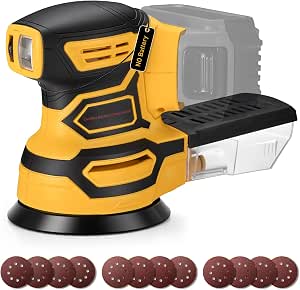


| cordless random orbital sander | Dust collection | Speed settings | Voltage | Speed range |
|---|---|---|---|---|
| AVID POWER 20V Cordless Random | 8 vacuum holes and removable dust collection bag | 6 | 20 V | 7,000–11,000 RPM |
| RYOBI 18V Cordless 5-Inch Rand | — | — | 18 V | — |
| DEWALT 20V MAX XR 5-Inch Cordl | Up to 95% with compatible DEWALT dust extractor | 5 | 20 V | — |
| DEWALT 20V MAX XR 6-Inch Cordl | Up to 95% with compatible DEWALT dust extractor | 5 | 20 V | — |
| Makita XOB01Z 18V Cordless 5-I | — | 7,000, 9,500, and 11,000 OPM | — | — |
| DEWALT 20V MAX Brushless 5-Inc | One-handed locking dust bag; compatible with DWV010 and DWV012 collectors | — | 20 volts | 8,000–12,000 OPM |
| SINGTIP 5-Inch Cordless Random | Eight intake ports and detachable dust bag | 6 | — | 7,000–13,500 RPM |
| CRAFTSMAN V20 5-Inch Cordless | Onboard dust bag; compatible with most 1 1/4-inch vacuum hoses | — | 20 volts | — |
| DEWALT 20V MAX 5-Inch Brushles | Locking dust bag; compatible with DWV010 and DWV012 collectors | — | 20V MAX | 8,000–12,000 OPM |
| RKBUDOL Cordless 5-Inch Random | Detachable dust collection box | 6 | — | 6,000–12,000 OPM |
| PANDAX 5-Inch Brushless Cordle | — | 6 | — | 7,000–12,000 OPM |
| Cordless 5-Inch Random Orbital | 8-hole suction system with removable rear dust bag | 6 | — | 9,700–19,000 RPM |
More Details on Our Top Picks
AVID POWER 20V Cordless Random Orbital Sander, 5-Inch, 6 Speeds
The AVID POWER is the most complete starting point here: it arrives with a 2.0Ah battery, charger, dust bag, and 30 sanding sheets, so buyers without a compatible tool battery can begin on small projects without sourcing extra parts. Its six speed settings from 7,000 to 11,000 RPM offer finer adjustment than the three fixed speeds on the Makita XOB01Z, while the included grits cover basic rough-to-medium sanding. That convenience comes with limits: the battery is modest for extended work, and the abrasives stop at 120 grit, leaving finer finishing discs to buy separately. Compared with the tool-only RYOBI PCL406B, this is a better self-contained pick; buyers already invested in a battery platform may prefer a tool-only model instead.
Pros:- Includes a 2.0Ah battery and charger, unlike the tool-only RYOBI and Makita options.
- Six speed settings provide more adjustment than the Makita XOB01Z’s three speeds.
- Comes with 30 hook-and-loop sheets in three useful coarse-to-medium grits.
- Textured grip, eight vacuum holes, and a removable dust bag support portable, one-handed work.
Cons:- The 2.0Ah battery is better suited to quick jobs than sustained sanding.
- Included abrasives do not go finer than 120 grit.
- The dust bag is less suited to extended dust control than a compatible extractor setup.
Best for: First-time cordless-sander buyers and DIYers handling short furniture, repair, or home-improvement jobs who need the battery and starter abrasives included.
Not ideal for: People sanding large surfaces for long stretches or seeking fine finishing grits in the box; the included 2.0Ah battery and 60/80/120-grit selection are limiting.
- Voltage:20 V
- Battery:2.0Ah lithium-ion, included
- Speed settings:6
- Speed range:7,000–11,000 RPM
- Disc diameter:5 in
- Dust collection:8 vacuum holes and removable dust collection bag
- Included sandpaper:30 sheets: 10 each of 60, 80, and 120 grit
- Weight:3.3 lb
Our verdict“Choose the AVID POWER if you want a cordless sander with its battery, charger, and starter abrasives included for small-to-medium DIY jobs.”
RYOBI 18V Cordless 5-Inch Random Orbit Sander (Tool Only)
The RYOBI PCL406B makes the most sense for buyers already using RYOBI 18V lithium-ion batteries: a compatible battery can move between tools, and this sander’s 5-inch pad and 10,000 rpm maximum suit routine work on wood, drywall, and composite surfaces. Its appeal is platform fit rather than a feature-rich kit. Unlike the AVID POWER, it includes no battery, charger, or starter pack of abrasives, so a new buyer must assemble those separately. It also offers less speed flexibility on the supplied information than the six-setting AVID POWER or DEWALT DCW211B. I’d rank it for existing RYOBI owners who want a straightforward portable sander, not as the strongest standalone choice for someone building a cordless setup from scratch.
Pros:- Uses the RYOBI 18V lithium-ion battery platform.
- 5-inch pad suits common sanding tasks across wood, drywall, and composite.
- 10,000 rpm maximum speed supports general surface preparation.
- Compact listed dimensions make it a portable option for workshop and job-site use.
Cons:- Battery and charger are sold separately.
- No sandpaper or dust-collection accessory is listed among the included components.
- The supplied specifications list a maximum speed but no adjustable speed settings.
Best for: DIYers and tradespeople who already own RYOBI 18V batteries and need a basic 5-inch sander for occasional wood, drywall, or composite work.
Not ideal for: Buyers without RYOBI batteries or those who want adjustable speed settings, included abrasives, and a ready-to-work kit.
- Voltage:18 V
- Battery type:Lithium-ion
- Disc diameter:5 in
- Maximum rotational speed:10,000 rpm
- Power source:Battery powered
- Battery and charger:Sold separately
- Dimensions:4 × 4 × 6 in
- Warranty:30-day limited warranty
Our verdict“Pick the RYOBI PCL406B if you already own RYOBI 18V batteries and want a simple tool-only sander for general-purpose jobs.”
DEWALT 20V MAX XR 5-Inch Cordless Random Orbital Sander (DCW211B)
The DEWALT DCW211B is the most compelling 5-inch choice here for buyers who can connect a compatible extractor. Its stated dust capture of up to 95% with a DEWALT extractor makes it better suited to indoor sanding than the AVID POWER’s included dust bag, though the extractor is a separate purchase. The five speeds from 8,000 to 12,000 OPM give useful control across surface-prep tasks, and the low-profile body and reduced vibration are intended to help with tight areas and longer sessions. Compared with the 6-inch DEWALT DCW230B, this model is easier to direct on smaller workpieces, but covers less area per pass. It is tool-only, so it best fits buyers already invested in DEWALT 20V MAX batteries and dust-control gear.
Pros:- Five speed settings span 8,000–12,000 OPM for task-specific control.
- Low-profile design is suited to work in tighter spaces.
- Reduced vibration may help limit fatigue during longer sanding sessions.
- Can capture up to 95% of dust when connected to a compatible DEWALT extractor.
Cons:- Battery and charger are sold separately.
- The dust extractor needed for the stated capture performance is sold separately.
- Its 5-inch pad covers less area per pass than the DEWALT DCW230B’s 6-inch pad.
Best for: DEWALT 20V MAX owners who sand indoors, work in tighter spaces, or plan to connect a compatible DEWALT dust extractor.
Not ideal for: Buyers seeking a complete kit or those without a compatible battery and extractor; both the battery and dust equipment are separate.
- Voltage:20 V
- Disc diameter:5 in
- Speed settings:5
- No-load speed:8,000–12,000 OPM
- Dust collection:Up to 95% with compatible DEWALT dust extractor
- Included sandpaper:8-hole, 80 grit
- Weight:3.8 lb
- Dimensions:9.53 × 7.99 × 5.91 in
Our verdict“Choose the DCW211B for controlled 5-inch sanding in tighter or dust-sensitive work areas if you already have DEWALT batteries and extractor equipment.”
DEWALT 20V MAX XR 6-Inch Cordless Random Orbital Sander (DCW230B)
For broad panels and other large wood surfaces, the DEWALT DCW230B’s 6-inch disc is its defining advantage: it covers more area per pass than the 5-inch DEWALT DCW211B and the other sanders in this group. Its five settings from 6,000 to 10,000 OPM give a lower-speed range suited to dialing back work on larger surfaces, while wireless tool control can start a compatible vacuum. Dust capture is listed at up to 95% with a compatible DEWALT extractor, but neither that extractor nor the battery and charger comes with this tool-only model. The larger pad may be less convenient on narrow parts and tight areas than the DCW211B’s 5-inch setup. I’d choose it for open workpieces, not as the most versatile size for mixed, detailed jobs.
Pros:- 6-inch disc covers more area per pass than the 5-inch models in this roundup.
- Five speed settings span 6,000–10,000 OPM.
- Wireless tool control can initiate compatible vacuum operation.
- Up to 95% dust collection is specified with a compatible DEWALT extractor.
Cons:- Battery and charger are sold separately.
- The compatible dust extractor is sold separately.
- The larger pad is less suited to narrow workpieces and tight spaces than the DCW211B.
Best for: Woodworkers and DEWALT 20V MAX owners who regularly sand large tabletops, panels, or broad cabinet surfaces and can connect a compatible extractor.
Not ideal for: People focused on small parts, tight corners, or detail work; the 6-inch pad is less maneuverable, and the battery, charger, and extractor are separate.
- Voltage:20 V
- Disc diameter:6 in
- Speed settings:5
- No-load speed:6,000–10,000 OPM
- Dust collection:Up to 95% with compatible DEWALT dust extractor
- Wireless tool control:Can start compatible vacuum operation
- Power source:Battery powered
- Dimensions:9.45 × 8.07 × 5.87 in
Our verdict“Choose the DCW230B if your priority is covering large wood surfaces quickly and you already have access to DEWALT batteries and a compatible extractor.”
Makita XOB01Z 18V Cordless 5-Inch Random Orbit Sander, Tool Only
The Makita XOB01Z focuses on controlled, repeatable sanding rather than offering the widest speed range. Its three one-touch settings—7,000, 9,500, and 11,000 OPM—make common pace changes straightforward, while the 1/8-inch orbit, pad brake, and start-up speed control are aimed at reducing abrupt starts and supporting a clean finish. Those controls give it a different emphasis from the DEWALT DCW211B, which offers five settings and a low-profile design for tighter access. The Makita’s battery is sold separately, and its stated runtime is up to 40 minutes per charge, so long sessions may call for a spare. The supplied data lists the weight as 4.54 g, which appears inconsistent for a power tool; I have not relied on that figure when judging handling.
Pros:- Three one-touch speed settings provide straightforward control.
- Pad brake and start-up speed control support more controlled contact with the workpiece.
- 1/8-inch orbit is specified for material removal and a swirl-free finish.
- Includes a 5-inch 120-grit abrasive disc and dust bag.
Cons:- Battery is sold separately.
- Stated runtime is up to 40 minutes per charge.
- Three fixed speed choices offer less adjustment than the five-setting DEWALT DCW211B.
Best for: Makita 18V LXT owners who want a 5-inch sander with controlled startup and pad braking for furniture finishing and routine surface work.
Not ideal for: Buyers who need a complete kit, more than three speed choices, or long uninterrupted sanding without a spare battery.
- Battery platform:18V LXT lithium-ion
- Speed settings:7,000, 9,500, and 11,000 OPM
- Orbit diameter:1/8 in
- Disc diameter:5 in
- Abrasive attachment:8-hole hook-and-loop
- Run time:Up to 40 minutes per charge
- Battery:Sold separately
- Included components:5-inch 120-grit abrasive disc and dust bag
Our verdict“Pick the Makita XOB01Z if you already use Makita 18V LXT batteries and value controlled startup and pad braking over a wider range of speed settings.”
DEWALT 20V MAX Brushless 5-Inch Random Orbital Sander, Tool Only (DCW210B)
The DEWALT DCW210B is the strongest all-round choice here for buyers already using DEWALT 20V batteries. Its brushless motor and adjustable 8,000–12,000 OPM range make it more adaptable than the single-maximum-speed CRAFTSMAN V20 CMCW220B, especially when a project moves between stock removal and finer surface work. A low-profile body helps keep the pad close to the work, while the hook-and-loop backing speeds up paper changes. Dust collection works through the included bag or compatible DEWALT collectors, though connecting other vacuum systems calls for a separate adapter. This is a tool-only purchase, so its value depends on already owning the battery platform; buyers starting from scratch may prefer the DEWALT kit, which includes a battery and charger.
Pros:- Brushless motor paired with variable speed supports varied sanding tasks.
- Low-profile design helps maintain control close to the work surface.
- Hook-and-loop pad allows quick abrasive changes.
- Includes a locking dust bag and supports compatible DEWALT dust collectors.
Cons:- Battery and charger are sold separately.
- A separately sold adapter is needed for connections to other vacuum systems.
Best for: DEWALT 20V tool owners who want a versatile 5-inch sander for routine furniture, trim, and workshop projects.
Not ideal for: New cordless-tool buyers who need a battery and charger included, or users who want to connect a non-DEWALT vacuum without buying an adapter.
- Pad size:5 inches
- Motor:Brushless
- Voltage:20 volts
- Speed range:8,000–12,000 OPM
- Pad attachment:8-hole hook-and-loop
- Weight:2.5 pounds
- Dust collection:One-handed locking dust bag; compatible with DWV010 and DWV012 collectors
- Included:Sander and dust bag; battery and charger sold separately
Our verdict“Choose the DCW210B for a capable, adjustable sander if you already own DEWALT 20V batteries.”
SINGTIP 5-Inch Cordless Random Orbital Sander for DEWALT 20V Batteries
The SINGTIP makes its case with a useful starter bundle: 20 sanding discs in five grits arrive with the sander, dust bag, and six speed settings. Its 7,000–13,500 RPM range reaches higher than the DEWALT DCW210B’s listed 12,000 OPM ceiling, giving buyers a wider stated speed span, though the supplied data uses different speed units, so the figures are not a direct performance comparison. The brushless motor includes overload and thermal protection, adding safeguards during demanding sessions. Like the RKBUDOL RS01, it relies on compatible DEWALT 20V batteries rather than including one. That makes it appealing to existing platform owners, but less convenient for newcomers; its brand-specific battery fit also narrows flexibility compared with a complete kit.
Pros:- Includes 20 hook-and-loop discs across five grits.
- Six speed settings allow adjustment for different sanding tasks.
- Brushless motor has overload and thermal protection.
- Detachable dust bag and eight dust-intake ports support debris collection.
Cons:- Battery and charger are not included.
- Battery compatibility is limited to DEWALT 20V MAX packs.
- The stated speed range is in RPM, limiting direct comparison with models specified in OPM.
Best for: DEWALT 20V battery owners who want a ready-to-start sanding bundle with multiple grits for home repairs and small woodworking jobs.
Not ideal for: Buyers without compatible DEWALT batteries, or those who prefer a sander from an established cordless-tool system with a clearly stated OPM range.
- Pad size:5 inches
- Motor:Brushless
- Speed settings:6
- Speed range:7,000–13,500 RPM
- Battery compatibility:DEWALT 20V MAX batteries
- Dust collection:Eight intake ports and detachable dust bag
- Included abrasives:20 discs: P60, P80, P120, P180, and P240, four each
- Dimensions:5.98 × 4.53 × 6.1 inches
Our verdict“Pick the SINGTIP if you already have a DEWALT 20V battery and value included abrasives over a bundled power pack.”
CRAFTSMAN V20 5-Inch Cordless Random Orbit Sander (Tool Only, CMCW220B)
The CRAFTSMAN CMCW220B is a straightforward match for buyers already invested in the V20 battery system. Its stated maximum of 12,000 OPM is less adjustable than the DEWALT DCW210B’s variable-speed control, so it suits repeatable, general-purpose sanding better than work that calls for careful speed tuning. In return, the design keeps things simple: a lightweight, low-profile body, dust-sealed switch, and onboard bag cover the basics, with compatibility for most 1 1/4-inch vacuum hoses offering a practical dust-management option. It also includes three grits, unlike the tool-only DEWALT DCW210B. The tradeoff is that the battery and charger remain separate purchases, and the listing provides no selectable speed range.
Pros:- Lightweight, low-profile design supports controlled handling.
- Dust-sealed switch is designed to resist workshop debris.
- Dust bag and compatibility with most 1 1/4-inch vacuum hoses offer collection choices.
- Includes 60-, 80-, and 120-grit sanding papers.
Cons:- Battery and charger are sold separately.
- Only a maximum speed is specified, with no variable-speed range listed.
- VERSATRACK clip and accessories are sold separately.
Best for: CRAFTSMAN V20 owners who need a light 5-inch sander for occasional surface prep, paint removal, or smoothing seams.
Not ideal for: Sanding users who need variable speed for delicate finishes or who are building a cordless system and need a battery and charger in the box.
- Pad size:5 inches
- Voltage:20 volts
- Maximum speed:12,000 OPM
- Weight:2.6 pounds
- Dimensions:7.7 × 5.8 × 5.8 inches
- Dust collection:Onboard dust bag; compatible with most 1 1/4-inch vacuum hoses
- Included abrasives:60-, 80-, and 120-grit paper
- Warranty:3-year limited warranty
Our verdict“Choose this CRAFTSMAN for uncomplicated sanding if you already own V20 batteries and do not need adjustable speed.”
DEWALT 20V MAX 5-Inch Brushless Cordless Random Orbital Sander Kit
This DEWALT kit earns its place by removing the main obstacle of the DCW210B: it comes with a 2.0Ah battery and charger, plus a contractor bag and dust bag. The sander itself shares the tool-only model’s brushless motor, low-profile layout, and 8,000–12,000 OPM variable speed, so the choice between them comes down largely to whether you need a power pack and carrying bag. Compared with the CRAFTSMAN CMCW220B, the DEWALT offers a specified adjustable speed range rather than a single listed maximum. Dust management still depends on the included bag or compatible DEWALT collectors. The supplied battery makes this a simpler entry point, but buyers who already own compatible batteries may find the DCW210B’s tool-only format a better fit.
Pros:- Includes a 2.0Ah battery and charger for a ready-to-use kit.
- Brushless motor and variable speed suit a range of sanding jobs.
- Low-profile design helps work close to the surface.
- Contractor bag and dust bag are included.
Cons:- The included battery is a 2.0Ah pack, which may limit uninterrupted runtime on longer jobs.
- Dust collection relies on the dust bag or compatible DEWALT collectors.
- The listed weight is 1.95 kg.
Best for: First-time DEWALT 20V buyers who want a variable-speed sander with a battery, charger, and carrying bag in one package.
Not ideal for: DEWALT 20V owners who already have batteries and a charger, or users seeking a larger-capacity battery for extended sanding sessions.
- Pad diameter:5 inches
- Motor:Brushless
- Voltage:20V MAX
- Battery:2.0Ah DCB203
- Speed range:8,000–12,000 OPM
- Pad attachment:8-hole hook-and-loop
- Dust collection:Locking dust bag; compatible with DWV010 and DWV012 collectors
- Included components:Sander, DCB112 charger, DCB203 battery, contractor bag, and dust bag
Our verdict“Choose this kit over the tool-only DCW210B when you need a battery, charger, and carry bag as well as adjustable sanding speed.”
RKBUDOL Cordless 5-Inch Random Orbital Sander for DEWALT 20V Batteries
The RKBUDOL RS01 is the most appealing option here for buyers who want a lower starting speed: its six settings begin at 6,000 OPM, below the DEWALT DCW210B’s 8,000 OPM floor. That wider low-end reach can give users more control when sanding delicate finishes or working with materials that call for a gentler approach. A brushless motor, detachable dust box, and 12 included discs add practical value, though the assortment is limited to 80, 120, and 240 grit. Compared with the SINGTIP, it lists speed in OPM and has a lower minimum, while both require DEWALT 20V batteries. The main limitation is platform dependence: this is not a complete kit, and its compatibility is restricted to specified DEWALT battery models.
Pros:- Six settings span a low 6,000 OPM starting point to 12,000 OPM.
- Brushless motor and 5-inch hook-and-loop pad suit varied sanding tasks.
- Detachable dust collection box is included.
- Twelve discs cover 80-, 120-, and 240-grit sanding.
Cons:- Battery and charger are not included.
- Compatibility is limited to specified DEWALT 20V battery models.
- Included discs do not cover very coarse grits.
Best for: DEWALT 20V battery owners who need a lower-speed setting for controlled work on delicate finishes, painted surfaces, or mixed materials.
Not ideal for: Buyers without a listed compatible DEWALT battery, or those who need a battery and charger or a wide selection of coarse sanding discs.
- Pad diameter:5 inches
- Motor:Brushless
- Speed settings:6
- Speed range:6,000–12,000 OPM
- Battery compatibility:Specified DEWALT 20V packs, including DCB200, DCB203, DCB204, DCB205, and DCB206
- Pad attachment:Hook-and-loop
- Dust collection:Detachable dust collection box
- Included discs:12: 80, 120, and 240 grit, four each
- Weight:2.7 pounds
Our verdict“Pick the RS01 if you own a compatible DEWALT battery and want a lower minimum speed than the DEWALT DCW210B provides.”
PANDAX 5-Inch Brushless Cordless Random Orbital Sander, Tool Only
The PANDAX suits buyers who already own DeWalt 20V MAX batteries and want a light sander for smaller projects. Its 2-pound body and six settings from 7,000 to 12,000 OPM give it a lower-speed range for controlled work than the other listed cordless sander, whose range starts at 9,700 RPM and reaches 19,000 RPM. That makes the PANDAX the more measured option on delicate surfaces, while the other model offers a higher stated speed ceiling. A dust box and ten assorted sanding sheets help get a project started, and the five-year warranty is a useful ownership detail. The tradeoff is a smaller speed range, plus no battery or charger in the box; buyers without compatible DeWalt packs will need to account for that separately.
Pros:- Brushless motor with six settings from 7,000 to 12,000 OPM supports controlled speed selection.
- At 2 pounds, the compact body is suited to overhead and extended sanding.
- Includes a dust box and ten sanding sheets across several grits.
- Five-year warranty is specified.
Cons:- Battery and charger are not included.
- Compatible only with DeWalt 20V MAX lithium-ion batteries.
- Its 12,000 OPM maximum is lower than the other reviewed sander’s stated 19,000 RPM ceiling.
Best for: DIYers with DeWalt 20V MAX batteries who want a lightweight sander for furniture, trim, and other controlled 5-inch sanding jobs.
Not ideal for: Buyers seeking a complete ready-to-use kit, a higher maximum speed, or compatibility with battery platforms other than DeWalt 20V MAX.
- Motor:Brushless
- Battery compatibility:DeWalt 20V MAX lithium-ion; battery not included
- Speed range:7,000–12,000 OPM
- Speed settings:6
- Disc diameter:5 inches
- Orbit diameter:1.1 inches
- Weight:2 lbs
- Included accessories:Dust box and 10 sanding sheets
- Warranty:5 years
Our verdict“Choose the PANDAX if you already have DeWalt 20V MAX batteries and prioritize a lightweight tool with a lower-speed range over maximum sanding speed.”
Cordless 5-Inch Random Orbital Sander, Brushless, 6-Speed, Tool Only
This sander is the stronger fit for buyers who want a broad stated speed range and a few useful accessories in the box. Its six settings span 9,700–19,000 RPM, giving it a higher top speed than the PANDAX, though the PANDAX starts at a lower stated speed for more restrained sanding. The 8-hole dust collection system feeds a removable rear bag, while hook-and-loop attachment makes disc swaps quick. Eighteen discs, gloves, and goggles add convenience for someone assembling a basic sanding setup. At 1.22 kg, however, it is heavier than the 2-pound PANDAX, and the included battery compatibility is described as “Dew 20V Max,” so buyers should verify their pack matches. Battery and charger are not included, and the product data gives RPM rather than OPM, making direct speed comparisons approximate.
Pros:- Six speed settings reach a stated maximum of 19,000 RPM.
- Eight-hole suction system and removable rear dust bag collect sanding debris.
- Package includes 18 sanding discs, safety gloves, and goggles.
- Brushless motor and internal cooling system are specified for sustained operation.
Cons:- Battery and charger are not included.
- Battery compatibility is listed as Dew 20V Max, which may require buyers to confirm pack fit.
- At 1.22 kg, it weighs more than the PANDAX.
Best for: DIYers who already have a compatible Dew 20V Max battery and want a higher stated speed ceiling plus sanding discs and basic protective gear.
Not ideal for: Buyers who need a battery and charger included, prefer a lighter tool for prolonged overhead work, or want clearly specified compatibility with a different battery platform.
- Motor:300W brushless
- Battery compatibility:Dew 20V Max; battery not included
- Speed range:9,700–19,000 RPM
- Speed settings:6
- Pad size:5 inches
- Weight:1.22 kg
- Dust collection:8-hole suction system with removable rear dust bag
- Included sanding discs:18 discs: P60, P80, P120, P180, and P240
- Included accessories:Safety gloves, goggles, and user manual
Our verdict“Pick this model over the PANDAX if you value its higher stated speed ceiling and included accessories more than lower weight and a lower-speed starting point.”
How We Picked
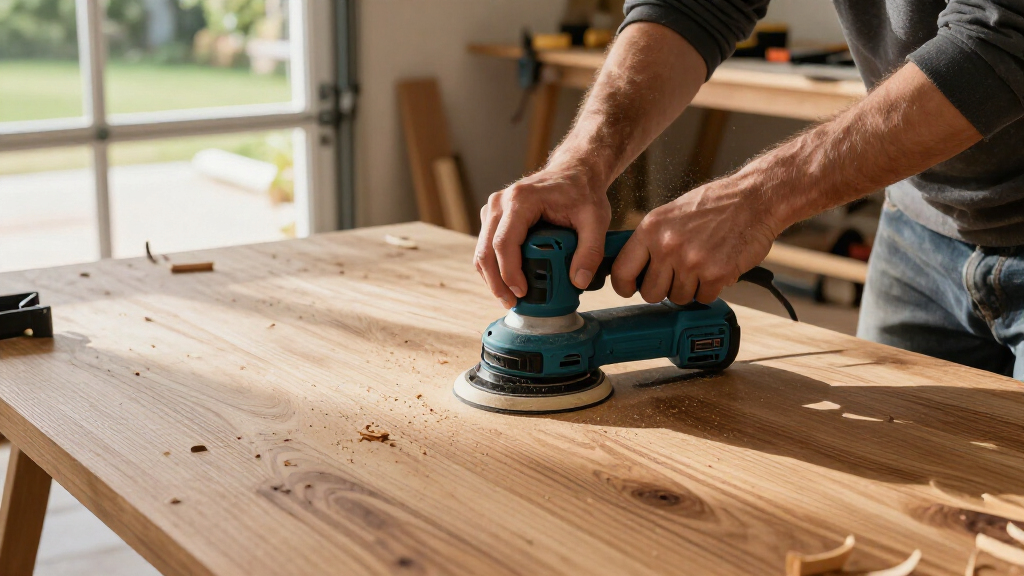
I ranked these cordless random orbital sanders by how well their stated design and features match common sanding jobs, not by brand name alone. I focused on pad size, speed control, motor type, battery compatibility, and kit format, since those choices affect coverage, control, runtime planning, and the amount a buyer needs to add before getting started. I also considered the practical difference between 5-inch models for general work and the 6-inch option for larger surfaces.
The ranking favors a useful balance of format, platform fit, and buyer flexibility. Established-brand options take priority where their ecosystem or product positioning makes the choice clearer; brushless models earn attention for buyers who value that motor design, while battery-compatible alternatives may appeal to owners of an existing pack but warrant closer checks on support and compatibility. A tool-only listing ranks lower for a new cordless-tool buyer if it leaves a battery and charger to source separately. Since the listed products do not provide comparable information on runtime, dust collection, or warranty terms, I avoid treating those details as settled advantages.
Factors to Consider When Choosing Cordless Random Orbital Sanders
Choosing among cordless random orbital sanders is less about chasing the longest feature list and more about matching the tool to your work, battery shelf, and sanding habits. I’d settle the platform and pad-size questions first; those decisions can matter more day to day than a small difference in speed settings.
Match the Battery Platform to Your Existing Tools
Start by checking the exact battery system you own, not just the voltage printed on a pack. A tool-only sander can be a sensible addition when you already have compatible batteries and a charger, but it may be a poor first purchase if those items are missing. Battery compatibility listings from third-party brands deserve extra scrutiny: check the stated pack fit, charging arrangements, and seller support before relying on a battery you need for other work. Avoid assuming that every battery bearing a familiar brand name fits every tool in that family. If your batteries are split across several systems, the convenience of using a pack you already own may outweigh a modest feature advantage elsewhere.
Choose Pad Size for the Workpiece, Not Just Speed
A 5-inch pad is the more flexible starting point for furniture, trim-sized components, and general shop work. A 6-inch pad covers more area with each pass, which can help on broad panels, but it can feel less nimble on narrow parts and edges. Bigger pads also need matching abrasives, so check what sizes and grits are easy for you to source before choosing. A common mistake is buying a larger sander to save time on occasional wide surfaces, then finding it awkward for most regular tasks. If your projects vary, a 5-inch model is often the easier single-sander compromise.
Treat Speed Control as a Control Tool, Not a Shortcut
Variable speed can help you adapt to delicate finishes, heat-sensitive materials, or a particular abrasive, but it does not replace the right grit and a light, even touch. More settings can make fine adjustments easier, while a simpler control may be perfectly adequate for routine wood sanding. Beginners often press harder when a sander seems slow; that can worsen the finish and put unnecessary strain on the tool. Start with a suitable abrasive and let the sander work at a steady pace, then adjust speed only when the surface or material calls for it. Before buying, consider whether you will use that control often enough to value it over simpler operation.
Weigh Brushless Design Against the Full Tool Setup
A brushless motor may appeal to buyers who prioritize motor design and want a model positioned for regular cordless use. It should not be treated as a guarantee of longer runtime or better finish without comparable specifications for the exact models. The battery, abrasive, surface, and workload all affect how a cordless sander performs in practice. If you are comparing a brushless bare tool with a kit, include the cost and availability of a compatible battery and charger in your decision. A complete kit can be the cleaner choice for a first-time buyer, while an existing platform owner may get more value from the bare tool.
Plan for Dust, Abrasives, and Setup
Dust management and abrasive compatibility shape the day-to-day experience, even when they are not the headline features in a product listing. Check how the sander’s dust outlet connects to the extractor or collection setup you already use, and confirm that replacement discs are easy to find in the required size and attachment style. A mismatch can add adapters, extra cleanup, or delays between grits. Do not assume that a dust bag makes extraction unnecessary, especially for frequent indoor sanding. Buyers who sand for long stretches should also think about grip, balance, and how comfortably they can hold the tool rather than choosing from motor or speed claims alone.
Decide When a Premium Platform Is Worth It
Paying more for a platform-focused model can make sense if you already own its batteries, chargers, and other tools, or if consistent support matters to your buying decision. For occasional home projects, a lower-cost or less-established option may be enough if its compatibility and basic setup fit your needs. The tradeoff is that the initial tool cost is only one part of ownership: batteries, chargers, abrasives, and any needed adapters can change the total. Compare complete setups rather than bare-tool listings against kits. If a sander will see frequent use, prioritize a dependable platform and comfortable handling; if it will come out a few times a year, avoid paying for features you will rarely use.
Frequently Asked Questions
Should I buy a tool-only sander or a kit?
I’d choose a tool-only model if I already own a compatible battery and charger and want to stay within that platform. A kit is usually the simpler route when I am starting from scratch, since it can provide the power components needed to use the sander. Compare what is actually included in each listing rather than assuming every kit has the same battery capacity or charger. Also check whether the battery is shared with tools I plan to use, since that can make a kit more useful beyond sanding. The right choice depends on the complete setup, not just the sander itself.
Is a 6-inch cordless sander better than a 5-inch model?
Not for every job. A 6-inch pad can cover broad panels more quickly, but it is larger and can be harder to guide on narrow parts or near edges. The 5-inch format is the more flexible choice for mixed household and shop tasks, and its abrasives may be easier to find locally. I’d pick 6 inches when large, flat surfaces make up much of the workload and choose 5 inches for varied projects. Check the sanding discs you can readily buy before settling on a pad size.
Will a sander made for DEWALT 20V batteries work with every DEWALT 20V pack?
Do not assume universal fit from a short compatibility claim. Check the sander listing for the specific battery types it accepts, and confirm that your pack attaches securely and is supported by the seller or manufacturer. This matters especially for third-party sanders designed around another brand’s battery system. Compatibility is only one part of the decision; charging, service, and replacement-tool support may differ from a sander made within the battery platform. If you cannot confirm the fit, contact the seller before relying on that battery for a project.
Do I need a brushless random orbital sander?
Not necessarily. Brushless design is a useful point of comparison, but it does not by itself tell me how long a battery will last, how comfortable the tool will feel, or what finish it will produce. For occasional sanding, pad size, battery fit, and a manageable grip may matter more. Frequent users may prefer to weigh brushless models more closely, especially when choosing between otherwise similar tools. I’d compare the whole tool setup and avoid paying extra for a motor label without a clear benefit for my workload.
Which cordless sander makes the most sense for a first-time buyer?
I’d start with a familiar 5-inch format and a battery setup that is complete or already matches tools I own. That keeps the choice manageable and leaves room for common projects, from furniture to small panels. A model with speed adjustment can offer more control, but a beginner can get good results by choosing the right grit, keeping the sander moving, and avoiding excess pressure. Before ordering, check whether the listing includes a battery and charger, what abrasives it accepts, and how its dust outlet fits your setup. Those details can matter more at the start than having the most settings.
Conclusion
For a well-rounded starting point, I’d choose the DEWALT 20V MAX XR 5-Inch DCW211B as best overall, especially if I already own DEWALT 20V batteries. My best value direction is the AVID POWER 20V for buyers who want six speed settings, provided its battery setup and support meet their needs. For a best premium pick, I’d look at the brushless DEWALT DCW210B; choose the kit version instead if you need the battery and charger as well. A first-time buyer should favor a manageable 5-inch model with a complete, compatible setup, while anyone sanding broad panels regularly should consider the 6-inch DEWALT DCW230B. If a third-party model built for DEWALT batteries appeals to you, verify pack compatibility and support before choosing it over a platform-native option.