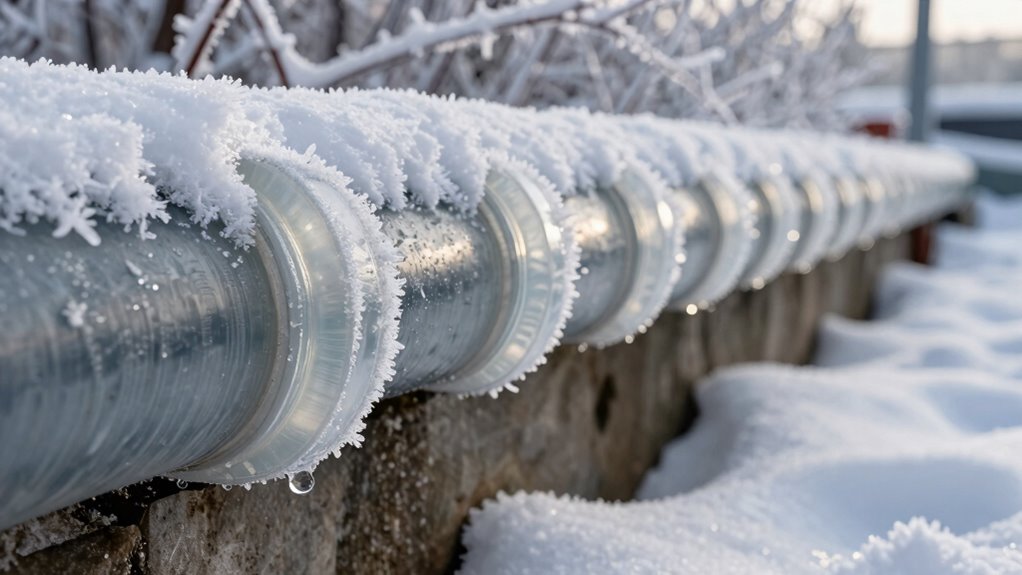

To prevent your water lines from freezing in cold weather, start by insulating exposed pipes with foam sleeves or heat tape, especially those near exterior walls or in unheated areas. Keep a steady drip of water running from faucets on exterior walls to maintain flow. Use space heaters carefully in vulnerable spots, and monitor weather forecasts to prepare for upcoming cold snaps. If you’d like tips on identifying risky pipes and long-term strategies, continue exploring effective winter-proofing methods.
Key Takeaways
- Insulate exposed pipes with foam sleeves or insulation tape, especially in unheated areas and near exterior walls.
- Keep outdoor faucets turned off, disconnect hoses, and cover outdoor plumbing with insulated covers.
- Allow a small steady flow of water through faucets to prevent freezing inside pipes.
- Use heat tape or space heaters safely to maintain warmth around vulnerable pipes.
- Monitor weather forecasts and proactively drain outdoor lines before cold snaps to prevent freezing.

Duck Brand Foam Pipe Covers, Pipe Insulation Foam Tubes for Hot and Cold Water Pipes, Pre Slit and Self Sealing Adhesive Edge, 0.75 in. x 1 Ft., 6 Sticks Per Package, 6 Feet Total, Black
- Suitable for Hot and Cold Pipes: Insulates hot and cold water pipes
- Pre-Slit for Easy Installation: Pre-slit design for quick setup
- Self-Sealing Edges: Securely seals around pipes
As an affiliate, we earn on qualifying purchases.
As an affiliate, we earn on qualifying purchases.
Why Frozen Pipes Are a Winter Emergency: And How to Prevent Them

When temperatures drop considerably, your pipes are at risk of freezing, which can lead to costly and disruptive emergencies. Frozen pipes can burst, causing water damage and expensive repairs. To prevent this, prioritize proper pipe insulation around vulnerable areas like basements, attics, and exterior walls. Insulating pipes helps maintain warmth and reduces the chance of freezing. Additionally, practicing emergency preparedness by knowing how to shut off your water supply quickly can minimize damage if a pipe does burst. Keep cabinet doors open to allow warm air circulation around pipes, especially in unheated spaces. Staying proactive with insulation measures and preparedness efforts, including understanding temperature thresholds, ensures you’re ready to handle cold snaps, helping you avoid the chaos and expenses associated with frozen pipes. Using high-quality insulation materials can provide better protection and durability during harsh weather conditions. Proper pipe installation techniques are also essential in minimizing areas susceptible to freezing and ensuring long-term protection.
How to Identify Pipes at Risk of Freezing in Your Home
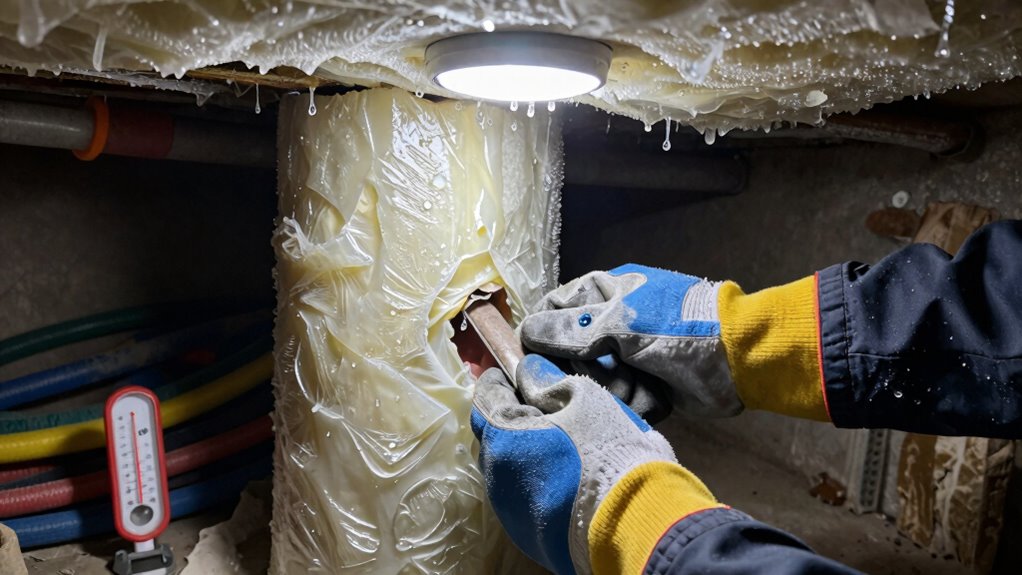
Check your home for unheated areas like basements, attics, or garages, as these spots are more prone to freezing. Exterior pipes and outdoor faucets are especially vulnerable during cold weather. By identifying these locations now, you can take steps to protect them before the temperature drops further. Utilizing energy-efficient cloud servers can help monitor and alert you to temperature fluctuations in real time, preventing freezing issues. Incorporating vetted home insulation techniques can further reduce the risk of frozen pipes by maintaining consistent indoor temperatures. Understanding sound healing science can also inspire innovative ways to create a warm, comfortable environment that minimizes cold spots, especially in areas with poor insulation or drafts.
Unheated Areas Susceptible to Freezing
Unheated areas in your home are especially vulnerable to freezing pipes during cold weather. These spots lack sufficient insulation to keep pipes warm. To identify pipes at risk, check areas like attics, basements, garages, and under crawl spaces. Look for:
- Pipes near exterior walls or uninsulated walls, especially around outdoor faucets, which often lack pipe insulation.
- Pipes running through unheated spaces, such as the garage or basement, where temperatures drop quickly.
- Exposed pipes that are not protected by any form of insulation or heating source.
Additionally, consider essential oils for respiratory health which can support overall well-being during the cold months. If you find these pipes, consider adding pipe insulation to keep the water flowing. Proper insulation techniques can significantly reduce the risk of freezing. Don’t forget to drain outdoor faucets to prevent freezing and damage during cold snaps.
Exterior Pipes and Outlets
Ever wonder which exterior pipes are most vulnerable to freezing? These pipes are typically located where landscaping considerations leave them unprotected, such as along exterior walls or in poorly insulated areas. Outdoor faucet covers are essential for shielding exposed outlets from freezing temperatures. Check for pipes that run through unheated spaces, like garages or crawl spaces, as they’re more prone to freezing. Use the table below to identify at-risk exterior pipes:
| Location | Risk Level |
|---|---|
| Exposed outdoor faucets | High |
| Pipes near landscaping | Moderate |
| Covered exterior walls | Low |
Being aware of freezing risks can help you take timely preventative measures to protect your plumbing. Additionally, understanding electric bike power and the typical horsepower of electric dirt bikes can inform your choices for outdoor equipment in cold weather. Recognizing insulation considerations can further improve your efforts to prevent pipe freezing during harsh winter conditions. It is also helpful to evaluate pipe insulation techniques to enhance your home’s defenses against freezing temperatures.
Preparing Your Home’s Exterior and Plumbing for Cold Weather
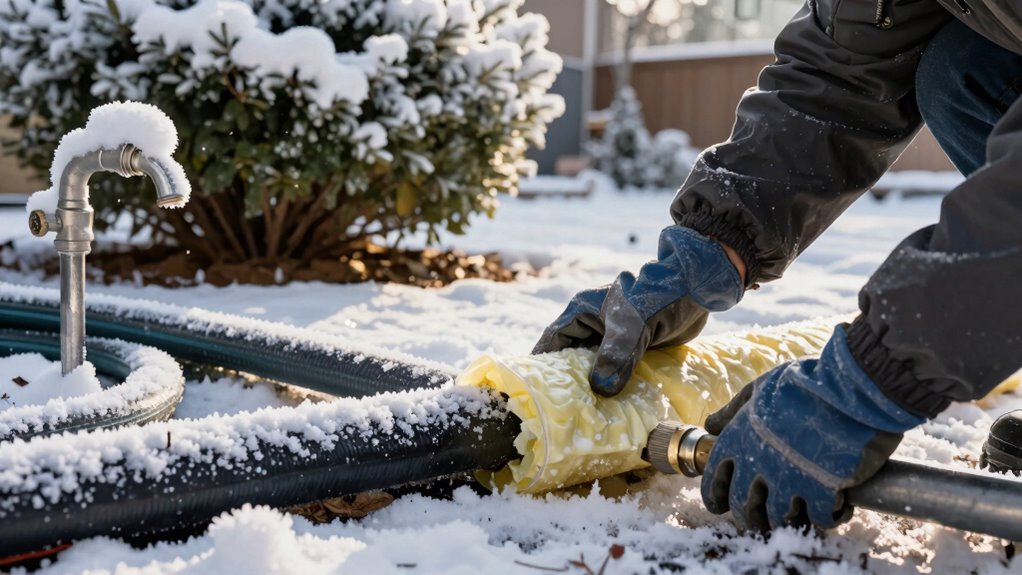
As temperatures begin to drop, it’s vital to get your home’s exterior and plumbing ready for the cold weather ahead. Start by inspecting outdoor faucets and shutting off the water supply to prevent freezing. Next, apply pipe insulation around exposed pipes to keep them warm and prevent bursts. Finally, consider installing outdoor faucet covers to add an extra layer of protection. These steps help ensure your plumbing stays functional during the coldest months. Remember, taking these simple precautions now can save you from costly repairs later. Keep an eye on vulnerable areas, and don’t forget to disconnect garden hoses to prevent water from freezing inside the lines. Additionally, consulting a professional for proper insulation techniques can further safeguard your plumbing system. Incorporating smart home technology such as temperature sensors and automated alerts can help monitor your home’s exterior and prevent potential issues before they arise. Using advanced water management systems can also provide added protection against freezing and leaks. Employing modern plumbing safeguards like leak detectors and automated shutoff valves can further enhance your home’s resilience during winter. Staying informed about winter weather forecasts can help you better prepare for sudden temperature drops and emergencies. With proper preparation, you’ll keep your plumbing safe and your home cozy all winter long.
Insulate Your Pipes Properly to Keep Them Thawing-Free
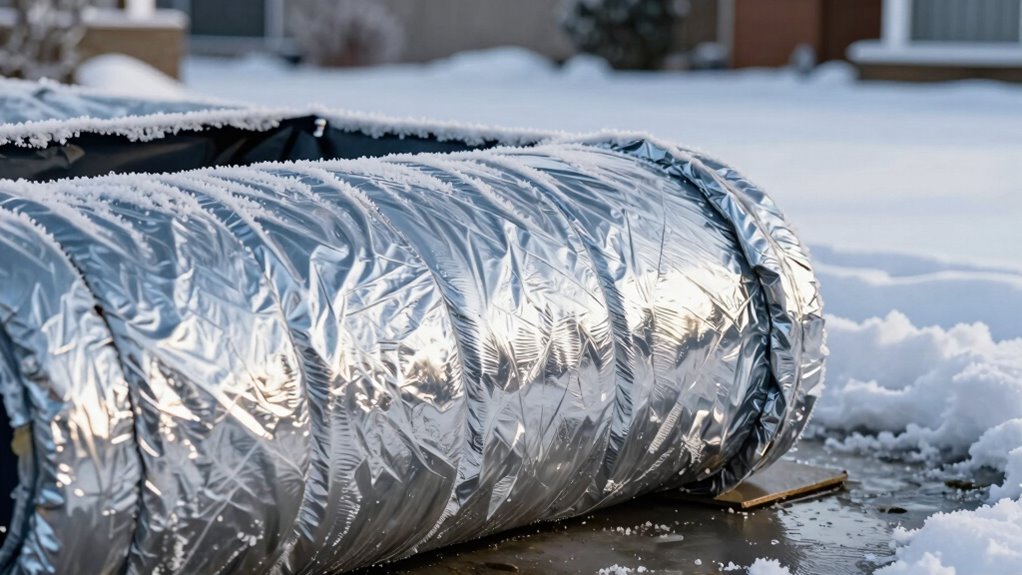
To prevent pipes from freezing during cold weather, it is vital to insulate them properly. Start by adding pipe insulation, which acts as a barrier against the cold. Foam sleeves are an effective option—they’re easy to install and fit snugly around your pipes. Wrap all accessible pipes, especially those in unheated areas like basements, garages, and crawl spaces. Make sure the foam sleeves cover the entire length of each pipe and secure them with tape if needed. Proper insulation keeps the water inside your pipes above freezing temperatures, reducing the risk of bursts and costly repairs. Regularly check the insulation for damage or gaps, and replace any worn or loose foam sleeves promptly. Proper airflow around the pipes can also prevent cold spots that lead to freezing. Additionally, maintaining consistent temperature in your home can further prevent freezing issues. Proper insulation is a simple, effective step to keep your plumbing safe during winter. Incorporating simple systems into your routine can make maintaining insulation easier and more effective year-round. Ensuring proper insulation techniques can help maximize your efforts and prevent costly damages.
Keep Water Running to Prevent Freezing in Cold Weather
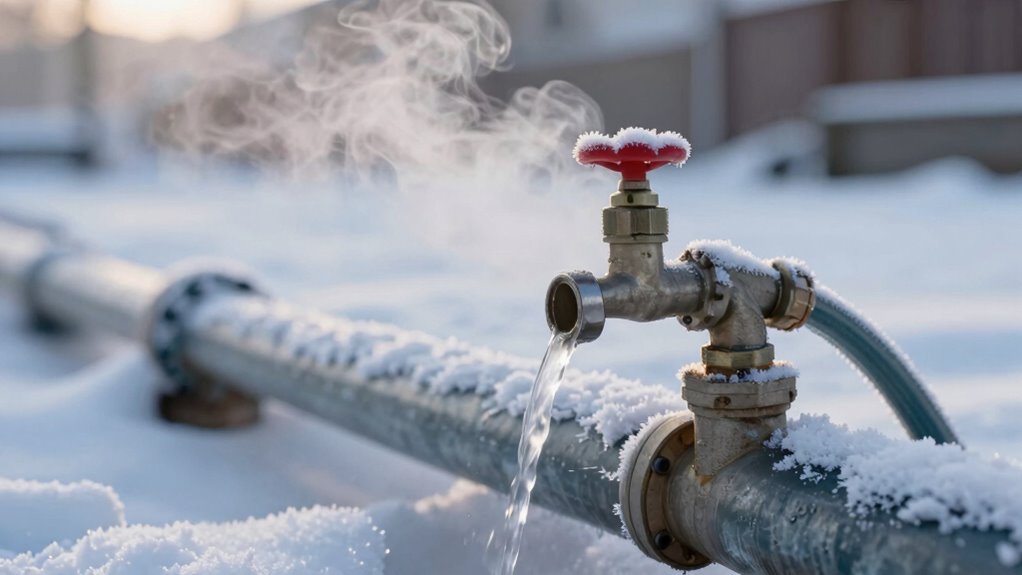
Did you know that letting a small stream of water flow through your pipes can considerably reduce the risk of freezing? When water keeps moving, it prevents ice from forming inside the lines. To guarantee this works effectively, consider these tips:
- Keep indoor humidity at a moderate level to avoid excess moisture that can contribute to pipe issues.
- Maintain steady water pressure; sudden drops can increase freezing risk.
- Let faucets drip slightly, especially those on exterior walls or unheated areas, to keep water flowing.
Running water helps prevent freezing but also promotes consistent water pressure, reducing the chance of pipes bursting. Remember, small adjustments now can save you from costly repairs later.
Set Up Heating Solutions for Vulnerable Areas Near Water Lines
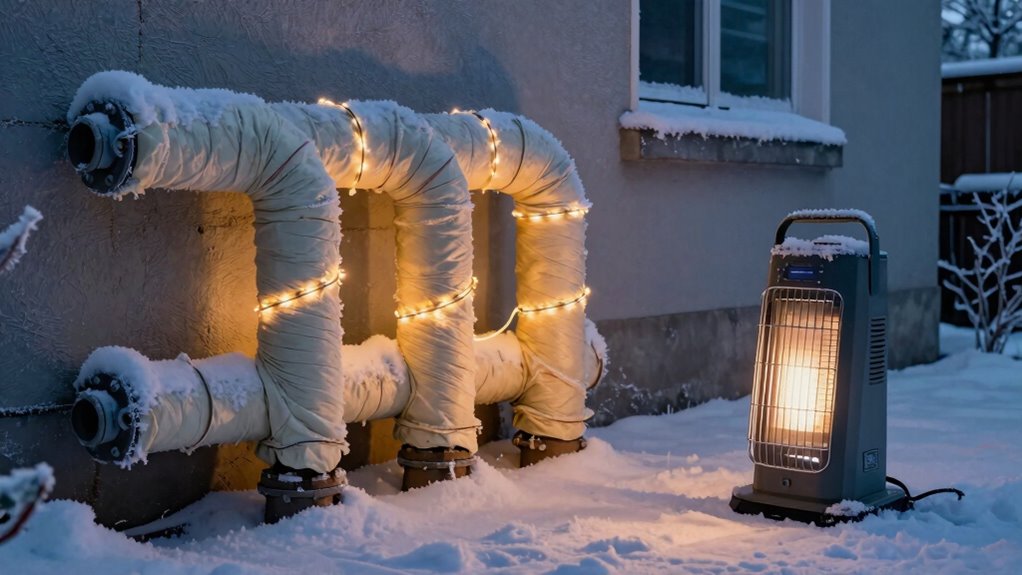
Installing heating solutions in vulnerable areas near water lines is a proactive way to prevent freezing during cold weather. You can use pipe insulation and heat tape to protect exposed pipes. Pipe insulation adds a barrier against cold air, reducing the risk of freezing, while heat tape provides direct warmth where needed. Properly setting up these solutions guarantees your water lines stay functional. Here’s a quick guide:
| Material | Best Use |
|---|---|
| Pipe insulation | Wrap around pipes in unheated spaces |
| Heat tape | Apply to sections prone to freezing |
| Insulation tape | Secure insulation and heat tape |
| Thermostat | Automate heat tape activation |
| Coverings | Protect exposed pipes from wind |
Use Space Heaters Safely to Protect Critical Pipes
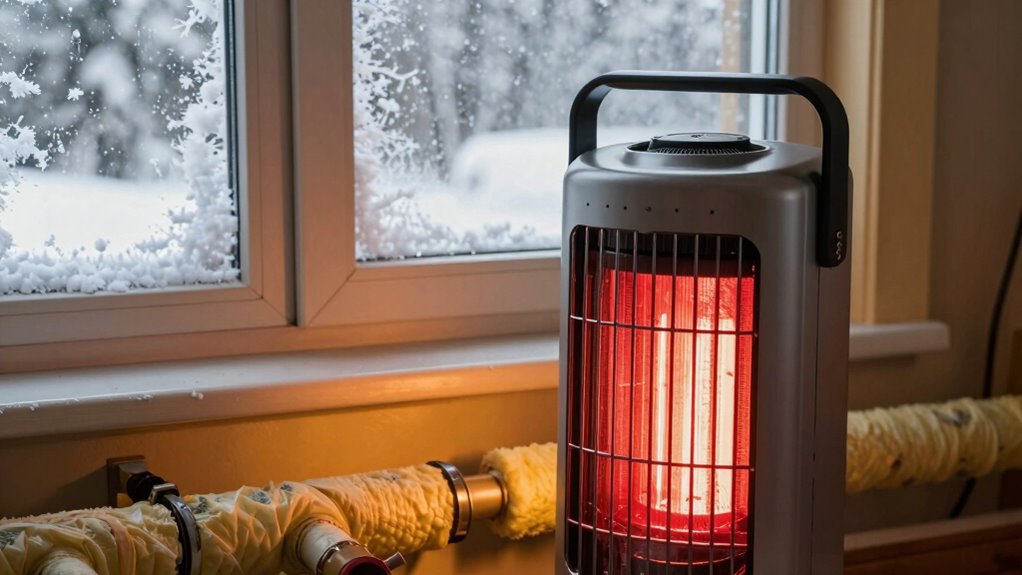
Using space heaters can be an effective way to protect critical pipes during cold weather, but it’s essential to use them safely to prevent fire hazards or damage. First, always follow space heater safety guidelines by keeping units at least three feet away from curtains, furniture, or other flammable materials. Second, guarantee proper electrical outlet placement; plug heaters directly into grounded outlets, avoiding extension cords that can overheat. Third, never leave space heaters unattended or running overnight. Regularly inspect cords for damage and keep them away from water or wet areas. By adhering to these safety tips, you minimize risks while keeping your pipes warm. Remember, responsible use of space heaters helps prevent accidents and keeps your home safe during cold snaps.
Watch the Weather and Get Ready for Cold Snaps
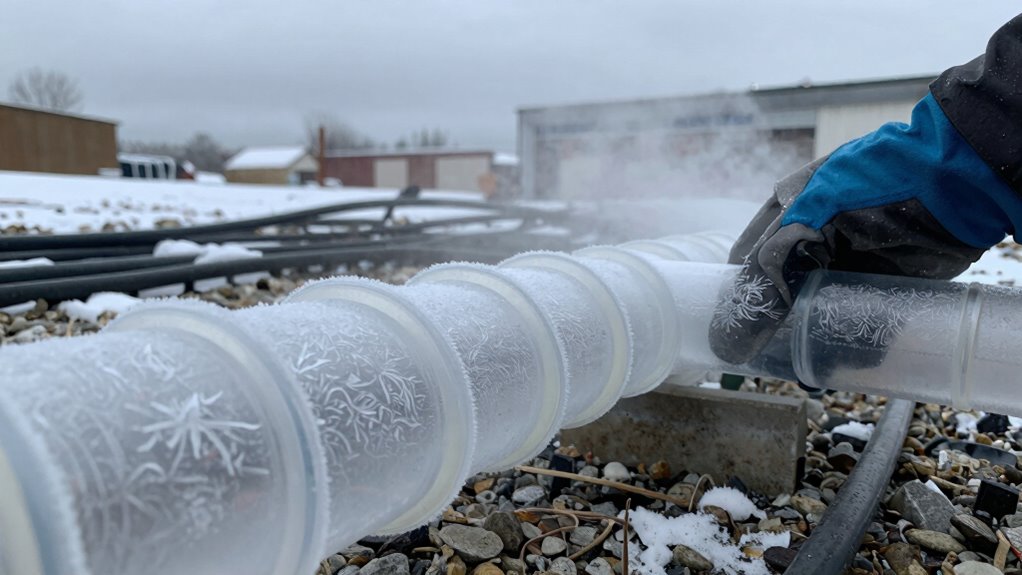
Staying alert to weather forecasts is essential for preparing your home for upcoming cold snaps. Regular weather monitoring helps you anticipate drops in temperature and plan your storm preparedness strategies accordingly. Sign up for local weather alerts or use reliable apps to stay informed about cold fronts. When you see signs of an approaching cold snap, you can take proactive steps like insulating vulnerable pipes or sealing drafts. Tracking weather patterns also helps you decide when to drain outdoor hoses or set up additional heat sources. Being proactive ensures you don’t get caught off guard by sudden temperature drops. By staying vigilant, you give yourself ample time to protect your home and avoid the inconvenience and damage caused by frozen pipes during winter storms.
How to Spot and Thaw Frozen Pipes Safely
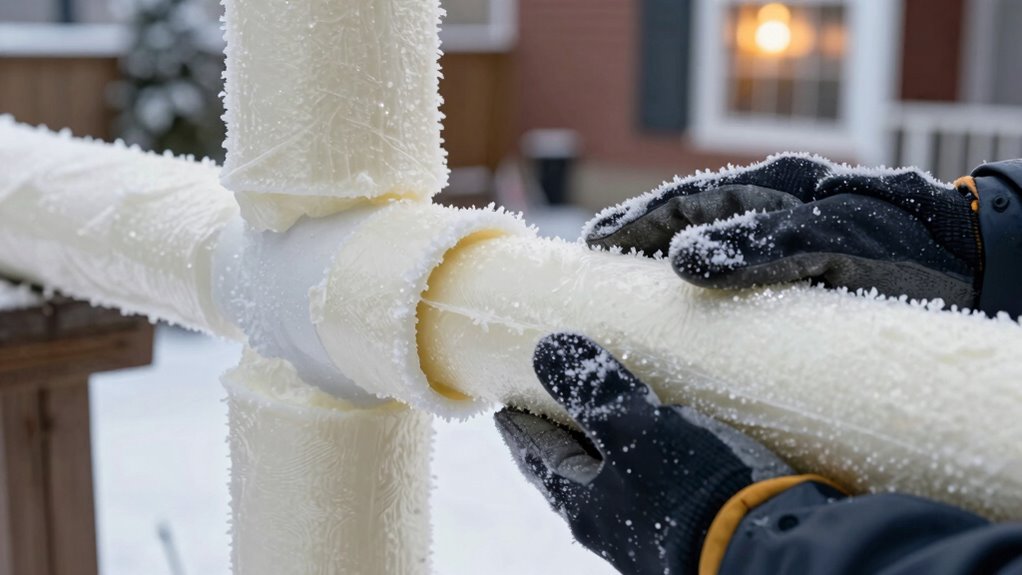
Recognizing the signs of frozen pipes early can save you from costly repairs and water damage. Look for no water flow when faucets are turned on, strange noises, or visible frost on pipes. To safely thaw frozen pipes, start with these steps:
- Turn on faucets gently to relieve pressure and check for leaks.
- Apply heat carefully using a hairdryer, warm towels, or space heater—never an open flame.
- Use thawing techniques like wrapping pipes with pipe insulation or heating pads to evenly warm the pipe.
Always prioritize safety, and avoid forcing pipes open if they’re stuck. Proper pipe insulation helps prevent future freezing, making thawing easier and safer. If you’re unsure, call a professional plumber to handle the situation.
Long-Term Plumbing Maintenance Tips for Winter Resilience
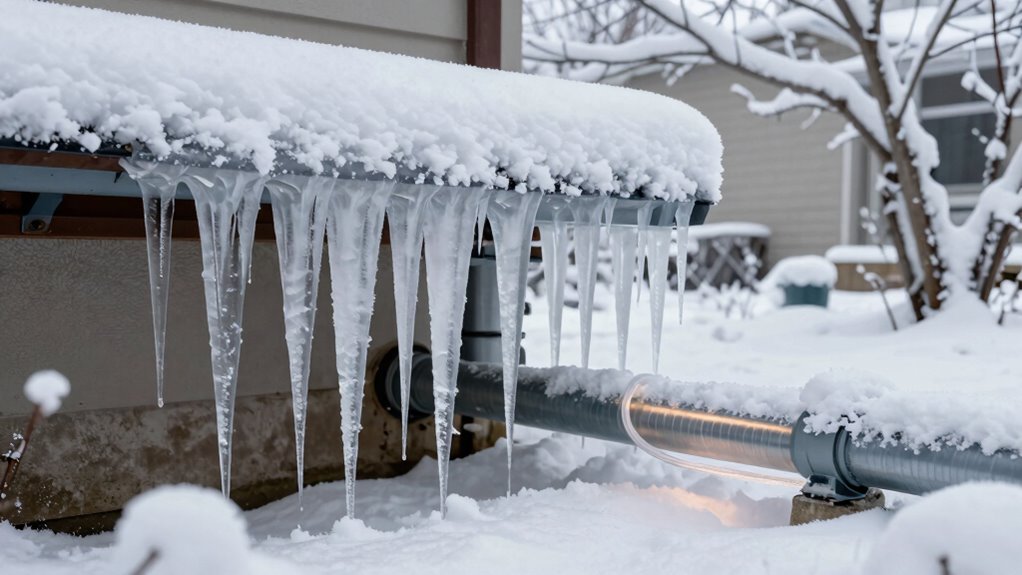
To keep your plumbing winter-ready, start by insulating exterior pipes to prevent freezing. Make sure to drain any unused lines to avoid damage if temperatures drop. Additionally, maintaining a consistent indoor temperature helps protect your entire plumbing system from cold-related issues.
Insulate Exterior Pipes
Insulating exterior pipes is one of the most effective ways to prevent freezing and costly repairs during cold weather. Proper pipe insulation creates a barrier that keeps the cold out and maintains water flow. To maximize exterior pipe protection, consider these steps:
- Wrap pipes with foam pipe insulation sleeves or wrap tape designed for exterior use.
- Seal any gaps or holes around pipes with weatherproof caulk to prevent drafts.
- Apply additional insulation or heat tape to vulnerable spots, especially where pipes run along exterior walls or in unheated areas.
Drain Unused Lines
When preparing your plumbing for winter, draining unused lines is a simple yet effective step to prevent freezing and potential burst pipes. Start by shutting off the main water supply, then open all faucets connected to drainage systems or unused lines. Drain remaining water from pipes and appliances to avoid ice buildup. Using pipe insulation around these lines adds extra protection against cold temperatures. Here’s a quick checklist:
| Step | Action |
|---|---|
| Shut off water | Turn off main supply to unused lines |
| Drain lines | Open faucets and drainage valves |
| Insulate pipes | Wrap with pipe insulation for added safety |
Drain and insulate all unused lines to keep your plumbing resilient during winter’s worst.
Maintain Indoor Temperature
Maintaining a consistent indoor temperature is essential for preventing frozen pipes during winter. Proper thermostat settings help keep your home warm enough, typically around 55°F (13°C), to prevent freezing. Adjust your thermostat to avoid sudden drops in temperature and ensure even warmth throughout your home. Additionally, managing indoor humidity levels can reduce the risk of pipes freezing; aim for 30-50% humidity. Here are some tips:
- Set your thermostat to a steady temperature, avoiding fluctuations.
- Use a humidifier if indoor air is dry, especially in heated rooms.
- Keep interior doors open to promote even heat distribution.
Frequently Asked Questions
How Can I Tell if My Water Lines Are Frozen Before They Burst?
You can tell if your water lines are frozen by checking for reduced or no water flow. Feel for icy spots along exposed pipes or listen for unusual sounds like banging or gurgling. If you notice these signs, avoid pipe thawing with direct heat and instead use safe methods to gradually warm the pipes. Acting quickly prevents bursting and ensures your water flow returns smoothly.
What Materials Are Best for Insulating Outdoor Water Pipes?
You should use foam pipe insulation or rubber pipe sleeves to insulate outdoor water pipes effectively. Foam pipe insulation is easy to install and provides excellent thermal protection, while rubber pipe sleeves offer flexibility and durability against harsh weather. Both materials prevent freezing by maintaining warmth around the pipes. Wrap these insulations tightly around your pipes, especially in vulnerable areas, to keep water flowing and avoid costly repairs during cold weather.
Can Using Chemicals or Heat Tapes Damage My Plumbing?
Using chemicals or heat tapes can pose risks to your plumbing if you’re not careful. Chemical risks include potential corrosion or buildup that damages pipes, while heat tape safety concerns involve overheating or electrical faults. You must follow manufacturer instructions, regularly inspect tapes, and avoid over-application of chemicals. Proper precautions guarantee your pipes stay protected without risking damage, giving you peace of mind during cold weather.
How Often Should I Check for Pipe Insulation During Winter?
You should check your pipe insulation regularly throughout winter, ideally every couple of weeks, as part of your winter inspection routines. During these inspections, make certain the insulation remains intact and covers all exposed pipes. Look for any signs of damage, wear, or gaps that could allow cold air to reach your pipes. Consistent pipe insulation maintenance helps prevent freezing and potential burst pipes, keeping your plumbing safe all season long.
Are There Specific Signs That Indicate a Pipe Is About to Freeze?
You notice a slight flicker in your water flow or hear unusual sounds from the pipes, which often coincides with ice formation and temperature drops. These signs indicate a pipe might be about to freeze. You should also watch for frost or condensation on the pipes, and if the area feels cold or drafty, it’s a good idea to take action before freezing occurs. Acting early prevents costly damage.
Conclusion
Think of your pipes as delicate pipes in a winter orchestra—they need your guidance to stay in harmony. By taking simple steps like insulating, letting water flow, and monitoring the weather, you keep your home’s plumbing singing smoothly through the cold. Don’t let freezing pipes hit a sour note; instead, be the conductor of your winter safety plan. With a little prep, you’ll keep your water flowing like a steady, warm melody all season long.