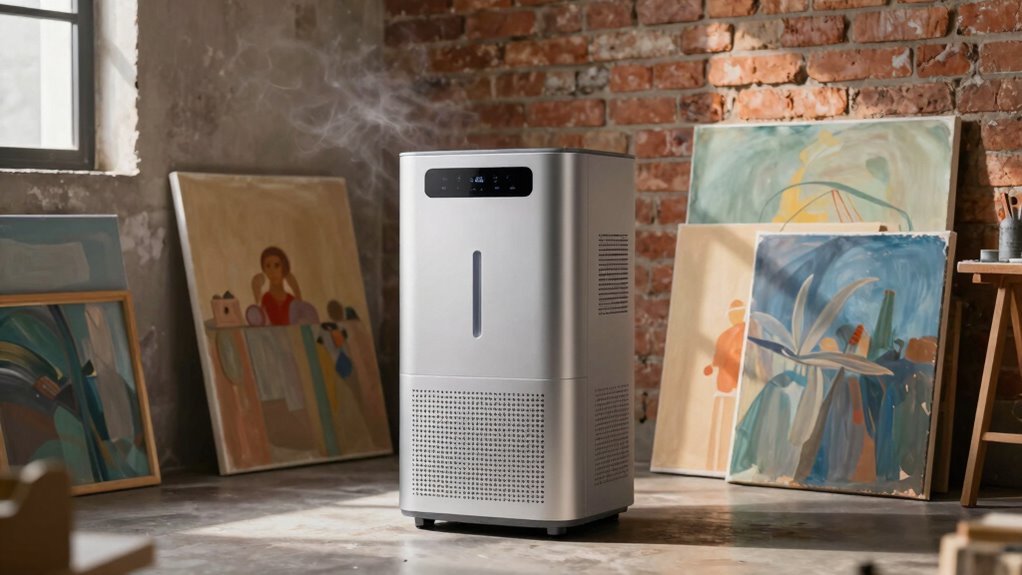
Maintaining the ideal humidity level for painting is essential, and typically, it should be between 40-50%. If the air is too humid, paint takes longer to dry, causing streaks, uneven coats, and future cracking. Using a dehumidifier helps you control this humidity, ensuring faster, more even drying for a professional finish. Keep an eye on those numbers; mastering this key detail can transform your project. If you want to learn the exact humidity number to aim for, keep going.
Key Takeaways
- Maintaining humidity levels between 40-50% ensures optimal paint drying and reduces imperfections.
- Dehumidifiers effectively control excess moisture, speeding up drying and improving finish quality.
- Proper humidity management prevents issues like peeling, blistering, and uneven coats during painting projects.
- Using a dehumidifier in high-humidity environments creates a stable, ideal setting for consistent paint results.
- Monitoring humidity with a hygrometer helps achieve the perfect moisture level, ensuring professional and durable paint finishes.
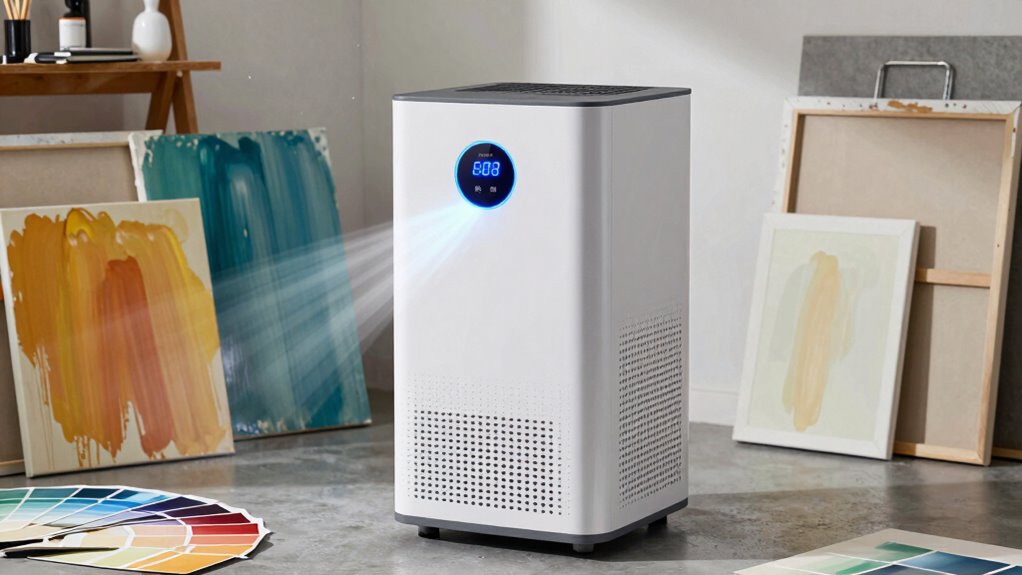
Are you struggling to achieve a flawless finish when painting? One of the most overlooked factors is the environment’s humidity level. Too much moisture in the air can extend the paint drying process, leading to uneven coats, streaks, or even peeling over time. That’s where dehumidifiers come into play, offering essential moisture control that makes all the difference. Proper humidity management ensures your paint dries evenly, setting the stage for a professional-looking result. When moisture lingers, it can trap water in the paint film, causing issues like blistering or long-lasting tackiness. By reducing excess humidity, a dehumidifier speeds up paint drying, giving you a better chance at a smooth, durable finish.
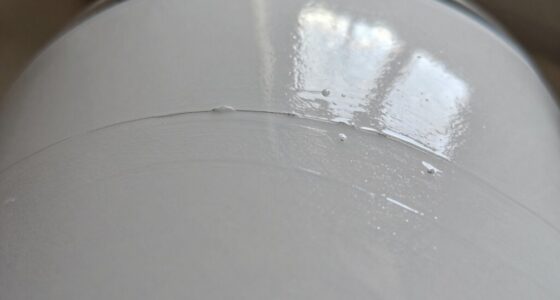
You might not realize it, but humidity levels directly impact how quickly and well your paint dries. If the air is humid, moisture in the environment slows down the evaporation process, leaving your paint wet or tacky for longer than necessary. This not only hampers your progress but also increases the risk of imperfections like uneven textures or splotches. Using a dehumidifier helps you maintain ideal moisture levels, typically between 40-50%, which is suitable for most painting projects. When you keep the air’s humidity in this range, you promote faster, more consistent paint drying, minimizing the chance of problems down the line. Humidity control is a crucial element in achieving a professional-quality finish.
Maintaining 40-50% humidity speeds up paint drying and reduces imperfections.
Moisture control isn’t just about speeding up the process; it’s also about ensuring the quality of the finish. Excess humidity can cause the paint to dry unevenly, leading to issues that require sanding or reapplication. With a dehumidifier working behind the scenes, you create a stable environment where paint can cure properly. This stability reduces the risk of cracking, peeling, or blistering, especially in areas with naturally high humidity or poor ventilation. It’s a simple step that delivers significant results—saving you time, effort, and frustration.
In addition to improving paint drying, dehumidifiers help you maintain a controlled environment that’s suitable for other aspects of your project, such as applying primer or finishing coats. They’re especially useful in garages, basements, or poorly ventilated spaces, where humidity tends to fluctuate wildly. By investing in a good dehumidifier, you’re taking proactive control of your painting environment, ensuring each coat adheres properly and dries evenly. Ultimately, managing moisture with the right humidity level transforms a challenging project into a straightforward process, giving you the professional-looking finish you desire.

Spray Booth Air Filter Replacement Pads Double Layer Fiber Cotton Effective Air Cleaning 24PCS White 40×18.5×1.5 cm Suitable for Paint Rooms Dehumidifiers Purifiers Horizo(2PCS)
- Filter Quantity Options: Choose 2 or 4 pieces
- Perfect Fit Size: 40x5x1.5 cm for spray kits
- Durable Double-Layer Design: Robust fiber cotton construction
As an affiliate, we earn on qualifying purchases.
As an affiliate, we earn on qualifying purchases.
Frequently Asked Questions
How Do I Choose the Right Dehumidifier Size for My Painting Space?
To select the right dehumidifier size for your painting space, start with size considerations like room dimensions and insulation. Use a capacity calculation based on your room’s square footage and typical humidity levels. If your space is larger or more humid, opt for a unit with higher capacity. Monitoring humidity throughout your project helps make certain you choose a dehumidifier that keeps conditions ideal, resulting in a flawless finish.
Can Dehumidifiers Be Used Outdoors for Painting Projects?
You can use a dehumidifier outdoors for painting projects, but it’s like trying to fit a square peg in a round hole. Outdoor humidity varies greatly, so choose a model designed for outdoor use or make certain it’s weatherproof. Proper dehumidifier placement is vital—set it where it can efficiently control moisture without exposure to rain or direct sunlight. Keep these factors in mind for the best results.
What Maintenance Is Required for Painting Dehumidifiers?
You need to regularly clean or replace the dehumidifier filter to guarantee ideal airflow and prevent mold growth. Drainage maintenance is also essential; check the drainage system for clogs and empty the water collection tank regularly if not connected to a continuous drain. Keep the unit clean, wipe down vents, and inspect for dust buildup to maintain efficiency. Proper maintenance extends your dehumidifier’s lifespan and keeps your painting environment ideal.
Are There Energy-Efficient Dehumidifiers Suitable for Long-Term Painting Use?
Imagine a breeze gently drying your freshly painted wall—that’s what energy-efficient dehumidifiers do for your project. You’ll find eco-friendly models with energy-saving options that reduce power use without sacrificing performance. These units are perfect for long-term painting, quietly maintaining ideal humidity levels while lowering your energy bills. Choose wisely, and your workspace stays comfortable, sustainable, and ready for flawless finishes every time.
How Does Humidity Affect Different Types of Paint During Application?
Humidity greatly impacts how your paint dries and adheres. If the air’s too humid, paint takes longer to dry, risking smudges or uneven finishes. High humidity also weakens paint adhesion, leading to peeling or bubbling later on. Conversely, low humidity promotes faster drying and better adhesion, resulting in a smooth, durable finish. To guarantee ideal results, maintain ideal humidity levels during application, especially with latex or oil-based paints.
Conclusion
Remember, patience is a virtue, especially when it comes to painting. Using a dehumidifier helps you control humidity levels, ensuring your artwork dries perfectly without imperfections. By paying attention to the humidity number, you set yourself up for success. Don’t rush the process—good things take time. When you prioritize the right environment, your paintings will stand the test of time, proving that a steady hand and the right tools make all the difference.