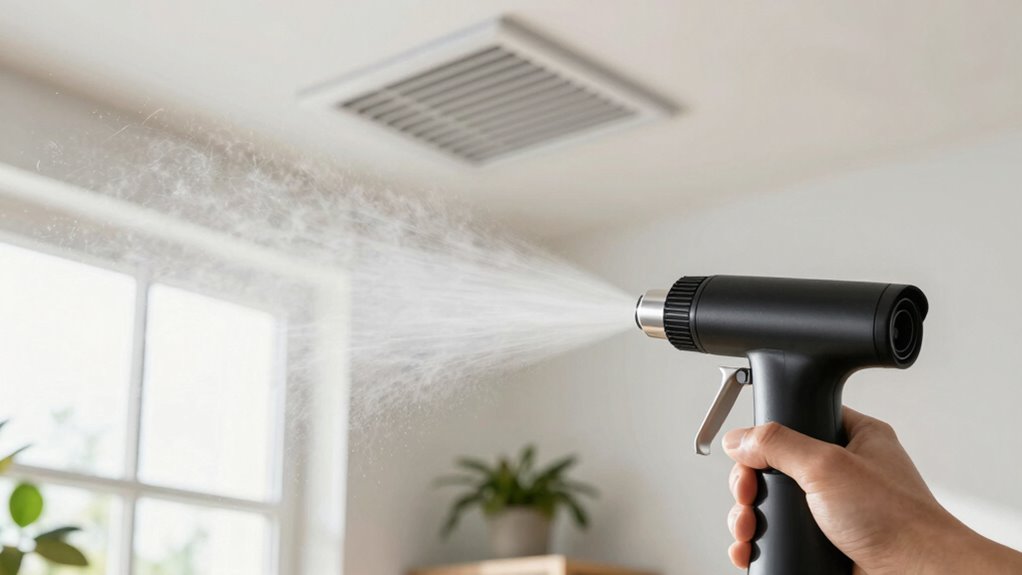

For effective indoor spraying, set up a steady airflow by opening windows and using fans or exhaust systems to create cross-ventilation. Place a portable or exhaust fan near the spraying area to help disperse fumes quickly and prevent buildup. Keep doors open if possible, and avoid over-spraying to reduce fumes. Ensuring proper ventilation not only improves safety but also keeps your sprayer working efficiently—continue on to find out more tips for safe indoor spraying.
Key Takeaways
- Use fans or exhaust systems to create continuous airflow during spraying for effective fume dispersal.
- Open windows fully to establish natural ventilation, supplementing mechanical exhaust methods.
- Position portable or exhaust fans strategically to direct airflow away from occupied areas.
- Maintain steady airflow with multiple fans if necessary, especially in small or enclosed spaces.
- Ensure ventilation remains active for a period after spraying to clear residual fumes safely.
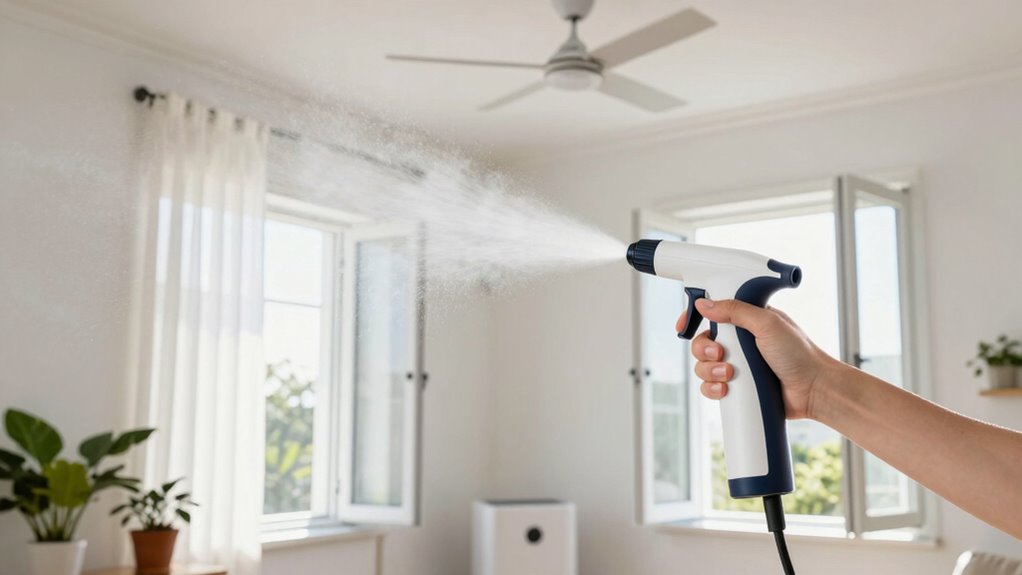
Have you ever considered using handheld sprayers indoors for quick, targeted application of cleaning solutions or disinfectants? If so, it’s a smart move for maintaining cleanliness efficiently. But before you start, it’s vital to prioritize safety precautions to prevent accidents or health issues. Always wear protective gear like gloves and masks, especially when handling strong chemicals. Make sure the area is well-ventilated to avoid inhaling fumes, and keep children and pets away during spraying. Proper ventilation isn’t just about open windows; it’s about creating a steady airflow that disperses airborne particles quickly. Using fans or exhaust systems can help improve air circulation, reducing the risk of inhalation of harmful vapors and guaranteeing the air remains safe to breathe. Effective ventilation setup**** is essential for dispersing airborne particles and maintaining a safe indoor environment.
Maintaining your handheld sprayer is equally important. Regular maintenance tips include cleaning the nozzle after each use to prevent clogging and ensuring the tank is free of residue. Check for leaks or cracks periodically, especially if you notice uneven spray patterns or decreased pressure. Proper storage also prolongs the lifespan of your equipment—store it in a cool, dry place away from direct sunlight. When it’s time to refill, do so carefully, avoiding spills, and always use the recommended solutions. Using the right cleaning agents not only guarantees effective disinfection but also prevents damage to the sprayer’s internal components.
Thinking about safety precautions, it’s wise to read the manufacturer’s instructions thoroughly before operating the sprayer. This helps you understand the correct pressure settings and application techniques, reducing the risk of misuse. Ventilation setup plays a vital role here; even with good safety practices, poorly ventilated spaces can cause buildup of fumes, which might lead to dizziness, headaches, or respiratory irritation. If you’re working in small, enclosed areas, consider using portable fans or installing exhaust fans to keep air moving. Always spray in short bursts and avoid over-application, which can lead to excess fumes lingering in the space.
Incorporating these safety precautions and maintenance tips ensures your handheld sprayer works effectively and safely indoors. It helps you get the most out of your equipment, keeps the environment safe, and protects your health. Remember, a little preparation and regular upkeep go a long way in making your indoor spraying tasks straightforward and safe. By staying vigilant about safety precautions and maintenance, you can confidently use your handheld sprayer for all your cleaning and disinfecting needs without worry.
Frequently Asked Questions
Can Handheld Sprayers Be Used Safely Without Masks Indoors?
You shouldn’t use handheld sprayers indoors without masks because mask safety and respiratory precautions are vital. Without proper protection, you risk inhaling harmful chemicals, which can cause health issues. Always wear a mask designed for chemical exposure, ensure good ventilation, and avoid spraying in enclosed spaces. Taking these precautions helps protect your respiratory system and ensures safer indoor use of handheld sprayers.
What’s the Ideal Humidity Level When Using Handheld Sprayers Indoors?
Coincidentally, maintaining the right humidity level enhances your spraying efforts. Aim for a humidity control range between 40-60%, which helps prevent mold and reduces spray residue. Keep an eye on your spray frequency, as overdoing it can raise humidity too high. Use a hygrometer to monitor conditions and adjust your spraying schedule accordingly, ensuring a comfortable and safe indoor environment while effectively using your handheld sprayer.
Are There Specific Cleaning Protocols for Handheld Sprayers After Indoor Use?
You should follow specific cleaning procedures after using your handheld sprayer indoors to prevent contamination. Rinse the nozzle and tank thoroughly with warm water and, if needed, use a mild disinfectant. Dry all parts completely before storage. Store your sprayer in a cool, dry place, following storage best practices to preserve its condition. Regular cleaning and proper storage ensure your sprayer stays effective and safe for future use.
How Often Should Ventilation Be Operated During and After Spraying?
Think of your sprayer as a storyteller releasing whispers into the air. You should run your ventilation during spraying and for at least 30 minutes afterward to maintain indoor air quality. This continuous airflow helps disperse fumes and guarantees proper sprayer maintenance. Keep the room well-ventilated to protect your health and preserve your equipment, turning a simple act into a safeguard for your space.
Can Handheld Sprayers Be Used With All Types of Indoor Plants?
Yes, handheld sprayers can be used with most indoor plants, but you should check plant compatibility first. Some plants may be sensitive to mist or chemicals, so avoid spraying if it could harm them. Keep in mind sprayer limitations like pressure and spray patterns, which might not suit all plant types. Always test on a small area or a single plant to prevent damage before widespread use.
Conclusion
Now that you know the right ventilation setup, you can confidently use your handheld sprayer indoors. It’s easy to forget that a simple fan can make all the difference—without proper ventilation, your sprayer’s effectiveness is limited, and fumes can linger. Think of it this way: your sprayer’s power isn’t just in the trigger, but in how well you manage the air around you. With the right setup, you can spray safely and efficiently, indoors and out.