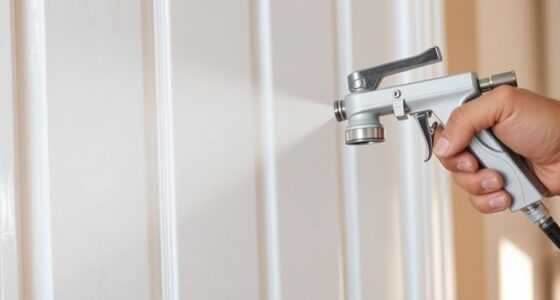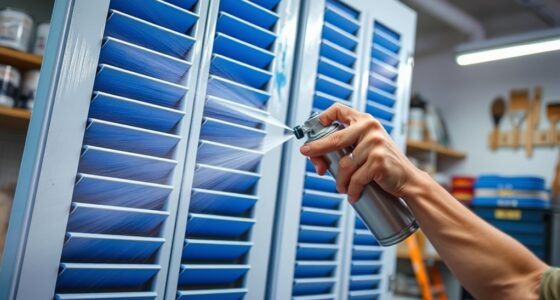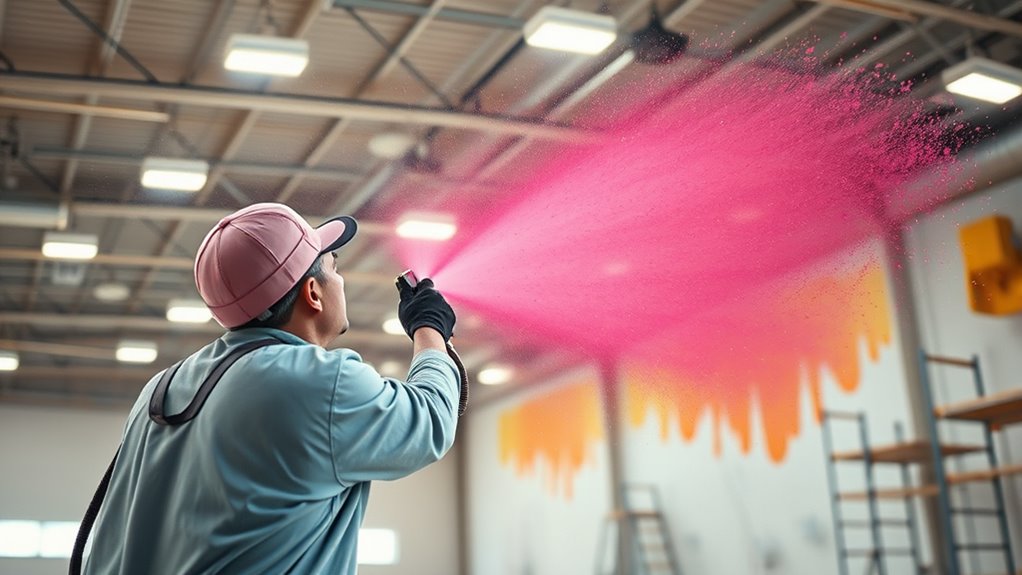

When spraying dryfall paint in commercial spaces, you’ll want to use a spray gun for quick, even coverage on ceilings and walls. Make certain your equipment is clean, properly calibrated, and maintain a consistent distance from the surface. Wear protective gear like a mask and goggles, and guarantee good ventilation. Cover floors and furniture thoroughly. If you stick with proper techniques, you’ll achieve a smooth, professional finish—keep going to learn more tips for perfect results.

Get business pricing on tools and workshop supplies
- Business-only prices and quantity discounts
- Tax-exempt purchasing
- Multiple users, one account, clear invoices
Key Takeaways
- Use a professional-grade spray gun with proper nozzle adjustments for even Dryfall paint application.
- Ensure the workspace is well-ventilated and protected with drop cloths to manage overspray.
- Maintain a consistent spray distance of 12-18 inches from the ceiling or wall surface.
- Wear appropriate safety gear, including respirators, goggles, and gloves, during spraying.
- Test spray on scrap surfaces to calibrate the equipment for a smooth, uniform finish.

Dryfall paint is a specialized coating designed to create a smooth, matte finish on ceilings and walls, making it ideal for areas prone to dust and debris. When you’re working with this type of paint in commercial spaces, mastering proper application methods is essential. While spraying is the most common approach, understanding the basics of brush techniques remains important, especially for touch-ups or detailed areas. Using a brush effectively involves applying light, even strokes and maintaining a wet edge to prevent lap marks. Keep your brush clean and use it sparingly to avoid overloading, which can lead to drips or uneven coverage. However, for large surfaces, spraying dryfall paint offers efficiency and a consistent finish, reducing the need for extensive brushwork. Proper preparation and technique are critical to achieving a professional-looking result and ensuring safety during application.
Before you start spraying, it’s critical to prioritize safety precautions. Dryfall paint contains particles that can become airborne during application, posing health risks if inhaled. Always wear a properly fitted respirator mask rated for particulate matter, along with safety goggles to protect your eyes. Gloves are essential to avoid skin contact, especially when handling paint or equipment. Ensure the workspace is well-ventilated by opening windows and using exhaust fans. Cover floors and furniture with drop cloths or plastic sheeting to catch overspray and make cleanup easier. It’s also wise to check the weather if you’re working in a semi-outdoor space, as humidity levels can affect drying times and finish quality.
When preparing for spraying, make sure your equipment is in top condition. Clean the spray gun thoroughly before use, and adjust the nozzle to achieve the right spray pattern. Test spray on a scrap piece or cardboard to fine-tune the flow and coverage. During application, maintain a consistent distance from the surface—usually about 12 to 18 inches—and move in smooth, overlapping strokes. Keep your hand steady and avoid rushing to prevent uneven coats or drips. After finishing, clean your spray equipment immediately to prevent paint buildup and ensure it’s ready for future jobs. Additionally, understanding the effectiveness and safety of the products you choose will help ensure a successful project.
professional spray gun for dryfall paint
As an affiliate, we earn on qualifying purchases.
As an affiliate, we earn on qualifying purchases.
Frequently Asked Questions
How Long Does Dryfall Paint Take to Fully Cure?
Dryfall paint typically takes about 2 to 3 weeks to fully cure, depending on humidity and temperature. During this drying time, paint adhesion improves as solvents evaporate and the coating hardens. You should avoid heavy cleaning or moisture exposure during this period to guarantee ideal curing. Keep the area well-ventilated, and check the manufacturer’s instructions for specific drying times to achieve the best results.
Can Dryfall Paint Be Used on Textured Surfaces?
Yes, dryfall paint can be used on textured surfaces. You’ll want to guarantee surface compatibility by selecting a product designed for textured areas. Proper surface preparation is key—clean the surface thoroughly, remove loose debris, and prime if necessary. Use even, light coats to avoid drips or uneven coverage. This approach helps achieve a smooth finish and ensures the dryfall paint adheres well to your textured surface.
Is Dryfall Paint Suitable for High-Humidity Environments?
Dryfall paint isn’t ideal for high-humidity environments because humidity concerns can cause it to dry slowly or not adhere properly. If you’re working in such conditions, ensure good ventilation to help the paint cure evenly. You might want to contemplate alternative paints designed specifically for high moisture areas, such as mold-resistant or waterproof coatings, to guarantee longevity and a proper finish.
What Safety Precautions Are Needed During Spraying?
Think of spraying dryfall paint as orchestrating a symphony—you hold the baton with care. You need proper personal protective equipment like masks, gloves, and goggles to shield yourself from airborne particles. Guarantee excellent ventilation to clear fumes and prevent buildup. Keep the workspace well-ventilated, use exhaust fans, and wear PPE consistently. These precautions turn your project into a safe, smooth performance, protecting your health every step of the way.
How Do I Clean Equipment After Spraying Dryfall Paint?
To clean equipment after spraying dryfall paint, start by disconnecting and thoroughly rinsing all tools and spray apparatus with warm water. Use a brush or cloth to remove any residual paint or buildup, guaranteeing no residue remains. For stubborn spots, soak parts in water or a mild solvent recommended for the equipment. Proper equipment cleaning prevents clogs, maintains performance, and guarantees safe residue removal for future use.
Conclusion
Now that you know how to spray Dryfall paint in commercial spaces, you can achieve a smooth, professional finish with confidence. Prepare your surface, choose the right equipment, and apply with steady, even strokes. Clean your tools thoroughly afterward to guarantee longevity. By following these steps, you’ll protect your workspace, enhance your results, and complete your project efficiently. With the right technique, your Dryfall paint job will look great, last long, and impress every time.
Fall yard work Picks
leaf blowers
As an affiliate, we earn on qualifying purchases.