Most air purifiers disappoint in removing VOC odors because their filters mainly trap particles and lack enough activated carbon to absorb chemical gases effectively. While HEPA filters help with dust, they don’t neutralize VOCs, which keep lingering. Many purifiers also get saturated quickly, reducing their odor-busting ability over time. To truly control VOC odors, addressing the sources and using dedicated absorption methods matter most — and there’s more to contemplate if you want better results.
Key Takeaways
- HEPA filters trap particles but do not remove VOC gases responsible for odors.
- Activated carbon filters help absorb VOC odors but have limited capacity and need replacement.
- Many air purifiers lack sufficient or proper filtration for VOCs, reducing their effectiveness.
- Addressing VOC emissions at the source, like using low-VOC products, is more effective than relying solely on purifiers.
- Combining source control, ventilation, and odor absorption yields the best results for VOC odor management.
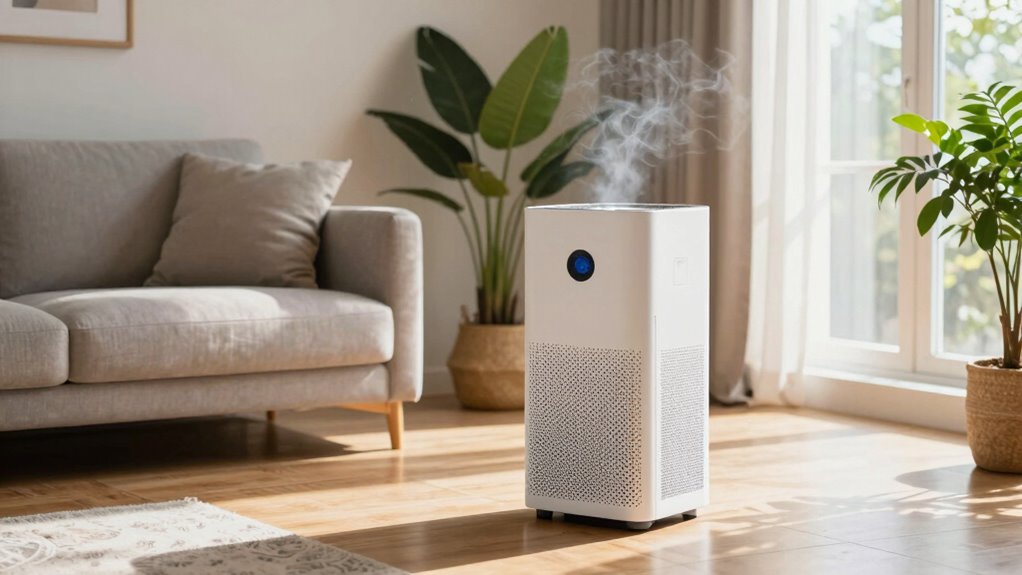
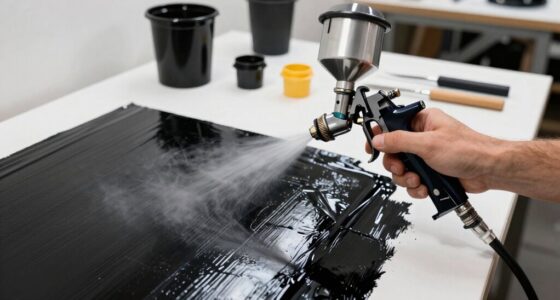
Have you ever wondered how to effectively reduce the strong odors caused by volatile organic compounds (VOCs) in your space? VOC sources can vary widely—from cleaning products and paints to new furniture and carpets—each releasing chemicals that contribute to indoor air pollution. These compounds are responsible for that persistent, often overwhelming smell that lingers long after the source is gone. While many turn to air purifiers, they often fall short of delivering the fresh, odor-free environment you’re aiming for. The reason lies in how these devices are designed and what they target.
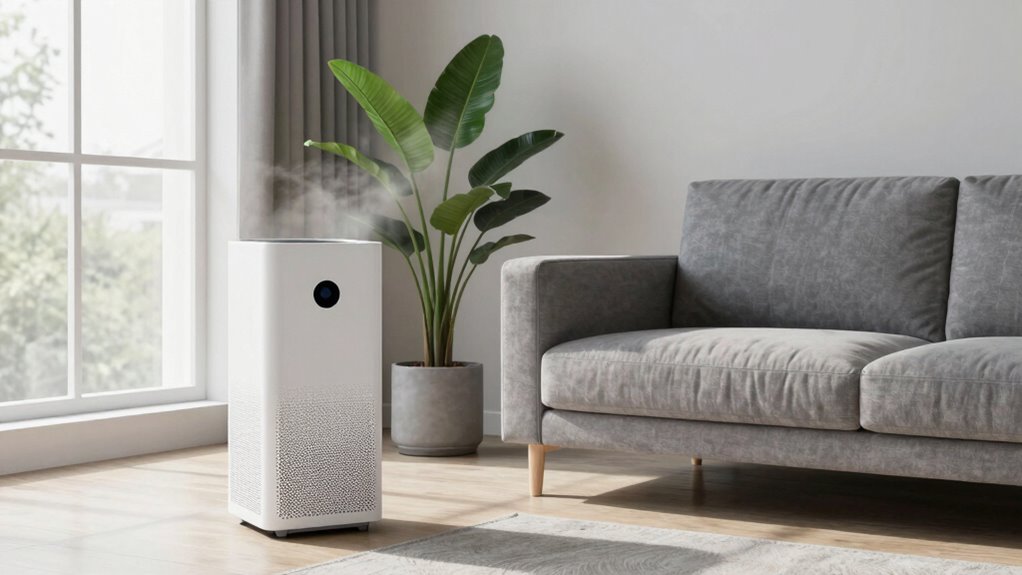
Most air purifiers rely heavily on filters, such as HEPA filters, which excel at trapping airborne particles like dust, pollen, and pet dander. However, VOCs are gaseous in nature, meaning they slip right past these filters. Some purifiers include activated carbon filters, which are better suited for VOC odor absorption, but not all models do. Even when they do, the capacity of these filters to absorb odors is limited and can become saturated quickly, especially if VOC levels are high. This means that over time, the purifier becomes less effective, and odors can return with a vengeance.
HEPA filters trap particles but let VOC gases slip through, reducing odor removal effectiveness over time.
You might notice that despite running an air purifier, the smell persists or even intensifies after a few days. That’s because VOCs aren’t just floating around freely; they’re continuously emitted from sources in your space. The key to tackling these odors isn’t just relying on air purifiers but understanding the importance of source control and proper odor absorption. Ventilating your space regularly helps dilute VOC concentrations, but it doesn’t eliminate the chemical emissions from sources. To truly improve air quality, you need to reduce the VOC sources themselves—using low-VOC paints, choosing furniture made with non-toxic materials, and avoiding harsh cleaning products.
In addition, incorporating odor absorption strategies can make a big difference. Activated carbon is one of the most effective tools for this, but it needs to be replenished or replaced regularly to maintain its effectiveness. Understanding the science of VOCs and how they behave in indoor environments can help you choose more effective solutions. Combining source reduction, proper ventilation, and reliable odor absorption methods creates a holistic approach. Relying solely on air purifiers often leads to disappointment because they can’t fully neutralize VOCs or their odors. Instead, focus on reducing VOC sources and enhancing odor absorption to achieve a truly fresh indoor environment.
Frequently Asked Questions
Can Air Purifiers Eliminate All VOCS Completely?
No, air purifiers can’t eliminate all VOCs completely. You need to contemplate different VOC sources like paints, cleaning products, or furniture, which constantly release fumes. Not all air purifier types, such as HEPA or activated carbon filters, target VOCs effectively. To improve air quality, combine proper ventilation with a purifier that specifically targets VOCs, but understand that some emissions may still linger despite your efforts.
How Long Does It Take to Notice VOC Odor Reduction?
Think of your space as a breathing organism, and with proper air exchange, you notice VOC odor reduction within a few days. However, if odor masking persists, it’s a sign your air purifier isn’t effectively filtering those VOCs. Typically, you’ll see a noticeable difference in a week, but for deep-seated odors, patience and consistent use are key. Keep your purifier running and your air freshens more swiftly.
Are There Specific Filters More Effective Against VOCS?
Yes, some filters are more effective against VOCs. Look for air purifiers with activated carbon filters, as they absorb odors and chemical vapors. HEPA filters are excellent for capturing particles but don’t target VOCs directly. For best results, choose a purifier that combines both activated carbon and HEPA filters, ensuring you reduce both airborne particles and odors effectively. This combo improves VOC removal and freshens your indoor air faster.
Do Air Purifiers Remove VOCS From Outdoor Air?
Did you know outdoor pollution can contain VOCs that easily enter your home? Air purifiers typically don’t remove VOCs from outdoor air effectively because their filtration efficiency drops when dealing with particles and gases outside. They mainly target indoor pollutants. So, while they improve indoor air quality, they won’t markedly reduce VOC levels from outdoor pollution, making it essential to limit outdoor exposure in high-VOC areas.
What Maintenance Is Required for VOC Control Effectiveness?
To keep VOC control effective, you need to follow a proper maintenance schedule and monitor the filter lifespan. Regularly check your air purifier’s filters, replacing them as recommended by the manufacturer. Dust and debris can clog filters, reducing performance. By maintaining your unit and replacing filters on time, you guarantee it continues to effectively reduce VOCs and odors, keeping your indoor air cleaner and healthier.
Conclusion
So, next time you turn on that air purifier, remember it’s not a magic wand for VOC odors. Instead, imagine trying to catch smoke with a sieve—some particles slip through, leaving a faint scent behind. To truly clear the air, combine methods like proper ventilation and targeted filters. Keep your space fresh and inviting by understanding these limits, and don’t rely solely on a purifier to do all the heavy lifting.