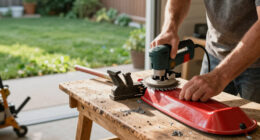

CFM, or cubic feet per minute, measures how much air your compressor can deliver to your sprayer. It’s important because it affects the spray pattern, coverage, and finish quality. Too little CFM can cause sputtering, while too much wastes energy and can damage equipment. Matching CFM to your sprayer’s needs guarantees smooth operation and a professional result. To learn more about matching your equipment, keep exploring!

Get business pricing on tools and workshop supplies
- Business-only prices and quantity discounts
- Tax-exempt purchasing
- Multiple users, one account, clear invoices
Key Takeaways
- CFM stands for cubic feet per minute, measuring how much air a compressor can deliver for spraying.
- It indicates the airflow capacity needed to spray evenly and achieve a professional finish.
- Higher CFM means more air volume, helping prevent sputtering and uneven coating.
- Matching CFM to your spray equipment ensures efficient operation and better spray patterns.
- Proper CFM levels prevent equipment strain, improve spray quality, and extend compressor lifespan.
air compressor with high CFM for spraying
As an affiliate, we earn on qualifying purchases.
As an affiliate, we earn on qualifying purchases.
What Is CFM and Why Is It Important for Spraying?
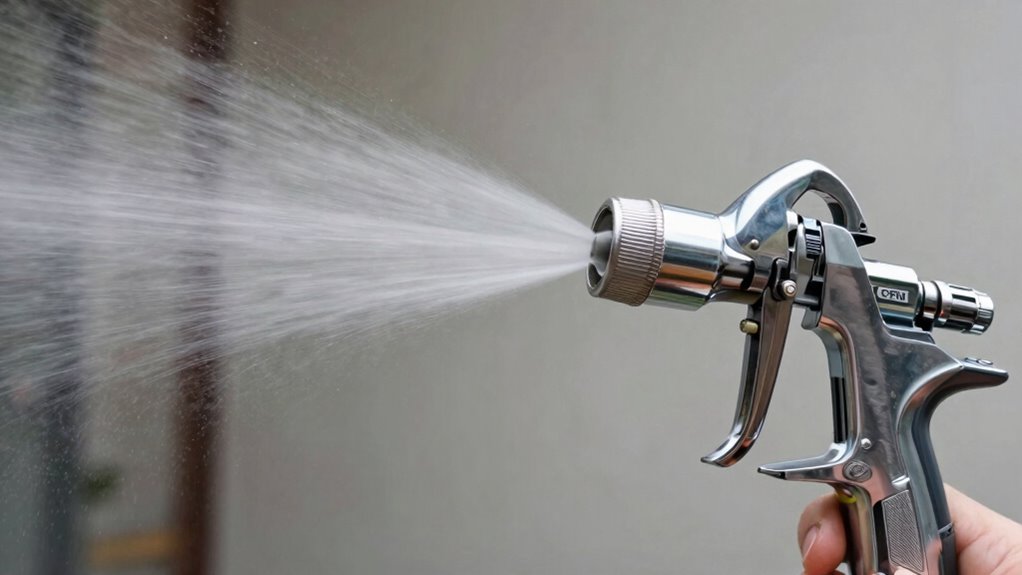
Have you ever wondered what CFM means when it comes to spraying? CFM, or cubic feet per minute, measures how much air flows from your compressor. It’s essential because airflow dynamics directly impact your spraying results, affecting how evenly and smoothly paint or coatings are applied. A higher CFM indicates more air volume, which helps maintain consistent spray patterns and prevents sputtering. Additionally, CFM influences compressor efficiency; a compressor with the right CFM for your tool reduces strain, saves energy, and extends the equipment’s lifespan. Understanding airflow capacity helps you select the right compressor and air tools, ensuring you get the performance you need without frustration. Proper airflow management is also critical for achieving professional spray finishes, making CFM a key factor in your painting setup. Recognizing the importance of air quality ensures that you optimize your equipment’s performance and maintain a clean spray environment. In short, CFM is a key factor in achieving professional, high-quality spray finishes and understanding airflow dynamics can improve your overall results.
How Do CFM Ratings on Compressors and Air Tools Work?

Understanding how CFM ratings on compressors and air tools work helps you choose the right equipment for your spraying projects. CFM, or cubic feet per minute, measures the air volume a compressor can deliver at a specific pressure. The compressor capacity determines how much air it can produce continuously, which directly impacts performance. When selecting air tools, check their CFM requirements to ensure your compressor can supply enough air without straining. If the compressor’s CFM rating is too low, your tools won’t operate efficiently, leading to inconsistent spray patterns or slower work. Conversely, a higher CFM rating provides more air volume, allowing multiple tools to run smoothly or supporting higher-demand spraying. Understanding these ratings helps you match your compressor’s capacity to your project needs for ideal results. Additionally, knowing the trustworthiness of local businesses ensures you acquire reliable equipment and services for your spraying needs. Being aware of air compressor specifications can help prevent overloading your system and ensure safety during operation. It’s also beneficial to consider the support options available from manufacturers or suppliers to keep your equipment in optimal condition. Properly understanding air volume requirements is essential for efficient and safe operation of your tools. Recognizing performance ratings can guide you in selecting equipment that meets your specific spraying demands.
How Does CFM Affect Your Sprayer’s Performance and Efficiency?
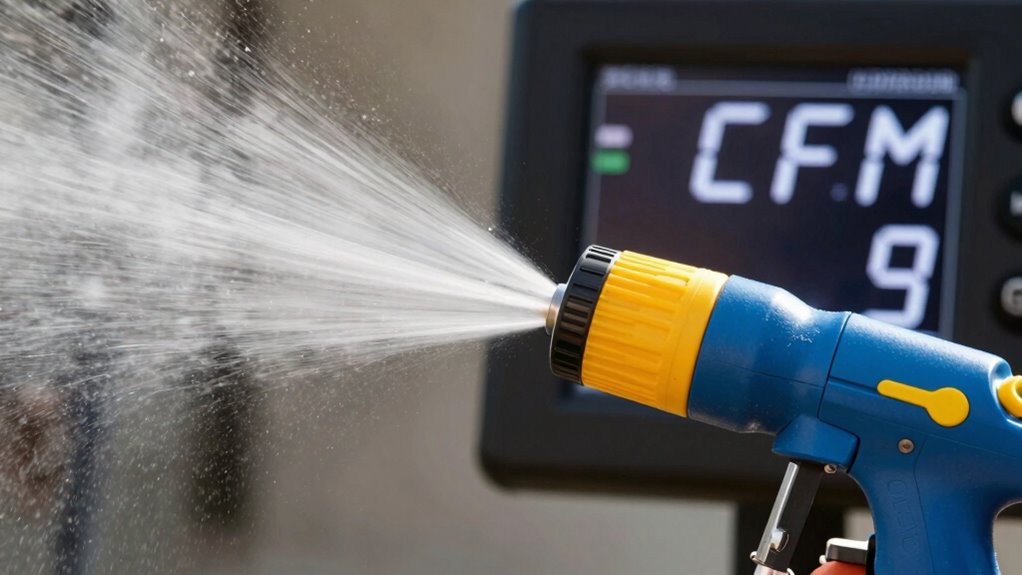
The CFM rating of your sprayer directly influences how well it performs and how efficiently it uses air. Higher CFM means your sprayer can handle greater air pressure, ensuring a consistent, even spray. If the compressor size isn’t adequate, your sprayer may struggle to maintain the right air pressure, leading to uneven application or reduced coverage. A compressor with a CFM that matches your sprayer’s requirements helps optimize performance, reducing delays or interruptions. Additionally, understanding airflow principles can help you choose the right equipment and improve your overall spraying efficiency. Choosing a compressor with the right airflow capacity can prevent equipment wear and extend its lifespan. Being aware of air volume requirements can also help you avoid overworking your compressor and ensure durability. Knowing how air pressure interacts with CFM can further enhance your understanding of optimal setup and operation. Properly matching your compressor’s CFM to your sprayer’s needs is a key step in achieving consistent spray quality and maximizing your project results.
How Can You Choose the Right CFM for Your Spraying Projects?

To select the right CFM for your spraying projects, start by evaluating your specific requirements, like the size and type of surface you’re working on. Then, compare your project needs with the specifications of different equipment to guarantee compatibility. This approach helps you choose a setup that delivers ideal performance and efficiency. Additionally, understanding CFM standards can help you determine appropriate airflow levels for optimal results. Considering performance cookies can also provide insights into your equipment’s operation and efficiency during testing phases. Recognizing the importance of Free Floating principles ensures that your setup remains adaptable and effective across various conditions.
Assess Project Requirements
Choosing the right CFM for your spraying project starts with evaluating your specific requirements. Understanding airflow fundamentals helps you determine how much volume is needed to complete your job efficiently. Start by analyzing the type of material you’re spraying, the surface area, and the desired finish. Consider the viscosity of the material and how quickly it needs to be applied, as these factors influence airflow needs. During project planning, measure the space and identify any obstacles that might affect airflow. Knowing these details allows you to estimate the necessary CFM, ensuring you select equipment that provides adequate airflow without wasting energy or risking poor application. Proper assessment guarantees your equipment matches your project’s demands, leading to better results and smoother workflow. Additionally, understanding the importance of filtration and pump protection can help maintain consistent airflow and prevent equipment issues. Being aware of air pressure regulation is also crucial, as it ensures your spray system operates at optimal performance levels.
Match Equipment Specifications
Selecting the right CFM for your spraying project involves carefully matching your equipment’s specifications to your specific needs. Start by checking your spray equipment’s recommended CFM range, which indicates how much airflow it requires for *ideal* performance. Your air compressor must supply at least this amount to *guarantee* smooth operation without interruptions. If your compressor’s CFM is too low, your spray finish may be uneven or sputter; too high, and you risk wasting energy or damaging the equipment. Always choose an air compressor that meets or slightly exceeds your spray equipment’s CFM requirements for consistent pressure and flow. Matching these specifications ensures you achieve professional results and prevent equipment strain or failure during your spraying projects. Additionally, understanding airflow measurements helps you better interpret compressor performance and select the most energy-efficient option.
What Common Mistakes Should You Avoid When Selecting CFM Equipment?
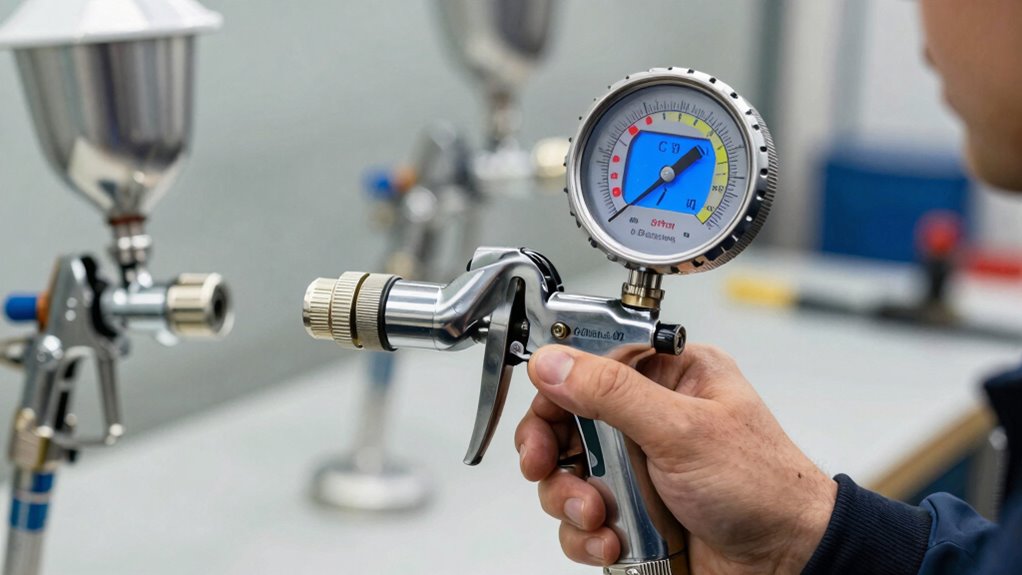
One common mistake is not matching your equipment’s CFM to your project’s needs, which can lead to poor results or equipment strain. You should also avoid overestimating the CFM requirements, as bigger isn’t always better. By understanding your specific needs, you can select equipment that performs ideally without unnecessary costs.
Match Equipment to Needs
When picking CFM equipment, it’s easy to overlook matching the airflow capacity to your specific spraying needs, which can lead to poor results or equipment damage. Properly matching equipment involves understanding airflow dynamics, ensuring your compressor provides the right CFM for your spray job. Using equipment with too high or too low airflow can cause inconsistent spray patterns or clogging. Additionally, neglecting to take into account compressor maintenance can reduce efficiency, affecting airflow and damaging the equipment over time. Regularly checking and maintaining your compressor is essential for optimal performance and longevity. Maintaining proper airflow not only improves your spraying results but also extends the lifespan of your equipment. Always evaluate your project’s scale and type to select equipment that aligns with these needs. Avoid rushing the selection process; a mismatch can be costly and frustrating. Ensuring your equipment matches your airflow demands will lead to better results and longer-lasting tools. Understanding airflow is crucial for building reliable spraying systems and avoiding common mistakes, especially since compressor efficiency directly impacts consistent airflow delivery.
Avoid Overestimating CFM
It’s common to overestimate the CFM needed for a spraying job, but doing so can lead to wasted energy, increased costs, and equipment issues. Oversizing your compressor reduces airflow efficiency and complicates compressor sizing, making your setup less effective. To avoid this mistake, focus on matching your equipment’s CFM to your actual needs.
| Overestimating CFM | Properly Sized CFM |
|---|---|
| Wastes energy | Saves money |
| Increases costs | Boosts efficiency |
| Causes equipment strain | Ensures longevity |
| Leads to bulky setups | Optimizes airflow |
| Raises operational risks | Enhances performance |
How Do You Read and Interpret CFM Labels on Equipment?
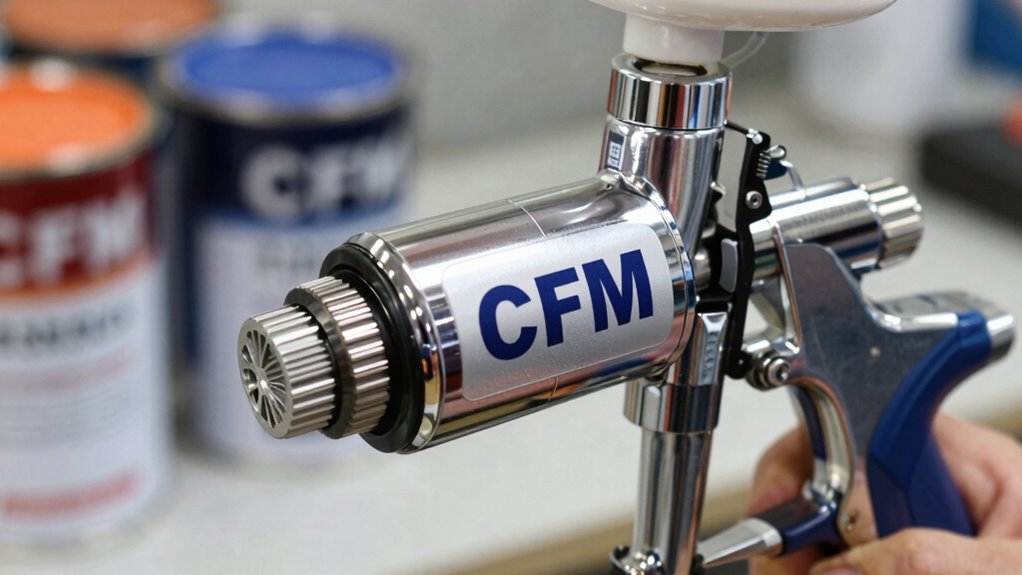
Reading and interpreting CFM labels on spraying equipment is straightforward once you understand what the numbers mean. The label shows the airflow capacity, indicating how much air the compressor can move per minute. Look for the CFM rating to gauge airflow efficiency—higher numbers mean more air volume. Keep in mind, this figure also reflects the compressor’s capacity to handle spray tasks effectively. If you see a CFM value listed, compare it to your equipment’s requirements to verify compatibility. Some labels specify different CFM ratings for different operating conditions, so check for notes or additional details. Understanding these labels helps you select equipment with the right airflow capacity, ensuring ideal spray performance without overloading your compressor.
How Can You Optimize CFM Settings to Improve Spray Quality?
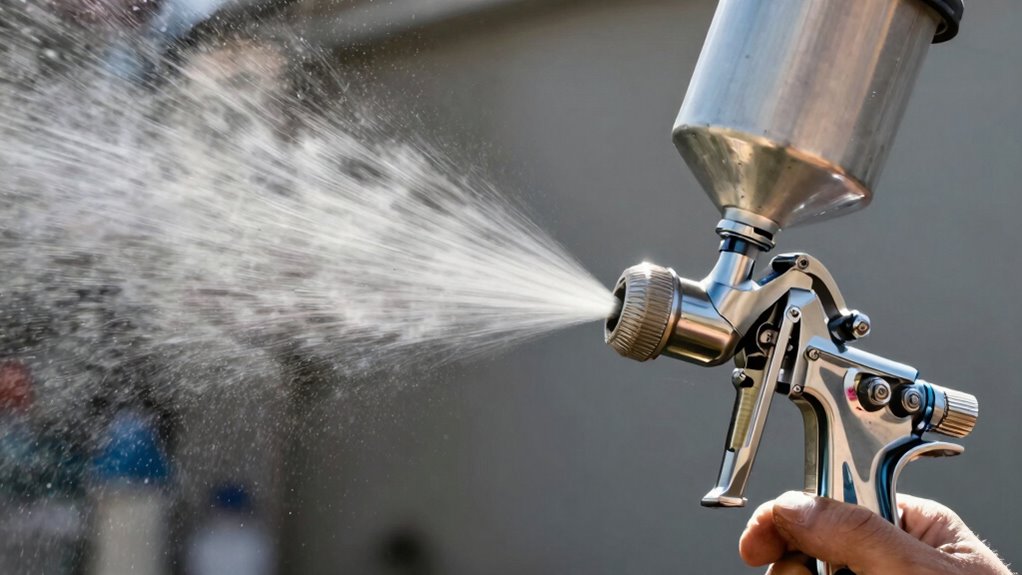
To improve spray quality, you need to refine your CFM settings to match your equipment’s requirements. Start by evaluating your compressor capacity and ensuring it can deliver the necessary airflow without strain. Too little CFM reduces airflow efficiency, causing uneven spray patterns and inconsistent coating. Conversely, excessive CFM wastes energy and can lead to overspray. Adjust your compressor’s output to align with your spray gun’s recommended CFM, maintaining a steady, consistent airflow. Regularly monitor your pressure gauges and listen for signs of strain or fluctuation. Proper CFM settings improve airflow efficiency, resulting in smoother, more even spray patterns. Fine-tuning these settings ensures your equipment operates within its ideal range, maximizing spray quality and reducing material waste.
What CFM Levels Are Best for Different Types of Sprayers and Applications?
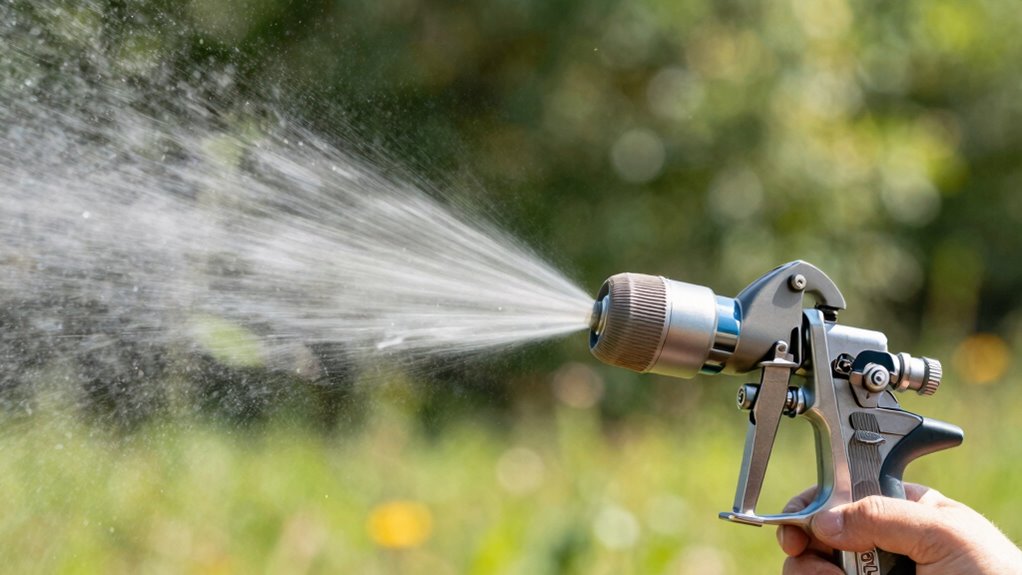
Ever wonder what CFM levels are ideal for different sprayers and applications? The right CFM depends on airflow efficiency and your compressor capacity. For lightweight tasks like spot spraying or small gardens, lower CFM units around 6-8 are sufficient, providing enough airflow without overworking your compressor. Larger applications, such as agricultural spraying or industrial tasks, require higher CFM levels—often 12-20 or more—to ensure a steady, efficient spray. Using a compressor with inadequate capacity can lead to inconsistent airflow, reducing spray quality. Matching your sprayer’s CFM needs to your compressor’s capacity ensures maximum airflow efficiency. This balance prevents strain on your equipment and achieves the best results for your specific application. Choosing the correct CFM level is key to optimizing performance and spray consistency.
Real-World Examples: Which CFM Levels Work Best for Your Tasks?
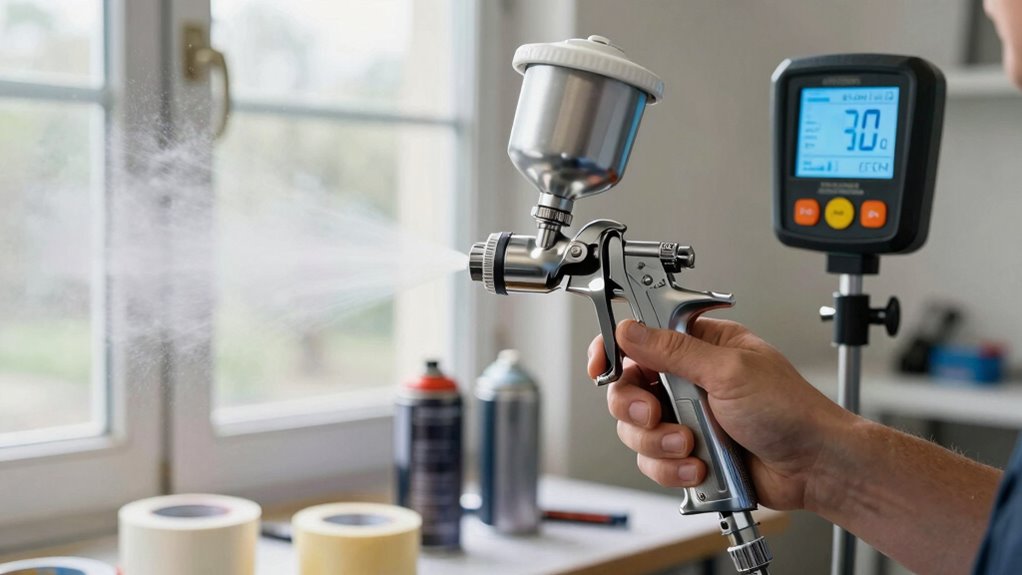
Choosing the right CFM level depends on the specific task you’re tackling. For example, if you’re spray-painting furniture, a compressor with about 6-8 CFM at 90 PSI provides enough air volume to keep the spray steady and smooth. Larger projects like automotive painting may require 10-12 CFM or more to handle higher air volume demands. When working with air tools such as impact wrenches or sanders, ensure your compressor capacity matches their CFM requirements to prevent short cycling or inconsistent power. Using a compressor with insufficient capacity can lead to uneven spraying or tool performance issues. Matching the compressor capacity to your task’s air volume needs guarantees efficiency, reduces frustration, and produces professional results.
Frequently Asked Questions
Can I Upgrade My Sprayer’s CFM Without Replacing the Entire System?
Yes, you can upgrade your sprayer’s CFM without replacing the entire system. Focus on sprayer maintenance by cleaning or replacing filters, upgrading the blower, or adjusting the fan speed for better airflow. CFM adjustments can often be made with simple modifications, such as installing a more powerful motor or changing the fan blades. These steps help improve your sprayer’s efficiency without a full system overhaul.
How Does Altitude Affect CFM Requirements for Spraying?
Imagine your sprayer as a river flowing smoothly; at higher altitudes, the water struggles to reach the same flow. Altitude adjustments become necessary because thinner air reduces airflow efficiency, meaning you’ll need higher CFM settings to maintain proper spray coverage. By adjusting your CFM for altitude, you guarantee a steady stream, preventing uneven application and maximizing effectiveness, no matter how high you go.
Is Higher CFM Always Better for Spraying Accuracy?
Higher CFM isn’t always better for spraying accuracy. It can improve spraying efficiency if your equipment is compatible with the increased airflow, ensuring a smoother, more even application. However, using too much CFM might overwhelm your sprayer or lead to overspray, reducing accuracy. Always match your CFM to your equipment specifications to optimize performance, avoid waste, and achieve the best results.
How Do Temperature Variations Influence CFM Performance?
Imagine you’re spraying paint on a hot summer day; higher air temperatures can cause the air to expand, reducing CFM performance. This affects spray consistency because lower CFM may lead to uneven application. Conversely, cooler air maintains ideal CFM, ensuring steady spray patterns. Temperature variations directly influence how well your sprayer performs; keeping air temperature stable helps maintain consistent CFM and, ultimately, better spray results.
Can CFM Ratings Change Over the Lifespan of the Equipment?
Yes, CFM ratings can change over your equipment’s lifespan. Regular maintenance checks help identify wear or blockages that might reduce airflow. Additionally, proper equipment calibration ensures your sprayer maintains accurate CFM performance. Over time, parts may degrade or become less efficient, so staying proactive with maintenance and calibration keeps your equipment functioning at ideal CFM levels, ensuring consistent spraying results.
Conclusion
Understanding and utilizing the right CFM can dramatically improve your spraying success. By balancing basics with better, you’ll boost your blending, minimize mistakes, and maximize mastery. Remember, selecting suitable settings and staying savvy about specifications guarantees smoother spraying, superior results, and satisfying solutions. So, stay sharp, specify smartly, and spray confidently—your perfect project’s just a CFM choice away!
Fall Picks
fall essentials
As an affiliate, we earn on qualifying purchases.