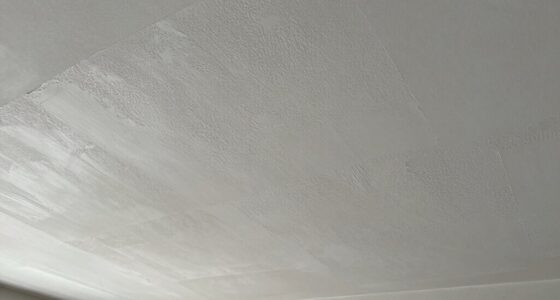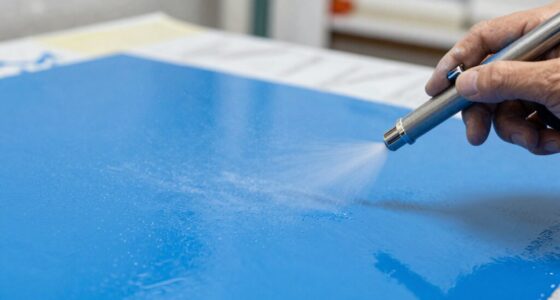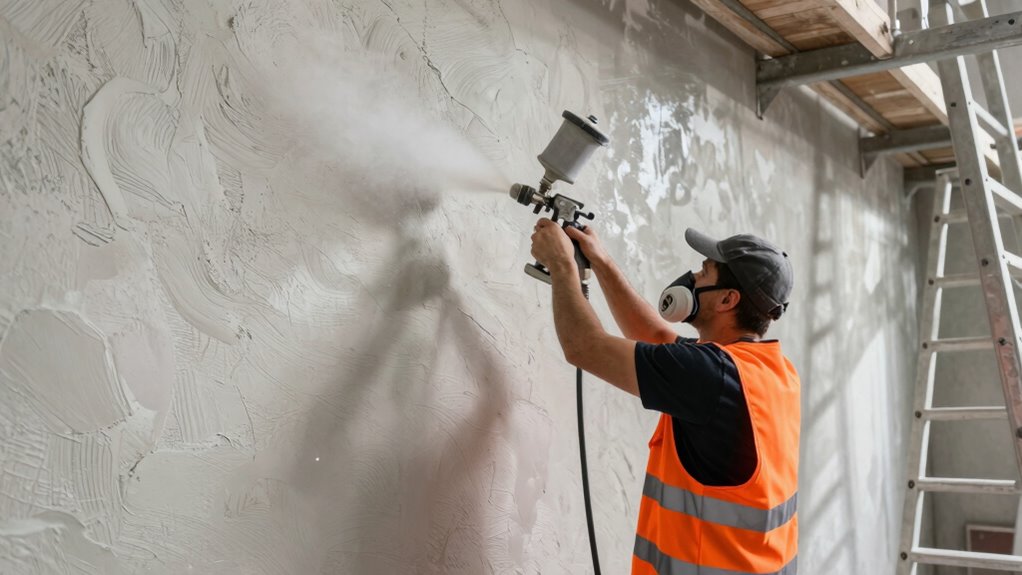

To avoid shadow spots when spraying stucco or mortar, use consistent application techniques like maintaining a steady hand, overlapping passes by about 50%, and keeping your spray pattern even. Make certain your equipment is well-maintained and properly calibrated for uniform coverage. Handle your tools at a consistent distance, and work in calm, stable environmental conditions. Paying attention to these details helps you achieve a smooth, seamless finish—more tips await to perfect your technique.
Key Takeaways
- Maintain a consistent spray pattern with overlapping passes to ensure even coverage and prevent patchy shadow spots.
- Regularly calibrate and clean equipment to ensure uniform spray distribution and color consistency.
- Keep a steady hand and proper distance from the surface to avoid uneven application and shadow effects.
- Work in calm, wind-free conditions to prevent external factors from causing inconsistent spray and shadow spots.
- Practice on small sections first to refine technique and ensure uniform color and application before full spraying.

Spraying stucco and mortar offers a fast and efficient way to apply these materials to walls, saving you time and effort compared to traditional hand application. However, if you’re not careful, you might end up with undesirable “shadow spots”—areas where the coating appears uneven or patchy. To prevent this, focus on consistent application techniques and proper equipment handling. One key factor is color matching; maintaining uniform color across the entire surface is vital for a seamless finish. When you spray, ensure your mix’s color is consistent and your application pattern is even, so you don’t end up with lighter or darker patches. If you notice color discrepancies, it’s often a sign to stop and check your mix or adjust your spray pattern before proceeding further.
Consistent application and color matching prevent shadow spots in stucco and mortar spraying.
Equally important is equipment maintenance. Well-maintained sprayers deliver a consistent spray pattern and prevent clogs that can cause uneven application. Regularly clean your spray tips, nozzles, and filters to avoid buildup of dried material, which can lead to inconsistent coverage and shadow spots. Also, check your pressure settings frequently; too high or too low pressure can result in uneven spray distribution, leaving visible patches. Make sure your equipment is calibrated correctly before starting each project, especially when working on large walls. Proper maintenance and calibration help ensure that the spray pattern remains uniform, preventing areas from appearing shadowed or patchy.
Another tip to avoid shadow spots is to keep a steady hand and maintain consistent distance from the wall while spraying. Moving too quickly or too slowly can cause variations in thickness, which may be more noticeable in certain lighting conditions. Practice on a small section first to get a feel for the spray pattern and adjust your technique as needed. Also, overlap each pass by about 50%, so you don’t leave uncoated gaps or overly thick layers that could dry differently and produce shadow effects.
Additionally, understanding the importance of projector technology can help you better plan your application process, as different equipment types may require specific handling techniques for optimal results. Lastly, consider environmental factors. Wind or temperature fluctuations can influence spray consistency. Work in calm conditions whenever possible, and keep the surface moist or at a stable temperature to promote even drying. By paying attention to color matching, maintaining your equipment diligently, and refining your spraying technique, you can minimize shadow spots and achieve a smooth, professional finish. Proper preparation and ongoing care will make a noticeable difference in the quality of your stucco and mortar application.
Frequently Asked Questions
What Are the Best Safety Precautions During Spraying?
You should always wear protective gear like masks, goggles, and gloves to shield yourself from dust and debris. Make certain your ventilation system is working properly to keep the air clean and reduce inhalation risks. Keep the workspace well-ventilated, and avoid spraying in confined areas. Regularly check your equipment for leaks or blockages, and follow safety guidelines to prevent accidents and health issues during the spraying process.
How Do Weather Conditions Affect Spraying Quality?
Imagine the weather as an artist’s brush, shaping your spray job’s perfection. Weather impact and temperature effects directly influence spraying quality; high humidity can cause drips, while cold temperatures may hinder proper adhesion. Wind can create uneven coverage, and rain ruins the work entirely. To guarantee flawless results, always check the forecast, spray in ideal conditions, and be mindful of how weather shapes your finish like a master sculptor.
Can Different Textures Be Achieved With Spraying Methods?
Yes, you can achieve different textures with spraying methods by adjusting your techniques. For texture variations, try varying spray pressure, nozzle size, or distance from the surface. Using finishing techniques like splattering, stippling, or dragging tools can enhance the texture. Practice these methods to create smooth, rough, or decorative finishes, giving your project a unique look. Mastering these techniques allows you to customize textures effectively with spray applications.
What Maintenance Is Required for Spraying Equipment?
You need to regularly clean your spraying equipment to prevent clogs and guarantee smooth operation. After each use, thoroughly rinse all parts with water or appropriate cleaning solutions. Store your equipment in a cool, dry place and avoid exposure to harsh elements. Check hoses and nozzles for wear and tear, replacing parts as needed. Proper equipment cleaning and storage tips help extend your sprayer’s lifespan and maintain peak performance.
How Do I Remove Overspray From Surrounding Surfaces?
To remove overspray from surrounding surfaces, start by protecting nearby areas with plastic sheeting or drop cloths. Use a soft brush or a damp cloth to gently clean the overspray, avoiding abrasive tools that could damage the surface. For stubborn spots, apply a mild solvent suitable for the material, then wipe clean. Proper surface protection and prompt overspray cleanup are key to maintaining a neat, professional finish.
Conclusion
Remember, applying stucco and mortar is like painting a mural—you want even coverage to avoid those pesky shadow spots. I once watched a professional carefully adjust his spray pattern, and suddenly the wall looked flawless, like a canvas come to life. Just as a painter’s precision makes all the difference, so does your technique. Keep your spray consistent, stay aware of angles, and you’ll achieve a smooth, uniform finish that’ll impress every time.