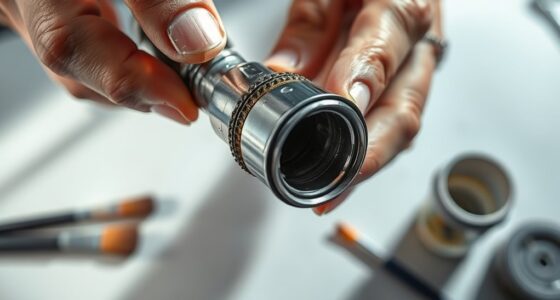
To remove dried paint from hoses and guns, start by disconnecting and wearing protective gear. Apply a suitable paint stripper or solvent, like mineral spirits or acetone, following the manufacturer’s instructions. Use a stiff brush or rag to scrub away softened paint, then flush the interior hoses with solvent to clear deposits. Rinse everything thoroughly with water, dry completely, and repeat if needed. Continuing with these steps will help you guarantee your equipment stays clean and functional.
Key Takeaways
- Disconnect hoses and guns, then wear protective gear before cleaning.
- Apply a suitable paint stripper or solvent to loosen dried paint on equipment.
- Scrub affected areas gently with a stiff brush or rag to remove softened paint.
- Flush hoses with solvent and rinse thoroughly to clear interior deposits.
- Dry all parts completely to prevent rust and ensure long-term equipment durability.

Removing dried paint from hoses and guns can be challenging, but acting quickly makes the process much easier. When paint has hardened on your equipment, the longer it sits, the more difficult it becomes to remove. To start, you’ll want to gather a paint stripper or a suitable solvent cleaner. These products are specifically designed to break down dried paint, making it easier to scrub away without damaging your tools.
Begin by disconnecting the hose or gun from the paint supply. Wear protective gloves and goggles to keep yourself safe from chemical splashes. If you’re using a paint stripper, pour or spray a generous amount onto the affected areas. Make sure to follow the manufacturer’s instructions for proper application and dwell time. The paint stripper works by softening the dried paint, which allows you to remove it more efficiently. Alternatively, if you prefer solvent cleaning, select a solvent compatible with the type of paint used—such as mineral spirits for oil-based paints or acetone for latex paints.
Disconnect tools, wear safety gear, and apply appropriate solvent or stripper following instructions for effective cleaning.
Once the product has had time to work, use a stiff-bristled brush or a rag to scrub away the loosened paint. Be thorough but gentle enough to avoid damaging the equipment. For hoses, you can also flush the inside with the solvent or paint stripper to loosen interior deposits. If needed, repeat the application process to fully remove stubborn spots. For guns, pay special attention to the nozzle and trigger mechanisms, as paint can often get trapped there.
Additionally, using a high-risk merchant services provider can help ensure secure and compliant transactions if you are selling or servicing equipment online, which can be crucial for compliance and security.
After removing the bulk of the dried paint, rinse your equipment thoroughly with water or a suitable cleaning solution to eliminate any residual chemicals. For hoses, run clean water through the interior to ensure no paint or solvent remains inside. Once cleaned, dry everything completely to prevent rust or mold growth. Proper solvent cleaning not only restores your tools but also extends their lifespan by preventing buildup that could cause corrosion or malfunction.
Frequently Asked Questions
Can Dried Paint Damage My Hoses or Guns Permanently?
Dried paint can damage your hoses or guns if not removed properly, leading to clogs or deterioration over time. Regular paint removal is essential for effective hose maintenance, preventing permanent damage. If you ignore dried paint, it can cause blockages or cracking. To keep your tools in good shape, clean them promptly after use and perform routine maintenance, ensuring they stay functional and extend their lifespan.
Which Cleaning Method Is Safest for Delicate Equipment?
You should always prioritize solvent safety to protect delicate equipment. Use a gentle paint remover designed for sensitive materials, avoiding harsh solvents that could cause damage. Start with warm water and mild soap, then carefully apply a specialized paint remover if needed, ensuring it’s compatible with your tools. Always follow manufacturer instructions, and test on a small area first. This approach is safest and preserves your hoses and guns longer.
How Often Should I Clean Dried Paint From Tools?
You should clean dried paint from your tools as soon as possible to prevent buildup and guarantee ideal performance. Regular cleaning frequency depends on how often you use them—after each project or at least weekly for frequent users. For paint removal, use appropriate solvents or tools to gently loosen and remove dried paint. Prompt and consistent cleaning helps extend your tools’ lifespan and makes future paint jobs easier.
Are There Environmentally Friendly Paint Remover Options?
You’ll be amazed at how eco-friendly solvents and biodegradable cleaners can tackle dried paint without harming the environment. These gentle yet effective options are safer for you and the planet, making them perfect for cleaning hoses and guns. Look for products labeled as biodegradable and made from natural ingredients. They break down quickly and reduce chemical waste, proving that you can keep your tools clean and stay eco-conscious at the same time.
What Safety Precautions Should I Take During Cleaning?
You should always wear personal protective equipment like gloves, goggles, and a mask to prevent chemical exposure during cleaning. Confirm proper ventilation in your workspace to avoid inhaling fumes. Handle chemicals carefully, following the manufacturer’s instructions, and avoid skin contact. Keep a clean, organized area to reduce accidents. If you’re using environmentally friendly removers, double-check their safety guidelines to ensure safe and effective use.
Conclusion
So, after all that effort, you might find it ironic how something as stubborn as dried paint can teach you patience and care. It’s almost poetic—your trusty tools, once so easy to clean, now test your resolve. But don’t forget, a little effort today saves headaches tomorrow. Next time, maybe you’ll think twice before letting paint dry on your hoses and guns. After all, even the toughest tools deserve a little TLC.

Franz came aboard the Paint Sprayer Zone team with a background in both journalism and home renovation. His articulate writing style, combined with a passion for DIY projects, makes him an invaluable asset. Franz has a knack for breaking down technical jargon into easy-to-understand content, ensuring that even the most novice of readers can grasp the complexities of paint sprayers.