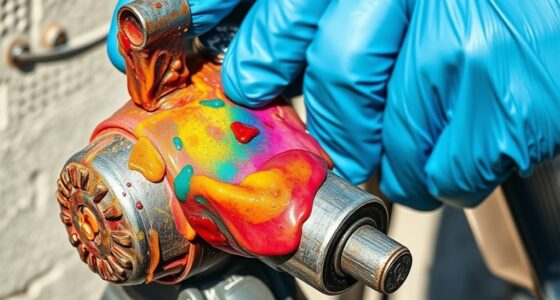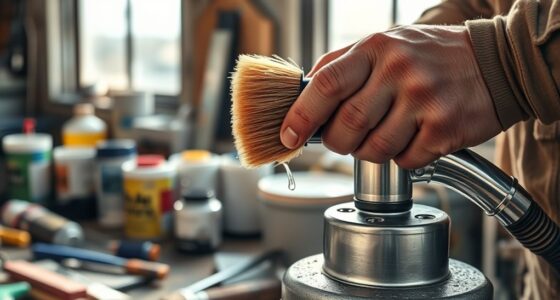
To reduce overspray without sacrificing coverage, focus on maintaining smooth, controlled spray motions and keeping a consistent distance from the surface. Adjust your spray pressure to finer settings, which create smaller droplets that stick better, minimizing waste. Regularly clean and calibrate your equipment to guarantee best performance. Proper workspace management and technique help you achieve precise application and cleaner finishes. Stay tuned for more tips on mastering these methods effectively.

Get business pricing on tools and workshop supplies
- Business-only prices and quantity discounts
- Tax-exempt purchasing
- Multiple users, one account, clear invoices
Key Takeaways
- Use smooth, controlled spray motions and maintain a consistent distance to prevent excessive atomization.
- Adjust spray pressure lower for finer droplets that improve coverage and reduce overspray.
- Regularly clean and maintain filters and equipment to ensure proper airflow and spray consistency.
- Practice trigger control by pressing and releasing smoothly for even application without waste.
- Keep the workspace organized and well-ventilated to minimize environmental overspray and enhance finish quality.

Have you ever struggled with overspray ruining your paint job or creating a mess? It’s a common frustration for anyone working with spray equipment. The key to reducing overspray without sacrificing coverage lies in mastering proper brush techniques and maintaining your spray booth effectively. When you understand how to control your application method and keep your workspace in top shape, you can achieve cleaner, more precise results.
First, focus on your brush techniques. Even if you’re primarily using a spray gun, understanding how to replicate the control of a brush can considerably reduce overspray. Use smooth, controlled motions, keeping the gun at an even distance from the surface. Overreaching or moving too quickly causes excessive atomization, which leads to overspray and wasted material. Practice consistent trigger control—pressing and releasing smoothly—to prevent uneven spray patterns. Also, adjust your spray pressure; a lower pressure often results in finer, more controlled droplets that stick where you want them, minimizing waste. By honing these techniques, you maintain better coverage and avoid the tendency to overspray, especially in tight or delicate areas.
Master smooth, controlled spray motions and adjust pressure to minimize overspray and achieve precise coverage.
Next, don’t overlook the importance of spray booth maintenance. A well-maintained booth ensures proper airflow and filtration, which are essential for controlling overspray. Regularly clean filters and replace them when needed to prevent buildup that can cause particles to circulate and settle undesirably. Keep the booth’s ventilation system in prime condition to ensure proper air exchange—this helps carry away excess spray before it settles on unintended surfaces. Proper maintenance also includes calibrating your equipment routinely, so spray patterns remain consistent. When your booth is clean and functioning correctly, it becomes easier to control overspray and achieve a professional finish without sacrificing coverage.
Additionally, understanding the Kia Tuning options available can help you optimize your vehicle’s performance, making your work more efficient and satisfying. Combining good brush techniques with diligent spray booth maintenance creates a synergy that greatly reduces overspray. When you control your spray gun’s motion and pressure precisely, you use less material and prevent excess from escaping into the environment. Meanwhile, a clean, well-ventilated booth prevents airborne particles from settling where they shouldn’t, keeping your workspace tidy and your finish smooth. Remember, reducing overspray isn’t just about saving paint or time; it’s also about working smarter and producing higher-quality results. With practice, your technique improves, and your workspace stays cleaner, making the entire process more efficient and less wasteful. In the end, mastering these aspects allows you to achieve excellent coverage with minimal mess, giving your projects a professional, flawless look.
HVLP spray gun with adjustable pressure
As an affiliate, we earn on qualifying purchases.
As an affiliate, we earn on qualifying purchases.
Frequently Asked Questions
Can Air Pressure Adjustments Minimize Overspray?
Yes, adjusting air pressure can minimize overspray while maintaining spray consistency. Lowering the air pressure helps control the spray pattern, reducing the amount of paint that drifts beyond your target area. This adjustment allows you to apply an even coat without excess spray, ensuring good coverage. Keep in mind, finding the right balance is key—too low, and coverage might suffer; too high, and overspray increases.
What Spray Tips Are Best for Reducing Overspray?
You should choose spray tips designed for your paint viscosity, like fine-finishing tips for thinner paints and larger tips for thicker coatings. Narrow or smaller spray tip types help reduce overspray by providing a controlled, precise spray pattern. Using the right spray tip for your specific paint viscosity guarantees you maintain coverage while minimizing excess overspray. Always match your spray tip to your paint’s consistency for ideal results.
How Does Humidity Affect Overspray Levels?
Humidity impact can profoundly affect overspray levels, as higher moisture effects cause the paint to dry slower, increasing the chance of overspray. When humidity is low, paint dries faster, helping you control overspray better and achieve a cleaner finish. To minimize overspray, monitor humidity levels and adjust your spraying technique accordingly, such as reducing pressure or thinning paint, especially in high humidity conditions where moisture effects are more pronounced.
Are There Specific Techniques to Control Overspray on Complex Surfaces?
Imagine your spray gun as a steady artist’s hand, carefully steering complex surfaces. To control overspray, focus on precise surface preparation, ensuring smooth, clean areas that require less paint. Proper equipment calibration is essential; it fine-tunes your spray pattern for even coverage. Use controlled, consistent strokes, and adjust your distance and pressure accordingly. These steps help you master complex surfaces without excess paint flying everywhere, keeping your work clean and professional.
What Safety Precautions Should Be Taken When Reducing Overspray?
When reducing overspray, you should always wear protective gear like masks, goggles, and gloves to prevent inhalation and skin contact. Guarantee proper ventilation safety by working in well-ventilated areas or using exhaust fans to disperse fumes. Keep a clean workspace to prevent accidents, and follow manufacturer instructions. These precautions protect your health and help you maintain a safe environment while achieving quality results.
Conclusion
By mastering these tips, you’ll never believe how much spray you’ll save—it’s like turning a flood into a gentle drizzle! Say goodbye to wasted paint and hello to perfect coverage every single time. Imagine the savings, the efficiency, and the pride you’ll feel knowing you’re a true pro. Don’t let overspray ruin your project—take control now and transform your work into a masterpiece with precision that feels almost magical!
Fall Picks
fall essentials
As an affiliate, we earn on qualifying purchases.