To protect threads and fittings and guarantee a no-leak assembly, always clean and dry threads before applying the right sealant or thread tape, wrapping clockwise without gaps or overlaps. Tighten fittings gradually by hand, then use a wrench with a gentle quarter to half turn—avoid over-torquing. Regularly inspect connections for corrosion or debris, and disassemble carefully using thread protectors. Mastering these habits will help you achieve leak-free plumbing; learn more tips below.
Key Takeaways
- Always protect threads with caps or covers during storage and disassembly to prevent damage and debris buildup.
- Use compatible, properly applied sealants or thread tape to ensure leak-proof connections.
- Tighten fittings gradually by hand and then with a wrench, stopping at initial resistance to avoid over-tightening.
- Regularly inspect threads and fittings for corrosion, cracks, or debris, and reapply protective coatings as needed.
- Disassemble fittings carefully, using thread protectors and proper techniques to prevent damage and ensure a secure reassembly.
Why Protecting Threads and Fittings Matters in Plumbing

Protecting threads and fittings is essential because damaged or improperly maintained components can lead to leaks, which may cause water damage and increase your utility bills. One key concern is thread corrosion, which weakens the metal and compromises sealing integrity. Corrosion can occur from exposure to moisture, minerals, or chemicals, making it critical to keep threads clean and dry. Additionally, ensuring fitting compatibility is indispensable; using mismatched fittings can cause improper sealing, increasing the risk of leaks. Properly protected threads help maintain a secure connection, preventing corrosion buildup and ensuring fittings work together seamlessly. Regular inspection and proper lubrication can further prevent corrosion and facilitate easier assembly and disassembly, extending the lifespan of your plumbing components. Using corrosion-resistant materials in fittings and threads can also significantly reduce the risk of damage over time. Employing preventive maintenance practices, such as applying anti-corrosion coatings, can further safeguard your plumbing system from deterioration. Being aware of the environmental conditions surrounding your plumbing setup can help you choose the right protective measures and materials. By taking these precautions, you extend the lifespan of your plumbing components and reduce the chances of costly repairs down the line.
What Causes Leaks at Threaded Connections?

What exactly causes leaks at threaded connections? One common culprit is thread corrosion, which weakens the metal over time and creates tiny gaps that allow leaks. Corrosion often results from moisture exposure, especially if protective coatings aren’t applied or maintained. Additionally, fitting deformation can occur if you overtighten the connection, distorting the threads or the fitting itself. This deformation compromises the seal, making it easier for water to escape. Poorly aligned threads or damaged fittings also contribute to leaks. When threads aren’t properly protected or assembled with care, these issues compound, increasing the likelihood of leaks. To prevent this, it’s essential to protect the threads, avoid overtightening, and regularly inspect fittings for signs of corrosion or deformation. Incorporating AI-driven solutions into maintenance routines can help detect early signs of damage and prevent leaks before they occur. Regularly using protective coatings can also significantly reduce the risk of corrosion and extend the lifespan of threaded connections. Employing proper assembly techniques ensures that fittings are correctly aligned and properly sealed, further reducing leak risks. Additionally, implementing preventive maintenance practices can help identify potential issues early, saving time and resources.
How to Choose the Right Sealant and Thread Tape to Prevent Leaks

Choosing the right sealant and thread tape is essential for guaranteeing a leak-free connection. You need to select materials compatible with your fittings and avoid products that could cause thread damage. Using incompatible sealants can degrade threads or fail to seal properly, leading to leaks. To make the best choice, consider these factors:
- Guarantee sealant compatibility with the pipe material and environment
- Use thread tape designed for the type of fluid or gas passing through
- Avoid over-taping, which can cause thread damage or improper sealing
- European cloud innovation emphasizes the importance of selecting sustainable and compatible materials to enhance overall system integrity. Additionally, selecting sealants that are chemical-resistant can help maintain a secure connection over time in various conditions.
- Ensuring proper thread engagement is also vital to prevent leaks and maintain the integrity of the connection. Proper material selection can further improve the durability and performance of your fittings, especially in challenging environments, where understanding material compatibility is crucial for long-term reliability.
Applying Sealant and Teflon Tape Correctly for Leak-Free Fittings

To achieve a leak-free connection, you need to apply sealant properly and wrap Teflon tape correctly. Make sure you use the right technique for sealing and threading, so nothing gets missed. Also, verify that your threads are compatible with the sealant and tape to prevent leaks. Proper thermal behavior of your fittings ensures that materials expand and contract correctly, maintaining a secure seal over time. Additionally, understanding the air purifier maintenance dos and don’ts can help prevent issues related to environmental factors that might affect fittings and connections.
Proper Sealant Application Technique
Applying sealant and Teflon tape correctly is essential for achieving leak-free threaded fittings. Proper application prevents issues like thread corrosion and ensures the sealant cures fully, creating a reliable barrier against leaks. To do this effectively:
- Wrap Teflon tape clockwise, overlapping smoothly without gaps or twists.
- Apply sealant evenly around the male threads, avoiding excess that could squeeze out.
- Clean threads beforehand to remove debris, guaranteeing optimal sealant curing and preventing corrosion.
These steps help maintain thread integrity and promote a secure, leak-proof connection. Proper technique reduces the need for rework and minimizes the risk of leaks caused by improper sealing. Focus on precision, and your fittings will stay tight and leak-free longer.
Correct Teflon Tape Wrapping
Ensuring a leak-free connection starts with wrapping Teflon tape correctly around the male threads. You want to wrap in the direction of the threads, keeping the tape tight and smooth to avoid bunching. Use tape with appropriate thickness—thick enough to seal, but not so bulky it causes thread damage or prevents proper fitting. Over-wrapping can lead to thread damage, while under-wrapping might cause leaks. Proper wrapping guarantees a tight seal without compromising the integrity of the threads. Additionally, understanding the correct wrapping technique helps prevent common installation issues. Being aware of thread compatibility ensures the fittings work together effectively and reduce the risk of leaks.
Ensuring Thread Compatibility
Properly fitting your threads requires verifying compatibility before applying sealant or Teflon tape. Using incompatible fittings can lead to thread corrosion and leaks. To guarantee fitting compatibility, check that the threads match in size, type, and pitch. Mismatched threads can cause damage over time, increasing the risk of leaks.
- Confirm thread size and pitch before assembly
- Use fittings made from compatible materials to prevent corrosion
- Inspect threads for damage or wear prior to sealing
How to Tighten Plumbing Fittings Properly Without Over-Torquing

Tightening plumbing fittings correctly is essential to prevent leaks and damage, but over-tightening can be just as problematic as under-tightening. When you overtighten, you risk thread damage that weakens the connection and causes leaks later. It can also lead to fitting corrosion, especially if metal components grind or break down. To avoid this, tighten fittings by hand first, then give them a quarter to half turn with a wrench. Stop as soon as you feel resistance—no need to crank down further. Always use thread sealant or Teflon tape properly to ensure a secure seal without excessive force. Remember, a snug fit is enough; over-torquing compromises the integrity of the threads and the longevity of your plumbing. Additionally, understanding the proper torque levels for different fittings can help prevent damage and ensure a reliable connection.
How to Inspect and Test Your Plumbing Connections for Leaks

After you’ve completed your plumbing connections, it’s essential to inspect and test them for leaks before finalizing the job. Carefully examine each fitting for signs of thread corrosion or moisture. Run water through the system at low pressure to check for drips or wet spots. Pay attention to the fitting material, making sure it’s not damaged or degraded. To improve your inspection:
- Look closely at threaded areas for corrosion or cracks
- Use a soapy water solution on connections to detect small leaks
- Tighten fittings slightly if you notice any leaks, but avoid over-tightening
This process helps you catch issues early, preventing future leaks and damage. Proper inspection ensures your connections remain secure, leak-free, and long-lasting.
Tips for Maintaining Leak-Free Fittings Over Time

To keep your fittings leak-free over time, regular maintenance and careful monitoring are essential. Check for signs of thread corrosion, which can weaken the seal and cause leaks. If you notice rust or corrosion, clean the threads thoroughly and apply a corrosion-inhibiting compound before reassembling. Proper fitting alignment is also vital; misaligned fittings can cause strain, leading to leaks or damage. Always ensure threads are clean and properly engaged before tightening. Avoid over-tightening, which can damage threads or distort fittings. Periodically inspect connections for any signs of wear or corrosion, and re-tighten fittings as needed. Maintaining a routine check helps prevent leaks and extends the life of your plumbing system, keeping it working reliably over time. Additionally, being aware of thread corrosion signs can help you address potential issues before they become severe. Regularly using plumbing system maintenance practices can also minimize the risk of leaks and extend the longevity of your fittings. Incorporating preventative measures into your maintenance routine can further safeguard your plumbing connections from future problems. Implementing proper sealing techniques can significantly reduce the chances of leaks developing over time. Moreover, ensuring proper torque application during assembly can help maintain a reliable seal over years of use.
What to Do When Your Plumbing Connections Still Leak

If your plumbing connections still leak despite your efforts, it’s time to troubleshoot the issue systematically. Common causes include thread damage or fitting corrosion. Carefully inspect your threads for visible damage, such as cracks or deformities. Examine fittings for corrosion or debris that may prevent a proper seal. Sometimes, thread damage occurs during disassembly, compromising the seal even after reassembly. Fitting corrosion can also cause leaks by creating an uneven surface. To fix these issues, consider replacing damaged threads with new fittings or cleaning corroded surfaces thoroughly. Always ensure you’re using the correct thread sealant and tightening fittings properly. Proper installation techniques are essential to prevent future leaks. Remember, neglecting these problems can lead to persistent leaks and potential water damage. Addressing these issues promptly keeps your plumbing leak-free and reliable.
Best Practices for Protecting Threads During Disassembly and Reassembly
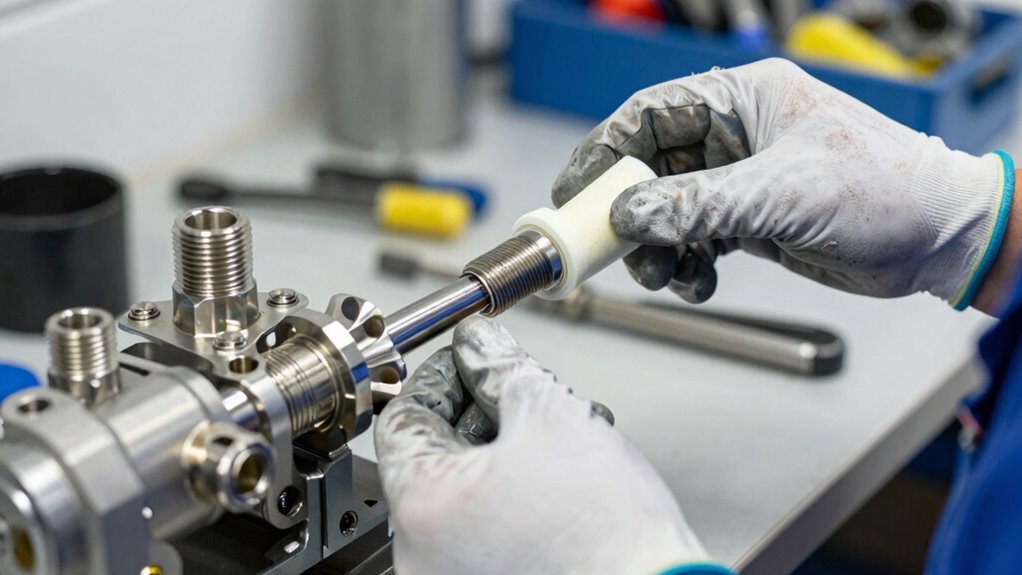
Protecting threads during disassembly and reassembly is essential to guarantee a leak-free connection. When you avoid thread damage, you prevent costly repairs and maintain the integrity of the fitting. Use proper tools, like thread protectors or caps, to shield the threads from nicks and scratches that can cause leaks. Be gentle when unscrewing fittings to reduce the risk of cross-threading or stripping threads. Additionally, taking care during reassembly helps prevent fitting corrosion, which can compromise the seal. Apply appropriate thread sealant or tape evenly to avoid excess buildup that might damage threads or impede proper tightening. Keeping threads clean and free of debris also minimizes the chance of corrosion and ensures a secure, leak-free connection each time.
Building the Habit of Leak-Free Assembly: Tips for Consistency
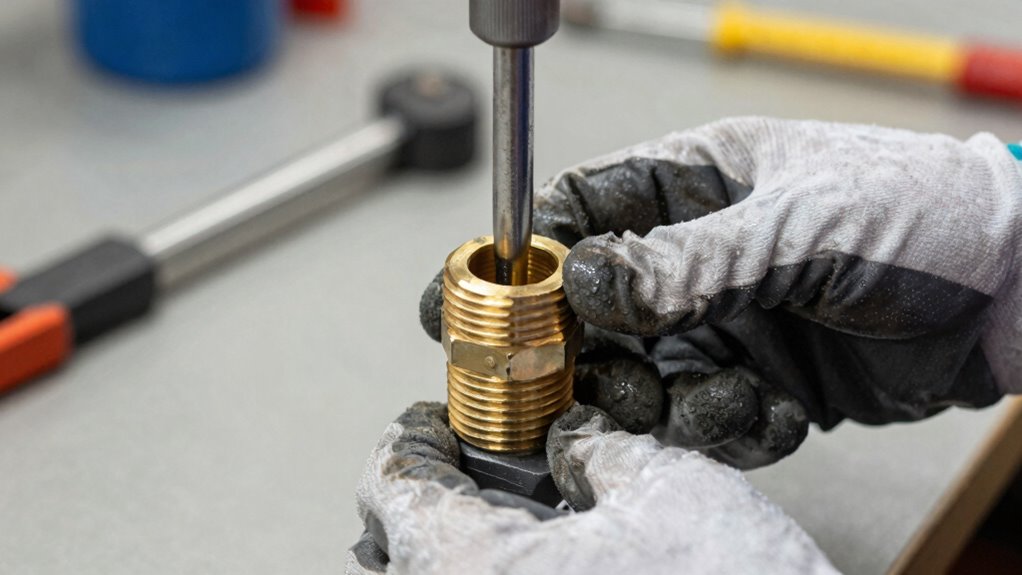
Developing a consistent approach to assembly guarantees your fittings remain leak-free over time. To build this habit, focus on gentle handling to prevent thread damage, always clean threads before assembly, and use appropriate thread sealants. These steps minimize risks of fitting corrosion and ensure a tight seal. Be mindful of cross-threading, which can compromise threads and lead to leaks. Regularly inspect threads for signs of damage or corrosion, addressing issues early. Keep tools calibrated and apply torque evenly to avoid over-tightening, which can cause thread damage. Establishing a routine ensures each connection is reliable, reducing the chance of leaks and costly repairs. Consistency in your assembly process is key to maintaining the integrity of your fittings over the long term.
Frequently Asked Questions
What Are the Common Mistakes to Avoid When Protecting Threads?
You should avoid overusing thread sealants, as excess can cause leaks or damage. Don’t forget to use protective caps on unused fittings to prevent dirt and debris from contaminating threads. Prevent cross-threading by aligning fittings carefully before tightening, and don’t overtighten, which can strip threads. Properly applying thread sealants and using caps ensures a secure, leak-free connection and prolongs the lifespan of your fittings.
How Often Should You Inspect Threaded Fittings for Damage?
You should inspect threaded fittings for damage regularly, ideally every few months or after any maintenance work. Look for signs of thread corrosion or fitting deterioration, which can lead to leaks or failures. Promptly address any issues you find to prevent costly repairs and ensure a secure seal. Regular inspections help catch problems early, maintaining the integrity of your system and extending the lifespan of your fittings.
Can Improper Protection Lead to Long-Term Plumbing Failures?
Think of improper protection as planting weeds in your plumbing garden. It can lead to long-term failures by exposing fittings to thread corrosion and compromising fitting compatibility. Without proper care, tiny cracks grow, weakening connections over time. Ignoring this can cause leaks, water damage, and costly repairs. So, always protect your fittings, ensuring they stay compatible and corrosion-free, much like tending a healthy garden to keep it thriving.
Are There Specific Tools Recommended for Thread Protection?
You should use specific tools like thread sealants and protective caps for thread protection. Thread sealants help prevent leaks and corrosion, ensuring a secure fit, while protective caps shield threads from dirt, debris, and damage during handling or storage. These tools are essential for maintaining the integrity of fittings, making your assembly leak-proof and long-lasting. Always keep these tools handy to follow best practices and avoid future plumbing issues.
How Does Environmental Exposure Affect Thread and Fitting Integrity?
Environmental exposure can considerably impact your thread and fitting integrity, leading to corrosion and reduced durability. You might think it’s just surface rust, but over time, moisture, chemicals, and temperature changes wear down corrosion resistance. This weakens connections, causing leaks or failures. To prevent this, make certain your fittings are properly protected and use corrosion-resistant materials, minimizing environmental impact and extending the lifespan of your assemblies.
Conclusion
By protecting your threads and fittings with proper sealants and careful assembly, you prevent leaks before they start. Imagine a homeowner who followed these habits—after replacing a sink, they used Teflon tape correctly and tightened fittings just enough. Months later, no drips or water damage. Consistently applying these best practices keeps your plumbing leak-free, saving you time and money. Make protection and proper technique your daily habit for reliable, leak-proof plumbing.