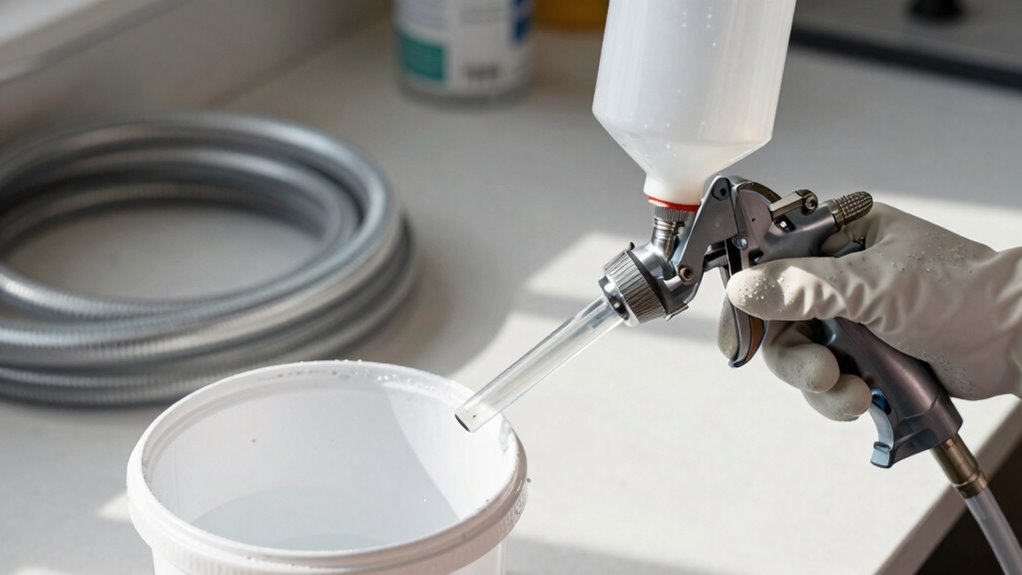
Many believe that simply rinsing your sprayer or using water switches causes clogs, but the real issue is residual paint drying inside hoses over time. If you don’t clean thoroughly after each job—disassembling parts and applying solvents—residue hardens and blocks the flow. This build-up often gets mistaken for a cleaning failure. To prevent future problems, it’s essential to understand what truly causes dried paint inside hoses and how proper cleaning habits can avoid it.

Get business pricing on tools and workshop supplies
- Business-only prices and quantity discounts
- Tax-exempt purchasing
- Multiple users, one account, clear invoices
Key Takeaways
- Dried paint inside hoses results from inadequate cleaning and failure to disassemble and scrub components after use.
- Rinsing with water alone often leaves residues, especially with oil-based paints, leading to buildup.
- Ignoring immediate cleaning allows paint to settle and harden, causing stubborn clogs over time.
- Using improper cleaning methods or neglecting to disassemble parts prevents thorough removal of dried paint.
- Regular maintenance, including disassembly and manual scrubbing, is essential to prevent dried paint inside hoses.
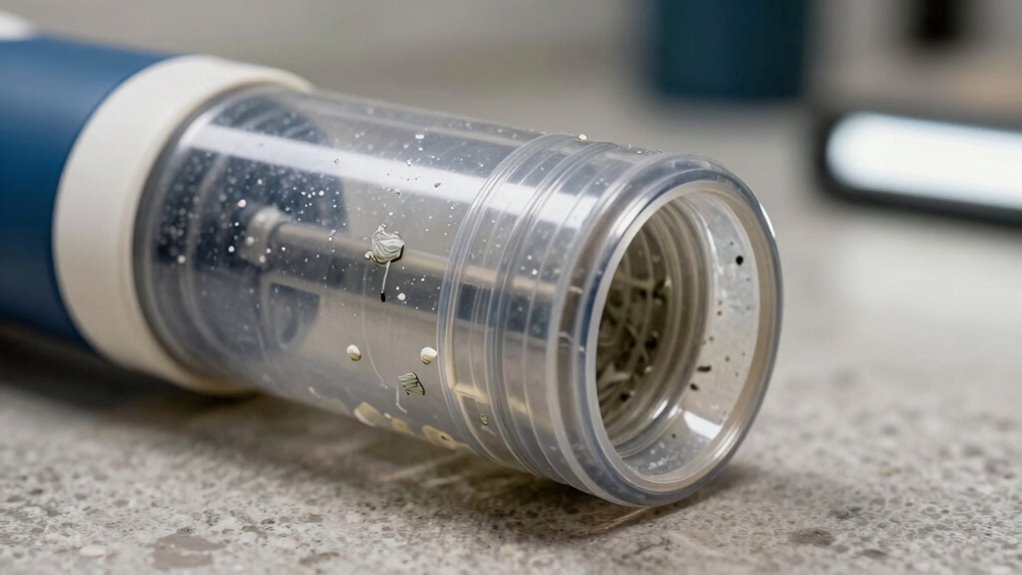
Many people believe that cleaning a sprayer is a quick rinse or simply switching to water between uses, but these myths can lead to costly clogs, residue buildup, and equipment damage. If you want your sprayer to perform well and last longer, understanding how dried paint inside hoses develops is essential. The main culprit is paint residue that isn’t properly cleaned after each use. When you skip thorough cleaning techniques, leftover paint dries inside the hoses, nozzles, and filters, turning into stubborn clogs that are tough to remove later.
Instead of rushing through the cleanup, you should focus on effective cleaning techniques. After finishing a project, you need to flush the sprayer with the appropriate solvent—water for latex paints or mineral spirits for oil-based paints. Simply running water through the system isn’t enough, especially if you don’t actively remove the residual paint. You should disassemble parts like the nozzle and filters and scrub them gently with brushes designed for sprayers. This ensures all paint residue is cleared away, preventing buildup that can cause blockages.
Effective cleaning involves flushing with the right solvent and scrubbing disassembled parts to prevent blockages.
Many people overlook the importance of cleaning the hoses thoroughly. Paint can adhere to the inner walls, and if not properly cleaned, it will dry and cause issues down the line. Using compressed air to blow out hoses can help remove residual paint, but it’s more effective when combined with manual cleaning. Applying cleaning solutions or solvents inside the hoses helps loosen dried paint, making it easier to flush out completely. You might also consider using specialized cleaning tools or kits that reach deep into the hoses and nozzles. Additionally, understanding how residue buildup occurs can help you develop better cleaning habits to prevent future clogs.
Another common mistake is neglecting to clean the sprayer immediately after use. Dried paint inside hoses often results from leaving paint in the system for extended periods without proper cleaning. The longer the paint sits, the more it dries and hardens inside the hoses, creating stubborn clogs that require time-consuming removal efforts. Regular maintenance, including thorough cleaning after each use, prevents this buildup and keeps your equipment in top shape.
As an affiliate, we earn on qualifying purchases.
Frequently Asked Questions
Can Using Harsh Chemicals Damage Spray Hoses?
Yes, using harsh chemicals can cause chemical damage to your spray hoses, leading to hose deterioration over time. When you choose aggressive cleaners, they may weaken the hose material, making it more prone to cracks and leaks. To prevent this, opt for gentle, hose-safe cleaning agents and thoroughly rinse afterward. Proper maintenance guarantees your hoses remain flexible and durable, reducing the risk of damage caused by harsh chemicals.
How Often Should I Replace My Spray Hoses?
You should replace your spray hoses every 1 to 2 years, depending on the hose material and usage. Rubber hoses tend to wear out faster, so they might need replacement sooner. Regularly inspect for cracks, leaks, or stiffness, as these signs indicate it’s time for a new hose. Proper maintenance extends hose life, but understanding the replacement frequency based on your hose material helps ensure consistent performance and safety.
Do Temperature Changes Affect Dried Paint Buildup?
You might notice that temperature fluctuation seems to influence dried paint buildup, but it’s actually because rapid changes cause paint to solidify inside hoses. When temperatures drop, paint can harden faster, leading to blockages. Conversely, higher temperatures can soften dried paint, making cleaning easier. So, keeping your workspace steady in temperature helps prevent paint from solidifying inside hoses, reducing buildup and maintaining your sprayer’s efficiency.
Is It Better to Flush With Water or Solvent?
You should opt for a water flush if you’re working with latex or water-based paints, as it effectively cleans the sprayer without harsh chemicals. For oil-based or stubborn paints, a solvent rinse is better, as it dissolves dried paint more thoroughly. Always make certain to follow the manufacturer’s instructions and thoroughly rinse your sprayer afterward to prevent clogs and guarantee ideal performance.
Can Improper Storage Cause Hose Blockages?
Improper storage can definitely cause hose blockages, turning your hose into a tangled nightmare! If you neglect proper storage techniques, hoses can kink, bend, or crush, trapping paint and debris inside. Over time, this leads to blockages that are tough to clear. Always store your hoses properly, in a cool, straight position, avoiding sharp bends and kinks. Proper storage keeps your hoses clear, flexible, and ready for your next project!
Conclusion
Don’t be duped by dangerous doubts about drying and dirt. Diligently dismantle myths and discover the real reason dried paint gets trapped inside hoses. Properly purge, rinse, and repeat to keep your sprayer spotless and your projects pristine. Remember, understanding the truth transforms tedious tasks into triumphant triumphs. So, stay savvy, stick to smart solutions, and say goodbye to stubborn stains. Your sprayer’s health hinges on wise work, so wield wisdom and win with flawless finishes!
Halloween Picks
halloween
As an affiliate, we earn on qualifying purchases.



![Bukit Bintang Hicks Flat: DBKL Orders Cleanup After Viral Video Exposes Dirty Conditions [WATCH] - NST Online](https://paintsprayerzone.com/wp-content/uploads/2026/08/bukit-bintang-hicks-flat-dbkl-orders-cleanup-after-viral-video-exposes-dirty-con-featured-560x300.jpg)