
O-ring materials determine how well a seal performs under various conditions, but some can swell and fail due to chemical exposure, temperature changes, or mechanical stress. When incompatible chemicals or extreme temperatures are present, the materials may degrade, swell, or crack. Proper material selection based on your environment can prevent these issues, but if you want to understand exactly why certain materials fail and how to avoid it, you’ll find useful insights ahead.
Key Takeaways
- Different O-ring materials have varying chemical resistances, which can cause swelling or degradation when exposed to incompatible substances.
- High temperatures can accelerate material degradation, leading to swelling, hardening, or seal failure.
- Improper installation or incorrect sizing can cause mechanical stress, deformation, or swelling of the O-ring.
- Exposure to harsh chemicals or extreme environmental conditions can break down polymer bonds, resulting in swelling and failure.
- Manufacturing processes and cross-link density influence material resilience, affecting swelling behavior and longevity.
What Are O-Ring Materials and Why Do They Matter?

Have you ever wondered what makes an O-ring effective in sealing? It all comes down to the O ring material types. Different materials provide unique sealing performance depending on the application. For instance, some materials resist heat and chemicals better, ensuring the seal stays intact under harsh conditions. Others are more flexible, allowing for better compression and sealing. The choice of material impacts how well the O-ring performs over time, preventing leaks and failures. Understanding the properties of various O ring materials helps you select the right one for your specific needs. Whether you’re working with high temperatures, aggressive chemicals, or low-pressure environments, choosing the appropriate material is vital for maintaining reliable, long-lasting seals. Additionally, material compatibility is crucial to ensure the O-ring functions effectively in its intended environment. Selecting the right sealing material also enhances the durability and performance of the seal in challenging conditions. Recognizing the temperature range of each material is essential for applications involving extreme heat or cold, as it directly affects the O-ring’s longevity.
The Most Common O-Ring Materials and Their Chemical Resistance
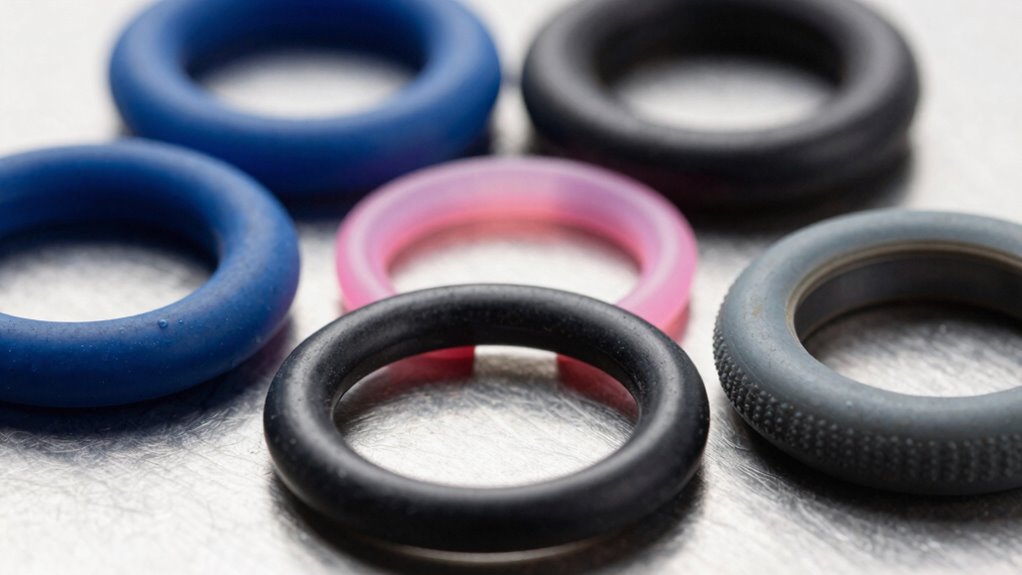
When selecting an O-ring material, understanding its chemical resistance is essential, especially if the seal will encounter aggressive substances. Common materials like nitrile (NBR), Viton (FKM), and EPDM each offer different resistance profiles. Nitrile provides good resistance to oils and fuels, making it suitable for many industrial applications, while Viton excels against fuels, chemicals, and high temperatures. EPDM is ideal for water, steam, and some acids. Ensuring correct O-ring installation is vital to maintain chemical resistance, preventing leaks or failures. Additionally, following manufacturing standards guarantees your O-rings meet quality and compatibility requirements. Knowing the chemical resistance of each material helps you select the right seal for your environment, reducing swelling and extending service life. Material compatibility is a crucial factor in preventing degradation over time, particularly in environments with fluctuating conditions. Auditory processing considerations can also influence material choice in specialized applications, ensuring compatibility with specific operating conditions.
How Temperature Affects O-Ring Swelling and Performance

Temperature plays a significant role in how O-rings perform and how they respond to their environment. As temperature rises, thermal expansion causes the material to expand, potentially leading to leaks or loss of sealing integrity. Conversely, low temperatures can make O-rings stiff and less flexible, increasing the risk of cracking or tearing. Elevated temperatures also accelerate material degradation, weakening the rubber’s structure and making it more prone to swelling or failure. Proper material selection based on operating temperature is vital to guarantee reliable performance. If the temperature fluctuates outside the O-ring’s ideal range, it can compromise sealing effectiveness and lifespan. Additionally, understanding the specific material properties helps in selecting an O-ring that can withstand environmental stresses and maintain durability over time. Being aware of thermal expansion is essential for predicting how the O-ring will behave under different temperature conditions. Recognizing the temperature tolerance of different materials allows for better prediction of potential swelling or deterioration. Furthermore, considering the compatibility with chemicals in the environment can extend the lifespan and performance of the O-ring. Knowing how temperature impacts swelling and performance and material behavior helps you select the right material and maintain system integrity.
How Pressure and Mechanical Stress Can Cause O-Ring Failures

Pressure and mechanical stress exert direct forces on O-rings that can lead to early failure if not properly managed. Excessive pressure stress causes deformation, reducing the seal’s effectiveness and increasing the risk of leaks. Repeated or sustained mechanical stress, such as compression or shear forces, can weaken the material over time, leading to cracks or tears. When O-rings are subjected to high pressure or dynamic movements, mechanical failure becomes more likely. Proper design, material selection, and installation are essential to withstand these forces. Understanding thermal behavior is crucial because temperature fluctuations can also impact the material’s ability to maintain a reliable seal under stress. Additionally, material compatibility plays a significant role in resisting deformation and failure in various environments. Recognizing stress distribution within the system can help prevent localized failures and extend O-ring lifespan. If you ignore pressure and mechanical stress, you risk compromising the seal’s integrity, which can result in costly downtime or system failure. Managing these stresses ensures the longevity and reliability of your O-rings in demanding environments.
Why Do Some O-Rings Swell Excessively? Causes and Implications

You might notice some O-rings swell more than expected, which can lead to failure. Incompatible chemicals or exposure to extreme temperature changes often cause this excessive swelling. Understanding these factors helps you select the right material to prevent issues and guarantee reliable sealing. Additionally, proper surface preparation and correct installation techniques can minimize the risk of swelling-related failures. Selecting an appropriate material suited for your specific environment is crucial to avoid these problems. Being aware of industry trends can also help in choosing materials that resist swelling and degradation over time. Proper material selection based on chemical compatibility can significantly reduce the likelihood of excessive swelling and subsequent failure. Awareness of material properties can guide you in choosing the most durable options for challenging conditions.
Incompatible Chemical Exposure
When O-rings are exposed to incompatible chemicals, they can swell excessively, compromising their sealing ability. This happens because of chemical incompatibility between the O-ring material and the substances it contacts. Certain chemicals can break down or alter the polymer structure, leading to material degradation. As a result, the O-ring absorbs chemicals more than it should, causing it to swell beyond normal limits. This swelling weakens the seal, increases the risk of leaks, and reduces the O-ring’s lifespan. To prevent this, it’s vital to select a material compatible with the specific chemicals in your application. Understanding chemical interactions helps you avoid material degradation and guarantees your O-rings maintain their sealing integrity under various chemical exposures. Additionally, considering the Free Floating concept in seal design can help manage swelling issues by allowing some movement without compromising the seal.
Excessive Temperature Fluctuations
Excessive temperature fluctuations can cause O-rings to swell beyond their normal size, compromising their sealing effectiveness. When temperatures rise rapidly, thermal expansion occurs, causing the material to expand more than intended. Conversely, sudden drops can lead to contraction, creating gaps. These repeated cycles stress the O-ring material, accelerating degradation over time. Material degradation weakens the seal’s integrity, making it more prone to swelling and failure. You might notice swelling if the O-ring material isn’t designed to withstand such temperature swings, especially if it doesn’t have good thermal stability. thermal stability is crucial for maintaining consistent performance under fluctuating conditions. Managing temperature fluctuations and selecting materials with appropriate thermal expansion properties are vital to prevent excessive swelling, maintain sealing performance, and extend the lifespan of your O-rings. Understanding material compatibility and how different materials respond to temperature changes can help prevent these issues.
Signs Your O-Ring Is Worn Out or Damaged: And When to Replace It
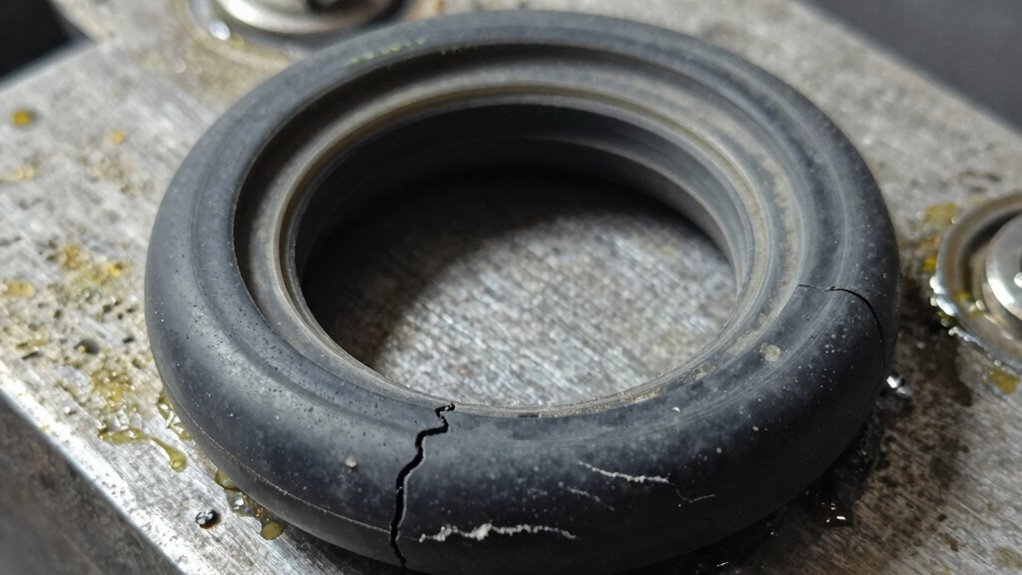
You’ll want to watch for visible cracks, tears, or deformation on your O-ring, as these are clear signs of wear. If you notice the O-ring isn’t sealing properly or your system is losing pressure, performance is declining. Leaking fluids or drips around the seal indicate it’s time to replace the O-ring before damage worsens. Additionally, understanding O-ring materials can help you select the best replacement to prevent future failures. Being aware of credit card security practices can also help safeguard your systems from cyber threats that may compromise your equipment.
Visual Damage Indicators
Identifying visual damage on your O-ring is essential for preventing leaks and equipment failure. Look closely at the O-ring’s surface for cracks, cuts, or tears, which indicate wear or damage. Swelling or deformation can also signal chemical attack or improper installation. Discoloration or hardening may suggest the material has degraded. Understanding your O-ring’s design helps recognize worn areas or irregularities caused by manufacturing processes. For example, uneven surfaces or rough edges might result from poor manufacturing quality. Regular inspection of these visual cues allows you to determine if the O-ring needs replacing before it fails completely. Being vigilant about signs of damage ensures your equipment remains sealed and operates smoothly, saving you time and costly repairs down the line. Additionally, material compatibility plays a crucial role in the longevity of your O-ring, as using incompatible materials can accelerate degradation and swelling.
Performance Decline Signs
When an O-ring begins to wear out or sustain damage, its performance often declines noticeably, signaling that it’s time for a replacement. Common signs include increased leakage, hardening, cracking, or extrusion. These issues can be caused by improper O ring storage, which affects material integrity, or manufacturing tolerances that result in an ill-fitting seal. Pay attention to these indicators to prevent system failures. Regular inspection helps identify early signs of damage. If you notice persistent leaks or deformation, replace the O-ring promptly. Proper storage methods and understanding manufacturing tolerances ensure excellent performance and longevity of your O-rings.
| Sign | Cause |
|---|---|
| Leakage or Dripping | Damage, improper storage, or tolerance mismatch |
| Hardening or Cracking | Material degradation over time |
| Swelling or Deformation | Chemical exposure or improper fit |
| Extrusion or Flattening | Excessive pressure or wear |
Leak or Drip Occurrences
Leak or drip occurrences are among the most obvious signs that your O-ring is worn out or damaged. When you notice leaks, it’s often due to improper O ring storage or manufacturing standards that didn’t meet quality benchmarks. Over time, exposure to harsh conditions or poor storage can cause the material to degrade, leading to cracks or loss of elasticity. These issues compromise the seal, allowing fluids or gases to escape. If your O-ring shows signs of leaking, it’s a clear indicator that it needs replacing. Always guarantee your O-rings are stored properly in a cool, dry environment and sourced from manufacturers adhering to strict standards. Doing so prolongs their lifespan and prevents premature failures that could lead to leaks or system damage.
How to Choose the Best O-Ring Material for Your Chemical Environment

Choosing the right O-ring material depends on understanding the chemical environment in which it will be used. To select effectively, consider the specific chemicals, temperature, and pressure involved. Your goal is to find a material compatible with these conditions to guarantee durability and sealing performance. During O ring manufacturing, materials are tested for chemical resistance and flexibility, making sealing technology more reliable.
Selecting the right O-ring material ensures durability by matching chemicals, temperatures, and pressures for optimal sealing performance.
Here are key factors to evaluate:
- Chemical Compatibility: Ensure the material resists the specific substances in your application.
- Temperature Range: Confirm the material maintains integrity within your operating temperatures.
- Mechanical Properties: Check flexibility, compression set, and wear resistance suitable for your conditions.
Tips to Prevent Swelling and Extend Your O-Ring’s Lifespan

To prevent swelling and prolong your O-ring’s lifespan, it’s vital to select the right material and maintain proper installation practices. During O ring installation, ensure the O ring fits correctly without stretching or twisting, which can cause damage or early failure. Proper lubrication is essential; use compatible O ring lubrication to reduce friction and prevent tearing during installation. Lubrication also creates a barrier that minimizes exposure to aggressive chemicals that can cause swelling. Regularly inspect your O rings for signs of wear or swelling, replacing them before failure occurs. By choosing the right material suited for your environment, practicing careful O ring installation, and applying proper lubrication, you notably extend your O-ring’s effective lifespan and reduce the risk of swelling-related failures.
Comparing Elastomer Options: Which O-Ring Material Fits Your Needs?

When choosing the right O-ring material, you need to consider chemical compatibility to guarantee it won’t degrade in your application. Temperature resistance is also vital, as extreme heat or cold can affect the O-ring’s performance and lifespan. By matching these factors to your specific environment, you can select the most reliable elastomer for your needs.
Chemical Compatibility Considerations
Understanding chemical compatibility is vital when selecting an O-ring material, as exposure to aggressive substances can cause swelling, degradation, or failure. To guarantee durability, consider how polymer formulations respond to chemicals and how manufacturing processes influence resistance.
- Polymer formulations determine chemical resistance, with some elastomers designed for specific solvents or acids.
- Manufacturing processes affect cross-link density, impacting how well an O-ring withstands chemical attack.
- Compatibility also depends on the exposure duration and concentration of chemicals, so testing in real-world conditions is vital.
Temperature Resistance Factors
Choosing the right O-ring material depends heavily on its ability to withstand operating temperatures without losing performance. Temperature resistance is vital because excessive heat causes thermal expansion, which can compromise sealing integrity. You need a material with strong temperature stability to prevent deformation or hardening at high temperatures, and to maintain flexibility in cold conditions. Different elastomers have varying temperature ranges; for example, Viton offers excellent heat resistance, while Nitrile performs better in moderate temps. By understanding how each material responds to temperature fluctuations, you can select an O-ring that remains reliable under your specific operating conditions. This guarantees your seal maintains its integrity, reduces failure risks, and extends service life.
Troubleshooting Common O-Ring Failures for Reliable Seals

O-ring failures can compromise seal integrity and cause costly downtime, so identifying the root causes quickly is essential. Common issues often stem from improper O ring installation and incorrect O ring sizing. To troubleshoot effectively, consider these key factors:
- Check installation techniques – Ensure the O ring is seated properly without twisting or pinching, which can lead to leaks or premature failure.
- Verify sizing accuracy – Use precise measurements to select the right O ring size, avoiding excessive compression or gaps that cause swelling or extrusion.
- Inspect the operating environment – Confirm material compatibility with the media and temperature conditions to prevent material degradation and swelling.
Frequently Asked Questions
How Can I Test if My O-Ring Material Is Compatible?
To test if your O-ring material is compatible, start with material testing by exposing a sample to your application’s chemicals and conditions. Observe if it swells, degrades, or loses flexibility over time. Conduct a compatibility assessment by checking manufacturer datasheets and industry charts to verify the material suits your environment. This proactive approach helps prevent failures, ensuring your O-ring maintains its sealing integrity and longevity.
Are There Environmentally Friendly O-Ring Materials Available?
Yes, eco-friendly materials are available for O-rings. You can choose biodegradable options like natural rubber or silicone, which are less harmful to the environment. These materials offer reliable performance while reducing ecological impact. When selecting, verify they meet your specific chemical and temperature requirements to maintain durability. Switching to environmentally friendly O-ring materials helps you support sustainability without sacrificing functionality.
What Are the Latest Innovations in O-Ring Technology?
You might think O-ring tech has hit a plateau, but today’s innovations prove otherwise. Manufacturers now focus on advanced material properties and cutting-edge manufacturing techniques to develop smarter, more durable O-rings. These improvements enhance resistance to swelling, temperature extremes, and chemical exposure. So, instead of settling for basic designs, you get high-performance seals that adapt to complex environments—proof that even small components get big upgrades in modern engineering.
How Do Manufacturing Processes Impact O-Ring Durability?
Manufacturing processes directly impact your O-ring’s durability by preventing defects and material inconsistencies. When manufacturing controls are tight, you reduce risks like cracks or weak spots that lead to early failure. Proper quality checks, precise molding, and consistent material handling guarantee your O-rings withstand pressure and chemical exposure. Skipping these steps can cause defects, lowering durability and risking leaks or sealing failures in your applications.
Can O-Ring Swelling Be Reversed or Repaired?
Swelling can often be reversed if you address the root cause, but only if you select the right material compatibility and swelling prevention measures. You shouldn’t ignore minor swelling, as it indicates a chemical reaction or incompatible fluid. To repair or prevent further damage, inspect the O-ring, replace it with a compatible material, and guarantee proper sealing conditions. This keeps your system reliable and extends the O-ring’s lifespan.
Conclusion
Choosing the right O-ring material is essential to prevent swelling and failures. For example, if you’re sealing a chemical reactor with aggressive solvents, selecting a resistant material like Viton can save you costly downtime. Regularly assess your environment and inspect O-rings for signs of wear. By understanding material properties and maintenance tips, you can guarantee a reliable seal and extend your O-ring’s lifespan, keeping your operations safe and efficient.