To stop water spots in your air spray system, focus on controlling moisture at every stage. Use high-quality filters and dryers to remove humidity from compressed air, and consider installing moisture barriers or sealed booths to block outside humidity. Regularly maintain your equipment and monitor air humidity levels with hygrometers. Maintaining a consistent, controlled environment helps prevent moisture issues and ensures a smooth, professional finish. Keep going to find out more ways to perfect your spray process.
Key Takeaways
- Use high-quality filters and dryers to remove excess moisture from compressed air before spraying.
- Implement moisture barriers like sealed booths or plastic sheeting to prevent humidity intrusion.
- Monitor ambient humidity with hygrometers and adjust environmental controls accordingly.
- Incorporate dehumidifiers in your workspace to maintain consistent, low humidity levels.
- Regularly inspect and maintain air filtration and drying equipment to ensure optimal moisture removal.
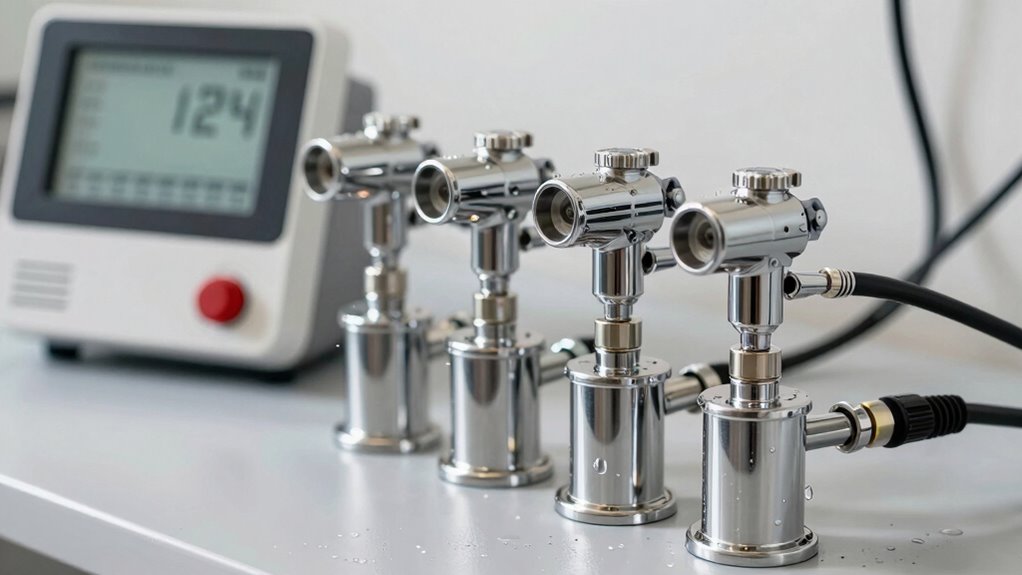
Controlling moisture in air spray systems is essential to guarantee a smooth, high-quality finish. When moisture levels aren’t properly managed, you risk water spots, uneven coatings, and compromised paint durability. Understanding how to maintain ideal air quality and deploy effective moisture barriers is key to achieving professional results every time. First, you need to recognize that the quality of the air supplied to your spray system directly impacts the final outcome. Moisture-laden air introduces tiny water droplets into the spray, which can cause blemishes and uneven textures. To combat this, invest in a high-quality air filtration and drying system that removes excess humidity before it reaches your spray gun. Compressed air should be as dry and clean as possible, which means regularly inspecting and maintaining filters and dryers. Not only does this improve air quality, but it also extends the lifespan of your equipment. Additionally, using proper air pressure regulation helps prevent moisture from condensing within the system, further reducing water spots. Moisture barriers are equally important and serve as a physical shield to prevent moisture from infiltrating your spray environment. These barriers can take several forms, such as moisture-resistant coverings, sealed booths, or controlled atmosphere chambers. Implementing a dedicated space with proper sealing minimizes the chances of outside humidity affecting your work. If you’re working in a garage or an open workshop, adding plastic sheeting or specialized curtains around the spraying area creates a barrier that limits moisture intrusion. Additionally, controlling the ambient temperature and humidity levels within your workspace is essential. Use dehumidifiers to keep moisture levels low, especially in humid climates or during rainy seasons. This consistent environment helps stabilize air quality and reduces water spots on your finished project. Monitoring tools also play a fundamental role. Use hygrometers and dew point meters to keep track of moisture content in the air. This way, you can adjust your system settings or environmental controls proactively, rather than reacting to problems after they occur. When you create a controlled environment with refined air quality and moisture barriers, you’re setting the stage for superior spray finishes. This approach not only prevents water spots but also ensures your coatings adhere better, dry more evenly, and last longer. Remember, moisture management isn’t a one-time effort but an ongoing process that requires regular checks and adjustments. By prioritizing these measures, you’ll consistently produce high-quality results, avoid costly reworks, and elevate your craftsmanship to professional standards.
Frequently Asked Questions
What Are the Best Moisture Control Products for Specific Air Spray Systems?
You should consider moisture absorption products like desiccant filters or silica gel to keep your air spray system dry. Pair these with effective air filtration units that remove humidity and airborne moisture. These products work together to prevent water spots by reducing moisture in your compressed air, ensuring a cleaner finish. Regularly checking and replacing your moisture absorption devices guarantees consistent performance, giving you better control over moisture and flawless spray results.
How Do Environmental Factors Influence Moisture Buildup in Spray Systems?
Environmental factors subtly sway moisture buildup in your spray system. High humidity levels introduce more moisture into the air, increasing the chance of water spots, while ambient temperature fluctuations can cause condensation, leading to unwanted droplets. To keep your system dry, monitor these conditions closely, and consider dehumidifiers or temperature regulation. By managing these factors, you reduce moisture risks, ensuring a smoother, flawless finish every time.
Can Moisture Control Methods Vary for Different Types of Paints?
Yes, moisture regulation techniques can differ depending on the paint type. You need to take into account paint compatibility because some paints are more susceptible to moisture absorption, which can cause water spots or poor finishes. For water-based paints, you might need more rigorous moisture control measures, while solvent-based paints are generally less sensitive. Adjusting your methods guarantees ideal results and prevents issues caused by moisture buildup in different paint formulations.
What Maintenance Schedule Is Recommended for Moisture Control Equipment?
You should check your moisture control equipment weekly and follow the manufacturer’s guidelines. Replace filters regularly to guarantee ideal moisture removal and prevent water spots. Drain accumulated water from filters and condensers weekly to avoid buildup. Keep an eye on the system for signs of clogging or wear, and perform routine drain cleaning to maintain efficiency. Consistent maintenance helps prevent moisture issues and maintains high-quality spray finishes.
Are There Cost-Effective Solutions for Small-Scale Spray Operations?
You can revolutionize your small-scale spray operation with surprisingly affordable options and DIY techniques that slash costs dramatically. Think simple solutions like using inline moisture filters, desiccant packs, or even homemade water traps—these can be game-changers. By implementing these budget-friendly strategies, you’ll keep moisture at bay, prevent water spots, and save money, all without sacrificing quality. Small steps lead to big results—your spray system will thank you!
Conclusion
To keep your air spray system free of water spots, consistent moisture control is key. Regularly checking and maintaining your system can prevent costly issues and guarantee a flawless finish. Did you know that improper moisture management can increase paint defects by up to 30%? Staying proactive helps you avoid these problems, saving time and money. Keep moisture levels in check, and enjoy smooth, professional results every time you spray.