To stop masking paper from curling, control the humidity levels and adjust tape tension properly. Keep the environment between 40-60% humidity using dehumidifiers or humidifiers as needed, and store your masking paper in a dry place. When applying tape, press gently with even tension to prevent stretching or lifting. Properly managing both humidity and tape tension guarantees your masking stays flat and sharp. Keep going to discover more tips to perfect your masking technique.
Key Takeaways
- Store masking paper in a dry environment and use dehumidifiers to prevent moisture absorption.
- Maintain humidity levels between 40-60% to reduce curling caused by humidity fluctuations.
- Apply tape with gentle, even pressure to ensure proper adhesion without overstretching or pulling.
- Use masking paper thick enough to resist curling and avoid high humidity areas during projects.
- Press firmly along tape edges and align carefully to keep masking flat and achieve sharp, clean paint lines.
Why Does Humidity Cause Masking Paper to Curl: And How Can You Prevent It?
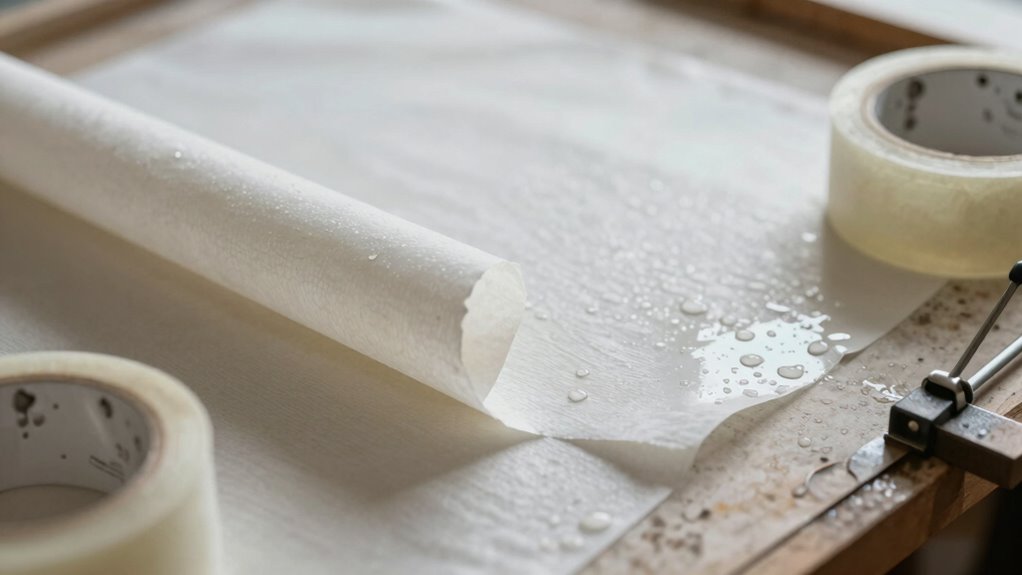
Humidity causes masking paper to curl because it introduces moisture into the material, weakening its adhesion properties and making the paper more flexible. When moisture seeps in, it affects the paper’s structure by reducing the effectiveness of the adhesive backing, causing edges to lift or curl. Thicker masking paper tends to resist curling better under humidity, but thinner options are more susceptible. To prevent this, store your masking paper in a dry environment and avoid exposing it to high humidity before use. You can also choose paper with a balanced thickness that offers durability without sacrificing flexibility. Proper storage and selecting the right thickness help maintain flatness, ensuring your masking paper stays smooth and adheres evenly during your project. Additionally, understanding the material properties of masking paper can help you select the most suitable type for humid conditions, especially considering moisture absorption characteristics. Being aware of climate conditions can further help in choosing the best storage and application practices for optimal results. Incorporating proper handling techniques can also extend the lifespan of your masking paper in humid environments.
How Does Tape Tension Make Masking Paper Warp? (And How to Adjust It)
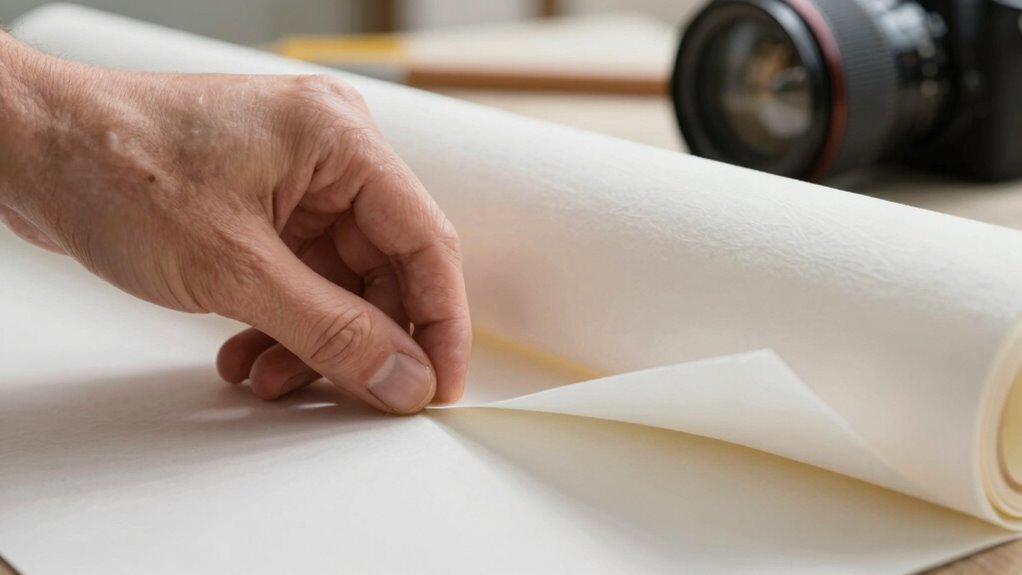
Tape tension plays a crucial role in whether your masking paper warps during application. If the tape is too tight, it pulls unevenly on the masking paper, causing it to stretch or buckle. Conversely, if it’s too loose, the paper can shift or lift, leading to warping or bubbling. Proper tape tension ensures the masking paper stays flat and adheres smoothly without distortion. To adjust it, gently press the tape onto the surface, applying even pressure without pulling excessively. Check that the tape has a snug but not tight grip, and avoid overstretching the masking paper. Maintaining ideal tape tension prevents warping and helps achieve clean, sharp paint lines. Regularly adjusting tape tension based on the paper’s characteristics can improve your masking results considerably.
Easy Ways to Control Humidity During Masking Projects
Controlling humidity levels during masking projects helps prevent issues like bubbling, lifting, or uneven paint lines. To achieve this, maintain a consistent environment with proper humidity control. Using a dehumidifier or humidifier can help you adjust the air moisture to ideal levels. Additionally, storing masking paper in a controlled space ensures better paper flattening and reduces warping caused by humidity fluctuations. Consider this quick reference:
| Humidity Level | Recommended Action | Effect on Paper |
|---|---|---|
| Low (<30%) | Use humidifier | Improves paper flattening |
| Ideal (40-60%) | Maintain current environment | Ensures consistent masking |
| High (>70%) | Use dehumidifier | Prevents paper curl |
| Fluctuating | Stabilize temperature & humidity | Avoids warping |
| Excess moisture | Allow paper to acclimate | Keeps paper flat |
Managing humidity keeps your masking paper stable, ensuring cleaner results.
How to Keep Masking Paper Flat by Adjusting Tape Tension

Adjusting tape tension is a simple yet effective way to keep masking paper flat during your project. When applying tape with the right tension, you prevent unwanted curling and promote proper paper flattening. Too tight, and the tape may distort the paper or cause tension-induced curling; too loose, and the paper won’t stay securely in place. To find the ideal tape tension, gently press the tape onto the surface and observe how the paper reacts. It should adhere smoothly without pulling or lifting. Proper airflow around the tape can help maintain consistent tension and adhesion to ensure proper application. Consistently maintaining proper tape tension ensures the masking paper remains flat and smooth, making your masking process cleaner and more precise. Fine-tuning tape tension is a quick, reliable method to achieve excellent paper flattening and improve your overall masking results. Proper application techniques are essential for achieving the best masking outcomes.
Additional Tips to Prevent Curling and Achieve Clean, Sharp Lines

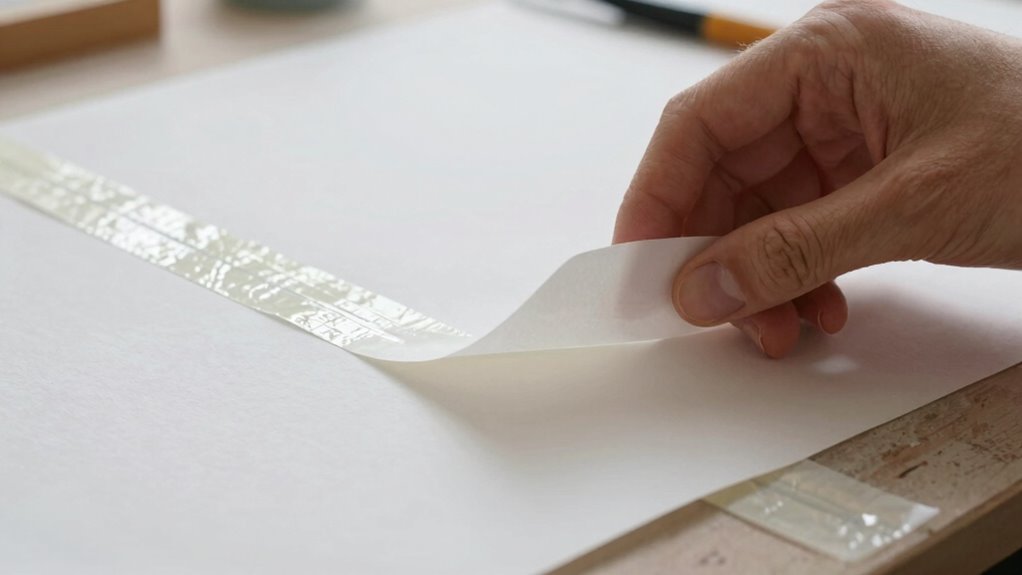
To prevent curling and guarantee your lines stay sharp, it’s important to apply masking paper carefully and use proper tools. Focus on maintaining a clean paint edge by pressing down firmly along the tape’s edge, ensuring no paint seeps underneath. Proper tape alignment is key; align the tape precisely before pressing it down to avoid jagged lines. Use a smoothing tool or your finger to firmly adhere the tape and mask the edges evenly. Visualize this setup:
| Masking Paper Placement | Tape Alignment | Smoothing Technique |
|---|---|---|
| Flat against surface | Precise along paint edge | Firmly pressed to seal |
| No wrinkles | Straight and tight | Ensures clean cut |
| Even tension | Correct positioning | Prevents curling |
This attention to detail helps achieve sharp, professional lines and keeps your masking paper flat. Additionally, controlling humidity levels can help prevent masking paper curling, leading to cleaner results.
Frequently Asked Questions
Can Different Masking Paper Brands Handle Humidity Better?
Yes, different masking paper brands vary in compatibility with humidity, affecting their performance. When choosing a brand, consider how well it handles moisture; some brands are designed to resist curling and tearing in humid conditions. You’ll want to select a brand known for consistent performance under moisture stress. Testing a few options will help you find the best masking paper for your needs, ensuring cleaner lines and less frustration during your projects.
What Environmental Factors Besides Humidity Affect Paper Curling?
Think of your workspace as a garden where delicate plants need proper care. Besides humidity, poor air circulation can cause paper to curl, like wind bending a fragile branch. If you store your paper in a damp or poorly ventilated space, it absorbs moisture unevenly, leading to warping. Keep your environment well-ventilated and store paper flat, just as you’d nurture plants in ideal conditions, to prevent curling and maintain quality.
Are There Specific Tape Types That Cause Less Tension-Related Warping?
You should choose tapes with gentle, less aggressive tape adhesive to reduce tension on the paper, minimizing warping. Look for tapes designed specifically for delicate surfaces, which often have a softer adhesive that interacts better with various paper textures. These tapes apply less stress, helping you prevent curling. Always test a small area first to verify the tape’s adhesive works well without causing unwanted tension or damage to your paper.
How Long Should Masking Tape Be Left on to Prevent Curling?
Think of masking tape as a gentle hug for your paper—too tight, and it might cause curling. To prevent paper curling, leave the masking tape on for about 30 minutes to an hour. This duration allows the adhesive to secure the paper without overstaying its welcome, ensuring proper paper curling prevention. Removing the tape too soon or leaving it too long can both lead to unwanted warping or damage.
Can Temperature Fluctuations Influence Masking Paper Behavior?
Temperature fluctuations can definitely influence masking paper behavior. When temperatures change, thermal expansion occurs, causing the paper to expand and contract. This movement can disrupt paper stability, leading to curling or peeling over time. To minimize this, keep the working environment stable and avoid rapid temperature shifts. By maintaining consistent temperatures, you help preserve the integrity of the masking paper and prevent issues caused by thermal expansion.
Conclusion
By understanding how humidity and tape tension influence masking paper, you can keep your work smooth and flawless. Think of your masking paper as a delicate dance partner—if you don’t give it the right cues, it’ll stumble. Keep humidity in check and adjust tape tension carefully, and you’ll prevent curling like a master conductor guiding an orchestra. With these tips, your masking projects will turn out sharp, clean, and professional—no surprises, just perfection.