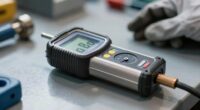
To use a wet film gauge without overthinking, hold it perpendicular to the surface and gently press it into the wet coating without excessive force. Make certain full contact across the gauge’s width, then read the measurement at the point where the coating touches the step. Consistently applying these simple steps and verifying your gauge’s calibration helps you get quick, accurate results every time. Keep practicing these techniques, and you’ll master the process with confidence.

Get business pricing on tools and workshop supplies
- Business-only prices and quantity discounts
- Tax-exempt purchasing
- Multiple users, one account, clear invoices
Key Takeaways
- Hold the gauge perpendicular to the surface and press lightly into the wet coating for an accurate reading.
- Keep your hand steady during measurement to avoid skewed results.
- Use the gauge regularly to build familiarity and develop a consistent routine.
- Verify gauge accuracy periodically with calibration standards or reference films.
- Focus on simple, consistent application and measurement techniques to prevent overthinking.
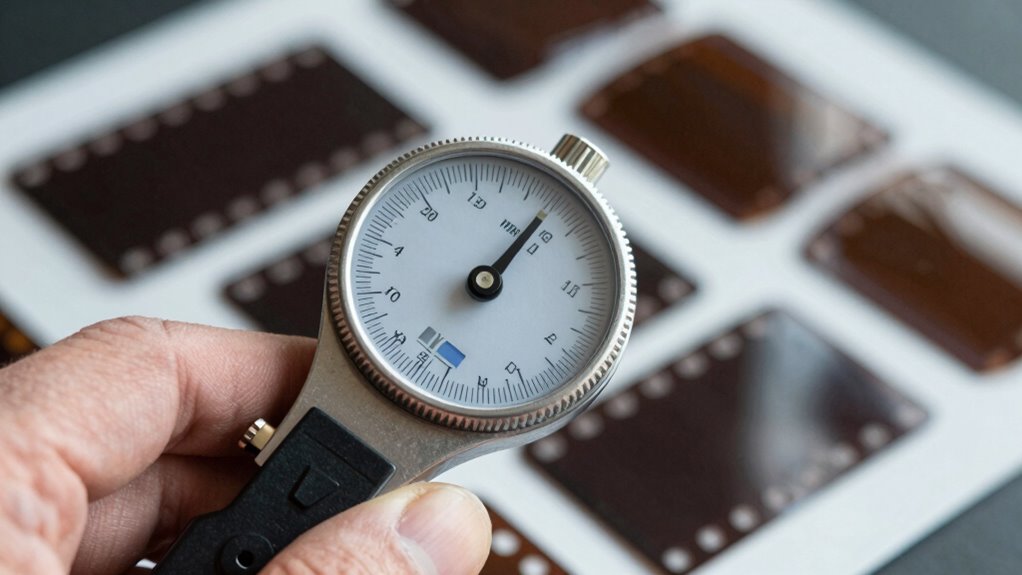
A wet film gauge is a simple yet essential tool used to measure the thickness of a coating or film while it’s still wet. When you’re applying paint, varnish, or other coatings, knowing the wet film thickness helps ensure quality and consistency. It’s a quick way to check if you’re meeting the desired specifications without the need for complicated equipment. Using your gauge correctly involves understanding application techniques and calibration methods, which can seem intimidating at first but become second nature with practice.
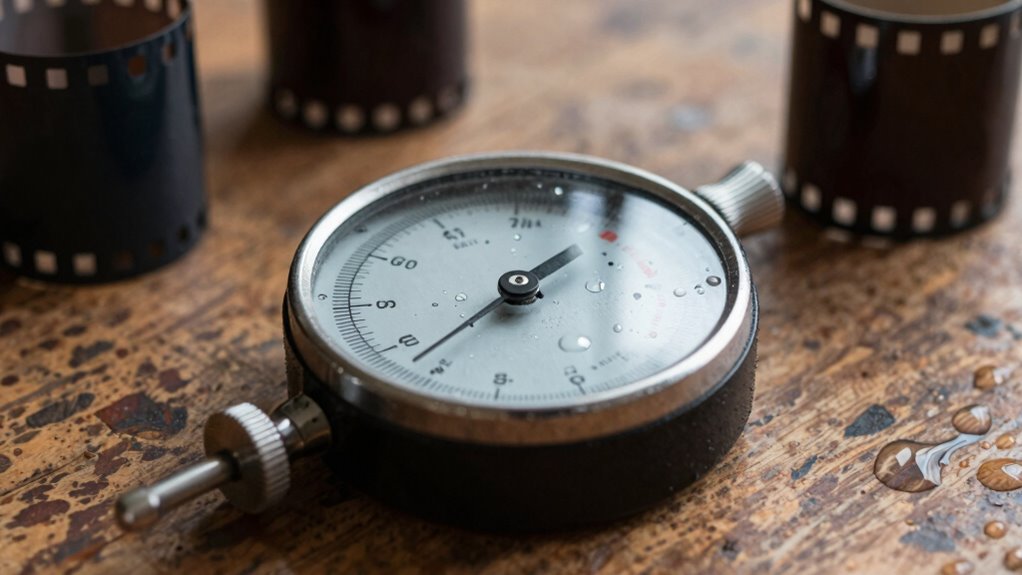
To start, you want to familiarize yourself with proper application techniques. Hold the gauge perpendicular to the surface, and press it lightly into the wet coating without applying too much pressure. Make sure the gauge makes contact across its entire width, then read the measurement at the point where the coating just touches the gauge’s step. Keep your hand steady to avoid skewing the reading. Practicing this consistently will help you develop a sense of how much material to apply and prevent over- or under-coating. Remember, the goal is to get an accurate reading quickly, so you can adjust your technique if needed.
Calibration methods are equally important to guarantee your wet film gauge provides reliable measurements. Most gauges are designed to be accurate out of the box, but environmental factors or mishandling can affect their precision. It’s a good idea to periodically check your gauge against a known standard or a film thickness reference. To do this, you can apply a film of known thickness on a test surface, then measure it with your gauge. If the readings don’t match, you might need to recalibrate or replace your gauge. Some gauges come with adjustable steps or calibration instructions; follow these carefully to maintain accuracy. Regular calibration helps you trust your measurements, especially when you’re working on projects that demand strict coating thicknesses.
Using a wet film gauge isn’t about overthinking the process; it’s about developing a consistent routine. Focus on applying techniques that produce smooth, even coats, and use calibration methods to confirm your gauge’s accuracy. Over time, you’ll find that checking your wet film thickness becomes a quick and reliable part of your workflow. It requires minimal effort but offers maximum control over your coating quality. When you keep things simple—holding the gauge correctly, practicing application techniques, and checking calibration—you won’t need to second-guess your measurements. Instead, you’ll trust your tool, make adjustments on the fly, and achieve professional results every time. Proper gauge maintenance and understanding of coating application techniques will further enhance your accuracy and efficiency.
wet film gauge for paint thickness
As an affiliate, we earn on qualifying purchases.
As an affiliate, we earn on qualifying purchases.
Frequently Asked Questions
Can Wet Film Gauges Be Reused Multiple Times?
Yes, wet film gauges can be reused multiple times. To guarantee accurate readings, you should regularly check gauge calibration and clean them after each use. Reusing gauges helps maintain film thickness consistency, but neglecting calibration or cleanliness can lead to errors. Always store your gauges properly, and verify their accuracy periodically to ensure reliable measurements, especially if you use them frequently or in different environments.
What Is the Maximum Thickness a Gauge Can Measure Accurately?
The maximum thickness a gauge can measure accurately depends on its calibration and design, but generally, most wet film gauges are reliable up to about 4 mm. To guarantee measurement accuracy, you should regularly calibrate your gauge and avoid exceeding its recommended range. Overloading beyond this limit can lead to inaccurate readings, so stay within the specified measurement capacity for precise results every time.
Are Digital Film Gauges More Reliable Than Traditional Ones?
Digital film gauges are generally more reliable than traditional ones because of their digital accuracy, which minimizes human error. They’re like a trusty compass guiding you through precise measurements. However, the best choice depends on your user preferences—some may prefer the simplicity of traditional gauges, while others value quick digital readouts. Ultimately, both can be effective; it’s about what fits your workflow and comfort level best.
How Do Temperature Changes Affect Gauge Readings?
Temperature changes can affect your gauge readings by causing material expansion or contraction, which impacts accuracy. To guarantee reliable results, maintain temperature stability in your environment and check your gauge’s calibration frequency regularly. When temperatures fluctuate, recalibrate your gauge if necessary, as consistent calibration helps counteract these effects. Being mindful of temperature variations and sticking to calibration schedules keeps your measurements precise and trustworthy.
Can I Use a Wet Film Gauge for Dry Film Measurements?
You can’t use a wet film gauge for dry film measurements because it’s designed specifically for wet film consistency and thickness. Using it on dry film would compromise measurement accuracy since the gauge’s readings depend on the film’s moisture content. To guarantee accurate results, always select the proper gauge for wet or dry film, and double-check your measurements regularly to maintain consistency.
Conclusion
Now that you know how to use wet film gauges without overthinking, you’re basically a painting superhero. No more fretting over tiny details or second-guessing your measurements—you’ll conquer every job with the confidence of a pro! Think of your gauge as your trusty sidekick, saving you from the chaos of uneven coats and messy finishes. With this simple tool in hand, you’re unstoppable, turning even the trickiest projects into smooth, flawless masterpieces.
Evergreen bestsellers Picks
bestsellers
As an affiliate, we earn on qualifying purchases.