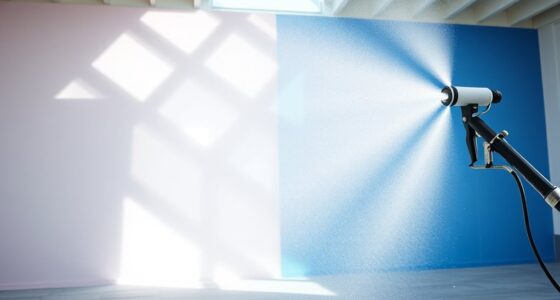
When spraying walls, it’s best to apply at least two coats for a professional, even finish. The first coat covers imperfections and primes the surface, while the second enhances color depth and smoothness. High-quality paint might need fewer coats, but porous or darker colors could require more. Environmental factors like humidity and temperature also affect drying times and coat thickness. To get the best results, understanding the full process will help you achieve a flawless look.
Key Takeaways
- Typically, at least two coats are needed for a smooth, even finish when spraying walls.
- A primer coat is essential before the first paint layer for better adhesion and coverage.
- Higher-quality paints may require fewer coats; cheaper paints often need more for full opacity.
- Proper spraying technique and environmental conditions can reduce the number of coats needed.
- Always inspect the wall after each coat to determine if additional layers are necessary for uniform coverage.

When spraying walls, knowing how many coats to apply is essential for a smooth, professional finish. The number of coats impacts the overall appearance, durability, and even the longevity of your paint job. Typically, most projects start with a primer, which is a crucial step to ensure the paint finish looks uniform and adheres properly. Skipping or underapplying primer can lead to uneven coverage, streaks, or the need for additional coats later on. The primer necessity depends on the surface you’re working with; porous or previously painted walls often benefit from a high-quality primer to create a sealed, smooth base.
Once you’ve applied the primer, you’ll generally want to follow with at least two coats of paint for a consistent and vibrant finish. The first coat acts as a foundation, covering the primer and any underlying imperfections. However, it’s rarely enough to deliver the desired color depth or smoothness. The second coat enhances the paint finish, providing even coverage and richness that transforms the wall’s look. Sometimes, especially with bold or dark colors, a third coat might be necessary to achieve the perfect finish, ensuring the color is true and free of streaks or patchiness.
The type of paint you choose also influences how many coats you’ll need. Higher-quality paints with better pigmentation tend to require fewer coats because they provide more coverage per application. Conversely, cheaper paints might necessitate additional coats to reach the same level of opacity and depth. Keep in mind that spraying allows for a more uniform application, reducing the need for multiple coats compared to brush or roller methods, but it still doesn’t eliminate the necessity of applying enough layers for a flawless result.
Temperature and humidity levels can affect how many coats you need as well. In humid or cold conditions, paint may take longer to dry, which might tempt you to apply additional coats sooner. Conversely, in ideal conditions, two coats might be adequate, especially if you’re using high-quality paint and proper primer. Always inspect the wall after each coat and wait for it to dry completely before deciding if another layer is needed. Rushing the process can lead to uneven coverage, splotches, or a less durable finish.
Frequently Asked Questions
Can I Skip Primer When Spray Painting Walls?
You can skip primer, but it’s not always recommended. Primer application helps improve paint adhesion and guarantees even paint thickness. If you’re painting a bare or stained wall, skipping primer might lead to uneven coverage or peeling over time. For best results, especially with new drywall or drastic color changes, applying a primer guarantees a smoother finish and longer-lasting paint job. Always consider your wall’s condition before skipping primer.
How Do I Prevent Drips During Spraying?
Prevent drips during spraying as if your walls depended on it. Keep your spray gun well-maintained, cleaning it thoroughly before each use to avoid uneven flow. Use proper paint mixing techniques to guarantee consistency, avoiding thick paint that’s prone to dripping. Maintain a steady hand and consistent distance from the wall, applying thin, even coats. This approach minimizes drips and results in a flawless finish that truly impresses.
Is It Necessary to Sand Between Coats?
You should sand between coats to guarantee proper surface preparation and paint adhesion. Lightly sanding helps remove imperfections, smooths out any drips or uneven areas, and creates a better bond for the next layer. Skipping this step can lead to peeling or uneven finish. Always clean off dust afterward, so your paint adheres perfectly and your wall looks flawless with each coat.
What Temperature and Humidity Levels Are Best?
Did you know that ideal temperature control and humidity levels considerably impact paint finish? You should aim for a temperature between 50°F and 85°F, with humidity levels kept below 70%. High humidity delays drying, while too low can cause uneven application. Keep your environment consistent, ensuring proper airflow and ventilation. This balance helps your spray job look smooth, durable, and professional, saving you time and effort in the long run.
How Long Should I Wait Between Coats?
You should wait about 2 to 4 hours between coats, depending on the paint type and environmental conditions. During this time, make certain your spray nozzle is properly maintained to prevent uneven application. Always check the paint drying time specified on the label; rushing can cause drips or uneven coverage. Patience ensures a smooth finish, so avoid applying the next coat too soon, and let each layer dry thoroughly for the best results.
Conclusion
So, next time you’re spraying walls, remember that two coats usually do the trick for a smooth, even finish. But don’t be tempted to skip the second coat—it’s the secret to professional-looking results. Some say one coat is enough, but that’s just a myth, especially with new or textured surfaces. Trust the experts: applying two coats guarantees durability and a flawless look that lasts. Give it that extra layer, and you’ll be amazed at the difference!
Franz came aboard the Paint Sprayer Zone team with a background in both journalism and home renovation. His articulate writing style, combined with a passion for DIY projects, makes him an invaluable asset. Franz has a knack for breaking down technical jargon into easy-to-understand content, ensuring that even the most novice of readers can grasp the complexities of paint sprayers.