
Sprayed paint usually feels dry to the touch within 15 to 30 minutes, but it’s not fully cured at this stage. Full curing, which ensures durability and a smooth finish, typically takes 24 hours or more depending on factors like temperature, humidity, and paint type. High humidity or cooler weather can extend drying times. To achieve the best results, you’ll want to follow proper drying and curing guidelines, and more details will help you plan your project better.
Key Takeaways
- Touch-dry typically occurs within 15-30 minutes, but full curing takes 24 hours or more.
- Drying time varies based on paint type, environmental conditions, and humidity levels.
- Warm, dry, ventilated spaces accelerate drying, while high humidity or cold weather delays it.
- Always wait for the previous coat to fully dry before applying additional layers to prevent issues.
- Complete curing, which ensures durability, can take anywhere from 24 hours to several days.

When you spray paint a surface, understanding how long it takes to dry is vital for achieving a smooth, professional finish. Drying time varies depending on several factors, including the type of paint, environmental conditions, and the thickness of the coat. Usually, spray paint dries to the touch within 15 to 30 minutes, but that doesn’t mean it’s fully ready for handling or additional coats. It’s important to let the paint cure properly to guarantee durability and a flawless appearance. Paint curing is the process where the paint hardens and bonds fully with the surface, which can take anywhere from 24 hours to several days.
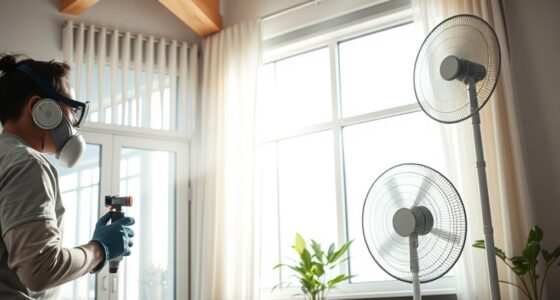
The drying time is primarily influenced by the solvent content in the paint, with fast-drying formulas typically setting within minutes, while others may take longer. For example, acrylic spray paints tend to dry quicker than oil-based paints. Environmental factors like temperature, humidity, and airflow greatly affect drying time. If you’re working in a warm, dry space with good ventilation, your paint will dry faster. Conversely, high humidity or cooler temperatures can extend the drying process, sometimes doubling the wait time. It’s best to follow the manufacturer’s recommendations on the label for precise drying times, as these are tailored to the specific formula you’re using.
However, don’t rush the curing process by handling the painted surface prematurely. While it might feel dry to the touch, the paint may still be soft underneath. If you expose it to moisture or stress too soon, you risk smudges, dents, or peeling. To guarantee the best results, allow the painted surface to sit undisturbed for the full curing period suggested by the manufacturer—often 24 to 72 hours. During this time, the solvent continues to evaporate, and the paint bonds thoroughly with the surface, increasing its resistance to scratches, chemicals, and weathering. Additionally, understanding the different types of spray paints can help you estimate drying and curing times more accurately.
In some cases, applying multiple coats can slightly extend drying and curing times. Always wait until the previous layer is fully dry before applying the next one. This prevents issues like uneven texture or paint drips. Patience is vital to achieving a professional, long-lasting finish. Remember, proper drying and curing aren’t just about appearance—they’re about ensuring your paint job withstands the test of time. By understanding and respecting these stages, you’ll get a smooth, durable finish that looks great and lasts longer.
Frequently Asked Questions
Can Environmental Factors Affect Drying Time?
Yes, environmental factors can affect drying time. You should consider paint chemical composition and drying time factors like humidity, temperature, and airflow. High humidity slows down evaporation, while low temperatures extend drying time. Good ventilation helps paint cure faster. By adjusting these environmental conditions, you can optimize drying time, ensuring your sprayed paint dries evenly and efficiently, regardless of external surroundings.
Is It Safe to Touch the Painted Surface Before It Dries?
You shouldn’t touch the painted surface before it’s fully dry because the paint film is still in the curing process. During this time, the paint is vulnerable to smudges, fingerprints, or damage. Touching too soon can compromise the finish and extend drying time. It’s best to wait until the curing process completes, ensuring the paint has set properly and hardened, giving you a smooth, durable surface.
How Does Humidity Influence Spray Paint Drying?
Humidity acts like a slow-moving tide, delaying your spray paint’s journey to dryness. When humidity’s high, moisture in the air seeps into the paint, forming a barrier that prolongs drying time. Thicker paint layers and improper application techniques intensify this effect, making it harder for your project to set. To speed things up, control humidity levels and apply thin coats, allowing the paint to breathe and dry efficiently.
What Are the Risks of Rushing the Drying Process?
Rushing the drying process can cause a drying delay, increasing the risk of paint smudging. When you hurry, the paint might not cure properly, leading to uneven surfaces or smudges that ruin your work. You also risk damaging the finish, especially if you touch or handle the surface prematurely. To avoid these issues, it’s best to wait until the paint is fully dry, even if it takes longer than expected.
Does the Type of Spray Paint Alter Drying Duration?
Like a chameleon changing colors, the type of spray paint you use can substantially alter the drying time. Different formulas, such as oil-based or acrylic, have varying paint consistency and drying properties. Thicker paints take longer to dry, while a well-executed spray technique ensures even application and faster drying. Always check the manufacturer’s instructions, as each paint type has its unique drying duration based on its composition.
Conclusion
Remember, patience is key when waiting for spray paint to dry. Rushing the process might ruin your project or cause smudges, leaving you frustrated. Trust the drying time, and you’ll be proud of your polished, professional finish. Even if you’re enthusiastic to see your work completed, taking a little extra time ensures lasting, beautiful results. So, hold on a bit longer—you’ll love the perfect, flawless finish that’s worth the wait.
Franz came aboard the Paint Sprayer Zone team with a background in both journalism and home renovation. His articulate writing style, combined with a passion for DIY projects, makes him an invaluable asset. Franz has a knack for breaking down technical jargon into easy-to-understand content, ensuring that even the most novice of readers can grasp the complexities of paint sprayers.