
Yes, you can spray indoors safely if you prioritize proper ventilation. Open windows and doors to create cross-breezes, and turn on exhaust fans or ventilation fans to help disperse fumes quickly. Avoid overusing chemicals and wear protective gear. Keep children and pets away during spraying, and make sure the space is well-ventilated afterward. To learn more about effective ventilation tips and safety precautions, keep exploring the essential steps for safe indoor spraying.

Get business pricing on tools and workshop supplies
- Business-only prices and quantity discounts
- Tax-exempt purchasing
- Multiple users, one account, clear invoices
Key Takeaways
- Always open windows and doors to create cross-ventilation before and after spraying.
- Turn on exhaust fans and use natural airflow to disperse fumes quickly.
- Follow product label instructions carefully, including recommended application amounts.
- Use protective gear and keep children and pets away during spraying for safety.
- Maintain and clean ventilation systems regularly to ensure ongoing indoor air quality.

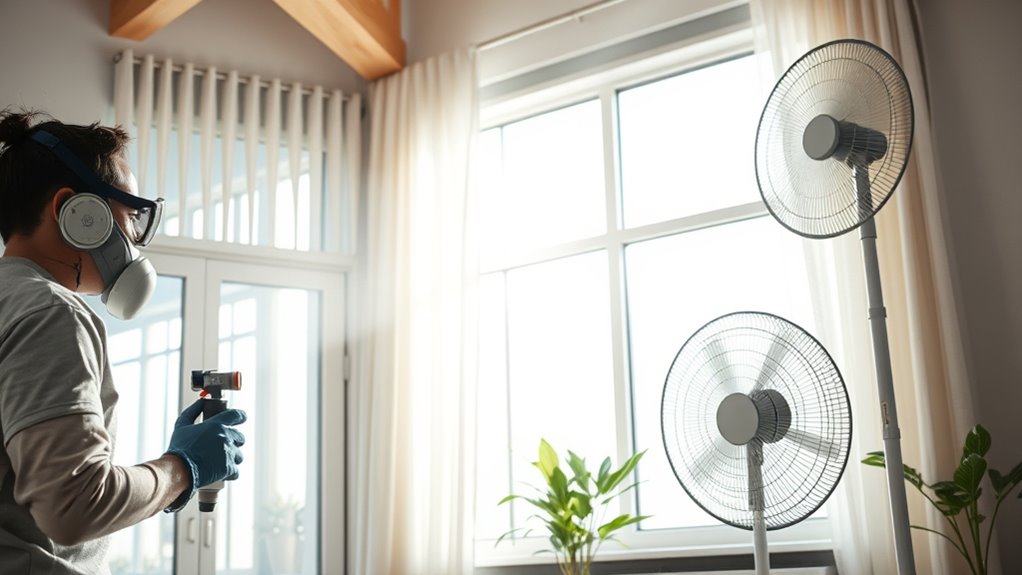
Spraying indoors can effectively eliminate pests and freshen your space, but it’s vital to do so safely. One of the most important factors to think about is proper ventilation. Good ventilation systems help disperse chemical fumes, reducing the risk of inhalation and ensuring that your indoor environment remains safe during and after application. Before spraying, open windows and doors to create a cross-breeze that encourages fresh air flow. If you have exhaust fans or ventilation fans, turn them on to help expel airborne particles and fumes quickly. This simple step can considerably lower the concentration of chemicals in the air, making the space safer for you and your loved ones.
Proper ventilation is key to safely spraying indoors and reducing chemical fumes.
In addition to increasing airflow, it’s imperative to follow specific safety precautions when spraying indoors. Always read and adhere to the instructions on the product label. Use the recommended amount, and avoid over-application, which can lead to excess fumes and potential health hazards. Wear protective gear such as masks, gloves, and goggles to shield yourself from direct contact with chemicals. Keep children, pets, and vulnerable individuals out of the room during spraying and until the area is thoroughly ventilated and dry. This minimizes their exposure to potentially harmful substances.
Another safety tip involves understanding your home’s existing ventilation systems. If you have HVAC systems, check whether they can be shut off or set to recirculate mode to prevent distributing chemicals throughout the house. Once spraying is complete, leave windows and doors open for as long as possible to maximize air exchange. Use fans to promote circulation, but ensure they are clean and free of dust or residues that could mix with the chemicals. After sufficient ventilation, you should notice a reduction in fumes and a safer indoor environment.
Additionally, maintaining proper ventilation by regularly cleaning vents and filters can help prevent the buildup of residues and ensure optimal airflow. Properly functioning ventilation not only improves air quality during spraying but also maintains a healthier indoor environment in the long run. Remember, safety precautions aren’t just about following instructions—they’re about actively protecting your health and the health of those around you.
As an affiliate, we earn on qualifying purchases.
Frequently Asked Questions
Are There Specific Sprays That Are Safer for Indoor Use?
Yes, you can find specific sprays that are safer for indoor use. Look for natural alternatives and low VOC sprays, which emit fewer harmful chemicals and reduce indoor air pollution. Always read labels to guarantee they’re free from strong fragrances and toxic additives. Using these safer options, combined with good ventilation, helps protect your indoor air quality and keeps your space healthier while still achieving your desired results.
How Often Should I Ventilate After Spraying Indoors?
You should ventilate immediately after spraying indoors and keep the space well-ventilated for at least 30 minutes to an hour. This allows for sufficient air exchange, reducing airborne chemicals and improving air quality. If possible, open windows and doors to maximize airflow. Continue ventilating periodically over the next few hours if you notice lingering smells or chemical fumes. Proper ventilation guarantees a safer indoor environment and minimizes health risks.
Can I Spray Indoors if I Have Pets or Children?
Imagine your home as a delicate garden where tiny seeds of spray drift through the air. If you have pets or children, it’s best to hold off on indoor spraying or take strict spray precautions. Their safety is like fragile blossoms, easily harmed. Make certain proper ventilation and wait for odors to dissipate. Always prioritize pet safety, and when in doubt, consult product labels or professionals to protect your loved ones.
What Are the Long-Term Health Risks of Indoor Spraying?
Long-term health risks from indoor spraying mainly stem from poor indoor air quality and chemical exposure. You might develop respiratory issues, allergies, or even more serious conditions over time if you repeatedly inhale residual chemicals. To protect yourself, guarantee proper ventilation during and after spraying, avoid overuse, and choose low-toxicity products. Regularly airing out your space minimizes chemical buildup, helping you maintain healthier indoor air quality and reduce potential health risks.
Is It Safe to Spray Outdoors and Then Move Inside Immediately?
It’s not safe to spray outdoors and then move inside immediately because spray residue can cling to your clothes, skin, or shoes, potentially exposing you indoors. Always take outdoor precautions like allowing spray to settle and thoroughly cleaning off residue before entering. Ventilate the area well and wait for fumes to dissipate. This way, you minimize indoor exposure and protect your health from lingering chemicals.
Conclusion
So, next time you spray indoors, remember that proper ventilation is key. Picture opening a window just as a gentle breeze sweeps through, carrying away fumes and revitalizing the air. It’s like your space breathes a sigh of relief, turning a potentially risky task into a safe one. When you prioritize good airflow, you create a healthier environment, making each spray feel less like a hazard and more like a fresh start.
Halloween Picks
halloween
As an affiliate, we earn on qualifying purchases.