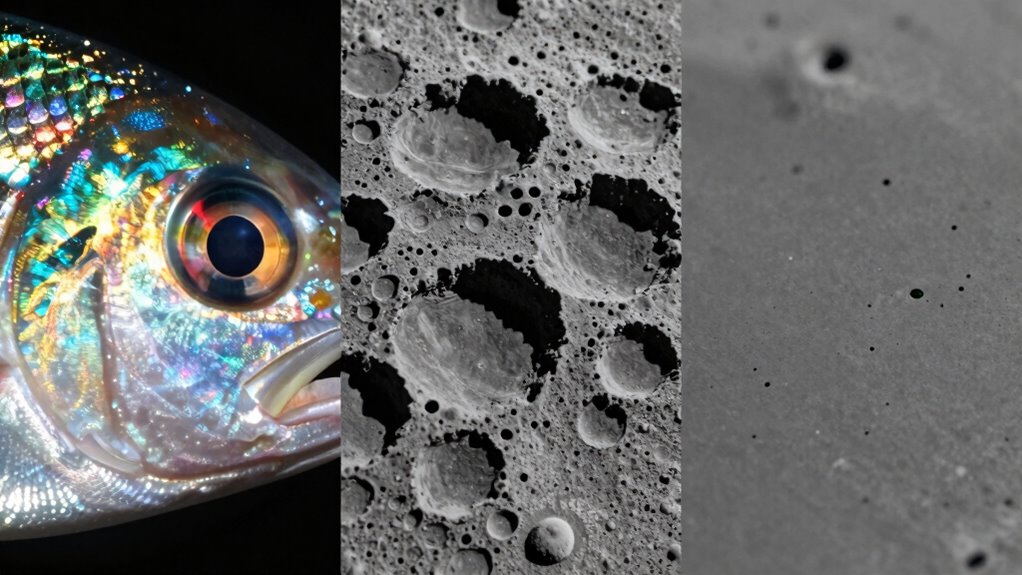

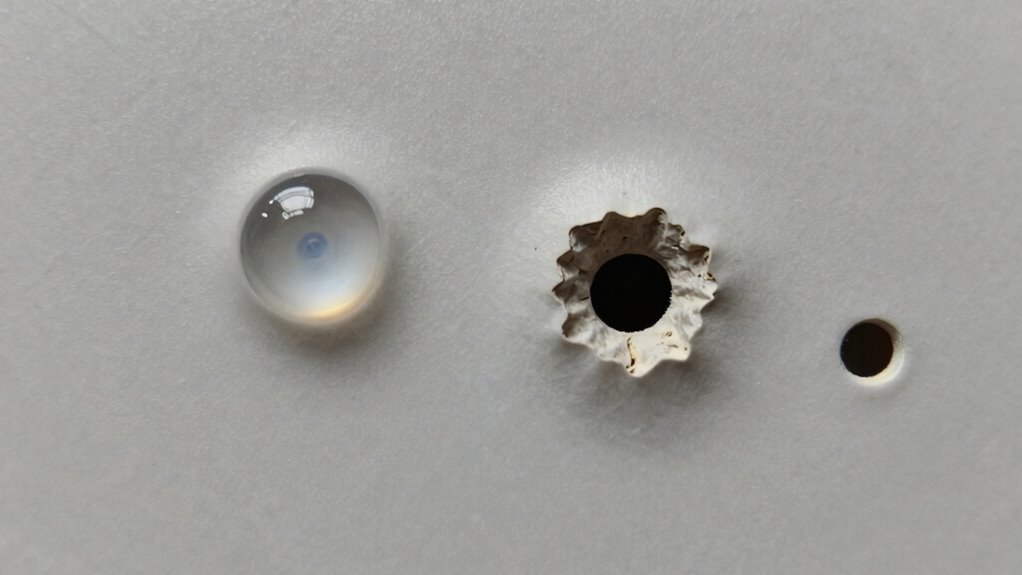
Fish eyes look like tiny, shiny, smooth spots caused by oil or silicone contamination. Craters are larger, bowl-shaped imperfections with rough edges, often from trapped debris or uneven coating. Pinholes appear as tiny holes scattered across the surface, typically from air bubbles during application or outgassing. Spotting these differences quickly helps identify the underlying issues. Keep going to discover simple tips for fixing and preventing these surface defects effectively.
Key Takeaways
- Fish eyes are small, round, shiny spots with smooth centers caused by surface oil or silicone contamination.
- Craters are larger, bowl-shaped imperfections with rough edges due to trapped debris or uneven coating.
- Pinholes are tiny, scattered holes resulting from outgassing or air bubbles during application.
- Visual cues: fish eyes are shiny and round; craters are larger with rough edges; pinholes are tiny and numerous.
- Proper inspection under good lighting helps quickly distinguish surface defects by size, shape, and texture.
What Causes Fish Eyes, Craters, and Pinholes in Your Coatings

Understanding what causes fish eyes, craters, and pinholes in your coatings is essential for achieving a smooth, defect-free finish. Poor application techniques often introduce these issues, especially if you rush or apply too thick coats. Surface preparation plays a critical role—if you don’t clean, sand, or degrease properly, contaminants can cause defects. Fish eyes typically result from oil, silicone, or grease left on the surface, which repels the coating. Craters and pinholes often stem from trapped air or improper mixing, creating bubbles that burst during drying. Ensuring thorough surface prep and using correct application techniques minimizes these problems. Proper cleaning, priming, and applying coatings in controlled conditions help you achieve a flawless, professional finish free of fish eyes, craters, or pinholes. Additionally, understanding the role of surface temperature and humidity can further improve your coating results. Maintaining an optimal environment during application can prevent issues related to application environment variability, ensuring a high-quality, smooth coating every time.
Controlling factors like surface temperature and humidity is crucial for preventing defects, as they influence the drying process and coating adhesion.
How to Spot Fish Eyes, Craters, and Pinholes Quickly and Easily
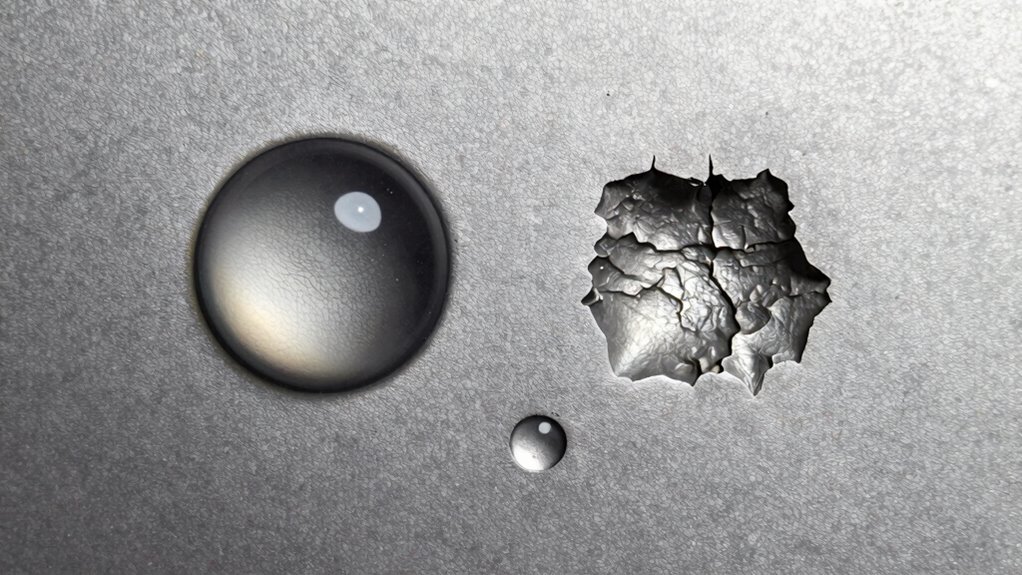
Spotting fish eyes, craters, and pinholes early can save you time and prevent costly rework. Look closely at your surface during application or after drying. Fish eyes often appear as small, round spots with a shiny, smooth center, indicating contamination or improper surface preparation. Craters are larger, bowl-shaped imperfections with rough edges, usually caused by uneven coating consistency or trapped debris. Pinholes are tiny holes scattered across the surface, often due to outgassing or improper surface prep. To identify these flaws quickly:
Early detection of fish eyes, craters, and pinholes prevents rework and saves time during coating inspection.
- Examine the coating under good lighting for surface irregularities.
- Check for consistency in coating thickness across the area.
- Look for signs of contamination or debris that could cause imperfections.
- Recognize that surface contamination can significantly affect the quality of your coating and lead to defects. Additionally, understanding surface preparation techniques can help prevent these issues from occurring in the first place.
Simple Tips for Fixing Surface Imperfections and Preventing Them
To effectively fix surface imperfections and prevent them from reoccurring, start by thoroughly cleaning and preparing the surface before applying any coating. Proper surface preparation removes dirt, grease, and old paint, ensuring better adhesion and reducing the chances of defects like fish eyes or pinholes. Use appropriate cleaning methods and abrade smooth surfaces to create a rougher texture, which improves application techniques. When applying coatings, follow manufacturer instructions closely, maintaining proper environmental conditions such as temperature and humidity. Apply thin, even coats, and allow sufficient drying time between layers. Regular inspection during and after application helps catch issues early. These simple tips—focused on surface preparation and proper application techniques—are your best defense against surface imperfections. Incorporating high-quality air purifiers can also improve indoor air quality, reducing dust and airborne particles that could contribute to surface defects or compromise coating adhesion. Paying attention to surface cleanliness enhances the overall quality and longevity of your coating job, minimizing defects like fish eyes, craters, or pinholes. Additionally, consulting with professional services can provide tailored solutions to ensure optimal results. Remember that understanding Free Floating techniques can also help in achieving a smooth, uniform finish. Furthermore, understanding the science behind sound vibrations can be beneficial when considering environmental factors that influence coating performance and curing processes.
Frequently Asked Questions
Can Environmental Factors Influence the Appearance of These Surface Defects?
Environmental influences and surface contamination definitely impact these defects. When you work in polluted or humid environments, surface contaminants can cause fish eyes, craters, or pinholes to form more easily. Changes in temperature or exposure to chemicals can also alter how these defects appear. To minimize their occurrence, you should control your environment, keep surfaces clean, and handle materials carefully to prevent contamination that worsens surface imperfections.
Are Certain Coating Materials More Prone to Developing Fish Eyes, Craters, or Pinholes?
Think of coating materials as soldiers; some are more prone to revealing weaknesses like fish eyes, craters, or pinholes. Materials with poor flow or high surface tension tend to develop these defects. To prevent this, you need proper surface preparation techniques—cleaning, leveling, and priming—that strengthen their defenses. Choosing coatings with better properties, like low VOCs and good adhesion, also helps reduce the risk of these surface imperfections.
How Do Humidity and Temperature Affect Defect Formation During Application?
Humidity influence and temperature effects play a big role in defect formation during application. High humidity increases the risk of fish eyes, craters, and pinholes because moisture gets trapped in the coating, causing defects. Elevated temperatures can speed up curing but also lead to faster evaporation, which may cause pinholes or craters. To avoid issues, control humidity levels and work within recommended temperature ranges for ideal coating performance.
Are There Industry Standards for Acceptable Levels of These Imperfections?
You’d think industry standards are crystal clear, right? Actually, they set defect thresholds for imperfections like fish eyes, craters, and pinholes, but these can vary by industry and application. Typically, minimal imperfections are acceptable, but exceeding thresholds could compromise quality. It’s wise to check specific standards for your sector, as what’s tolerable in one might be unacceptable in another. So, stay informed and don’t push those limits too far!
What Long-Term Impacts Do These Defects Have on Coating Durability?
These defects can considerably impact your coating’s longevity by creating weak spots that accelerate corrosion and deterioration over time. They often lead to maintenance challenges, as you’ll need frequent repairs to prevent further damage. Left unaddressed, fish eyes, craters, or pinholes compromise the protective barrier, reducing overall durability and increasing long-term repair costs. Ensuring proper application and surface preparation helps maintain your coating’s effectiveness and extends its lifespan.
Conclusion
Now that you can quickly spot fish eyes, craters, and pinholes, you’re better equipped to tackle surface flaws. While fish eyes warn of contamination, craters suggest improper spraying, and pinholes reveal trapped air. Spotting these imperfections is like reading a map of your coating’s health—each tells a different story. With this knowledge, you’ll prevent future issues and achieve flawless finishes, turning surface imperfections into opportunities for perfecting your craft.