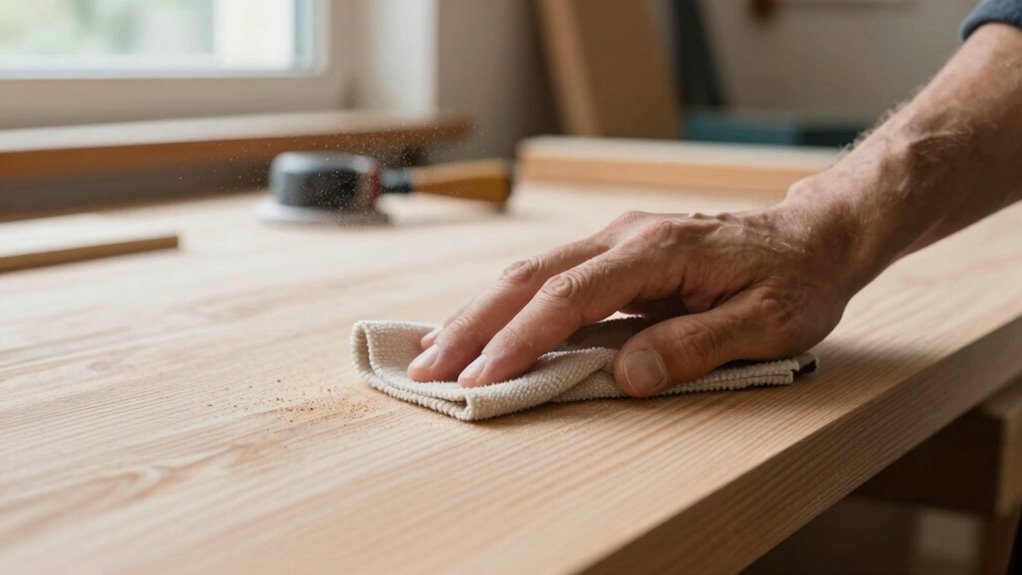

To control dust during sanding and keep your finish clean, use proper dust extraction tools, like vacuum-equipped sanders, and seal off your workspace with plastic sheeting. Ventilate well and dampen surfaces to reduce airborne particles. Always wear PPE like masks and goggles, and dispose of dust in sealed containers. Regularly maintain your equipment to prevent leaks. Follow these steps to make certain dust doesn’t contaminate your work—more tips await if you keep exploring.
Key Takeaways
- Use sealed dust collection systems and vacuum tools directly attached to sanders to capture dust at the source.
- Seal off work areas with plastic sheeting and proper ventilation to contain dust and prevent contamination.
- Wear PPE like HEPA respirators, goggles, and disposable coveralls to protect yourself and prevent dust spread.
- Dampening surfaces slightly reduces dust dispersion during sanding processes.
- Regularly maintain and troubleshoot dust extraction equipment to ensure maximum efficiency and prevent indoor contamination.
Why Dust Control Is Critical for Safe, Clean Sanding

Dust generated during sanding poses serious health and safety risks if not properly controlled. Airborne particles from sanding can be inhaled, leading to respiratory issues and long-term health problems. Without effective dust control, these particles spread throughout your workspace, contaminating surfaces and compromising air quality. Implementing dust monitoring helps you track airborne particle levels, ensuring they stay within safe limits. This real-time data allows you to adjust your dust management methods promptly, reducing exposure risks. Proper dust control not only safeguards your health but also maintains a cleaner, safer environment, preventing dust buildup that could cause slips or damage to equipment. Prioritizing dust control measures is essential for safe, efficient sanding and a healthier workspace. Effective dust management is also crucial for protecting the longevity of your tools and finished surfaces. Additionally, employing appropriate dust collection systems can significantly improve overall air quality and reduce cleanup time. Using air filtration devices further enhances the removal of fine dust particles, creating a safer breathing environment. Incorporating proper ventilation practices can further help disperse dust and keep your workspace safer and cleaner. Implementing these dust control techniques can make a significant difference in maintaining a healthy and efficient workspace.
How to Choose the Best Dust Extraction Tools for Your Workspace

Choosing the right dust extraction tools is essential for maintaining a safe and efficient workspace, especially when sanding frequently. Start by evaluating the power and capacity of dust extraction systems to make certain they handle your workload. Look for equipment with high-quality vacuum filters that trap fine dust particles effectively, preventing contamination and improving air quality. Consider the size and portability of the system to match your workspace layout, making sure it’s easy to move and connect to your tools. Compatibility is key—make certain your dust extraction system works with your existing sanding tools. Investing in reliable systems with efficient vacuum filters will reduce dust mess, protect your health, and keep your workspace cleaner, ultimately improving your sanding results. Additionally, incorporating smart home technology can enhance your workspace by enabling automated dust management and real-time air quality monitoring to ensure a healthier environment. Being aware of air filtration standards can also help guide you toward equipment that meets safety regulations and provides optimal dust control. Ensuring your equipment meets these standards can also contribute to meeting regulatory compliance and safeguarding your workspace. Moreover, selecting systems with advanced filtration technology can further improve dust capture efficiency and air purification.
Effective Techniques to Reduce Dust During Sanding

To effectively reduce dust during sanding, you should implement a combination of practical techniques that minimize airborne particles. First, always wear a dust mask to protect your lungs from fine dust particles. Second, adapt your sanding technique by applying gentle pressure and keeping the sander moving steadily; this prevents excessive dust creation. Third, use a vacuum attachment or dust collection system directly on your sander to trap dust at the source. Additionally, consider dampening the surface slightly to reduce dust dispersion. Using a high-efficiency air purifier maintenance ensures that residual airborne dust is filtered out effectively, contributing to a cleaner workspace. Proper dust management measures can further improve air quality and reduce cleanup time. These steps help contain dust and improve air quality. Proper contingency plans in your workspace can further mitigate risks associated with dust and equipment failure. Implementing dust control measures is essential for maintaining a safe and clean environment during sanding projects. Remember, a proper sanding technique combined with protective gear like a dust mask considerably lowers airborne dust, keeping your workspace cleaner and safer. Incorporating safe work practices ensures that dust management is effective and that safety remains a priority throughout your project.
Preparing Your Workspace to Contain Dust Effectively

Setting up your workspace properly is essential for containing dust effectively during sanding. Good dust containment relies on managing airflow to prevent dust from spreading. Start by sealing off the area with plastic sheeting and tape to create a contained environment. Use fans and ventilation to direct airflow toward exhaust points, ensuring dust doesn’t escape. Proper airflow management minimizes airborne particles and keeps dust localized. To further improve dust control, consider using airflow optimization techniques that help achieve better containment. Here’s an example setup: Free Floating techniques can help optimize airflow patterns for better containment. Additionally, maintaining a positive pressure environment can prevent dust from entering the workspace from surrounding areas.
How to Properly Dispose of Dust and Clean Up After Sanding

After sanding, it’s vital to dispose of dust safely to protect yourself and the environment. Use proper disposal methods and cleaning techniques to guarantee no dust lingers. Always wear personal protective equipment to stay safe during cleanup. Additionally, understanding the environmental impact of dust disposal helps ensure that you minimize harm to surrounding ecosystems. Properly filtering dust particles can also prevent airborne contaminants from affecting indoor air quality and health. Implementing effective air filtration systems can further enhance indoor air safety by capturing residual dust. Being aware of indoor air quality principles can guide you in choosing the right cleanup strategies that promote healthier indoor environments. Incorporating dust collection techniques tailored for your workspace can significantly reduce airborne dust during and after sanding.
Safe Dust Disposal Methods
Wondering how to dispose of dust safely after sanding? Proper disposal prevents contamination and keeps your workspace safe. First, collect the dust using a dust bin or a sealed container to prevent airborne particles. Once full, take the container to a designated disposal site, such as a local waste facility, that accepts construction dust. Avoid dumping dust in regular trash or storm drains to prevent environmental harm. Second, make certain you wear gloves and a mask during cleanup to avoid inhaling dust particles. Additionally, environmental considerations should guide your disposal choices to minimize ecological impact. Finally, clean your tools and work area thoroughly to reduce residual dust. By following these steps, you keep hazardous dust out of the environment and ensure safe, responsible disposal. Understanding Youngster Choice can also offer insights into safe practices and responsible decision-making during cleanup.
Effective Cleanup Techniques
To properly dispose of dust and clean up after sanding, start by wearing gloves and a mask to protect yourself from airborne particles. Use a vacuum equipped with a HEPA filter to contain dust effectively, preventing it from spreading. Regularly maintain your equipment, checking filters and seals to guarantee maximum dust containment. After vacuuming, wipe down surfaces with a damp cloth to pick up any residual dust. Avoid sweeping, which can stir up particles into the air. Dispose of collected dust in sealed bags or containers to prevent contamination. Proper equipment maintenance ensures dust stays contained, reducing health risks and keeping your workspace clean. Once cleanup is complete, inspect tools for dust buildup and clean filters before your next project.
Personal Protective Equipment
Have you prioritized proper personal protective equipment (PPE) to stay safe during cleanup after sanding? PPE is essential to protect yourself from dust particles and contaminants. First, choose the right respirator selection—opt for a mask with a HEPA filter to trap fine dust. Second, wear protective clothing like disposable coveralls to prevent dust from settling on your skin and clothes. Third, don goggles or safety glasses to shield your eyes from airborne debris. Always ensure your respirator fits well and seals properly before starting cleanup. After sanding, carefully dispose of dust and debris in sealed bags to prevent spread. Proper PPE not only keeps you safe but also guarantees a cleaner, healthier workspace.
Troubleshooting Common Dust Control Problems and How to Fix Them

When dust control issues arise, the first step is to identify where the dust is coming from. Once you know the sources, you can apply effective suppression methods to reduce airborne particles. Addressing these points guarantees a safer, cleaner sanding process.
Identifying Dust Sources
Identifying dust sources is essential for effective sanding dust control because pinpointing where dust originates allows you to target your efforts precisely. Without proper dust source identification, contamination prevention becomes difficult, and dust can spread uncontrollably. To do this effectively, consider these key areas:
- Sanding equipment – Check if your sander is sealed properly; leaks can release excess dust.
- Work area setup – Identify gaps or openings that allow dust to escape into the environment.
- Ventilation system – Ensure filters are clean and functioning correctly, preventing dust recirculation.
Effective Dust Suppression
Effective dust suppression is essential for maintaining a safe and clean work environment, but even the best systems can encounter issues. Dust particles may escape air filtration, reducing overall effectiveness. To troubleshoot, check that your filters are clean and properly fitted, as clogged or misaligned filters allow dust to circulate. Ensure your dust collection system maintains adequate airflow; if airflow drops, dust particles won’t be captured efficiently. Sometimes, seals around dust collection units can loosen, letting dust escape into the work area. Regularly inspect and replace filters, tighten seals, and verify that your air filtration setup is functioning at its best. By addressing these common problems, you’ll improve dust control, keeping your workspace cleaner and safer during sanding projects.
Frequently Asked Questions
What Safety Gear Is Recommended When Sanding With Dust Control Methods?
When sanding with dust control methods, you should wear respiratory protection like a mask or respirator to prevent inhaling fine dust particles. Eye safety is also essential, so don’t forget to wear safety goggles or glasses to shield your eyes from dust and debris. These safety gear pieces help keep you protected while you work efficiently and maintain a clean environment without compromising your health.
Can Dust Control Sanding Be Effectively Used on All Types of Surfaces?
Dust control sanding can be effective on many surfaces, but you need to take into account surface compatibility and dust containment limitations. Some delicate or porous surfaces may require special techniques or alternative methods to prevent damage or contamination. Always assess the surface type beforehand, and be aware that dust containment systems might not capture all dust particles, especially on complex or textured surfaces. Proper planning ensures the best results without compromising finish quality.
How Often Should Dust Extraction Systems Be Maintained for Optimal Performance?
You should perform dust system maintenance regularly, ideally after each use or weekly if used frequently. This involves checking filters and replacing them as needed to guarantee ideal performance. Regular filter replacement prevents clogs and maintains effective dust extraction. By staying on top of dust system maintenance, you keep your sanding environment clean, reduce airborne dust, and protect your finishing process from contamination.
Are There Eco-Friendly Dust Disposal Options Available?
Think of eco-friendly dust disposal like planting seeds for a sustainable future. You can opt for biodegradable waste options that decompose naturally, reducing environmental impact. Participating in recycling programs guarantees dust and debris are repurposed responsibly, minimizing landfill contributions. These choices help protect your workspace and the planet, turning your cleanup into a positive act of environmental stewardship. Embrace these green solutions for cleaner, healthier environments.
What Are Signs of Ineffective Dust Containment During Sanding?
You’ll notice ineffective dust containment when you see dust spillage on nearby surfaces or lingering dust in the air after sanding. If dust isn’t properly captured, it settles onto furniture or floors, making cleanup harder. Lingering dust also indicates poor containment, which can contaminate your finish. To avoid this, guarantee your dust collection system is sealed tightly and use appropriate barriers to keep dust from spreading.
Conclusion
By mastering dust control, you’re planting seeds for a cleaner, safer workspace that blossoms with quality. Think of each step as tending to a delicate garden—removing debris guarantees your finish blossoms untouched. With the right tools and techniques, you’re cultivating not just a pristine project, but a healthier environment. Keep your methods sharp and your workspace clear, so your craftsmanship can flourish, free of dust’s silent interference.