To move air in cold weather without freezing your project, you should choose ventilation equipment designed for low temperatures, such as heat recovery ventilators (HRVs) or energy recovery ventilators (ERVs). These systems efficiently transfer heat while exchanging air, preventing frost buildup. Ensuring proper insulation around vents and ducts, controlling humidity, and maintaining regular system checks help avoid freezing and damage. Keep these strategies in mind to protect your project from cold-related issues as you explore more effective solutions.
Key Takeaways
- Use heat recovery ventilators (HRVs) or energy recovery ventilators (ERVs) to exchange air efficiently without losing heat.
- Insulate vents and ductwork thoroughly to prevent cold air infiltration and freezing of components.
- Implement precise temperature control and humidity management to reduce condensation and ice buildup.
- Regularly clear snow, ice, and debris from vents and exhaust outlets to maintain unobstructed airflow.
- Choose durable, low-temperature-rated ventilation equipment designed for cold environments to ensure reliable operation.
What Are the Main Challenges of Ventilating in Cold Weather?
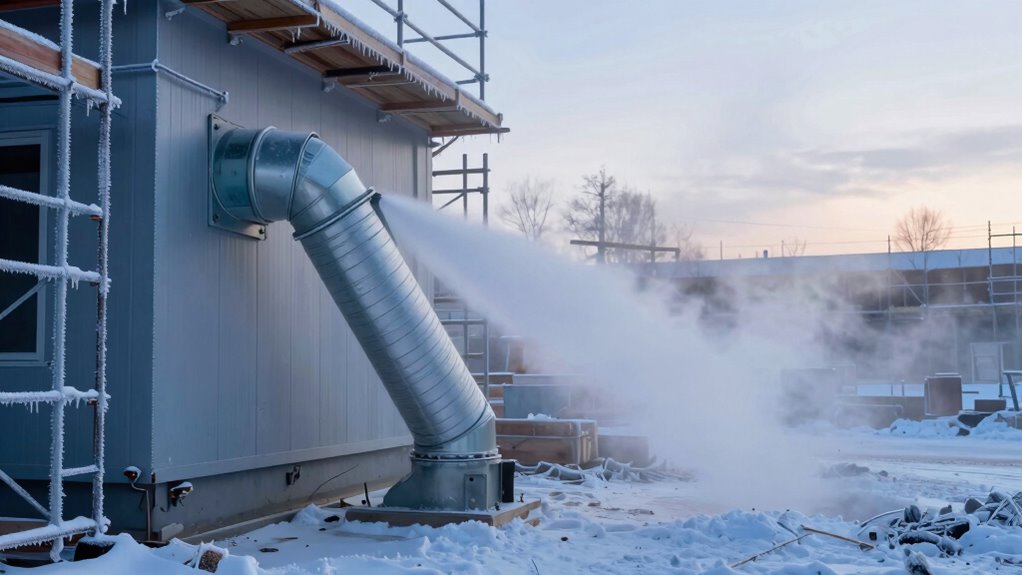
Ventilating in cold weather presents several significant challenges. One major issue is insulation challenges, which make it difficult to maintain warm indoor temperatures without losing heat. If your building isn’t properly insulated, cold air can infiltrate, forcing your heating system to work harder and increasing energy costs. Proper insulation is essential to prevent heat loss and improve overall energy efficiency. Additionally, air sealing techniques are crucial to minimize drafts and cold spots, ensuring a more controlled environment. Moisture control is another critical concern; when warm, moist air meets cold surfaces, condensation forms, leading to mold and structural damage. Proper ventilation systems must strike a balance—removing stale air while preventing the entry of cold drafts and excess moisture. Without careful planning, you risk creating cold spots, ice buildup, or humidity problems that compromise both comfort and building integrity. Addressing building envelope considerations is vital for optimizing performance in cold climates. Overcoming these challenges requires a thoughtful approach to insulation and moisture management, especially in energy-efficient building designs that prioritize sustainability.
How Do You Choose the Best Ventilation Equipment for Freezing Conditions?
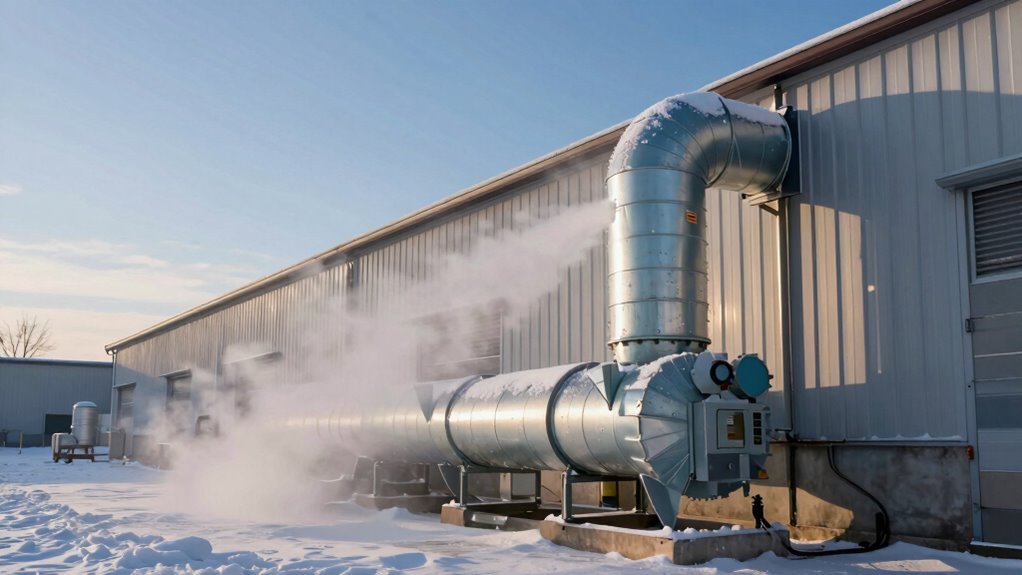
Selecting the right ventilation equipment for freezing conditions requires careful consideration of its ability to withstand low temperatures and prevent cold drafts. You should focus on choosing units with durable heat exchangers designed for cold environments, which efficiently transfer heat without freezing. Additionally, prioritize equipment with advanced air filtration to remove contaminants and moisture that can lead to ice buildup. Here are key factors to consider:
Choose ventilation units with durable heat exchangers and advanced filtration for optimal cold climate performance
- Cold-Climate Heat Exchangers: Ensure they’re specially rated for low temperatures to maintain efficiency.
- Durability and Insulation: Equipment must resist freezing and damage.
- Air Filtration Quality: High-performance filters prevent moisture and debris from affecting system performance.
- Control Systems: Opt for systems with precise temperature regulation to avoid cold drafts and maintain airflow stability.
Furthermore, selecting units with high static pressure capabilities can help ensure consistent airflow even in complex duct systems, especially when dealing with low-temperature environments. Incorporating advanced control algorithms can optimize system operation in challenging conditions.
What Are the Most Effective Ventilation Strategies for Cold Environments?
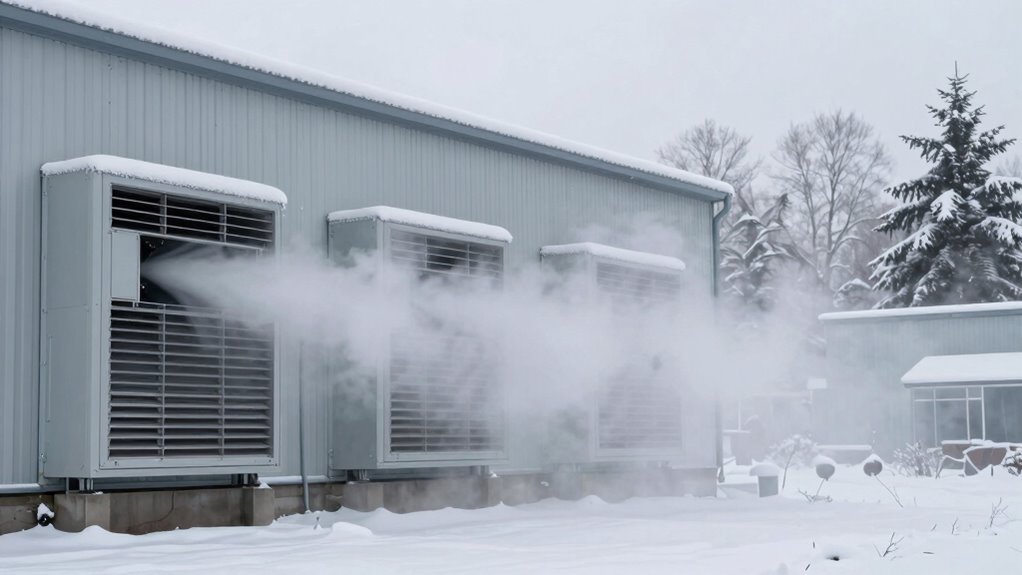
In cold environments, implementing effective ventilation strategies is essential to maintain air quality without compromising insulation. You should focus on airflow optimization to ensure fresh air circulates efficiently while minimizing heat loss. Proper humidity regulation prevents moisture buildup, which can lead to frost or mold. Using heat recovery ventilators (HRVs) or energy recovery ventilators (ERVs) balances air exchange and energy efficiency. To evoke emotion and clarify options, consider this table:
| Strategy | Benefits | Challenges |
|---|---|---|
| Heat Recovery Ventilation | Saves energy, maintains warmth | Installation complexity |
| Controlled Exhaust Fans | Removes stale air effectively | Potential cold drafts |
| Humidity Management | Prevents condensation | Requires precise regulation |
| Airflow Optimization | Enhances air quality | Needs careful planning |
Choose strategies that prioritize airflow and humidity control to protect your project from cold-related issues. Proper ventilation is key to creating a comfortable and safe environment in cold climates. Additionally, integrating smart home automation can help monitor and adjust ventilation parameters in real-time for optimal performance. Furthermore, employing advanced sensors can improve responsiveness and efficiency of the ventilation system.
How Can You Stay Safe and Prevent Freezing or Damage During Cold-Weather Ventilation?
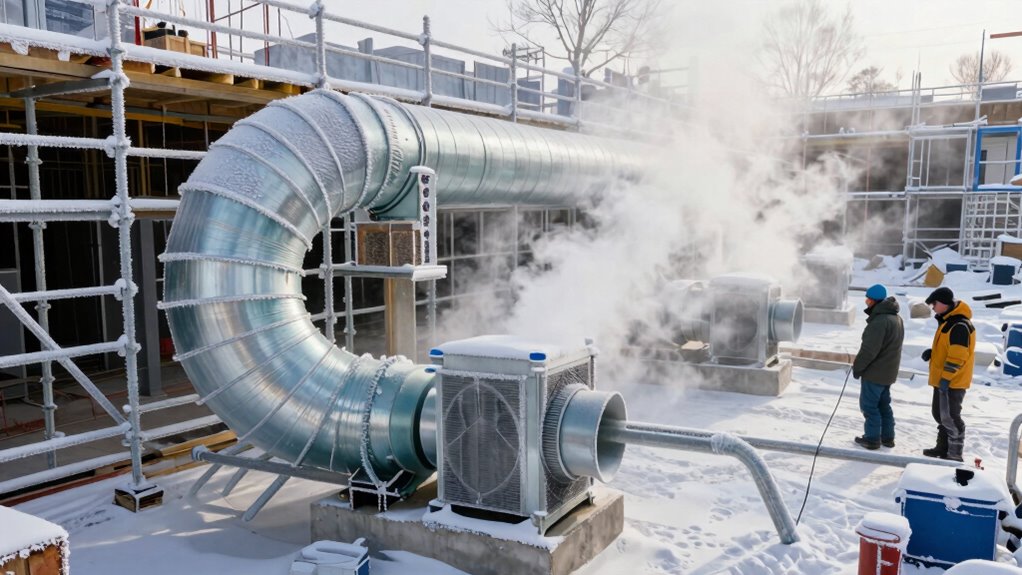
Properly managing ventilation in cold weather is key to preventing freezing pipes and structural damage. To stay safe, focus on protecting your ventilation system and building. Here are four essential tips:
- Use effective insulation techniques around vents and ductwork to maintain airflow without exposing equipment to extreme cold.
- Regularly check and maintain equipment durability, ensuring components are weatherproof and resistant to low temperatures.
- Seal leaks around windows, doors, and vents to prevent drafts that could cause freezing or reduce insulation efficiency.
- Install heat recovery ventilators or heaters to keep incoming air warm without sacrificing ventilation.
Additionally, understanding the importance of proper ventilation in maintaining indoor air quality during cold months can help prevent moisture buildup and related issues.
How Do You Troubleshoot Common Cold-Weather Ventilation Problems?
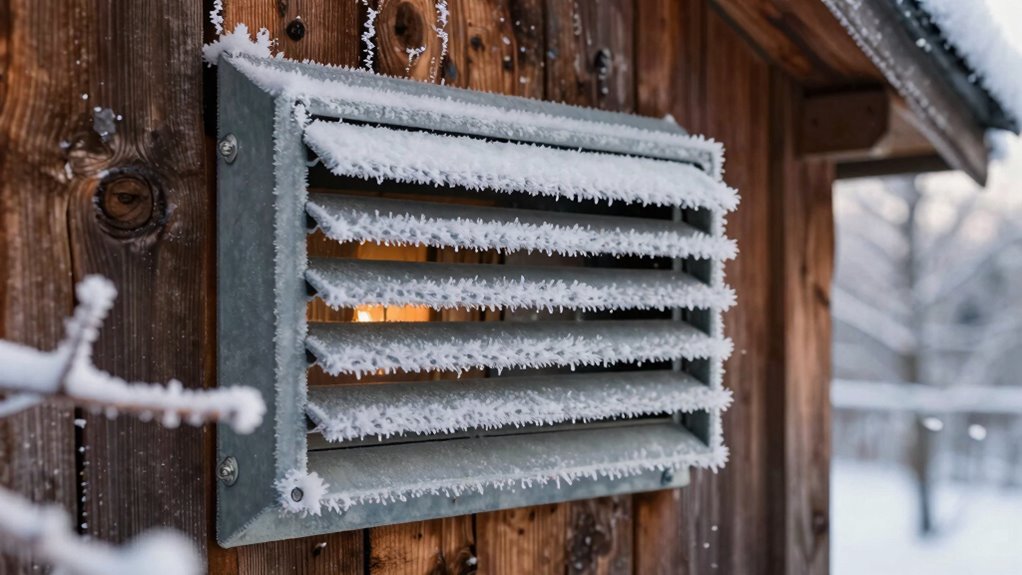
When cold weather causes ventilation issues, troubleshooting quickly can prevent further damage or discomfort. First, check for airflow blockages or leaks that hinder proper ventilation; sealing drafts can improve airflow optimization. Ensure vents are free of snow, ice, or debris that could restrict air movement. If moisture control becomes a problem, look for signs of excess humidity or condensation, which may indicate insufficient airflow or insulation issues. Adjust ventilation settings if possible, to balance air exchange without freezing pipes or creating cold drafts. Regularly inspect fans and exhaust systems to confirm they’re functioning correctly. Understanding airflow dynamics can help optimize ventilation strategies during colder months, especially when designing systems suited to cold-weather conditions. Additionally, reviewing security measures for your ventilation equipment can help prevent unauthorized access or tampering, which could compromise system integrity. Incorporating proper insulation around vents and ductwork can also significantly reduce heat loss and prevent freezing. Addressing these issues promptly helps maintain proper airflow and moisture levels, ensuring a safe, efficient ventilation system that withstands cold conditions without freezing or damage.
Frequently Asked Questions
What Are the Latest Innovations in Cold-Weather Ventilation Technology?
The latest innovations in cold-weather ventilation focus on advanced thermal insulation and efficient air exchange systems. You can now install heat recovery ventilators (HRVs) and energy recovery ventilators (ERVs) that optimize airflow while conserving heat. These systems use smart controls to adjust air exchange rates, preventing freezing and maintaining indoor comfort. By integrating insulation with ventilation technology, you guarantee your project remains energy-efficient and protected against harsh winter conditions.
How Does Humidity Affect Ventilation Efficiency in Freezing Temperatures?
Humidity levels substantially impact your ventilation efficiency in freezing temperatures. High humidity can cause moisture buildup, leading to ice formation and reduced airflow, while low humidity helps with moisture management, preventing freezing issues. By maintaining proper humidity control, you guarantee better air exchange and prevent frost buildup, keeping your system running smoothly. Proper humidity management is essential for optimizing ventilation performance and protecting your project from cold-weather challenges.
Can Ventilation Systems Operate Effectively During Snowstorms?
Think of your ventilation system as a sturdy ship steering through a storm. During snowstorms, it can still operate effectively if designed with proper airflow and protection against snow infiltration. Well-designed airflow directs moisture away, preventing freezing issues, while strategic sealing keeps snow out. As long as your system’s built to handle harsh conditions, it’ll keep the air moving without freezing or getting blocked, even in the worst snowstorms.
What Maintenance Routines Ensure Long-Term Cold-Weather Ventilation Reliability?
To guarantee long-term cold-weather ventilation reliability, you should regularly perform filter maintenance and consider insulation upgrades. Check and replace filters to prevent blockages and maintain airflow, especially during winter. Insulation upgrades help keep components warm and prevent freezing. Additionally, inspecting ductwork for leaks and ensuring vents are clear will keep your system running efficiently in cold conditions, reducing the risk of freezing and maintaining good air quality year-round.
Are There Environmental Impacts Associated With Cold-Weather Ventilation Methods?
Yes, cold-weather ventilation methods can impact the environment by increasing energy consumption and affecting your environmental footprint. Using energy-intensive systems may lead to higher greenhouse gas emissions if not managed efficiently. To minimize these effects, you should optimize ventilation systems for energy efficiency, incorporate renewable energy sources where possible, and regularly maintain equipment to prevent unnecessary energy waste, helping you reduce your overall environmental impact.
Conclusion
Just as winter tests the resilience of a sturdy tree, cold-weather ventilation challenges your project’s endurance. By understanding the hurdles, selecting the right equipment, and employing effective strategies, you can safeguard your work from freezing hazards. Remember, perseverance through these icy trials ensures your project remains resilient and thriving—like a flame unwavering in the storm. Stay vigilant, adapt, and you’ll emerge victorious, proving that even in the harshest cold, progress can still bloom.