
To fix spatter and avoid rain drops when ceiling spraying, start by choosing an adjustable nozzle to control spray pattern and flow. Maintain consistent air pressure, using regulators to find the right balance—too much causes splatter, too little leads to uneven coverage. Keep your gun 12-18 inches from the ceiling, moving smoothly and overlapping slightly. Regularly clean your equipment, and test your spray on scrap first. Mastering these tips can lead to flawless results—if you continue exploring, you’ll discover even more effective techniques.
Key Takeaways
- Use an adjustable spray nozzle to fine-tune the pattern and minimize overspray that causes rain drops.
- Manage air pressure carefully with regulators; start low and increase gradually for even atomization.
- Maintain a consistent distance of 12-18 inches and overlap passes to ensure smooth, drip-free coverage.
- Test spray on scrap or hidden ceiling sections to identify and correct spatter issues early.
- Regularly clean and maintain the nozzle to prevent clogs and ensure consistent spray quality.
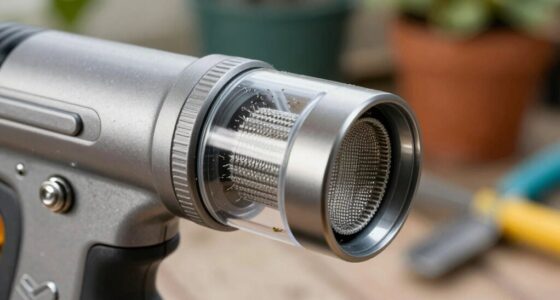
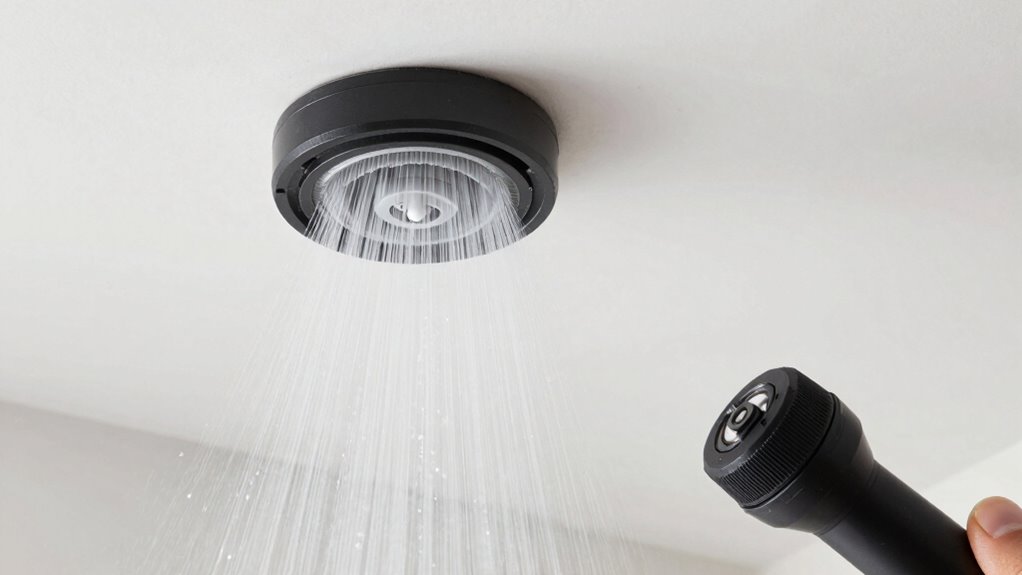
If you want to spray ceilings effectively without causing rain drops or drips, understanding the right techniques and tools is crucial. One of the most important tools you’ll use is your spray nozzle. The spray nozzle controls the pattern and flow of your paint or coating, so selecting the right one can make a big difference in preventing spatter. A nozzle with adjustable settings allows you to fine-tune the spray pattern, reducing overspray and minimizing drips. Always choose a nozzle designed for ceiling work, which typically produces a fine, even mist rather than a heavy spray that can cause rain drops.
Choosing the right spray nozzle is essential for achieving a smooth, drip-free ceiling paint job.
In addition to the nozzle itself, managing air flow is critical. Proper air flow ensures the paint atomizes evenly and adheres smoothly to the ceiling surface. Too much air flow can create a forceful spray that leads to splatter and drips, while too little can result in uneven coverage and increased application time. You want to balance the air pressure to produce a consistent, gentle mist. Most spray guns have adjustable regulators that let you control this air pressure precisely. Start with a lower setting and gradually increase until you find the sweet spot where the spray is even and controlled. This careful regulation helps you avoid the common pitfall of rain drops forming on the ceiling.
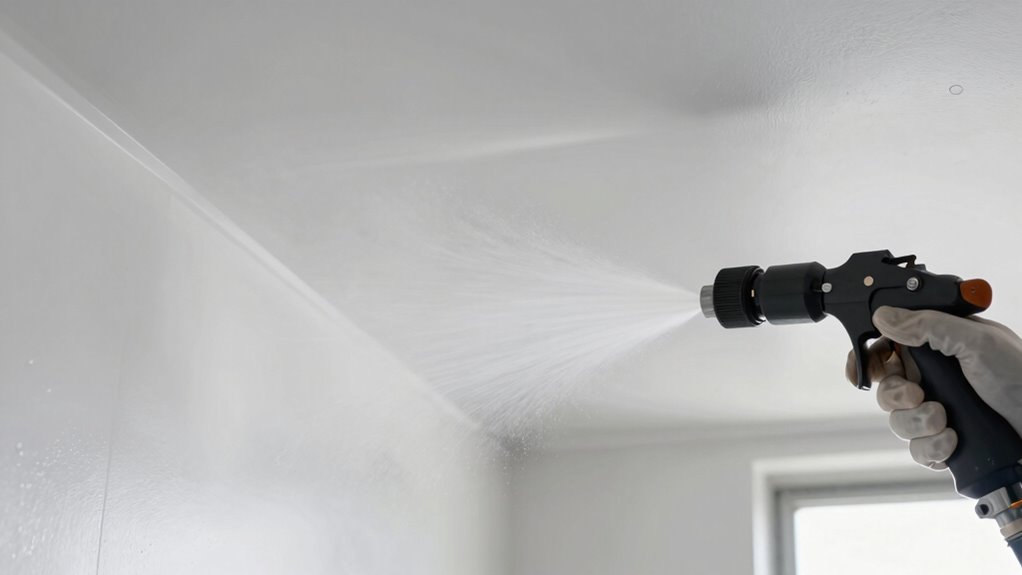
Technique plays a crucial role too. Maintain a consistent distance from the ceiling, usually about 12 to 18 inches, and move your spray gun smoothly and evenly across the surface. Avoid staying in one spot for too long, as this can cause buildup and drips. Keep your movements steady, overlapping each pass slightly to ensure uniform coverage. When your spray nozzle is properly adjusted and your air flow is balanced, you’ll notice less spatter and fewer rain drops.
Another tip is to test your spray pattern on a scrap piece or a small hidden section of the ceiling before starting the main job. This lets you observe how the paint behaves and make necessary adjustments. Properly cleaning and maintaining your spray nozzle regularly also prevents clogging and uneven spray, which can contribute to spatter issues. Paying attention to proper technique and equipment maintenance can significantly improve your results and help you prevent unwanted rain drops.
Frequently Asked Questions
What Tools Are Best for Ceiling Spraying Without Rain Drops?
You should use a high-quality spray gun with adjustable settings to minimize rain drops. Manage air flow with appropriate fans or ventilation to prevent overspray, and maintain the correct spray distance to reduce spatter. Using a fine mist nozzle helps control the spray pattern, ensuring a smooth application. These tools, combined with proper air flow management and consistent spray distance, help you achieve a clean ceiling spray without rain drops.
How Can I Prevent Spatter During Ceiling Spraying?
To prevent spatter during ceiling spraying, focus on proper brush techniques and adjusting spray pressure. Keep your brush strokes smooth and even to minimize splatter, and lower your spray pressure to reduce overspray. Maintain a consistent distance from the ceiling, and test your setup on a small area first. These steps help control spray dispersion, ensuring a cleaner finish with minimal spatter.
What Safety Precautions Are Necessary for Ceiling Spraying?
Think of safety as your shield in the spraying storm. You must wear protective gear—gloves, goggles, masks—that act as your armor. Make certain proper ventilation measures are in place, like opening windows or using fans, to keep fumes and overspray at bay. This rhythm of precautions safeguards your health and keeps the work smooth, preventing hazards from spattering or inhaling harmful particles. Stay protected, stay safe.
How to Choose the Right Spray Nozzle for Ceiling Work?
To select the appropriate spray nozzle for ceiling work, you should consider the spray nozzle types and spray pattern selection. Choose a nozzle that offers adjustable spray patterns, like a fan or wide-angle nozzle, to guarantee even coverage and minimize spatter. Focus on nozzles designed for ceilings, which provide a consistent spray without drips. Testing different nozzles beforehand helps you find the best pattern for a smooth, professional finish.
Can Ceiling Spraying Be Done on Textured Surfaces?
Yes, you can spray ceilings with textured surfaces, but you need to guarantee texture compatibility and proper surface preparation. First, identify the type of texture to determine if spraying is suitable. Clean and prime the surface thoroughly to improve adhesion and reduce spatter. Use the right nozzle settings to match the texture’s height and roughness. Taking these steps helps achieve a smooth finish without damaging the textured surface.
Conclusion
Remember, a stitch in time saves nine. By fixing spatter at the source when ceiling spraying, you prevent rain drops from ruining your finish. Proper techniques and prompt adjustments keep your project clean and professional-looking. Don’t wait for problems to grow; tackle them early. When you address issues head-on, you save time, effort, and frustration. Keep these tips in mind, and you’ll achieve a flawless ceiling without unwanted splatter every time.