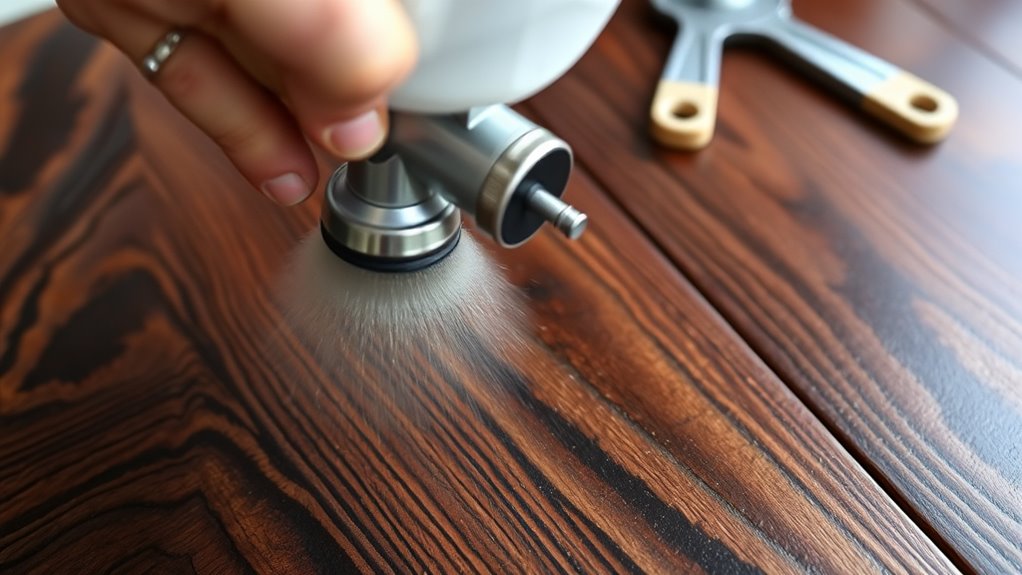

Yes, you can spray stain with an airless sprayer to get a smooth, even finish quickly while minimizing overspray. Just make certain you choose the right stain and set the proper pressure to prevent drips and uneven coverage. Keep the spray about 12 inches from the surface and use steady, overlapping passes for best results. If you want to discover more tips for a flawless application, keep exploring how to perfect your technique.

Get business pricing on tools and workshop supplies
- Business-only prices and quantity discounts
- Tax-exempt purchasing
- Multiple users, one account, clear invoices
Key Takeaways
- Yes, an airless sprayer is suitable for applying stain efficiently on large surfaces.
- Proper technique involves keeping the spray about 12 inches from the surface with steady passes.
- Adjust pressure settings to prevent drips, pooling, or overspray during spraying.
- Always test stain on small samples to ensure desired color and coverage before full application.
- Use a brush for detailed areas or edges, blending with spray for a uniform finish.
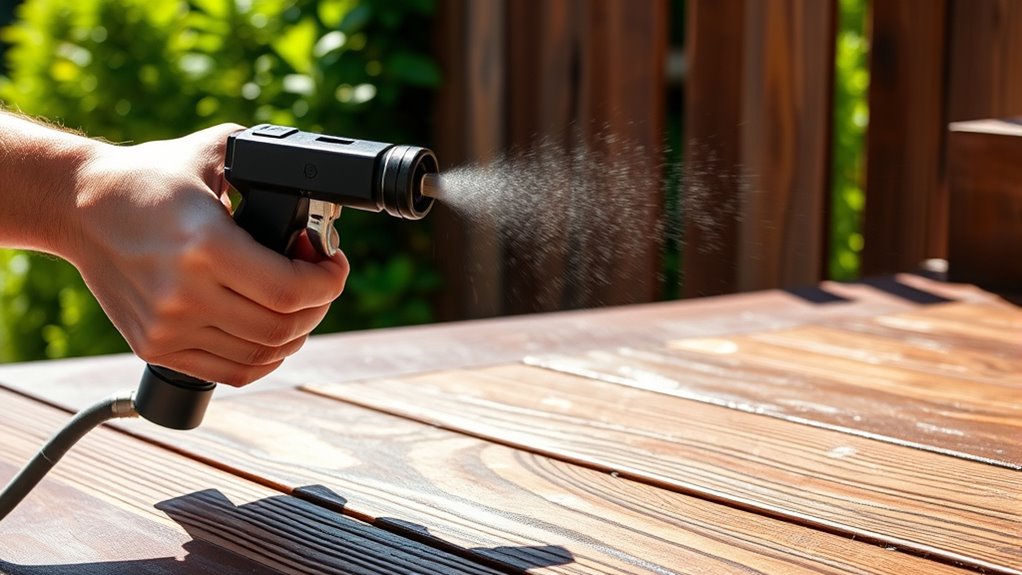
Spraying stain with an airless sprayer is an efficient way to achieve a smooth, even finish on large surfaces. While it’s tempting to jump straight into spraying, understanding proper techniques can make a significant difference in your results. Before you start, it’s essential to consider your brush techniques and stain color selection. These factors influence the overall look and durability of your project.
When preparing to spray, your first step should be choosing the right stain color. Picking the correct hue is crucial because it sets the tone for your entire project. Consider testing small samples on scrap wood or hidden areas to see how the stain looks once applied and dried. Keep in mind that some stains appear darker or lighter when sprayed compared to brushing. This is why testing is key to avoiding surprises after the job’s done. Once you select your color, prepare your surface by cleaning and sanding it thoroughly. A smooth, clean surface ensures even absorption and reduces the risk of blotches or uneven spots.
Choosing the right stain color and testing samples ensures a smooth, even finish.
Now, even though spraying is fast, your brush techniques still matter. When using an airless sprayer, it’s best to think of it as an extension of your hand, mimicking brush strokes to maintain control. Keep the spray gun about 12 inches from the surface and use steady, overlapping passes. This overlaps by about 50% to prevent streaks and uneven patches. Maintaining consistent speed and distance helps distribute stain evenly, much like brush techniques do when you’re manually applying stain. If you notice drips or pooling, switch to a lighter spray pressure and keep your strokes smooth. Proper technique minimizes overspray and waste, saving you time and money in the long run.
Furthermore, your brush techniques can serve as a backup for tricky spots or edges where spraying might be challenging. Use a brush to carefully fill in corners, edges, or detailed areas. This blending ensures a uniform finish across the entire surface. When selecting your stain color, keep in mind that the final appearance can be affected by the application method. A darker stain may require fewer coats, while a lighter shade might need multiple passes for full coverage.
As an affiliate, we earn on qualifying purchases.
Frequently Asked Questions
Can I Use an Airless Sprayer for All Types of Stains?
You can use an airless sprayer for many types of stains, but stain compatibility varies. Thinner stains like water-based or semi-transparent ones usually spray well, while thicker stains may clog or require thinning. Make certain to check the stain’s consistency and adjust your sprayer accordingly—thin thicker stains and adjust pressure settings. Test spray on a small area first to ensure smooth application and avoid clogs.
How Do I Prevent Splatter When Spraying Stain With an Airless?
To prevent splatter when spraying stain with an airless, start with proper brush techniques and spraying angles. For example, hold the sprayer at a consistent distance and keep a steady hand, overlapping each pass slightly. Adjust your spraying angle to maintain even coverage and avoid overspray. Practicing these methods helps you control the spray, minimizing splatter and achieving a smooth, professional finish.
What Safety Gear Should I Wear When Spraying Stain?
You should always wear proper safety equipment when spraying stain. Put on protective gear like goggles or a face shield to guard your eyes, a respirator or mask to avoid inhaling fumes, and gloves to protect your skin. Long sleeves and pants can also help prevent stain splatters from contacting your skin. Wearing the right safety gear keeps you safe and guarantees you can focus on your project without health risks.
How Do I Clean an Airless Sprayer After Staining?
Sure, cleaning your airless sprayer after staining feels as fun as watching paint dry. To do it right, you’ll need to flush out leftover stain with water or mineral spirits, depending on the stain type. Disassemble the parts, clean filters, and wipe down the nozzle. Proper equipment maintenance guarantees your sprayer’s longevity, making future stain applications smoother and less messy—because nobody enjoys a clogged, stubborn machine.
Is There a Recommended Distance to Hold the Sprayer From the Surface?
You should hold your airless sprayer about 12 to 18 inches from the surface, maintaining a consistent spray angle of around 30 to 45 degrees. Adjust the distance based on the stain’s viscosity—thicker stains may require you to be slightly closer. Keep your spray steady and perpendicular to the surface for even coverage, ensuring you don’t oversaturate or leave streaks.
Conclusion
Yes, you can spray stain with an airless sprayer, making your project quicker and more even. Just imagine effortlessly covering a large fence or deck in no time, with smooth, professional results. Even if you’re worried about overspray, a little practice and proper masking will keep your surroundings clean. Once you get the hang of it, you’ll see how this powerful tool transforms your staining experience into a simple, satisfying task.
Fall yard work Picks
leaf blowers
As an affiliate, we earn on qualifying purchases.