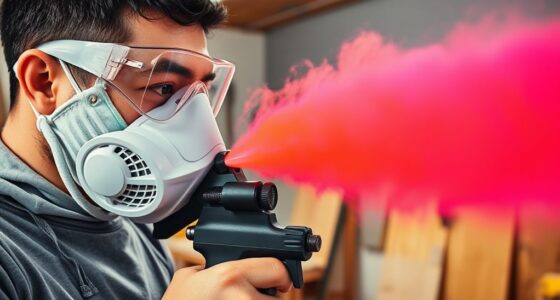
Yes, you need to wear a mask whenever you’re spraying to protect your lungs from inhaling harmful fumes, particles, or vapors. Masks filter out dangerous chemicals and prevent immediate discomfort or long-term health damage. Respirators with proper filters are best for chemical protection, while simple masks might not be enough. Using the right mask along with good ventilation and other protective gear can considerably improve your safety—keep going to learn more about staying protected.

Get business pricing on tools and workshop supplies
- Business-only prices and quantity discounts
- Tax-exempt purchasing
- Multiple users, one account, clear invoices
Key Takeaways
- Masks filter harmful fumes, vapors, and particles, preventing inhalation of hazardous chemicals during spraying.
- Use a respirator with proper filters for effective protection against chemical fumes.
- Proper masks are essential regardless of the spraying environment, including outdoor or well-ventilated areas.
- Combining masks with eye protection and gloves offers comprehensive safety during spraying tasks.
- Adequate ventilation reduces airborne hazards, but masks remain crucial for respiratory safety.

Do you need to wear a mask when spraying? The short answer is yes, especially if you’re dealing with substances like paints, pesticides, or cleaning chemicals. Masks act as essential protective gear that filters out harmful particles, vapors, and fumes, preventing them from entering your lungs. Even if the spray seems harmless or you’re working in a well-ventilated area, it’s better to err on the side of caution. Respiratory protection is vital because inhaling chemicals can cause immediate discomfort or long-term health issues. Wearing a mask isn’t just about following safety protocols; it’s about actively safeguarding your health during each spraying task.
When it comes to choosing the right protective gear, a mask rated for the specific chemicals you’re handling makes a significant difference. For spray paints or pesticides, a respirator with appropriate filters offers superior protection compared to simple dust masks. These respirators are designed to seal tightly around your face, reducing the risk of inhaling hazardous fumes. Additionally, eye protection and gloves are recommended to prevent skin and eye contact with the chemicals. Proper protective gear creates a barrier between you and potential hazards, making your spraying process safer.
Ventilation tips are equally important to reduce your exposure. Whenever possible, work outdoors or in areas with good airflow. If you’re indoors, open windows and doors to increase ventilation. Using fans to direct fumes away from your workspace can make a big difference. Consider setting up exhaust systems or portable air purifiers equipped with HEPA filters to further clear the air. These ventilation tips help dilute and remove airborne contaminants, reducing the strain on your respiratory system and making the environment safer for longer periods of spraying. Ensuring proper ventilation is an often overlooked but crucial aspect of safety during spraying activities.
respirator mask for chemical fumes
As an affiliate, we earn on qualifying purchases.
As an affiliate, we earn on qualifying purchases.
Frequently Asked Questions
Can I Skip Masking if the Spray Is Non-Toxic?
You shouldn’t skip masking even if the spray is non-toxic, as part of your DIY safety measures. Masks protect you from potential chemical exposure that might still cause irritation or allergic reactions. Always prioritize safety by wearing appropriate gear, regardless of how harmless the product seems. Protecting yourself helps prevent unnecessary health risks, and masks are a simple, effective way to stay safe during any spray project.
How Long Should I Wear a Mask After Spraying?
Think of your mask as a loyal guard, staying vigilant until the threat has passed. You should wear a mask for at least 30 minutes to an hour after spraying, depending on the product’s fumes and ventilation. Make sure your respirator fit remains snug, and check mask maintenance regularly. Keep the mask on until the spray particles settle, ensuring no lingering fumes compromise your safety.
Are Masks Necessary for Outdoor Spraying?
Yes, masks are necessary for outdoor spraying to guarantee mask safety and follow spray precautions. Even outdoors, spraying chemicals can release fumes and particles that you shouldn’t inhale. Wearing a mask helps protect your respiratory health and reduces exposure to harmful substances. Always choose the right mask for the task, and make sure it fits properly. Following proper spray precautions and wearing masks keeps you safe during outdoor spraying activities.
Do Different Spray Types Require Different Masks?
Different spray types do require different masks, especially because a proper respirator fit is essential for safety. Did you know that poorly fitting masks can reduce protection by up to 60%? You need to choose the right respirator for each spray and regularly check mask maintenance, like replacing filters and ensuring a snug fit. This way, you stay protected from harmful particles, no matter the spray type you’re using.
Can Masks Prevent All Chemical Inhalation Risks?
Masks critically improve chemical protection by filtering out harmful particles, but they can’t prevent all inhalation risks. The effectiveness depends on the mask type and proper fit. To maximize safety, choose masks rated for chemical protection, like N95 or respirators, and make sure they seal well. Always follow safety guidelines, and remember, masks are an essential part of safety but shouldn’t be your only protection against chemical inhalation.
Conclusion
So, next time you’re spraying, remember that wearing a mask isn’t just a safety tip—it’s a smart move. Coincidentally, many accidents happen when folks skip protection, only to wish they’d taken precautions. By masking up, you protect yourself from harmful fumes and particles, making your project safer and more successful. It’s a small step that can make a big difference, so don’t overlook it—you’ll thank yourself later.
Fall Picks
fall essentials
As an affiliate, we earn on qualifying purchases.