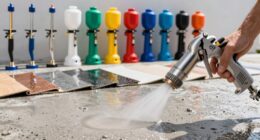

Using a water cleanup sprayer for oil-based paints isn’t recommended unless it’s specifically designed for that purpose. Most sprayers intended for water-based paints can’t handle the thicker, oil-based formulas without modifications. You’ll need to check the manufacturer’s guidelines, thoroughly clean the equipment after switching, and possibly thin the oil paint for proper spraying. To guarantee safe, effective application, consider the necessary steps—more details will help you achieve the best results.
Key Takeaways
- Water cleanup sprayers are mainly designed for water-based paints; check manufacturer guidelines before using with oil-based paints.
- Thoroughly clean and inspect the sprayer to remove residual water-based paint and prevent clogs.
- Thin oil-based paints with appropriate solvents to match the sprayer’s viscosity requirements.
- Adjust spray pressure and test on a small surface to ensure smooth application with oil paints.
- After use, clean the sprayer thoroughly with suitable solvents to maintain equipment performance.
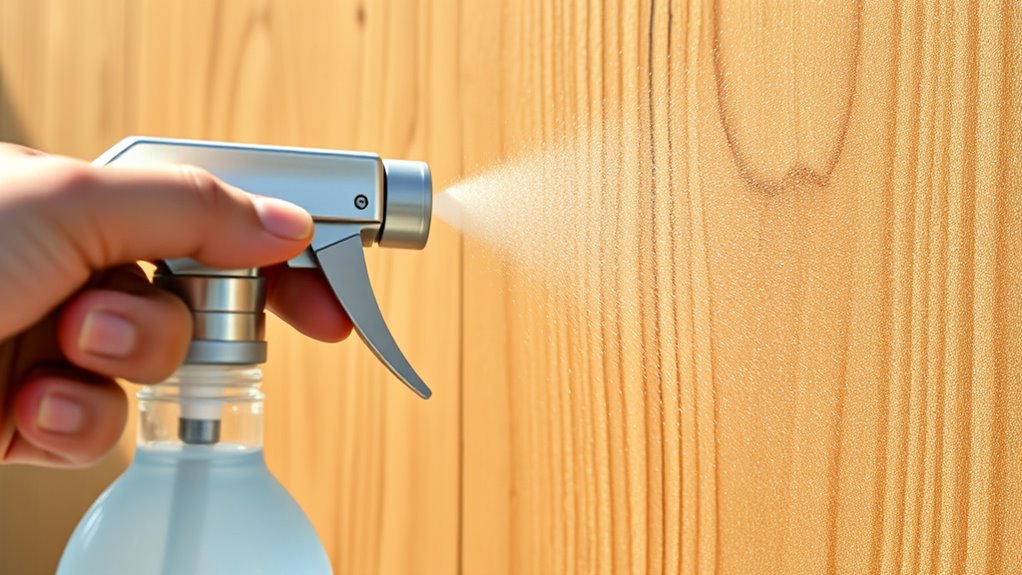
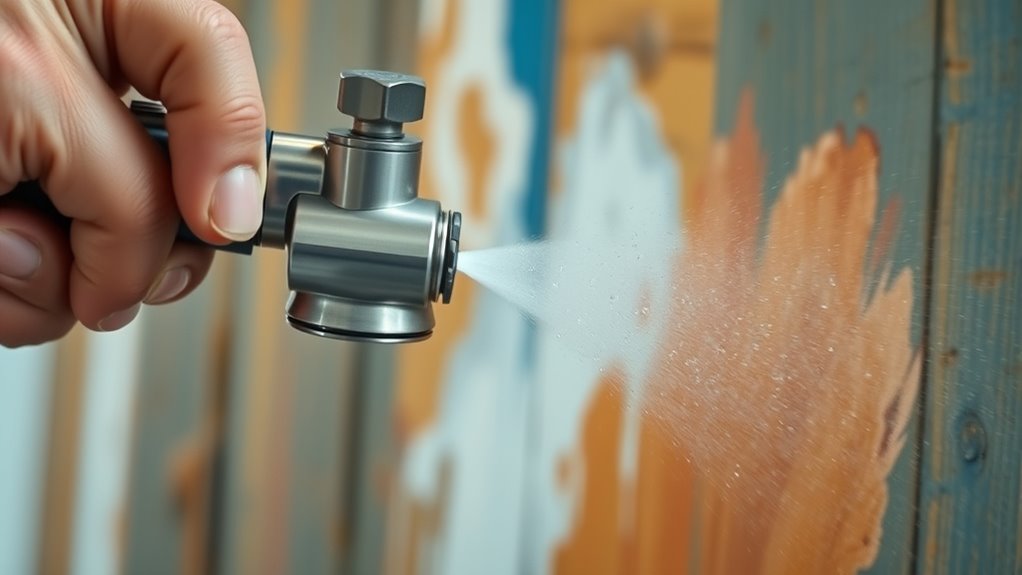
Spraying oil-based paints with a water cleanup sprayer might seem challenging, but it’s entirely possible with the right technique. The key lies in understanding paint compatibility and maintaining your equipment properly. Water cleanup sprayers are designed primarily for water-based paints, which makes using them with oil-based paints tricky. Oil paints have different chemical properties that can clog or damage the sprayer if not managed correctly. Before attempting to spray oil-based paints, check your sprayer’s specifications. Not all water cleanup models are compatible with oil-based products, so consult the manufacturer’s guidelines to avoid damaging your equipment.
Using water cleanup sprayers for oil-based paints requires careful checks and proper maintenance.
If your sprayer is compatible, the next step is to guarantee your equipment is well-maintained. Clean your sprayer thoroughly before switching to oil-based paints. Residual water-based paint can react with oil paints, causing clogs or uneven spraying. After cleaning, inspect all parts—especially the nozzle and filters—to confirm they are free of debris. Regular maintenance not only prolongs the life of your sprayer but also guarantees a smoother application when working with different types of paints. Use appropriate cleaning agents recommended by the manufacturer to remove any residual paint and prevent corrosion, which could impair spray quality.
When you’re ready to spray oil-based paint, consider thinning it slightly. Oil paints tend to be thicker and more viscous than water-based paints, which can strain your sprayer. Use a compatible thinner or solvent as recommended, but be cautious—over-thinning can compromise the paint’s adhesion and finish. Test the mixture on a small surface first to see if it sprays smoothly. Adjust the spray pressure accordingly; oil paints often require higher pressure settings to achieve an even coat without drips or sputtering.
Additionally, understanding the paint viscosity helps in achieving a smooth application and prevents equipment strain. Throughout your project, keep a close eye on your equipment. Regularly check for clogs or uneven spray patterns, and clean the nozzle immediately if you notice any issues. After finishing, clean your sprayer thoroughly with solvents suitable for oil paints to prevent buildup and ensure it’s ready for future use. Remember, equipment maintenance is essential when adapting a water cleanup sprayer for oil-based paints. While it’s possible to make it work, your success depends on careful preparation, checking paint compatibility, and diligent cleaning. With these steps, you can effectively spray oil-based paints using a water cleanup sprayer, saving time and effort while achieving a professional finish.
Frequently Asked Questions
Will Spraying Oil-Based Paint Damage My Water Cleanup Sprayer?
Spraying oil-based paint can damage your water cleanup sprayer if it’s not compatible, as these paints are thicker and require specific equipment. Using the wrong sprayer can reduce equipment longevity and clog parts. Always check paint compatibility before use and consider using a sprayer designed for oil-based paints. This maintains your equipment in good shape and ensures a smooth, effective painting process.
Can I Switch Between Water-Based and Oil-Based Paints Using the Same Sprayer?
Switching between water-based and oil-based paints with the same sprayer is like changing gears on a bike—possible, but tricky. You need paint compatibility to prevent clogs and damage. After each use, thorough equipment maintenance is essential—clean all parts meticulously to avoid mixing residues that could ruin your next project. Properly switching guarantees your sprayer stays in top shape and your finishes come out flawless every time.
What Cleaning Agents Are Needed After Spraying Oil-Based Paint?
After spraying oil-based paint, you need solvent-based cleaners like mineral spirits or paint thinner for effective paint removal. Water cleanup sprayers won’t work, so avoid water or soap. If you prefer less toxic options, look for solvent alternatives such as citrus-based cleaners or specialized eco-friendly paint removers. Always wear gloves and guarantee proper ventilation during cleaning to stay safe and effectively remove all paint residues.
How Long Does Oil-Based Paint Residue Stay in the Sprayer?
Oil-based paint residue can stay in your sprayer for several days or even weeks if you don’t clean it properly. This buildup can clog the nozzle and affect sprayer performance. To prevent this, you need regular sprayer maintenance, including thorough cleaning with the right solvents. Promptly cleaning after each use guarantees paint residue doesn’t harden, keeping your sprayer in good shape and ready for future projects.
Are There Safety Concerns When Spraying Oil-Based Paints With Water Cleanup Equipment?
Spraying oil-based paints with water cleanup equipment isn’t safe, as it raises significant ventilation safety and chemical exposure concerns. Studies show improper equipment use can release toxic fumes, risking respiratory issues. Water cleanup sprayers aren’t designed for oil-based paints, which contain harmful solvents. Always use proper gear, ensure good ventilation, and follow manufacturer instructions to safeguard yourself from hazardous chemical exposure when working with oil-based paints.
Conclusion
Ultimately, spraying oil-based paints with a water cleanup sprayer isn’t recommended, as it can clog the device and affect the finish. Did you know that oil-based paints contain solvents that can be harmful if not handled properly? By choosing the right equipment, you guarantee a smooth, safe application. Protect yourself and your project by using the appropriate sprayer for oil paints—your results will be worth it!

Franz came aboard the Paint Sprayer Zone team with a background in both journalism and home renovation. His articulate writing style, combined with a passion for DIY projects, makes him an invaluable asset. Franz has a knack for breaking down technical jargon into easy-to-understand content, ensuring that even the most novice of readers can grasp the complexities of paint sprayers.