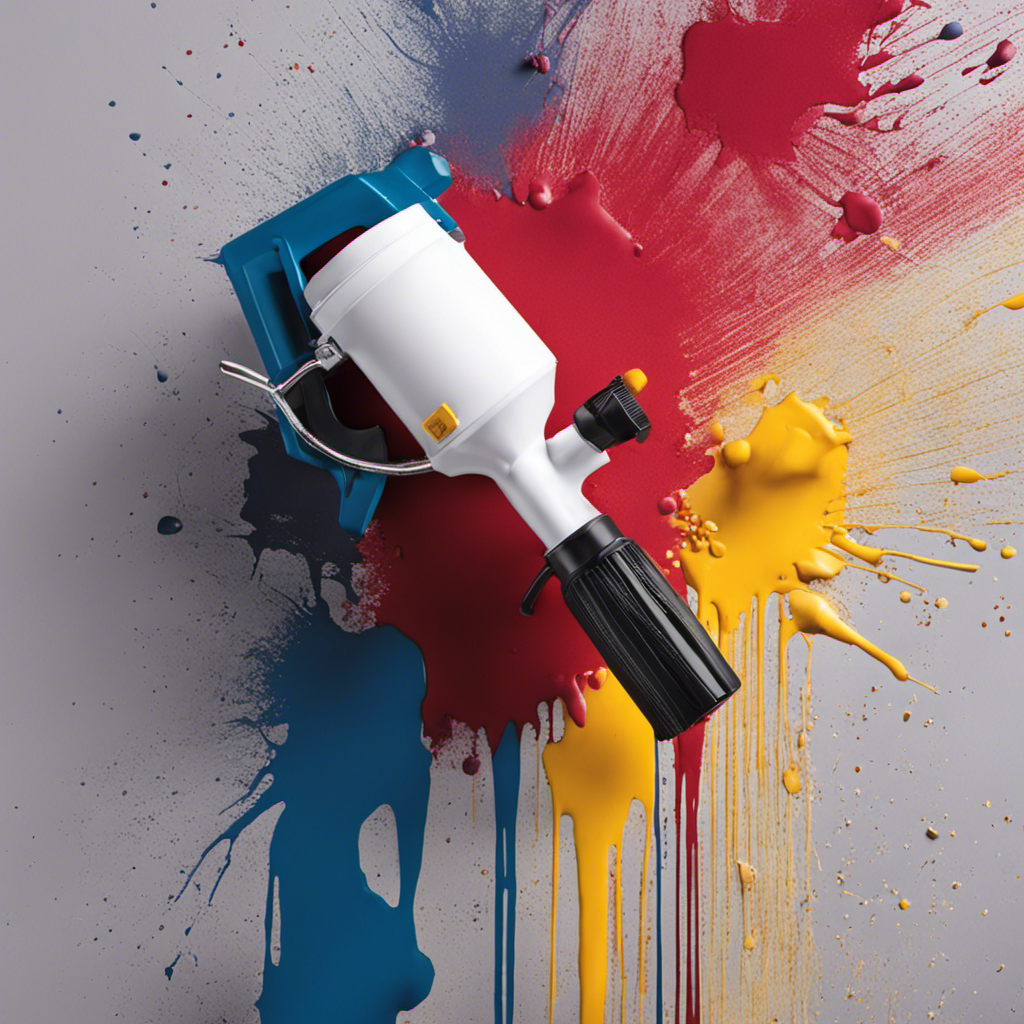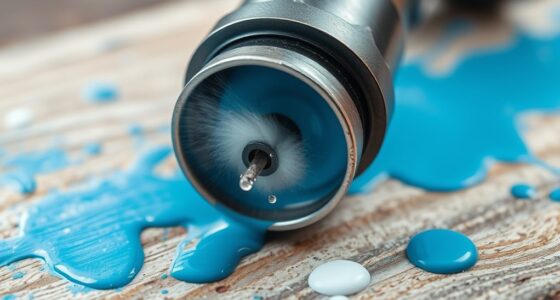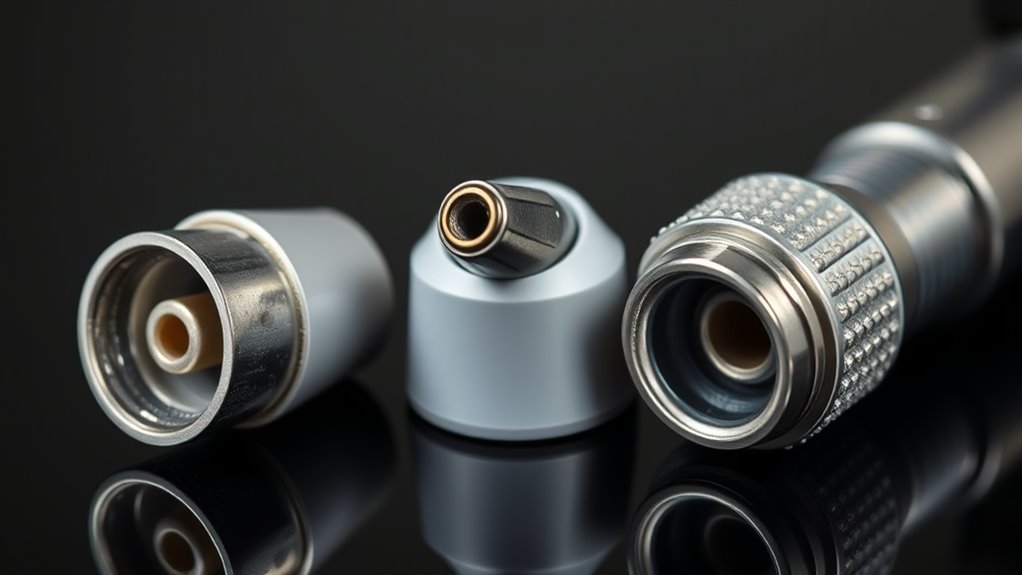

Paint sprayers have different spray tips to help you achieve the best finish for your project. The shape and size of the tip influence how the paint is dispersed, allowing you to cover large areas quickly or focus on details. Choosing the right tip reduces overspray, waste, and uneven coats. By selecting the appropriate spray pattern and flow, you can get a professional look. Keep exploring to learn how to pick the perfect spray tip for your needs.

Get business pricing on tools and workshop supplies
- Business-only prices and quantity discounts
- Tax-exempt purchasing
- Multiple users, one account, clear invoices
Key Takeaways
- Different spray tips create various spray patterns suited for specific surfaces and project types.
- Nozzle sizes determine the amount of paint and spray fineness, optimizing coverage and finish quality.
- Tip shapes like fan or round help control the coverage area, improving precision or speed.
- Selecting the appropriate spray tip reduces overspray, material waste, and the need for touch-ups.
- Using the correct spray tip enhances application efficiency and results for professional-looking finishes.

Choosing the right spray tip is essential for achieving a smooth, even finish with your paint sprayer. The spray tip determines how the paint is delivered onto your surface, impacting the quality and efficiency of your project. Different spray tips come with various brush types and nozzle sizes, which are designed to handle a range of surfaces and paint types. By understanding these differences, you can select the appropriate tip to match your specific needs.
Brush types refer to the shape and design of the spray tip’s nozzle, which influences the spray pattern and the amount of paint applied. For example, some tips feature a fan-shaped pattern, ideal for covering large, flat surfaces quickly and evenly. Others have a circular or round spray pattern, perfect for detail work or small areas. The choice of brush type directly affects how the paint is dispersed, helping you achieve either broad coverage or precision where needed. When working on projects like walls, a wide fan tip provides efficient coverage, while for furniture or trim, a round nozzle helps control the flow and avoid overspray.
Nozzle sizes are equally critical because they control the volume of paint released and the spray pattern’s width. Smaller nozzle sizes, such as 0.8mm or 1.0mm, produce a fine mist, making them suitable for delicate surfaces or light coats. Larger nozzle sizes, like 1.5mm or 2.0mm, spray more paint at once, which speeds up coverage on thicker surfaces or when applying multiple coats. Using the correct nozzle size prevents issues like runs, drips, or uneven coverage. For instance, if you use a nozzle that’s too small for a thicker paint, it may clog or produce a patchy finish. Conversely, a nozzle that’s too large for detail work might lead to overspray and waste.
Different projects require different combinations of brush types and nozzle sizes. For example, when painting a smooth wall, a wide fan tip with a medium nozzle size delivers fast, even coverage. On the other hand, if you’re working on intricate trim or furniture, a smaller round tip with a fine nozzle ensures precision without overspray. Adjusting these components based on your project’s specifics helps you control the spray pattern, paint flow, and ultimately, the quality of your finish. Proper selection of spray tips based on your project’s requirements can significantly improve your results and reduce material waste.
As an affiliate, we earn on qualifying purchases.
Frequently Asked Questions
How Do I Choose the Right Spray Tip for My Project?
When choosing the right spray tip, you need to take into account your project’s paint consistency and desired spray pattern. For thinner paints, opt for smaller tips to avoid drips, while thicker paints require larger tips for smooth application. A wider spray pattern covers more area quickly, ideal for large surfaces, whereas a narrow pattern offers precision for detailed work. Adjust your spray tip based on these factors to achieve a professional finish.
Can I Use the Same Spray Tip for Different Types of Paint?
Using the same spray tip for different types of paint isn’t ideal because paint consistency varies, affecting how it sprays and adheres. Thicker paints may clog or damage the tip, reducing its durability, while thinner paints work better with standard tips. To get the best results and prolong your sprayer’s life, switch tips based on each paint’s viscosity and consistency. This guarantees smooth application and maintains tip durability over time.
How Often Should I Replace or Clean Spray Tips?
You should clean your spray tips regularly to maintain ideal spray tip performance. The cleaning frequency depends on how often you use your sprayer and the type of paint you’re spraying. Typically, clean the spray tip after each use to prevent clogs and ensure smooth application. For spray tip maintenance, inspect for wear and replace them when they show signs of damage or clogging that cleaning can’t fix.
Do Spray Tips Affect the Speed of Painting?
Ever wonder if spray tips impact your painting speed? They definitely do. Using the right spray tip guarantees better paint coverage and an even spray pattern, which speeds up the job. A wider spray tip covers more area quickly, while a narrower one offers precision. So, choosing the appropriate tip directly affects how fast you complete your project, making your work more efficient and the results smoother.
Are There Safety Considerations When Switching Spray Tips?
When switching spray tips, safety is key. Always wear protective gear like masks, goggles, and gloves to prevent paint inhalation and skin contact. make certain the new tip is compatible with your sprayer to avoid malfunctions or leaks. Turn off the sprayer before changing tips, and follow manufacturer instructions carefully. Properly cleaning and inspecting tips after use also helps maintain safety and tip longevity.
Conclusion
Just like an artist chooses the right brush for a masterpiece, selecting the right spray tip guarantees your project turns out perfect. Each tip is a tool designed for a specific stroke, helping you achieve professional results with ease. Remember, as in a well-orchestrated symphony, every piece has its place. So, next time you pick a spray tip, think of it as selecting the right note to create a harmonious and flawless finish.
Fall Picks
fall essentials
As an affiliate, we earn on qualifying purchases.