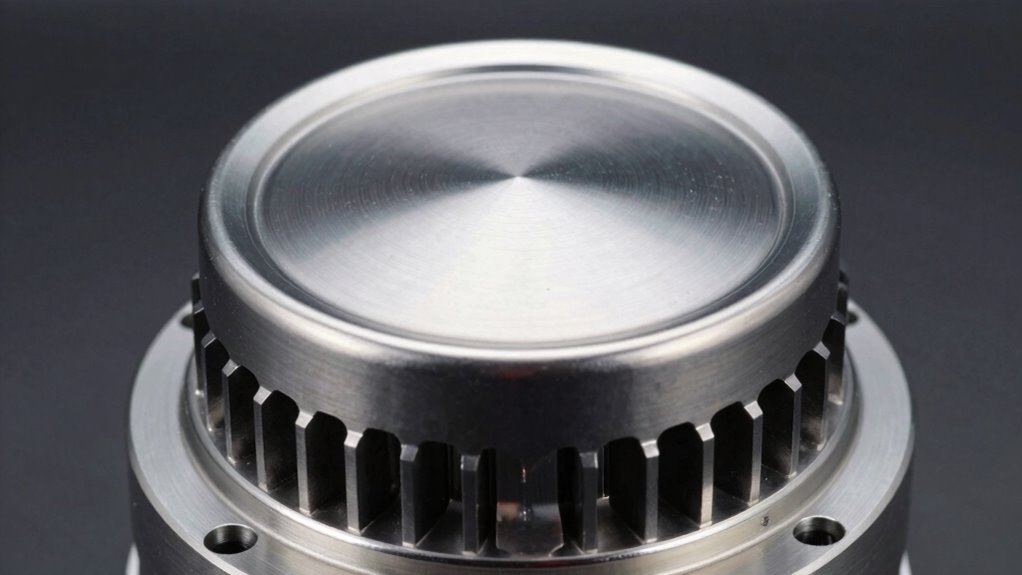

Air caps and diffusers play a crucial role in shaping your spray pattern and finish quality. They control airflow, atomization, and paint distribution, directly impacting smoothness and coverage. Choosing the right types and adjusting settings ensure your project looks professional. Proper maintenance and matching components to your gun and paint are necessary for consistent results. Keep exploring to discover how these parts can truly transform your spray finishing results.
Key Takeaways
- Air caps and diffusers control spray pattern, atomization, and paint distribution, directly impacting finish quality and pattern consistency.
- Proper selection and adjustment of these parts optimize airflow, reducing issues like runs, sags, and uneven coverage.
- Different types of air caps and diffusers are designed for specific finishes, from fine detailed work to broad coverage.
- Regular maintenance, cleaning, and timely replacement of air caps and diffusers prevent spray defects and ensure consistent results.
- Upgrading to advanced or specialized air caps and diffusers enhances airflow control, improving overall spray finish quality.
Understanding How Air Caps Shape Your Spray Pattern and Finish
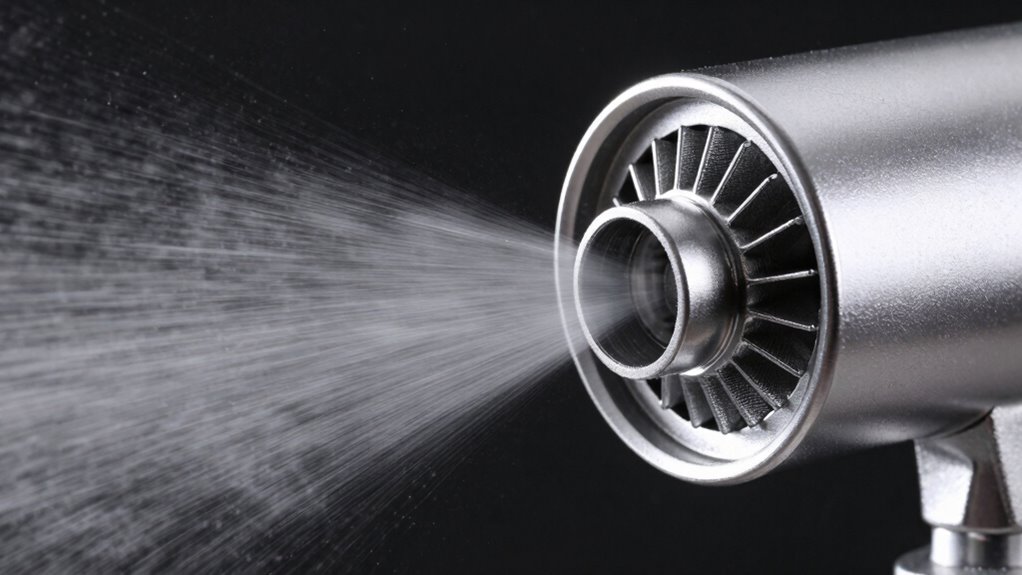
Air caps play a crucial role in determining your spray pattern and the finish quality. The shape and size of the air cap influence how the paint is atomized and directed onto the surface. A well-designed air cap creates a consistent, even spray pattern, which helps you achieve a smooth, professional-looking finish. If the spray pattern is uneven or irregular, your final result may have runs, sags, or patchiness. Choosing the right air cap ensures better control, allowing you to adjust the spray width and pattern for different projects. Properly matched air caps improve the overall finish quality, making your work look polished and refined. Understanding how air caps influence these aspects helps you get the best results from your spray equipment. Additionally, selecting the appropriate air cap size and type based on your project requirements can significantly enhance your overall spray performance. Paying attention to atomization quality can further optimize your spray results for a flawless finish. For optimal results, consider the air cap design to match your specific application needs.
What Are Diffusers, and How Do They Affect Paint Spread?
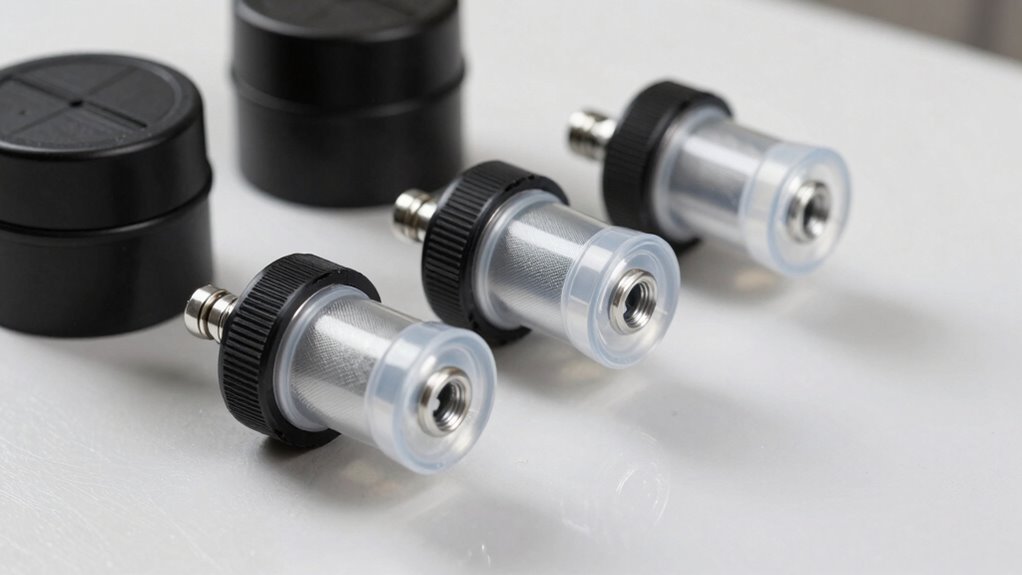
Diffusers help you control airflow, which directly influences how evenly your paint spreads. By adjusting the airflow, they improve atomization, resulting in a smoother finish. Understanding how diffusers affect paint spread can make your spraying process more efficient and professional-looking. Additionally, proper diffuser use supports energy-efficient application techniques, reducing waste and environmental impact.
Airflow Control Impact
Have you ever wondered how the design of a spray system influences the quality of your paint job? Airflow control plays a vital role in shaping your finish. Diffusers and air caps manage airflow dynamics, directly impacting spray consistency. Proper airflow ensures an even paint distribution, reducing overspray and drips. When airflow is optimized, you gain better control over the paint pattern and thickness. Additionally, understanding the contrast ratio of your equipment can help you achieve deeper blacks and brighter whites for a more vivid finish.
Paint Atomization Effects
Since proper atomization is essential for a smooth, even paint finish, understanding how diffusers influence this process is key. Diffusers help optimize paint atomization by controlling the spray angle and ensuring a consistent paint consistency. A well-designed diffuser narrows or widens the spray angle, breaking the paint into finer droplets that spread more evenly. This results in better coverage, fewer runs, and a uniform appearance. When the spray angle is adjusted correctly, the paint particles disperse at an ideal size, reducing overspray and ensuring the paint flows smoothly onto the surface. Additionally, the spray pattern can be precisely manipulated with diffusers to achieve a desired finish, making them crucial for professional results. In short, diffusers play a vital role in fine-tuning the spray pattern, directly impacting the quality of your finish through improved atomization. Additionally, selecting the right diffuser can help manage paint viscosity, which is crucial for achieving optimal spray performance and a professional-looking result. Proper air cap selection further enhances the atomization process by adjusting the air flow for a more controlled spray. Understanding the airflow dynamics involved can also help in troubleshooting and refining your painting technique for superior results. Recognizing the importance of diffuser design can lead to better control and more consistent finishes in your projects.
Different Types of Air Caps: Features and Which One Is Right for You

Choosing the right air cap depends on your specific needs and the type of project you’re working on. Different air caps feature various diffuser designs and materials that influence spray patterns and finish quality. Here are three key options:
Selecting the right air cap ensures optimal spray patterns and finish quality for your project needs.
- Standard Air Caps – Made from durable materials like stainless steel, they provide reliable performance and simple diffuser designs, suitable for general projects.
- Fine Finish Caps – Crafted with precision diffuser designs for smooth, detailed finishes, ideal for furniture or automotive work.
- Wide Pattern Caps – Designed with larger diffuser openings, these are perfect for covering broad surfaces quickly, often using lightweight materials for ease of handling.
Understanding these options helps you select an air cap that balances your project’s needs with the materials and diffuser designs best suited for your desired finish.
How to Choose the Best Diffuser for Your Painting Project
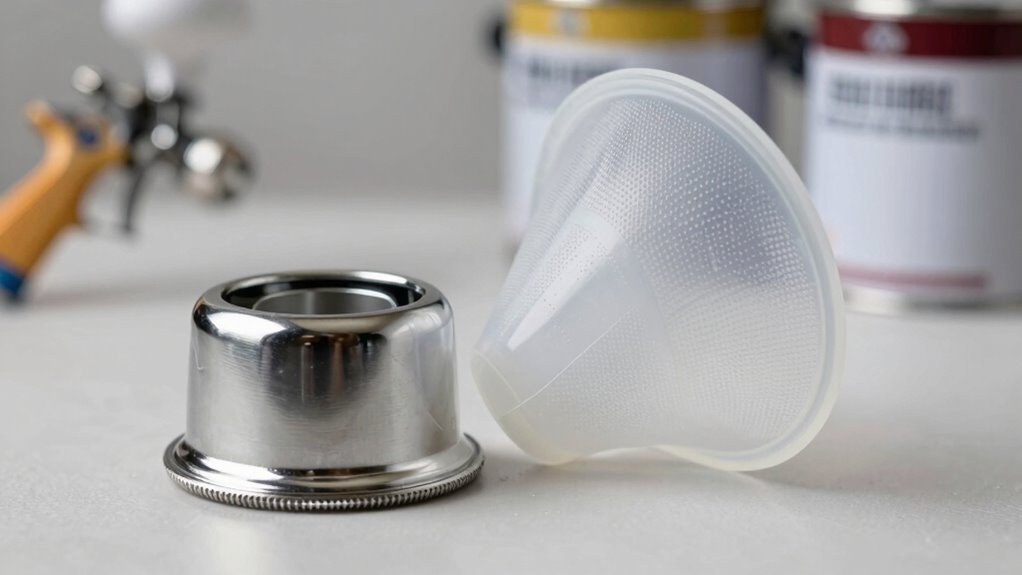
Selecting the right diffuser for your painting project is essential to achieving a smooth, professional finish. A well-chosen diffuser controls air flow and helps maintain consistent paint flow, which improves paint consistency and reduces overspray. Consider your project’s size and detail level; smaller projects benefit from diffusers that offer finer control, while larger jobs need higher air flow. To help decide, here’s a quick overview:
| Diffuser Type | Best For | Key Feature |
|---|---|---|
| Fine Mist | Detail work | Low air flow, smooth finish |
| Standard | General projects | Balance of air flow and coverage |
| High Flow | Large surfaces | Increased air flow for speed |
| Custom | Specific needs | Adjustable settings |
Choose based on your project’s scope and desired finish quality. Additionally, understanding air flow control can help you select the most effective diffuser for your specific needs. Proper diffuser selection ensures optimal paint atomization and finish quality, especially when working on intricate or large-scale projects. Being familiar with airflow dynamics can further enhance your ability to achieve consistent results across different surfaces. Moreover, mastering airflow control techniques can significantly improve the overall quality of your paint job.
How Do Settings on Your Spray Gun Impact Coverage and Smoothness?
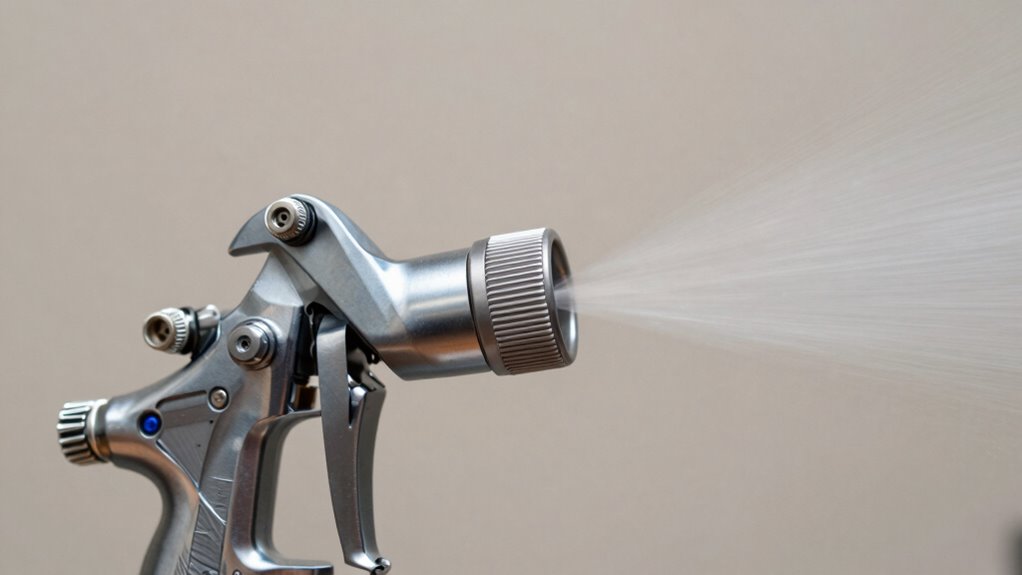
Adjusting the settings on your spray gun directly influences how evenly and smoothly your paint covers the surface. Proper adjustments help achieve a consistent spray pattern, which is vital for even coverage and better paint adhesion. When you tweak the settings, consider these factors:
- Fluid flow rate – controls the amount of paint sprayed, affecting coverage and smoothness.
- Air pressure – impacts the spray pattern, making it wider or narrower for detailed or broad areas.
- Fan pattern – adjusts the width of the spray, influencing how smoothly the paint applies and how well it adheres.
Fine-tuning these settings results in a more uniform finish, reduces overspray, and improves overall quality. Your spray pattern’s consistency directly correlates with a professional-looking surface. Choosing the right equipment also plays a crucial role in achieving optimal results, especially when understanding how spray gun settings impact your project. Additionally, understanding air caps and diffusers helps you control the spray pattern more precisely, leading to better coverage and finish quality. Properly configuring these components enhances the quality of the finish, making your project look more polished and professional.
Common Spray Finish Problems Caused by Air Cap and Diffuser Issues (And How to Fix Them)

If your spray finish isn’t coming out right, the issue might be with your air cap or diffuser. Problems like uneven spray patterns or excess overspray can stem from misaligned or worn parts. Fixing these issues is essential for achieving a smooth, professional finish. Regular maintenance and inspection of components like the air cap and diffuser can help prevent these common problems. Understanding how spray finish problems develop can help you troubleshoot and maintain your equipment more effectively.
Uneven Spray Pattern
An uneven spray pattern often results from issues with the air cap or diffuser, disrupting the airflow and causing inconsistent paint distribution. This affects spray consistency and can ruin your finish. To fix this, start by checking that the nozzle is properly aligned; misalignment causes uneven spray. Next, inspect the air cap for clogs or damage, as debris can disturb airflow. Finally, ensure the diffuser is clean and seated correctly, promoting smooth, even spray. Regular maintenance of these parts helps maintain optimal spray pattern and prolongs equipment life.
Excessive Overspray or Runs
Problems like excessive overspray or runs often stem from issues with the air cap or diffuser, which can cause uneven or too forceful airflow. When the airflow is too strong, it pushes paint beyond the target surface, creating overspray and drips. This is especially common if your paint viscosity is too low or if the spray booth environment isn’t properly controlled. To fix this, check your air cap and diffuser for damage or misalignment, and adjust the air pressure accordingly. Thinning your paint slightly can help reduce overspray and improve flow. Also, make sure your spray booth is well-ventilated to maintain consistent airflow. Proper maintenance and adjusting your setup will help you achieve a smoother finish without runs or excessive spray. Paying attention to your airflow balance and ensuring all components are properly aligned will lead to better spray results.
Maintaining and Replacing Air Caps and Diffusers for Optimal Results

Regularly inspecting and maintaining your air caps and diffusers guarantees they operate at peak efficiency. To do this, check for wear, clogs, or damage that could affect spray quality. Proper maintenance ensures consistent paint viscosity, which is essential for smooth, even finishes. When replacing parts, choose the correct air cap and diffuser for your spray gun to maximize paint atomization. Additionally, staying informed about startup ideas with actionable insights can help you identify new tools or techniques to improve your maintenance routine. Keeping up with innovative spray technology can also lead to more efficient and higher-quality results over time.
Matching Air Cap and Diffuser Types to Your Spray Gun and Paint
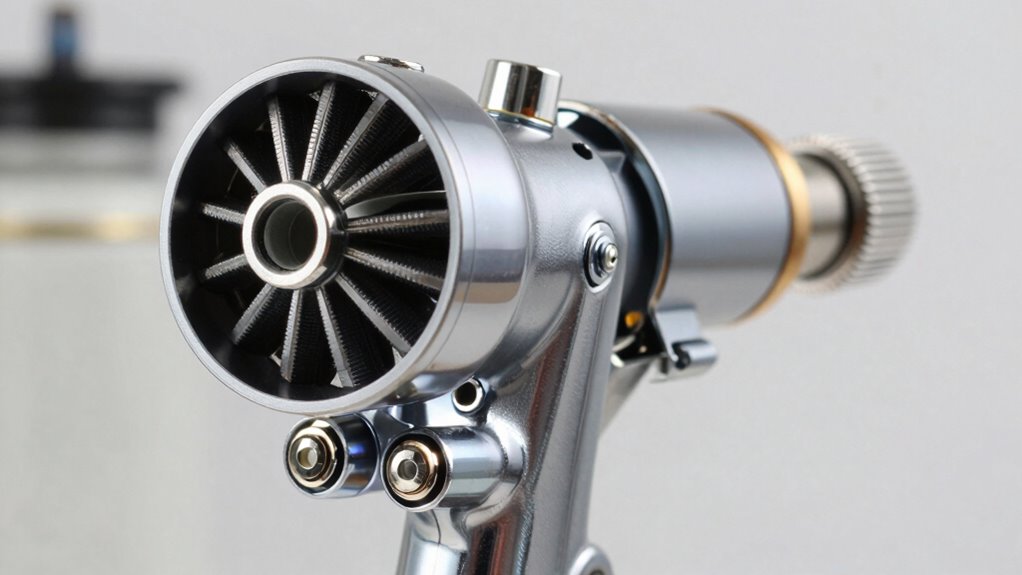
Matching the right air cap and diffuser to your spray gun and paint is essential for achieving peak results. The correct combination influences your spray pattern, ensuring even, consistent coverage without runs or overspray. When selecting components, consider the type of paint you’re using—thinner paints may require different air caps than thicker coatings. Properly matched parts also improve paint adhesion, helping your finish last longer and look smoother. Using incompatible air caps or diffusers can cause inconsistent spray patterns, leading to uneven coats and compromised durability. Always check the manufacturer’s recommendations for your spray gun, and match the air cap and diffuser to suit your specific paint and project needs. This careful pairing ensures optimal performance and a professional-quality finish.
Key Factors to Consider When Upgrading Your Spray Gun Components
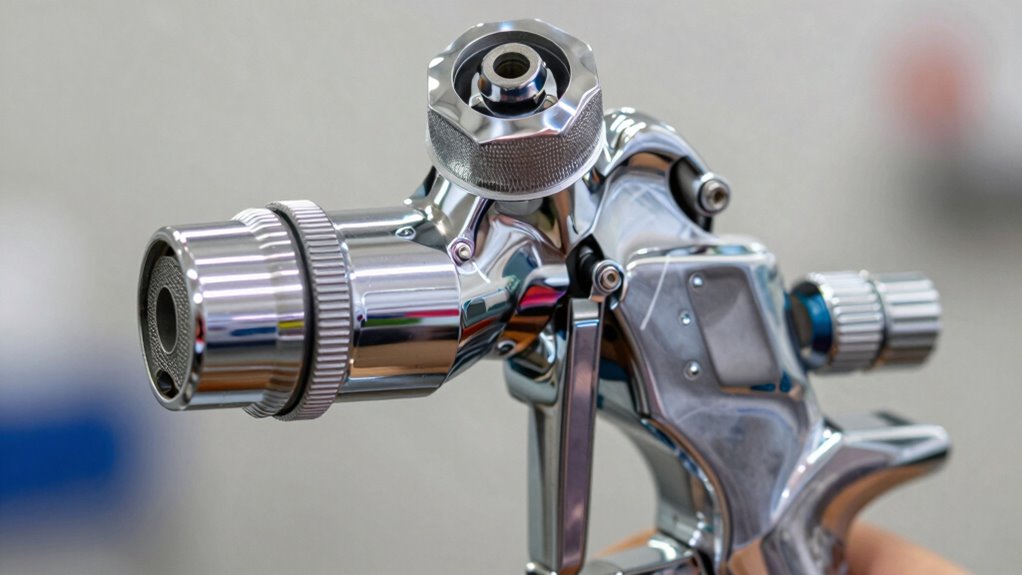
When upgrading your spray gun components, it’s crucial to take into account how each part affects overall performance and the quality of your finish. Key factors include paint viscosity, which influences spray consistency and atomization, and spray booth ventilation, essential for proper solvent removal and finish quality. Consider these points:
- Compatibility with paint viscosity to ensure smooth application without drips or defects.
- The impact on spray pattern and finish quality when using different air caps and diffusers.
- How an upgraded component may improve airflow, especially in well-ventilated spray booths, reducing overspray and improving finish consistency.
Focusing on these factors helps you select parts that optimize your spray gun’s performance, leading to a professional-grade finish.
Frequently Asked Questions
How Do Air Cap Sizes Influence Spray Pattern and Finish Quality?
Air cap sizes directly influence spray pattern control and finish consistency. A larger air cap produces a wider spray, ideal for covering broad surfaces quickly, while a smaller one offers more precision for detailed work. Choosing the right size helps you attain even coverage, reduces overspray, and guarantees a smooth, professional finish. By matching the air cap to your project, you improve spray pattern control and consistently deliver high-quality results.
Can Different Diffuser Materials Improve Paint Application?
You get what you pay for when choosing diffuser materials, as some improve paint application more than others. Different materials can enhance paint adhesion and surface smoothing, leading to a more uniform finish. By selecting high-quality diffusers, you guarantee better control over spray consistency, which reduces overspray and uneven coats. Ultimately, investing in the right diffuser material helps you achieve a professional look while saving time and effort.
What Are Signs Indicating It’s Time to Replace an Air Cap or Diffuser?
You should replace your air cap or diffuser when you notice poor paint adhesion or uneven spray consistency. If your finish starts to look patchy, splattered, or inconsistent, it’s a clear sign the parts are worn or clogged. Additionally, increased overspray or difficulty maintaining a steady spray pattern indicates it’s time for a replacement. Regularly inspecting these parts helps guarantee peak performance and a flawless finish.
How Do Environmental Conditions Affect Air Cap and Diffuser Performance?
Did you know that humidity effects can reduce airflow efficiency by up to 30%? Environmental conditions like temperature influence air cap and diffuser performance considerably. High humidity can cause corrosion, leading to clogs or leaks, while temperature fluctuations affect material expansion and contraction. You should regularly check these parts in changing environments, as extreme conditions can diminish their effectiveness, requiring timely replacements to maintain ideal airflow and finish quality.
Are There Compatibility Considerations Between Spray Guns and Various Air Cap Types?
Yes, you need to take into account spray gun compatibility when selecting air caps. Different air cap types are designed for specific spray guns, so make certain your gun matches the air cap to get ideal performance. Proper air cap selection improves spray pattern, finish quality, and efficiency. Always check manufacturer guidelines to confirm compatibility, preventing issues like uneven coating or reduced control, and ensuring you achieve the best finish possible.
Conclusion
Think of your spray gun as a painter’s brush, and the air cap and diffuser as its bristles and tips. When you choose the right parts and keep them well-maintained, you’re guiding the paint like a steady hand, creating a flawless masterpiece. Small adjustments can transform a rough sketch into a stunning finish. So, treat your tools like trusted brushes—carefully selected and cared for—to achieve the perfect, professional look every time.