
TL;DR
A home-improvement article describes using aluminum foil to cover stair railings while painting nearby walls, avoiding the need to remove the railing or wrap it with painter’s tape. The method may reduce cleanup, but its effectiveness depends on covering the railing fully and keeping the foil in place.
A home-improvement article recommends wrapping a stair railing in aluminum foil before painting nearby walls, as a way to guard against paint drips without taking the handrail off. The tip is presented as a quicker alternative to covering the railing with painter’s tape, though no test results or measured time savings are provided.

Get business pricing on tools and workshop supplies
- Business-only prices and quantity discounts
- Tax-exempt purchasing
- Multiple users, one account, clear invoices
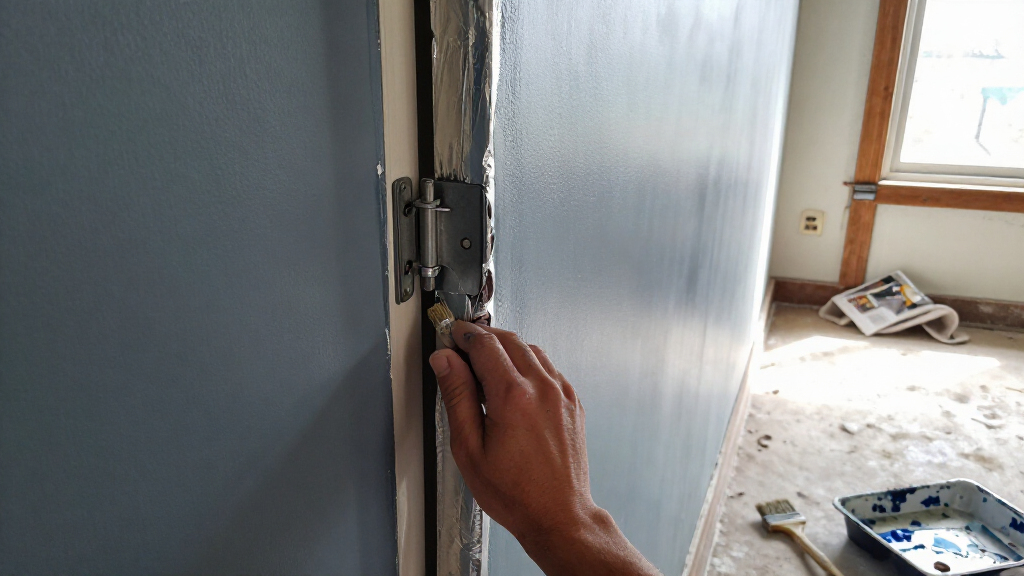
The suggested approach is to tear off generous pieces of foil and wrap them around the railing, pressing the material against its shape. The article advises covering the underside and full surface, not just the areas visible from above. Where strips meet, a slight overlap is recommended to reduce gaps that could let paint through.
Decorative details may need their own pieces of foil. The instructions specifically call out the volute, the curled or spiral feature at the end of some railings, and the rounded rail cap. Grooves and other detailed areas can also be covered to limit the amount of paint that might otherwise need to be removed later.
The article says foil can be peeled away once the painter is confident the wall paint has cured and that the areas behind the railing are covered. It also suggests wiping used strips with an old rag and reusing them for another wall or storing them for later. Those reuse suggestions are conditional: the foil must come off cleanly and remain usable.
Protect stair railings with aluminum foil
Wrap the railing before painting nearby walls to help guard against drips without removing the handrail. The article gives no measured time savings or test results.
Cover the whole railing
Press generous foil strips around the rail and overlap their edges to reduce gaps.
Shape foil around the full surface, including the underside.
Use separate pieces for grooves, the rounded cap, and the volute.
Check that foil is pressed into place and seams overlap.
Foil or removal?
The tip offers a way to leave the handrail in place while protecting it during wall painting.
- Shapes around rails and decorative details
- May reduce cleanup if coverage is complete
- Can improve access to the wall
- Requires handling fasteners and reinstalling the handrail
Remove it with care
Wait until the paint has cured, following the paint product’s instructions; the article gives no fixed wait time.
- Peel the foil gently and check the railing for paint.
- Reuse strips only if they come off cleanly and remain usable.
- Keep stairs clear and do not rely on a foil-covered rail for balance.
Protecting Railings Without Removal
Painting behind stair rails can be awkward because the railing is close to the wall and has surfaces that are difficult to reach with a brush or roller. Removing it may make access easier, but it adds a separate task: handling the fasteners and reinstalling the handrail. Foil offers a low-cost protective covering that can be shaped around railings without that disassembly.
The practical value is reduced risk of paint on a finished banister and potentially less cleanup. The article argues foil is faster to apply than winding painter’s tape around the railing, but it does not quantify the time saved or compare the methods under controlled conditions. For readers, the useful takeaway is the preparation principle: cover the entire surface, including details and undersides, before opening the paint.
The suggestion is aimed at a small household painting job, not a substitute for careful masking or safe access around stairs. A loose strip could shift while painting, and a covered railing may be less convenient to grip. Painters should avoid relying on a foil-wrapped rail for balance and should keep the stairway clear while working.
Products Worth Considering

Philips Hue Amarant Outdoor Smart Light Bar, Black

Dyson V15s Detect Submarine Wet and Dry Vacuum, Yellow/Nickel

Bose SoundLink Max Portable Bluetooth Speaker, IP67 Waterproof, Black
As an affiliate, we earn on qualifying purchases.
A Tape-Free Masking Approach
The advice addresses a familiar sequence in stairwell painting: the wall needs a fresh coat, but a fixed railing sits between the painter and some of the surface. The article presents two alternatives: remove the handrail to reach the wall more easily, or leave it in place and protect it while painting. Its foil method is the second option.
Unlike a strip of tape, foil can be pressed into the shape of an object, according to the article. That makes it suitable for wrapping around a rounded rail or covering a decorative cap. The same basic idea is suggested for a doorknob when painting a door. These are practical suggestions rather than independently verified product-performance findings; the article gives no specific brand, test conditions, or comparison with other coverings.
““Simply tear off a few strips and cover the entire thing in a fraction of the time.””
— The home-improvement article
No Timing or Test Data Provided
The article does not report a trial, measured time savings, or a comparison of foil with painter’s tape or other masking materials. It also does not specify how well foil stays in place on different railing shapes, finishes, or surfaces, or whether paint can seep through poorly joined strips. The suggestion that foil does not absorb paint is offered as the reason the railing can stay clean, but no testing details are given.
There is no stated curing interval for removing the foil. Paint products and room conditions vary, so the instructions do not establish a universal wait time. The article also does not address whether foil could mark, scratch, or otherwise affect a delicate railing finish, or how many times a strip can be reused.
Check Coverage Before Painting
For anyone trying the method, the next step is to inspect the covering before painting: press foil around the rail, overlap seams, and separately cover caps, volutes, grooves, and the underside. Keep the handrail available only if it can be used safely; do not treat a foil-covered surface as a dependable grip while working on stairs.
After painting, follow the paint product’s instructions for drying and curing rather than relying on a fixed wait time. Remove the foil gently once the wall is ready, then check the protected surface for paint before deciding whether the strips can be wiped and reused. The article provides no further testing or follow-up on the method’s performance.
Source: rss
Key Questions
How do you use aluminum foil to protect a railing while painting?
Tear off generous strips, wrap them around the railing, and press them into place. Cover the underside and overlap the edges so there are fewer gaps for paint to reach the railing.
Should decorative railing details be covered too?
Yes. The article recommends using separate foil pieces for details such as a volute, a rounded rail cap, and grooves, which can be difficult to clean if paint reaches them.
When should the foil come off?
The article advises waiting until the wall paint has cured before removing the foil. It gives no fixed curing period, so follow the directions for the paint being used.
Can the foil be reused?
The article says used strips may be wiped with an old rag and reused or stored, provided they peel off cleanly. It does not give a limit for reuse or test how well the foil holds up over multiple uses.
Source: hunker.com