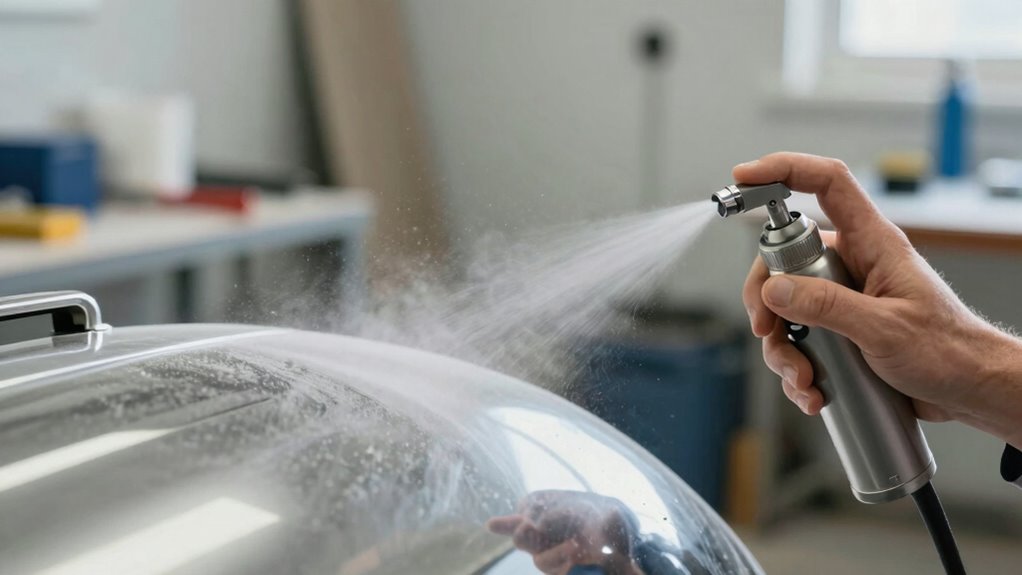
To reduce dust attraction during spraying, ground your tools and surfaces to dissipate static charges safely. Maintain humidity levels between 40-60% to lessen static buildup and dust clinginess. Use anti-static sprays or wipes to treat surfaces thoroughly, and incorporate conductive materials like metal tools or fabrics to prevent static accumulation. Combining proper grounding, humidity control, and anti-static products creates a cleaner environment. Keep exploring these techniques to discover more ways to keep dust at bay.

Get business pricing on tools and workshop supplies
- Business-only prices and quantity discounts
- Tax-exempt purchasing
- Multiple users, one account, clear invoices
Key Takeaways
- Ground surfaces and tools to safely dissipate static charges and prevent dust attraction during spraying.
- Maintain humidity levels between 40-60% to reduce static buildup and dust clinginess.
- Use anti-static sprays and wipes to neutralize static charges on surfaces before spraying.
- Incorporate conductive materials and tools to create static pathways, preventing static accumulation.
- Regularly check and ensure proper grounding and static dissipation techniques for a dust-free environment.
As an affiliate, we earn on qualifying purchases.
Why Does Static Electricity Make Dust Stick When Spraying?

When you spray a surface, static electricity can cause dust particles to cling more strongly. This happens because electrostatic forces attract dust, increasing dust adhesion. Spraying can generate static charges on surfaces, creating an imbalance of electrons. These charges cause nearby dust particles, which often carry opposite charges, to be drawn toward the surface. The electrostatic forces between the surface and dust particles grow stronger, making dust stick more stubbornly. Additionally, Free Floating particles can move unpredictably, further complicating dust removal. As a result, dust becomes harder to remove and can settle quickly after spraying. Understanding this interaction helps you realize why static buildup worsens dust adhesion. Electrostatic interactions can also influence how dust particles respond to airflow and other environmental factors, impacting cleaning efforts. By controlling static, such as using anti-static sprays or grounding techniques, you can reduce dust attraction and enhance cleaning efficiency. Implementing static reduction methods can noticeably improve your cleaning efficiency, preventing dust from sticking and making your surfaces cleaner and dust-free longer.
How Does Grounding Help Reduce Static Buildup?
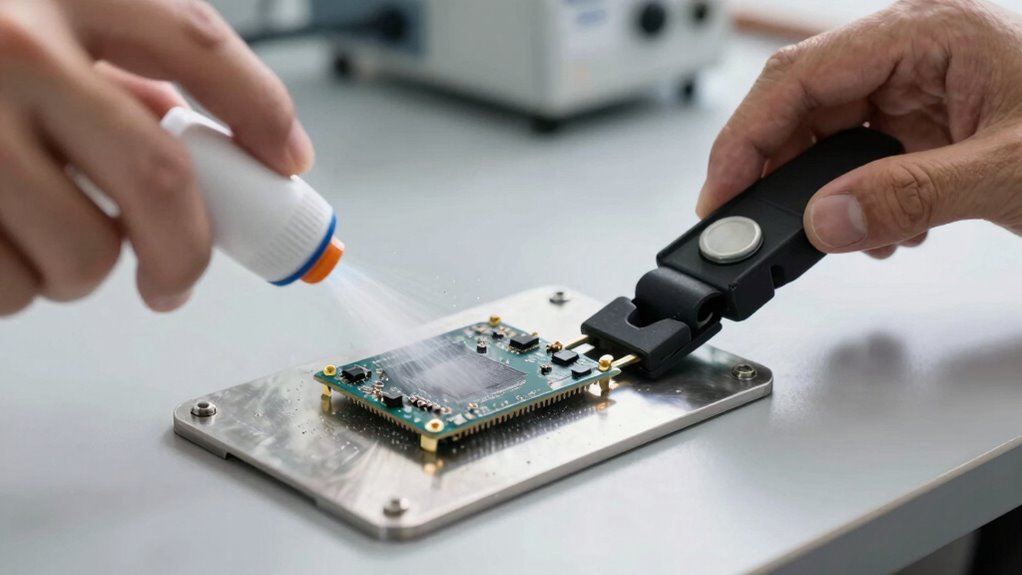
Grounding provides a safe path for static charges to flow away from your equipment or body. It quickly dissipates built-up static, reducing the risk of sparks or shocks. Plus, it improves safety by preventing static-related accidents. Additionally, grounding supports the implementation of energy-efficient cloud solutions, contributing to sustainable practices in technology infrastructure. Proper grounding can also enhance the reliability of smart home systems by minimizing static interference that could disrupt sensitive electronics. Implementing effective grounding techniques is essential for maintaining electronic safety and ensuring consistent operation of modern devices.
Establishes a Path for Static
Establishing a path for static to flow safely to the ground is essential in reducing static buildup. Conductive materials, like metal tools or grounding straps, create a direct route for static charges to dissipate. This process acts as electrostatic shielding, preventing static from accumulating on surfaces or objects. When you connect conductive items to a grounded surface, static charges are redirected away from sensitive areas. This not only minimizes static buildup but also helps protect delicate components and reduces dust attraction caused by static electricity. By ensuring a proper grounding path, you allow static to escape harmlessly, maintaining a safer and cleaner environment. Proper grounding techniques effectively establish a controlled pathway, reducing the risk of static-related issues during spraying or handling sensitive materials. Incorporating grounding techniques into your setup is crucial for effective static control and safety.
Dissipates Static Charges Quickly
By providing a direct conductive path to ground, grounding allows static charges to dissipate almost instantly. This quick release prevents static buildup from causing sparks or attracting dust. Using effective grounding techniques, like attaching static dissipators or grounding mats, ensures your equipment stays neutral. These methods help channel charges safely away from surfaces, reducing static-related problems. When you implement proper grounding, you minimize the risk of static shocks and static cling during spraying. It’s a simple yet powerful way to control static electricity. To maximize effectiveness, regularly check connections and ensure grounding devices are in good condition. This proactive approach keeps static charges from accumulating, making your workspace safer and cleaner. Proper grounding reduces static buildup, and understanding grounding techniques is essential for effective static control. Additionally, understanding Gold IRA markets can help investors make informed decisions about their precious metals investments, further emphasizing the importance of strategic safety measures. Remember, proper grounding is key to dissipating static quickly and efficiently.
Enhances Overall Safety
Since static electricity can cause sparks and fires, reducing static buildup is essential for safety. Grounding works by providing an easy path for static charges to dissipate, lowering the risk of dangerous sparks. Electrostatic shields and conductive coatings help improve safety by controlling static charge accumulation on surfaces and equipment. These materials allow static electricity to flow safely to the ground, preventing sudden discharges. When you ground tools or surfaces, you minimize the chance of static-induced fires or shocks during spraying or handling sensitive materials. Incorporating grounding techniques with electrostatic shields and conductive coatings creates a safer environment. Proper grounding methods help ensure effective static control in various environments, especially in hazardous areas where static discharge risks are higher. Additionally, understanding the electrostatic principles behind static buildup can aid in selecting appropriate grounding and shielding solutions. Using grounding techniques effectively can also improve the overall efficiency of static charge management. Overall, grounding not only reduces static buildup but also helps protect you and your workspace from potential hazards.
How to Use Anti-Static Sprays and Wipes to Keep Surfaces Dust-Free?
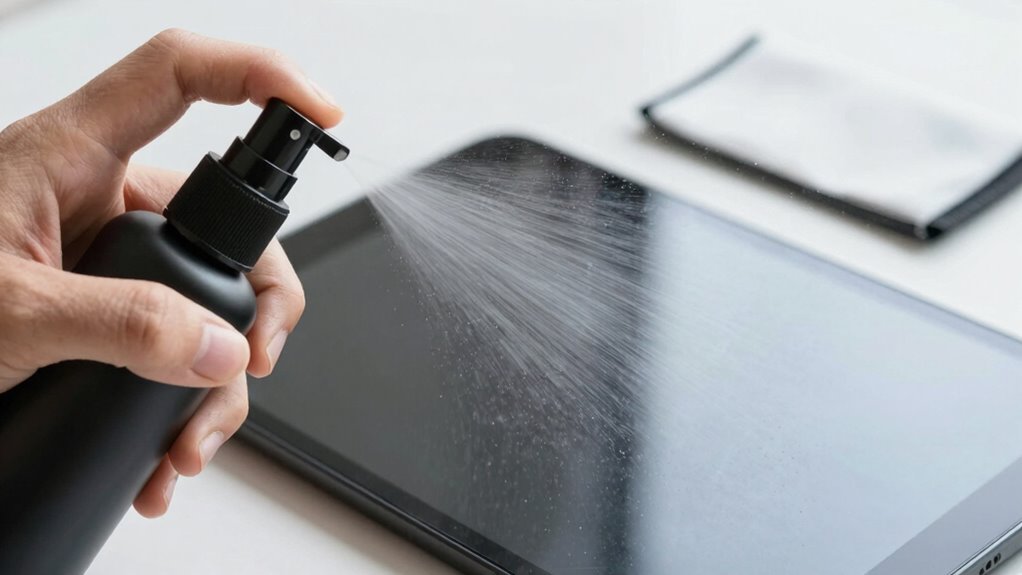
Anti-static sprays and wipes are effective tools for keeping surfaces dust-free, especially in environments where static electricity attracts dust particles. They work by neutralizing electrostatic forces that cause dust to cling to surfaces, aiding in dust mitigation. To maximize their effectiveness, follow these tips:
- Clean surfaces thoroughly before applying sprays or wipes to remove existing dust.
- Spray evenly or wipe gently, covering all areas without over-saturating.
- Allow the treated surface to dry completely before use.
- Regularly reapply, especially in high-traffic or highly static-prone areas, to maintain dust resistance.
- Choosing the right anti-static product ensures better performance and longer-lasting dust-repelling effects. Using products with electric dirt bike technology can also enhance static reduction in certain environments. Incorporating static-neutralizing agents can further improve dust control effectiveness.
- Selecting surfaces with anti-static coatings can provide ongoing static reduction and minimize dust buildup over time. Proper application of air purifier maintenance dos and don’ts can also help reduce airborne dust particles that settle on surfaces.
Using these products helps break electrostatic attractions, reducing dust buildup and making cleaning easier. Proper application guarantees surfaces stay cleaner longer and minimizes static-related dust attraction effectively.
How Humidity Can Help Minimize Static and Dust Attraction?
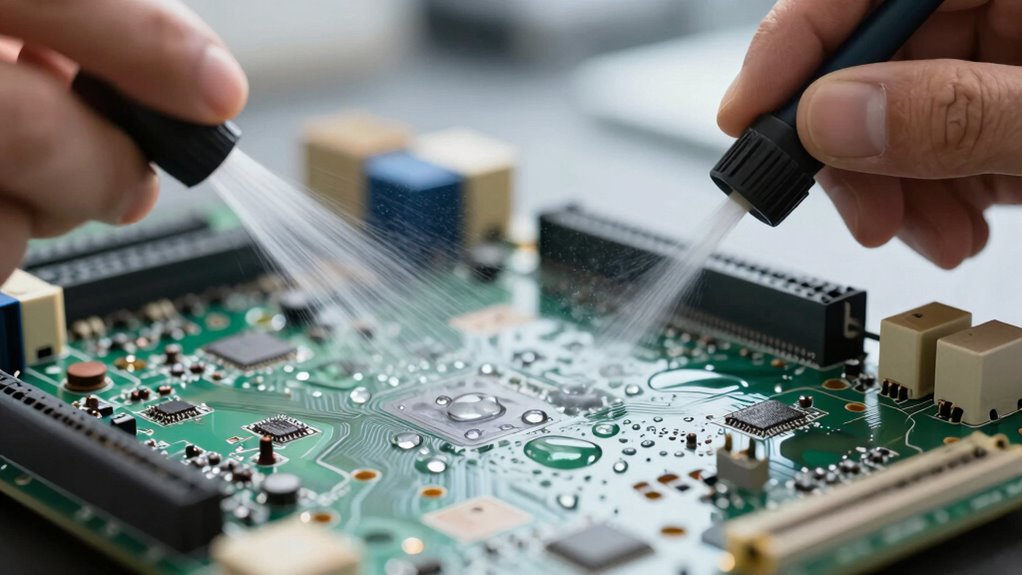
Maintaining proper humidity levels can considerably reduce static buildup and keep dust from clinging to surfaces. When the air has enough moisture, static electricity diminishes, making it harder for dust particles to stick. Keeping your environment humid helps create a cleaner, safer space with less static-related trouble. Proper humidity control is also essential for air quality and overall comfort in indoor settings. Additionally, maintaining optimal humidity levels can support better sleep quality by preventing dryness that might disturb rest. In workplaces or homes with sensitive electronics, proper humidity can also help protect equipment from static damage and static discharge. Consistent humidity levels can also improve material stability, preventing deterioration caused by static-related issues.
Humidity Levels Matter
Humidity levels play a crucial role in reducing static buildup and dust attraction. By maintaining proper humidity control, you keep moisture levels in check, which minimizes static charge and dust adherence. When the air is too dry, static electricity increases, making surfaces more attractant to dust. Increasing humidity creates a conductive environment that dissipates static charges more effectively. To optimize moisture levels:
- Use a humidifier to add moisture to dry environments
- Keep indoor humidity between 40-60% for best results
- Regularly monitor humidity levels with a hygrometer
- Avoid over-humidifying, which can cause mold or damage
Controlling humidity isn’t just about comfort—it’s a simple way to considerably reduce static and dust, making your cleaning and spraying tasks easier and cleaner.
Static Electricity Reduction
Since static electricity tends to build up more in dry environments, increasing humidity levels can considerably reduce static charges on surfaces. Moist air helps dissipate static by allowing charges to flow more freely, minimizing electrostatic buildup. You can enhance static reduction with electrostatic shielding, which prevents charge accumulation, or by applying conductive coatings that allow charges to dissipate safely. Maintaining humidity around 40-60% creates a less static-prone environment. Additionally, using humidifiers or moisture sources can help sustain ideal levels. Here’s a quick comparison:
| Approach | Benefits |
|---|---|
| Electrostatic shielding | Blocks charge buildup, protects sensitive equipment |
| Conductive coatings | Provides a conductive path for static dissipation |
| Increased humidity | Reduces static generation, minimizes dust attraction |
| Proper grounding | Discharges static safely |
| Humidity control | Maintains consistent static reduction |
Dust Attraction Minimized
Reducing static charges not only protects sensitive equipment but also minimizes dust attraction, which is often drawn to static-laden surfaces. Increasing humidity helps balance material conductivity, making surfaces less prone to static buildup. Proper grounding techniques, like grounding mats and wrist straps, allow static charges to dissipate safely, reducing dust attraction. Maintaining ideal humidity levels prevents static from acting like a magnet for dust particles. Here are some ways to leverage humidity and grounding:
- Use humidifiers to keep humidity around 40-60%
- Ground static-sensitive items with conductive mats
- Choose materials with better conductivity for surfaces
- Regularly monitor humidity and grounding effectiveness
Which Materials and Tools Naturally Dissipate Static?
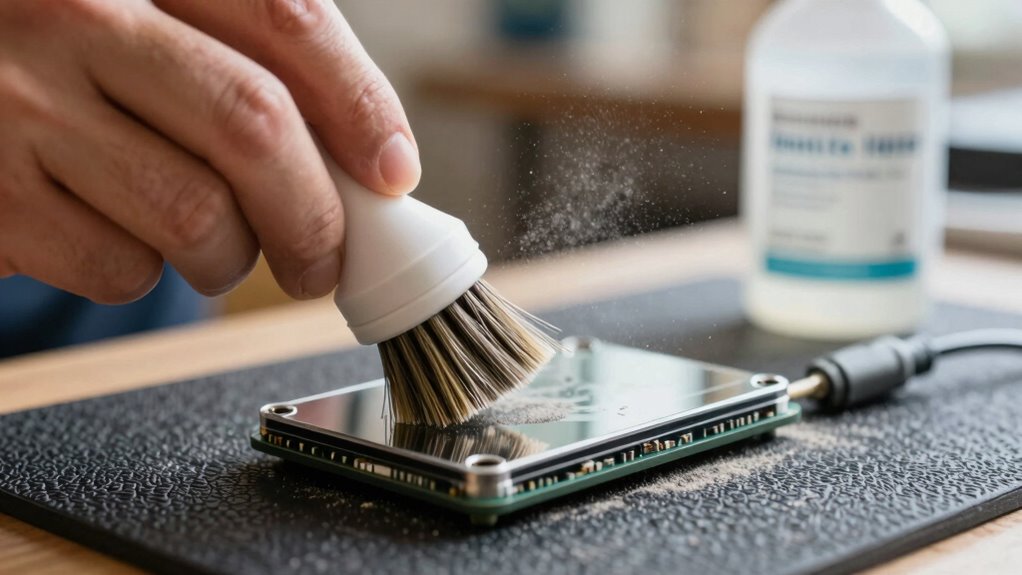
Certain materials and tools naturally dissipate static electricity due to their conductive or dissipative properties. Conductive fabrics, often made with metal fibers or coated with conductive coatings, allow static charges to flow away safely, preventing buildup. Metal tools, such as brushes, spatulas, or tweezers, also help dissipate static because metals are excellent conductors. When you use these tools, static charges transfer quickly to ground, reducing static buildup on your work surface or equipment. Incorporating conductive fabrics into clothing or work surfaces can further minimize static attraction. Metal tools are especially useful during spraying or handling sensitive components, as they prevent static from accumulating and attracting dust. Using these materials promotes a safer, cleaner environment by naturally dispersing static charges.
Tips for Spraying in Low-Humidity or Static-Prone Environments?
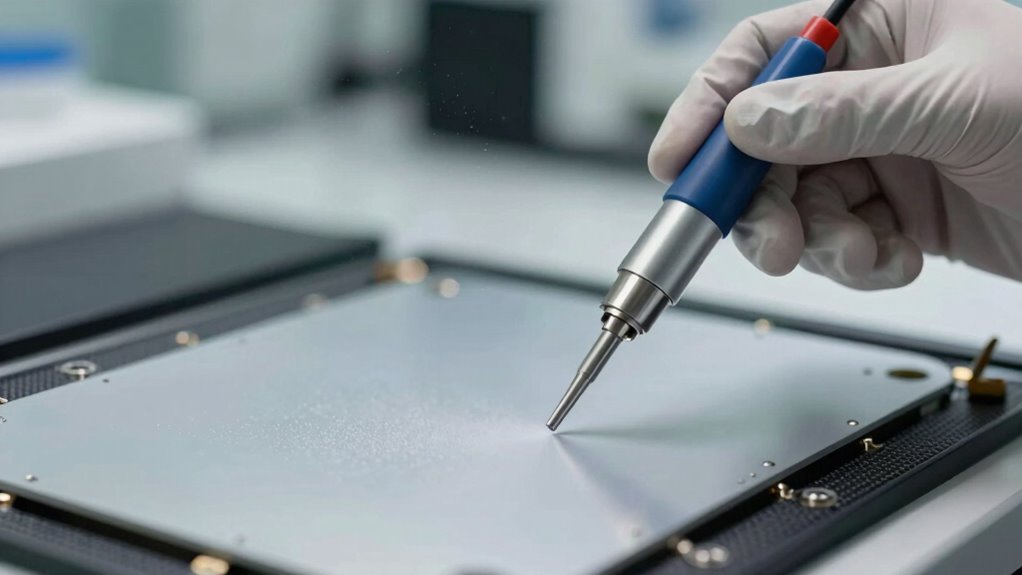
When spraying in low-humidity or static-prone environments, taking proactive steps can prevent static buildup and guarantee a smooth application. To improve electrostatic shielding, consider using anti-static sprays or dust repellents that reduce static charge on surfaces. Keep the environment slightly humidified with a humidifier, as higher humidity levels decrease static electricity. Ground yourself and spraying equipment properly to discharge static buildup. Additionally, wearing clothing made from natural fibers can minimize static generation. Using anti-static mats or ionizers nearby can also help neutralize static charges. These measures create a more controlled environment, reducing dust attraction and static discharge. Remember, combining effective grounding with dust repellents and electrostatic shielding techniques ensures a cleaner, more efficient spraying process.
What If Static Isn’t the Main Cause of Dust? Troubleshooting Persistent Dust Buildup?
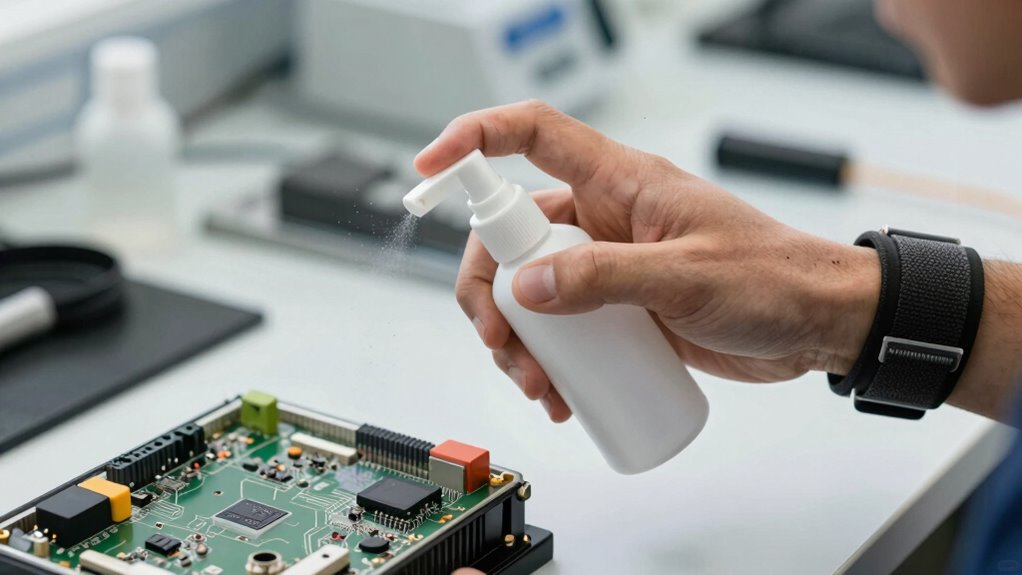
Even after applying anti-static measures, persistent dust buildup can remain a challenge. If static isn’t the main culprit, consider conducting electrostatic testing to identify other sources of dust attraction. This testing reveals whether other factors, like surface cleanliness or airflow, contribute to dust accumulation. You might need to implement additional dust mitigation techniques, such as improving filtration, sealing gaps, or adjusting ventilation. Regular cleaning routines and controlling humidity levels can also help reduce dust. Remember, static is just one piece of the puzzle. Troubleshooting involves a systematic approach: test, identify, and address all potential causes. By exploring these factors, you can better control dust buildup and maintain a cleaner environment, even when static isn’t the primary driver.
Frequently Asked Questions
Can Specific Paint Types Influence Static Charge Buildup?
Yes, certain paint types can influence static charge buildup. Paint properties like formulation and additives impact static dissipation, helping diminish static buildup during spraying. Using paints with anti-static or conductive additives allows static charges to dissipate quickly, minimizing dust attraction. Selecting the right paint ensures smoother application, better finish, and fewer dust particles clinging to the surface, making your project cleaner and more professional.
Are There Eco-Friendly Anti-Static Products Available?
Yes, eco-friendly anti-static products do exist, and they might surprise you. You can choose eco-friendly coatings and biodegradable anti-static agents that effectively reduce static buildup without harming the environment. These innovative solutions are designed to be safe, sustainable, and efficient. So, when you’re seeking greener options, rest assured that reducing static while protecting the planet is entirely possible with these eco-conscious choices.
How Often Should Anti-Static Measures Be Reapplied?
You should reapply anti-static measures like antistatic fabric and grounding techniques whenever you notice dust buildup or after cleaning your workspace. Regularly recharging your antistatic fabric and checking grounding connections help maintain effectiveness. If you use static control sprays, reapply them according to the product instructions, typically every few weeks. Staying vigilant ensures your static control remains reliable, reducing dust attraction and protecting sensitive equipment.
Does Lighting Impact Static Electricity and Dust Attraction?
Lighting effects can influence static electricity and dust attraction. Bright, fluorescent, or LED lighting may increase static buildup because they generate electrical discharge, which boosts static control challenges. Environmental factors like humidity levels also play a role. To reduce dust attraction, guarantee proper lighting choices and maintain stable environmental conditions. Managing lighting effects helps minimize static electricity, decreasing dust attraction and improving overall static control in your workspace.
Can Regular Cleaning Reduce Static and Dust Accumulation?
Cleaning regularly is like sweeping away clouds of dust before they settle. It can definitely reduce static and dust buildup, especially if you use fabric softeners in your laundry and keep air humidity levels balanced. Fabric softeners neutralize static, while higher humidity makes it harder for static to cling. Consistent cleaning minimizes dust attraction, leaving your space cleaner and static-free. So, stay diligent for a dust-free, static-resistant environment.
Conclusion
By understanding how static attracts dust and using simple anti-static tricks, you can keep surfaces cleaner longer. Don’t worry if static seems stubborn—adjusting humidity or grounding tools often does the trick. Even if dust persists, troubleshooting can reveal other causes like material buildup. With these tips, you’ll reduce dust attraction while spraying, making your workspace cleaner and more comfortable without extra fuss or expensive equipment.
Fall Picks
fall essentials
As an affiliate, we earn on qualifying purchases.