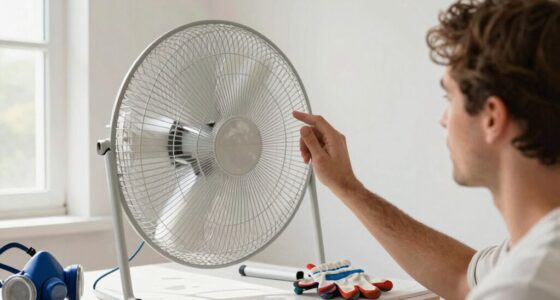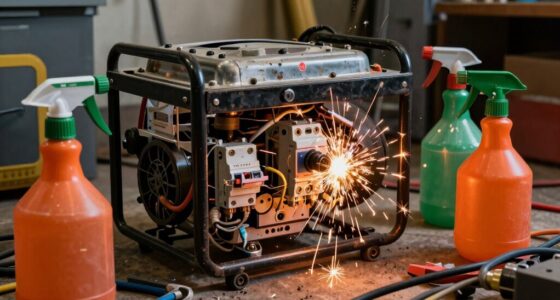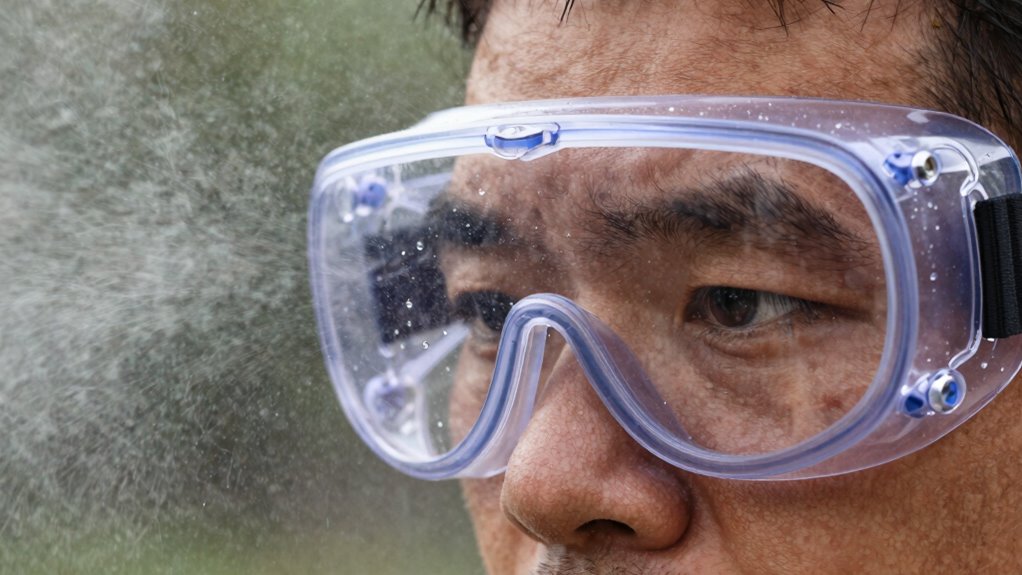

To prevent mist burn during spraying, wear impact-resistant goggles that fit snugly against your face to keep out fine droplets and fumes. Choose goggles with UV protection for long-term eye health, especially outdoors. Confirm the straps are adjustable to secure a comfortable, leak-proof seal. Regularly check and clean your goggles to maintain clarity and effectiveness. If you want to learn more about proper eye safety techniques, keep exploring the best protective options available.

Get business pricing on tools and workshop supplies
- Business-only prices and quantity discounts
- Tax-exempt purchasing
- Multiple users, one account, clear invoices
Key Takeaways
- Wear impact-resistant, sealed safety goggles designed specifically for spraying tasks to prevent mist and chemical entry.
- Ensure goggles fit snugly with adjustable straps and no gaps around the edges for maximum protection.
- Choose goggles with UV protection to guard against long-term UV damage from exposure during outdoor spraying.
- Regularly inspect and clean goggles to maintain clarity and integrity, ensuring consistent barrier effectiveness.
- Avoid regular glasses or sunglasses, as they lack proper sealing and chemical splash protection needed for spraying safety.
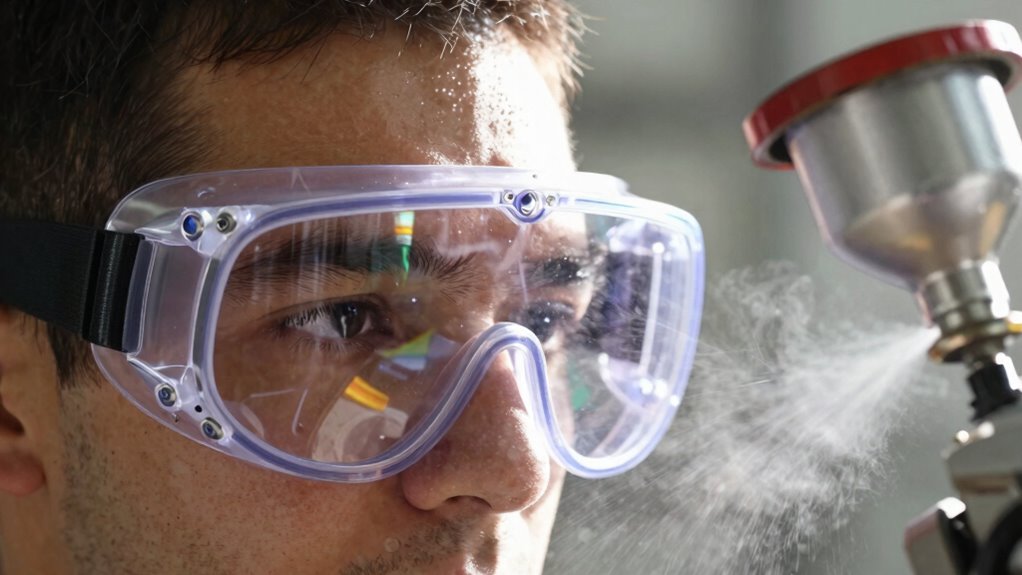
Have you ever considered how vital eye protection is when spraying? Whether you’re working with pesticides, paints, or other chemicals, your eyes are vulnerable to mist and splashes that can cause serious damage. Ensuring proper eye safety isn’t just about wearing any eyewear; it’s about choosing the right protection that effectively shields your eyes from harmful particles and UV rays. Safety goggles are your best bet for all-encompassing coverage, providing a snug fit that prevents mist from sneaking in around the edges. Look for goggles designed specifically for spraying tasks—they’re usually made with impact-resistant materials and have a sealed design to keep out fine droplets and fumes. When selecting safety goggles, prioritize models labeled for chemical splash protection, and consider options with UV protection. UV rays can be just as damaging as the chemicals themselves, especially if you’re working outdoors or under bright light conditions. Goggles with UV protection help block these rays, reducing the risk of long-term eye damage such as cataracts or retinal burns.
It’s tempting to just wear regular glasses or sunglasses, but these don’t offer the same level of protection. Regular glasses often have gaps around the sides, allowing mist to reach your eyes, and sunglasses, unless they’re specifically rated for UV protection, might not shield against chemical splashes or fine particles. Investing in proper safety goggles with UV protection ensures that your eyes stay safe from both chemical exposure and ultraviolet radiation. When you put on your goggles, make sure they fit snugly against your face, with no gaps around the edges, to prevent any mist from penetrating. Adjust the straps so they stay secure without causing discomfort. Remember, protective gear isn’t just about comfort—it’s about safety.
Proper eye protection also means inspecting your goggles before each use for cracks or scratches that could impair your vision or reduce their effectiveness. Clean them regularly with appropriate solutions to maintain clarity and ensure they function properly during spraying activities. Wearing the right safety goggles with UV protection not only shields your eyes from immediate harm but also helps prevent long-term damage caused by UV exposure. It’s a simple step that can save you from painful injuries, costly medical treatments, and permanent vision problems. Always prioritize your eye safety by choosing high-quality, certified eye protection gear designed for spraying tasks. Your eyes are invaluable, so treat them accordingly, and never compromise on safety when working with potentially hazardous substances. Additionally, understanding the Free Floating hazard in spraying environments can help you better select protective gear that offers comprehensive coverage against all risks.
impact-resistant safety goggles for spraying
As an affiliate, we earn on qualifying purchases.
As an affiliate, we earn on qualifying purchases.
Frequently Asked Questions
Can Regular Sunglasses Provide Adequate Eye Protection During Spraying?
Regular sunglasses aren’t enough for spraying, even if they’re trendy fashion accessories with UV protection. They don’t provide a secure seal around your eyes, leaving gaps for harmful mist or chemicals to reach your eyes. You need proper safety goggles designed for spraying tasks, which offer full coverage and impact resistance. Protect your eyes effectively by choosing the right gear rather than relying on stylish sunglasses that lack the necessary safety features.
How Often Should Spray Goggles Be Replaced for Optimal Safety?
You should replace your spray goggles when they show signs of damage or after approximately 6 to 12 months of regular use. Goggle maintenance is essential for safety standards; inspect for cracks, scratches, or fogging regularly. Keep in mind, outdated or damaged goggles compromise protection. Prioritize safety by adhering to manufacturer recommendations and replacing your goggles promptly to guarantee maximum eye safety during spraying tasks.
Are Contact Lenses Safe to Wear While Spraying Chemicals?
Wearing contact lenses while spraying chemicals isn’t recommended because contact lens safety can be compromised by chemical exposure. Chemicals can get trapped behind the lenses, causing irritation or damage. Most contact lenses lack chemical resistance, leaving your eyes vulnerable. For ideal protection, always wear proper safety goggles designed for chemical use. These provide a barrier that contact lenses can’t offer, ensuring your eyes stay safe and protected during spraying tasks.
What Are the Signs of Eye Irritation From Spray Mist?
You might notice eye irritation signs like discomfort, redness, or a burning sensation after exposure to spray mist. Eye discomfort often accompanies feelings of grit or a burning feeling, while vision blurriness can occur if the irritation worsens. If these symptoms persist or worsen, it’s essential to rinse your eyes with clean water immediately and seek medical attention promptly to prevent further damage.
Can Prescription Glasses Be Modified for Better Spray Protection?
Yes, you can modify your prescription glasses for better spray protection. Consider adding protective overlays to your lenses, which create an extra barrier against mist. Lens modification options include attaching clear, impact-resistant shields or using special sprays that make the lenses more resistant. These modifications help prevent mist burn and keep your eyes safe while maintaining your vision clarity. Always consult with an eye care professional before making modifications.
Conclusion
To keep your eyes safe while spraying, always wear proper protective gear. Think of your eyes as delicate flowers that need gentle care—protecting them isn’t just a suggestion, it’s a small act of kindness you owe yourself. By taking simple precautions, you can avoid any uncomfortable mishaps and continue your work smoothly. Remember, a little foresight today keeps the surprises at bay tomorrow. Your eyes will thank you for the thoughtful care you give them.
Fall Picks
fall essentials
As an affiliate, we earn on qualifying purchases.